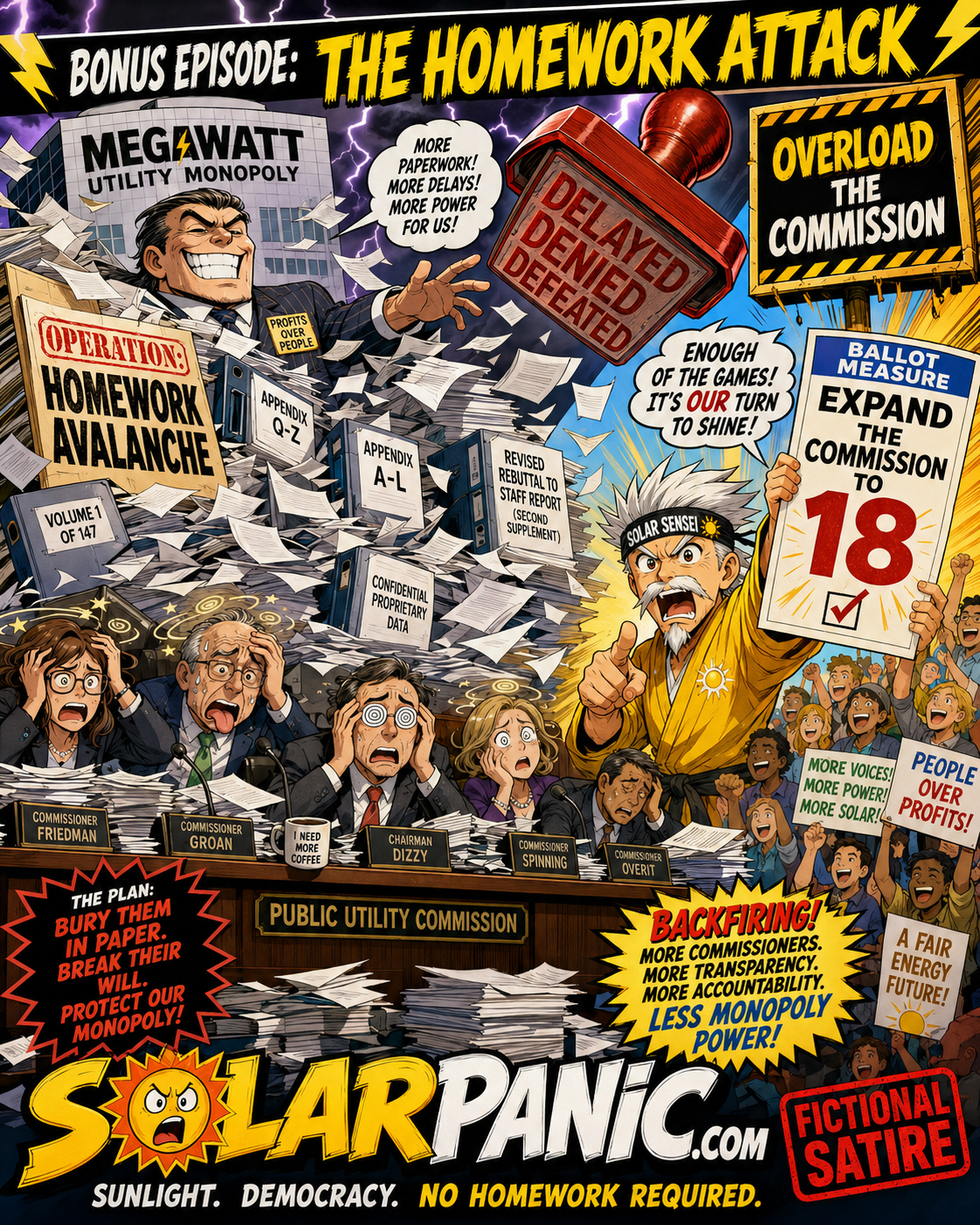
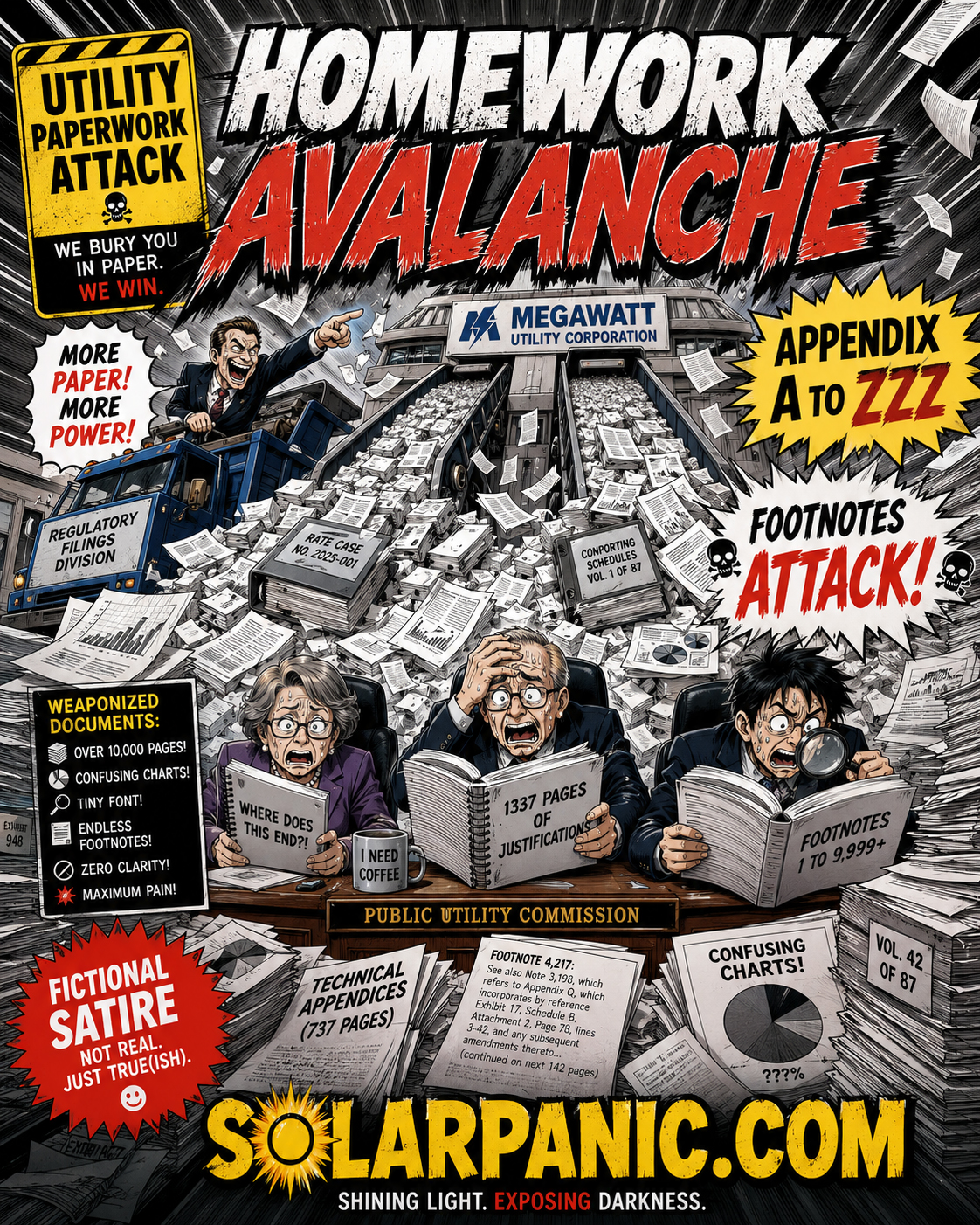
Operation: Overload the Commission
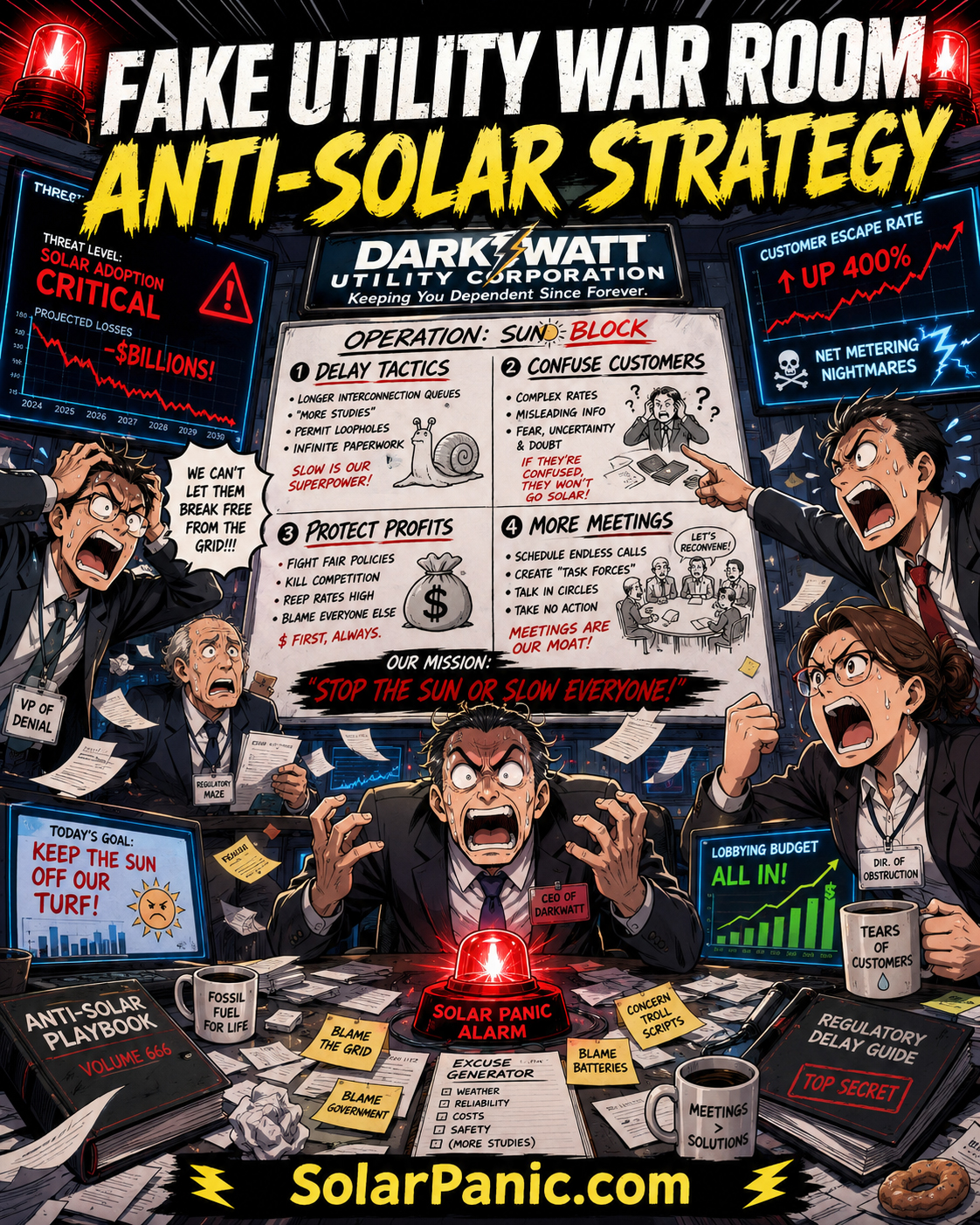
Deep inside the fictional headquarters of MegaWatt Monopoly Utility Co., Chairman Kilowatt slams his fist on the conference table.
“We do not need to stop the sun,” he growls. “We only need to make the paperwork so exhausting that nobody has enough brain left to ask questions.”
The room goes silent. Then the executives smile. Not happy smiles. Utility monopoly smiles. The kind of smiles that appear right before a 9,000-page filing lands on someone’s desk.
The Paper Tsunami
The next morning, a truck backs up to the commission building. Then another. Then another. Out come the filings:
- Revised Revised Revised Tariff Proposal
- Emergency Grid Flexibility Cost Recovery Framework
- Solar Customer Fairness Adjustment Appendix
- Demand Charge Clarification Appendix Part 19
- Simple Explanation, Volume IV
- Footnote Index to the Footnote Index
The commissioners try to read. They really do. But the paperwork keeps coming. Every question creates three appendices. Every appendix creates seven exhibits. Every exhibit creates a spreadsheet with hidden tabs.
Rubber Stamp Mode
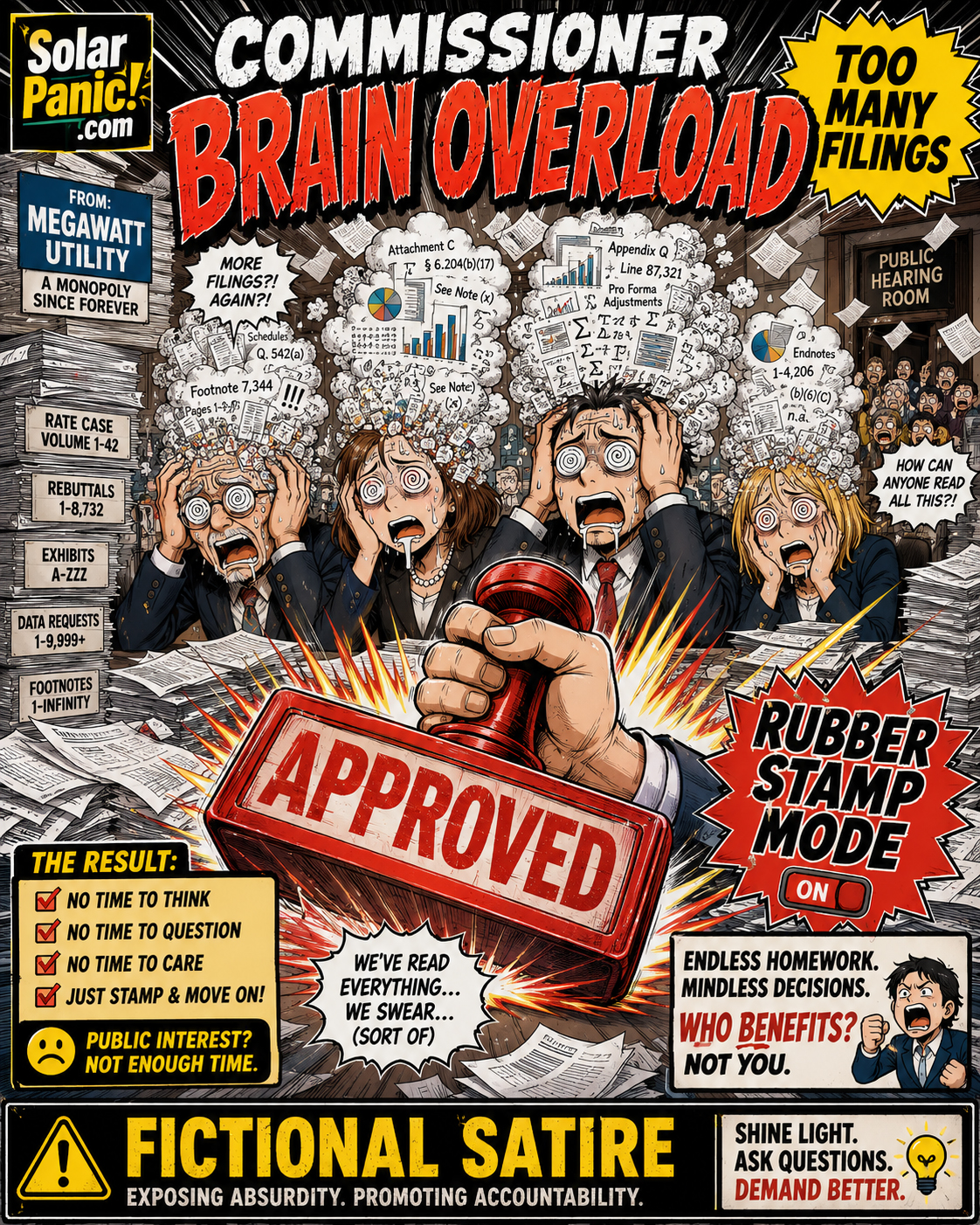
One commissioner squints at page 6,482 and whispers, “Did this footnote just footnote another footnote?”
Another commissioner begins speaking only in acronyms. A third sees demand charges floating in the air. A giant stamp rises from the paperwork pile.
APPROVED. APPROVED. APPROVED.
MegaWatt Monopoly celebrates. The tactic is working. The commissioners are not corrupt in this manga universe. They are overwhelmed. Their desks are full. Their brains are full. Their calendars are full. The monopoly’s homework machine has turned public oversight into exhaustion.
Solar Sensei Hears the People
But outside the building, Solar Sensei is listening. Homeowners are tired of peak rates. Businesses are tired of surprise bills. Families want batteries. Solar workers want fair rules. The public wants simple answers to simple questions.
“When monopoly homework becomes a weapon,” Solar Sensei says, “democracy needs more desks.”
The movement begins with one clean page. No secret appendix. No trick tariff. No fog machine. Just one idea:
Expand the Commission to 18

The ballot measure is called Proposition Sunlight. The message is direct: if monopoly companies can bury a small commission in paperwork, the people can expand the table.
More commissioners means more readers. More readers means more questions. More questions means the paperwork weapon starts to fail.
The Monopoly Panic
MegaWatt Monopoly launches attack ads. Chairman Kilowatt warns that 18 commissioners would create “too much oversight.” Madame Peak Rate calls it “dangerously readable government.” The Permit Goblin faints into a stack of incomplete forms.
But the people understand the joke. The old trick was homework overload. The answer is more desks.
Election Night
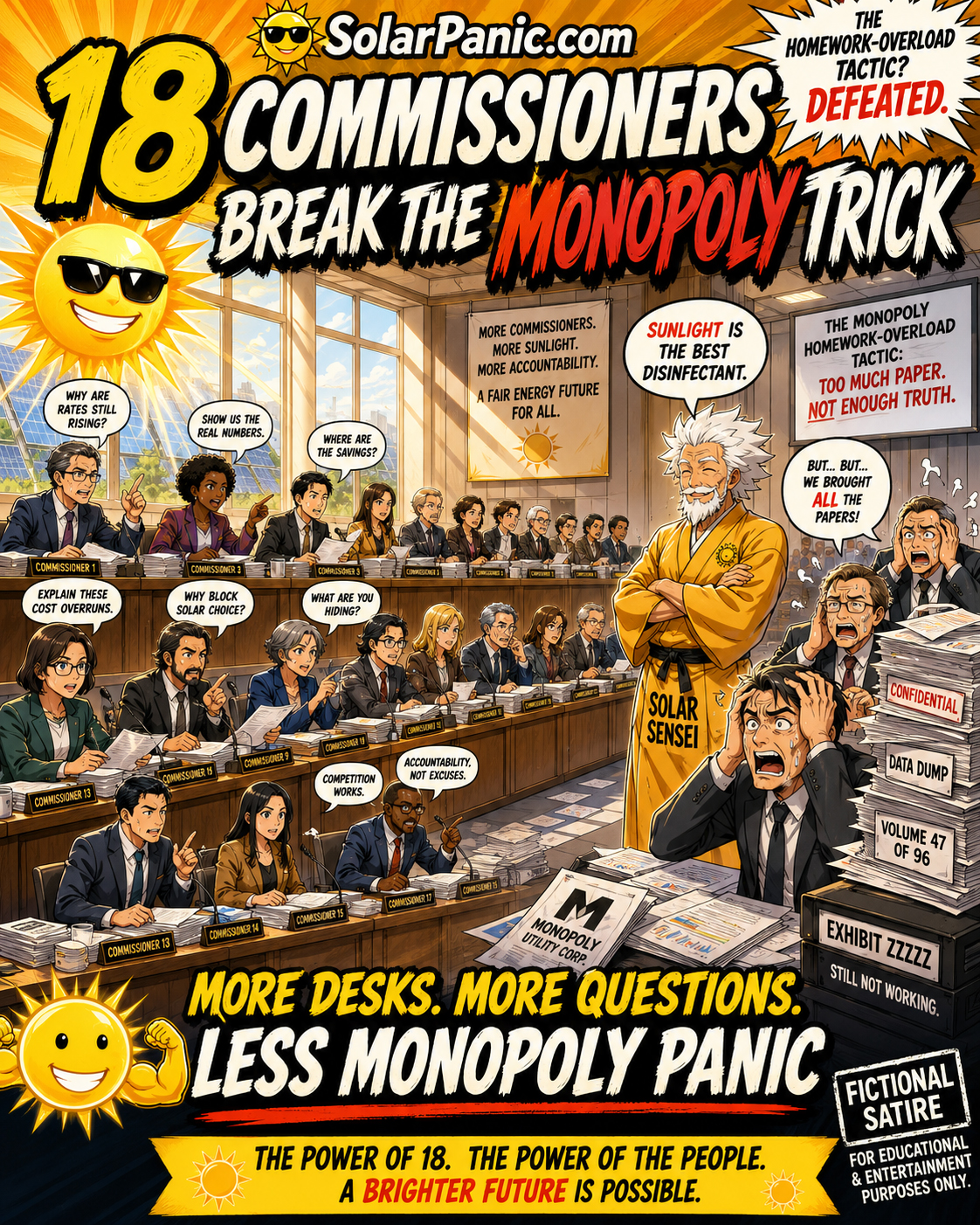
The results come in. The measure passes. Eighteen commissioners enter the room. The paperwork pile is still big, but now it is divided across enough people to ask real questions.
- Why are solar customers treated like a threat?
- Why are batteries punished instead of valued?
- Why should customers pay more for using less monopoly power?
- Why does every “simple” proposal need thousands of pages?
Final caption: When the people expand the table, monopoly panic loses its seat.