The New Room
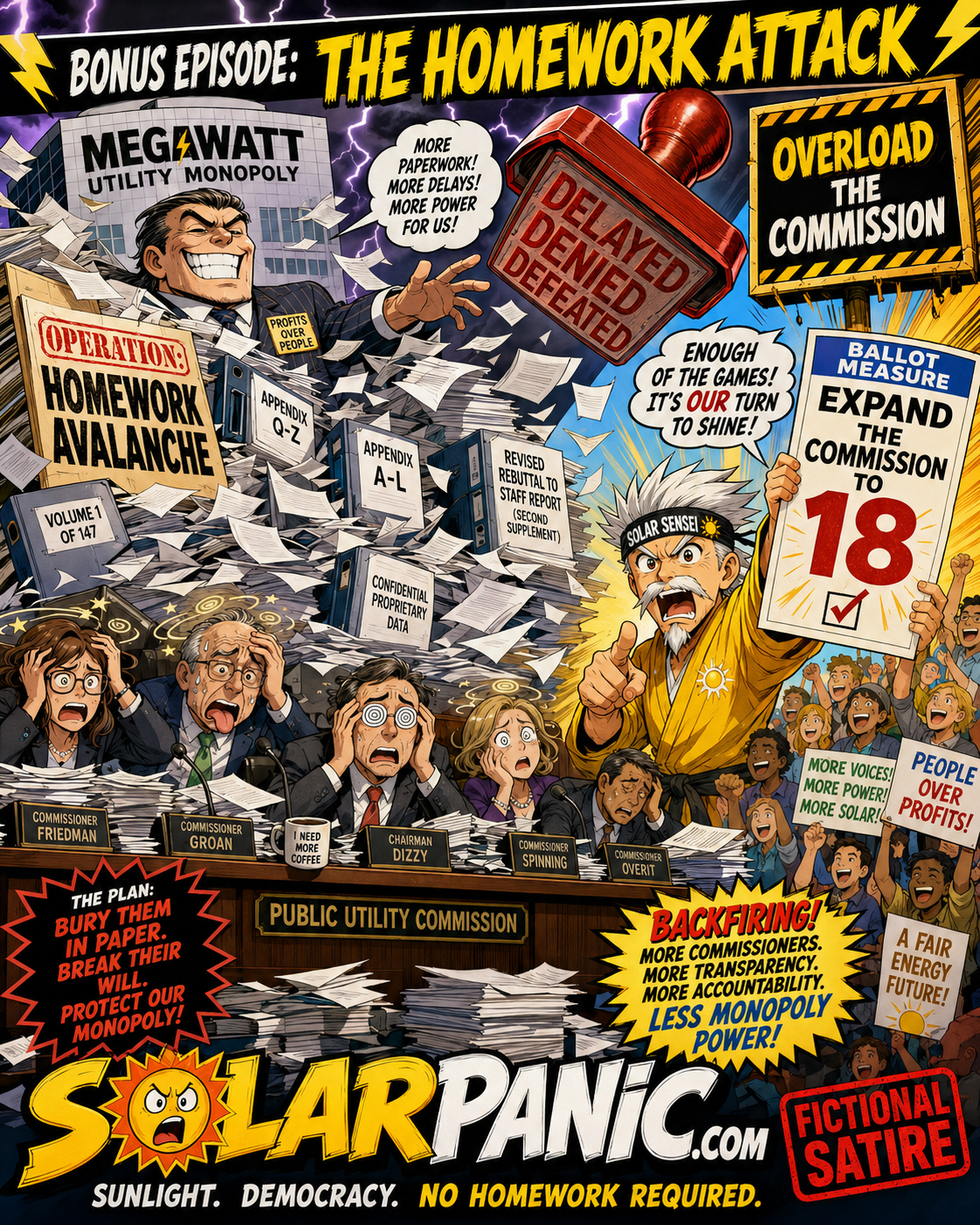
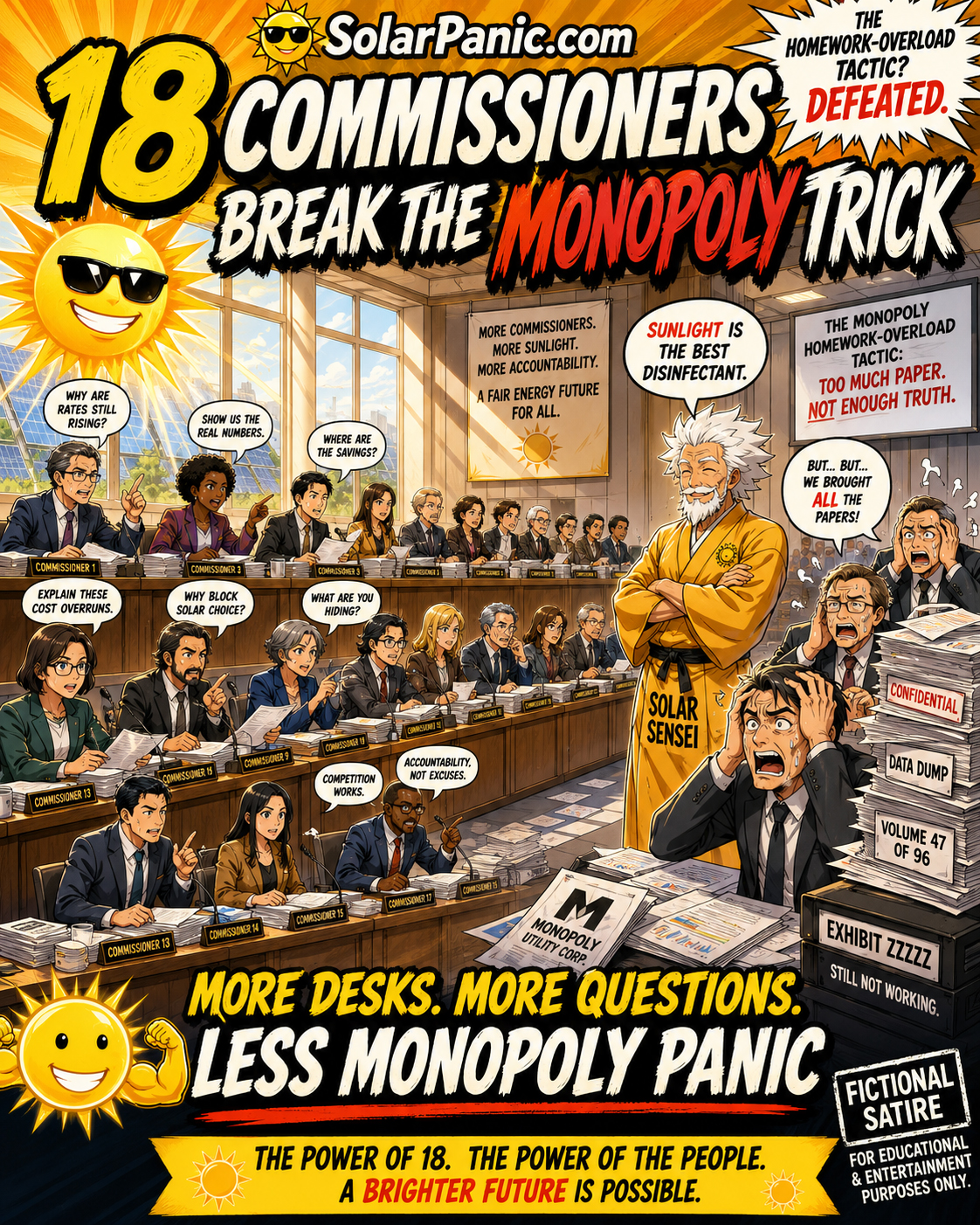
The first hearing after Proposition Sunlight is different before anyone speaks. The table is longer. The nameplates keep going. The microphones stretch across the room like a manga battle formation.
Chairman Kilowatt peeks through the door and freezes.
“Why are there so many readers?” he whispers. “Who authorized this much attention?”
Solar Sensei smiles. The public has not defeated paperwork by pretending it is small. The public has defeated paperwork by making oversight big enough to handle it.
Commissioner One Reads the Rate Model
The first commissioner follows the money. Not the slogans. Not the dramatic utility warning language. The money. When a proposal claims that customer-owned solar is a problem, Commissioner One asks who benefits from calling it a problem.
Commissioner Two Reads the Battery Section
The second commissioner studies batteries. The fictional monopoly calls them a threat. Solar Sensei calls them useful infrastructure owned by the customer. During blackouts, peak hours, and critical-load events, the battery is not a villain. It is a quiet hero.
Commissioner Three Reads the Footnotes
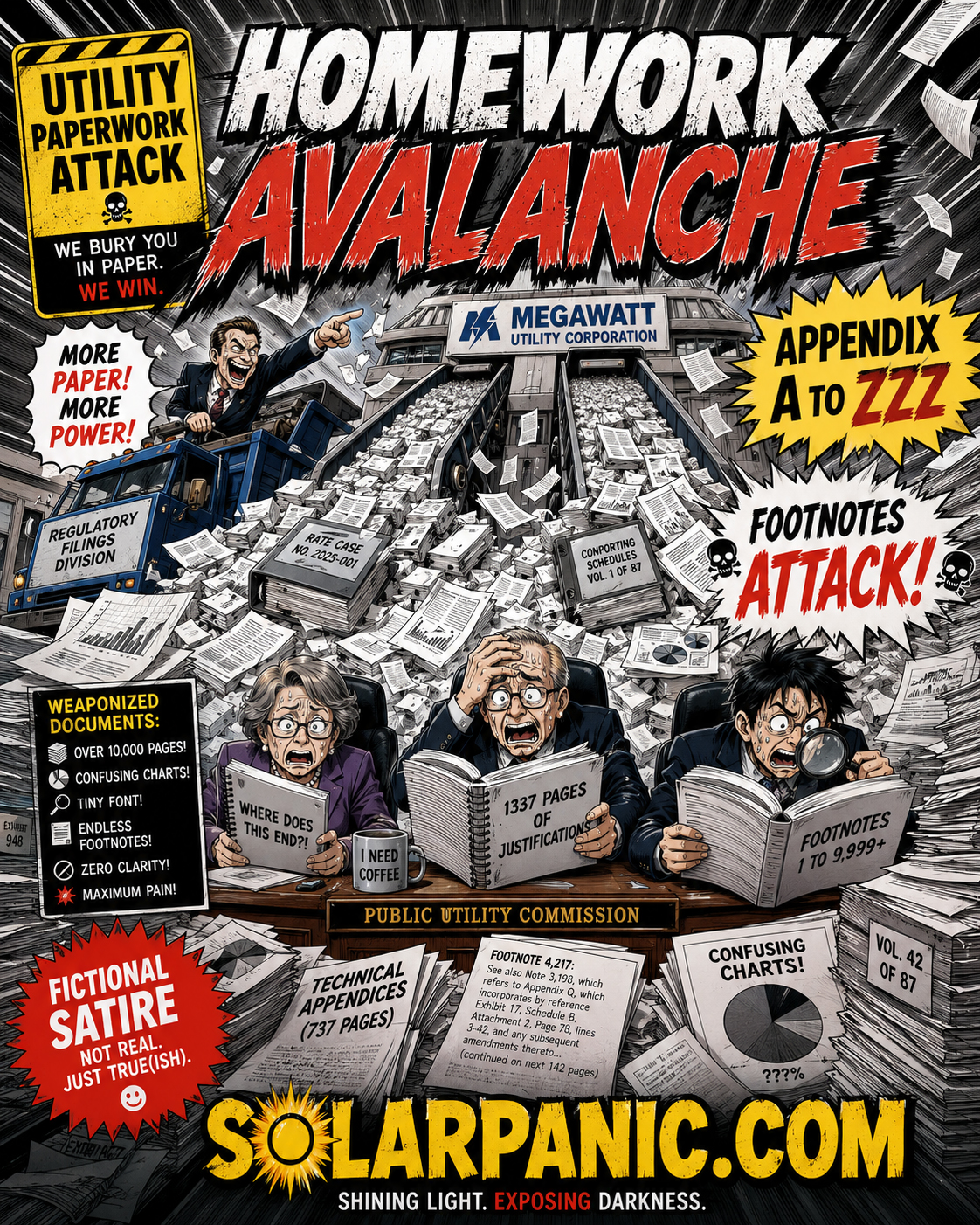
The third commissioner goes straight to the footnotes. The Permit Goblin screams from inside a filing cabinet. Appendix 47 is opened in public. Suddenly the room can see what the fog was hiding.
The monopoly’s old trick depended on nobody having enough time to read the fine print.
Commissioners Four Through Nine Divide the Stack
Interconnection. Reliability. Consumer bills. Peak rates. Grid resilience. Solar rules. Each topic gets attention. The paper pile is still large, but it no longer controls the room.
MegaWatt Monopoly tries to release a new emergency supplement. This time, six commissioners ask why the emergency always seems to help the monopoly and slow the customer.
Commissioners Ten Through Seventeen Ask Simple Questions
The most dangerous questions are simple:
- Why should customers be punished for using less monopoly power?
- Why are solar batteries treated like a threat instead of a solution?
- Why does every “simple” filing require thousands of pages?
- Why is public clarity described as a risk?
- Why does the fictional monopoly panic when customers own equipment?
The questions land like lightning bolts. Not because they are complicated, but because they are obvious.
Commissioner Eighteen Brings Sunlight
The eighteenth commissioner waits until the room is quiet. Then comes the question that breaks the spell:
“Is this proposal good for the public, or just easier for the monopoly?”
The room stops. The rubber stamp monster shrinks. Chairman Kilowatt drops a binder. Madame Peak Rate checks her calculator and finds only sweat.
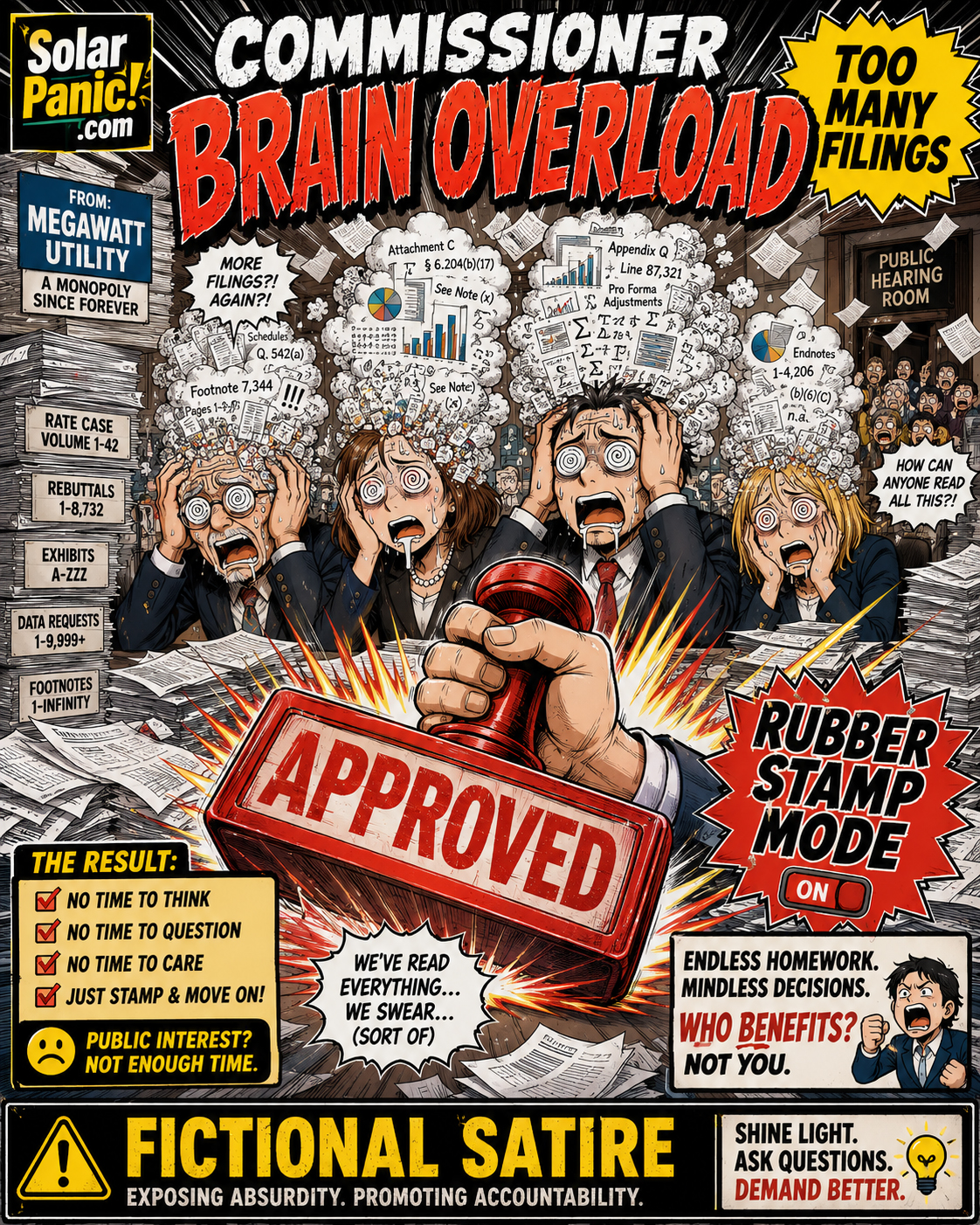
The Tactic Breaks
The fictional monopoly still has lawyers. It still has lobbyists. It still has binders, charts, acronyms, and “urgent” revisions. But the old tactic no longer works the same way.
When oversight was small, homework could become a weapon. When the table expanded, homework became homework again.
Punchline: More desks. More readers. More questions. Less monopoly panic.
What Solar Sensei Taught the People
Solar Sensei does not say that every commissioner will always agree. He says something better: a public process should have enough capacity to think. That is the heart of Proposition Sunlight.
SolarPanic is fictional manga satire, but the public lesson is clean: transparent energy regulation needs attention, capacity, and sunlight.