The Battery That Would Not Bow
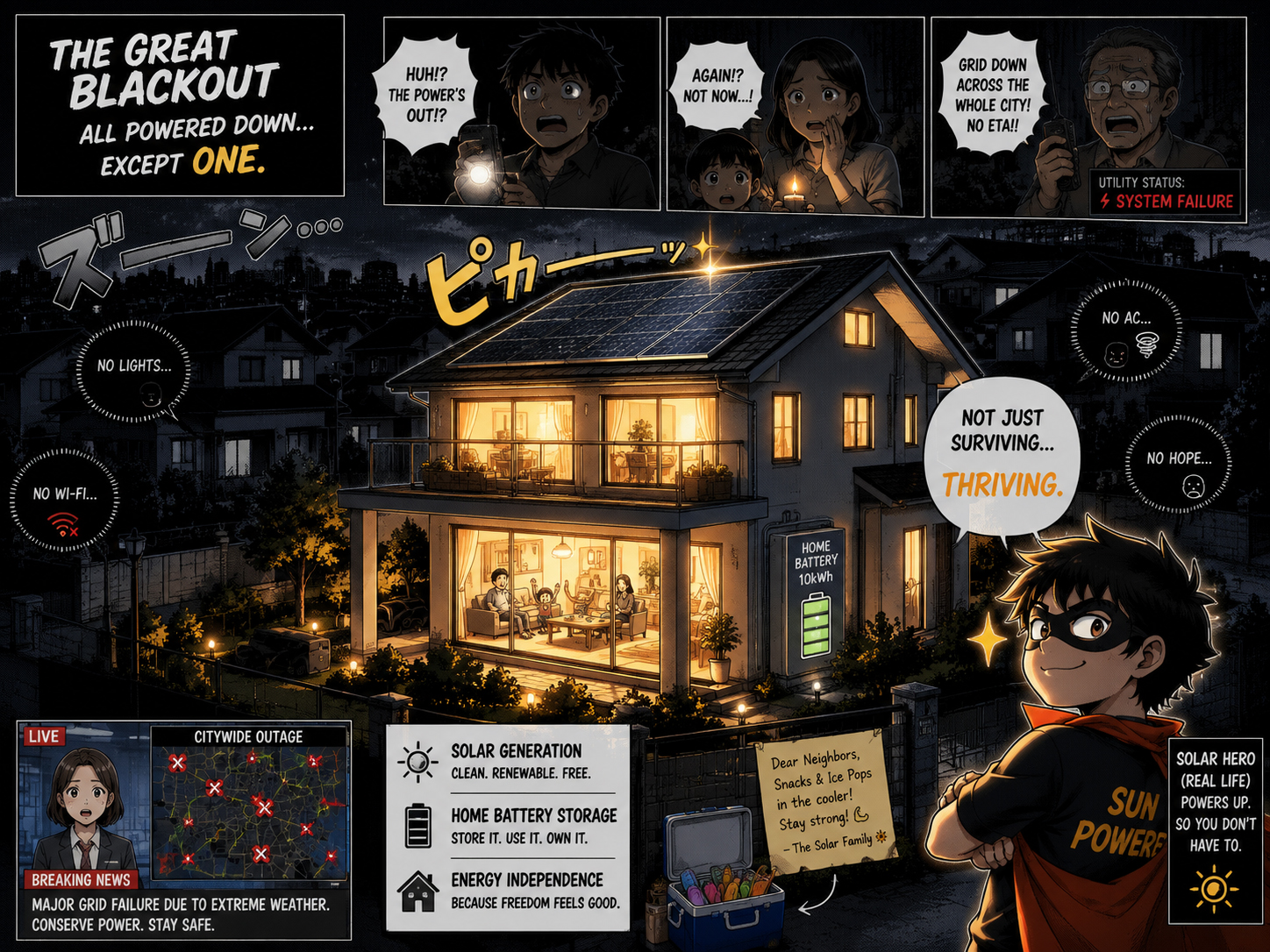
At 5:01 in the afternoon, Madame Peak Rate arrives wearing a cape made of electric bills. The fictional utility boardroom cheers. Peak hours are here. The calculator is glowing. The customer is supposed to feel trapped.
“Raise the mood! Raise the bill!” Madame Peak Rate cries.
But in the garage, Battery Boy wakes up. Quiet. Charged. Ready. Not dramatic. Not confused. Not impressed by the cape.
What Battery Backup Really Means
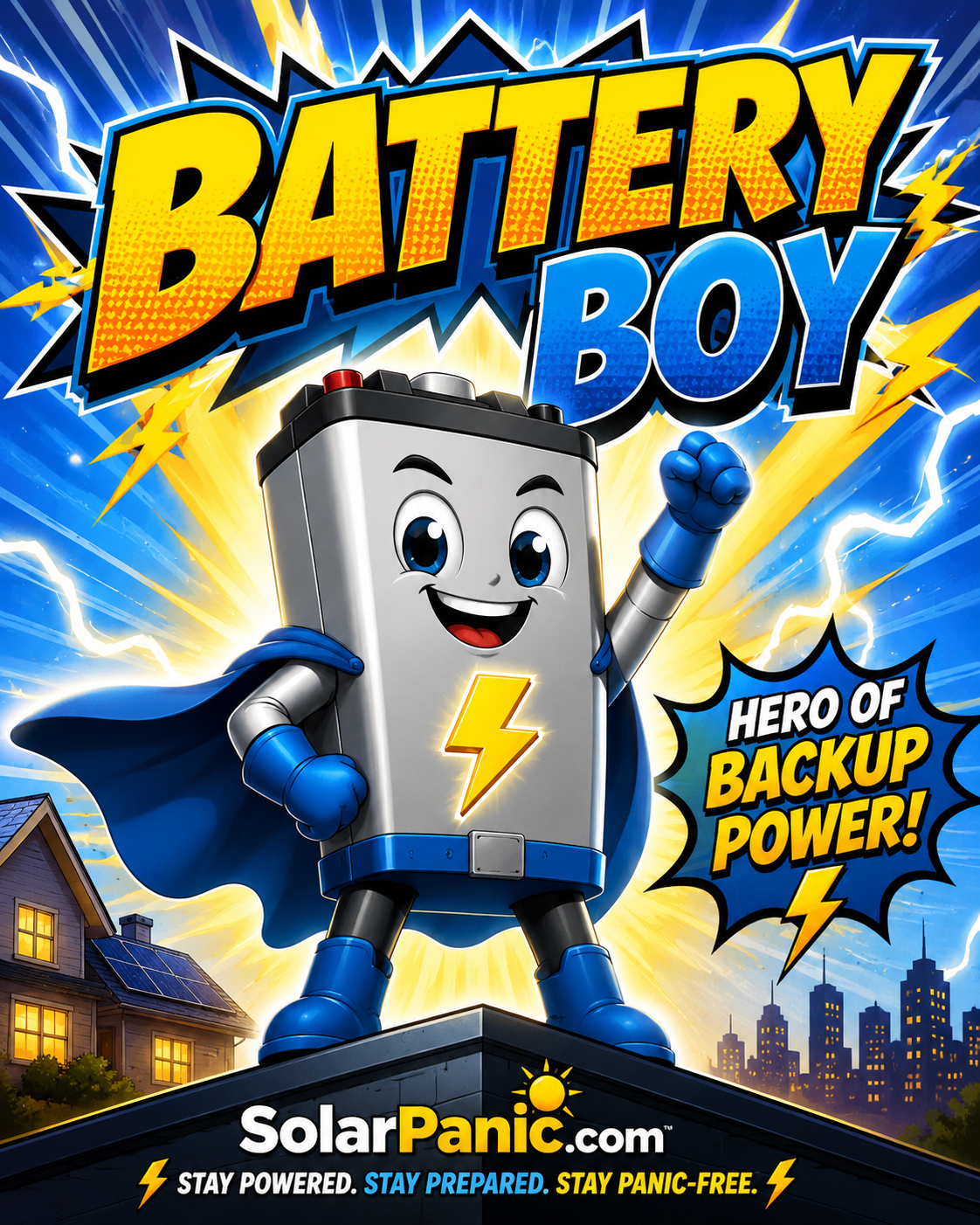
Battery backup starts with a practical question: what should keep working if the grid fails or the rate period gets expensive? The answer is not the same for every home or business. A good design separates fantasy from actual needs.
- Refrigerator and freezer loads
- Internet, modem, router, and communication
- Selected lighting circuits
- Garage door or gate access
- Medical or essential equipment where applicable
- Security, pumps, controls, or business-critical loads
Solar Sensei rule: do not ask the battery to be a superhero for everything. Ask it to be excellent for the loads that matter most.
The Blackout Scene
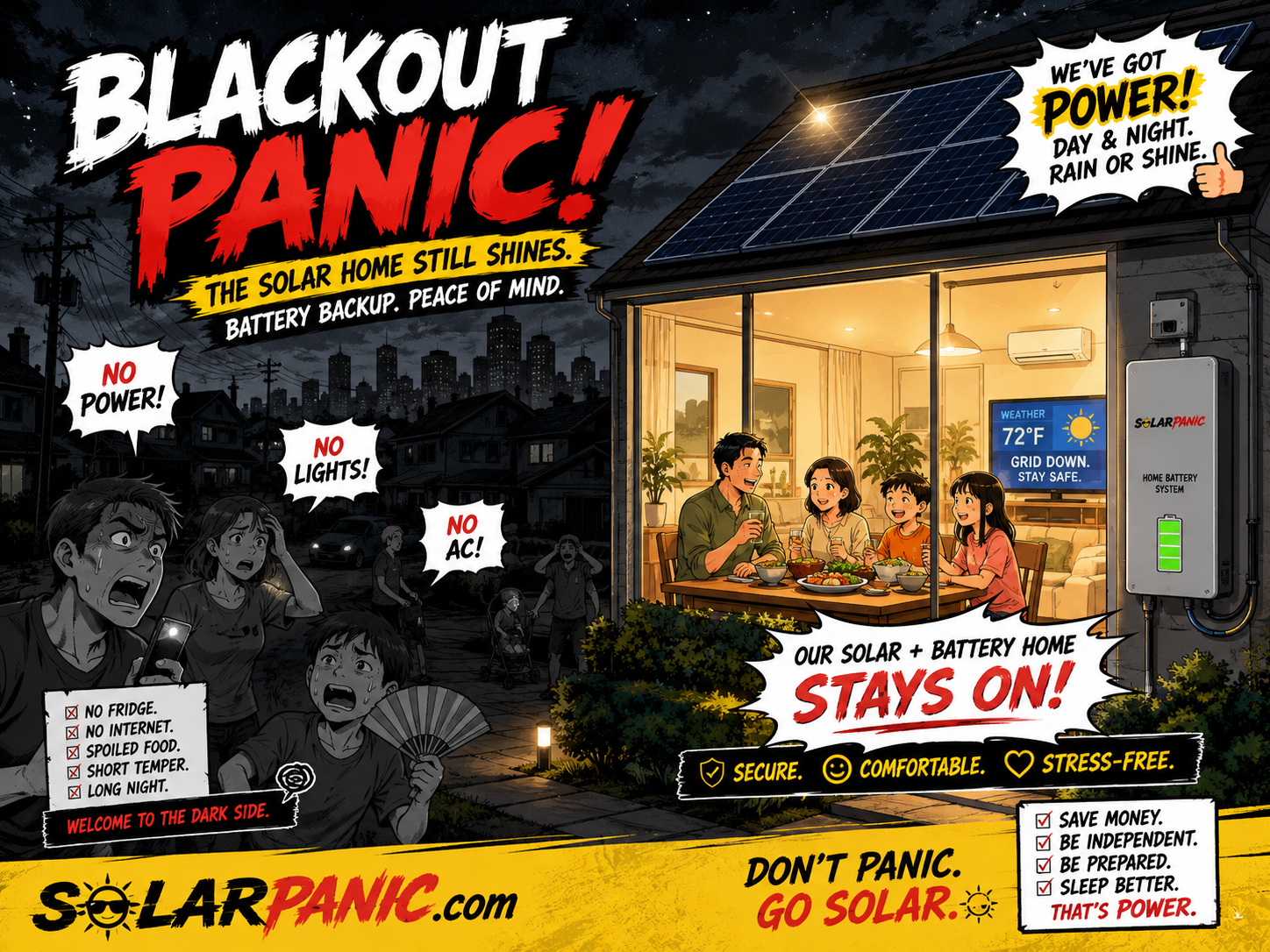
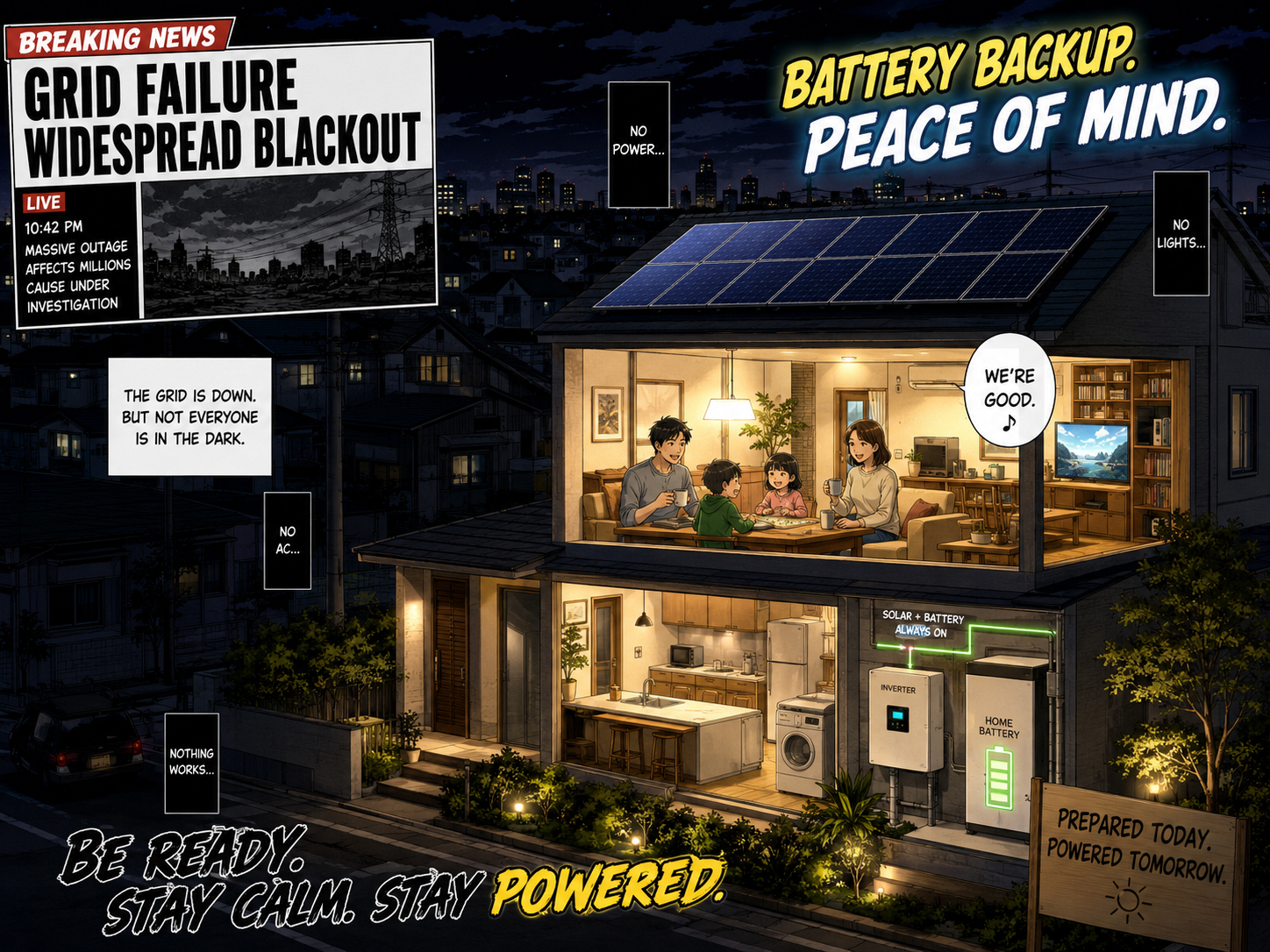
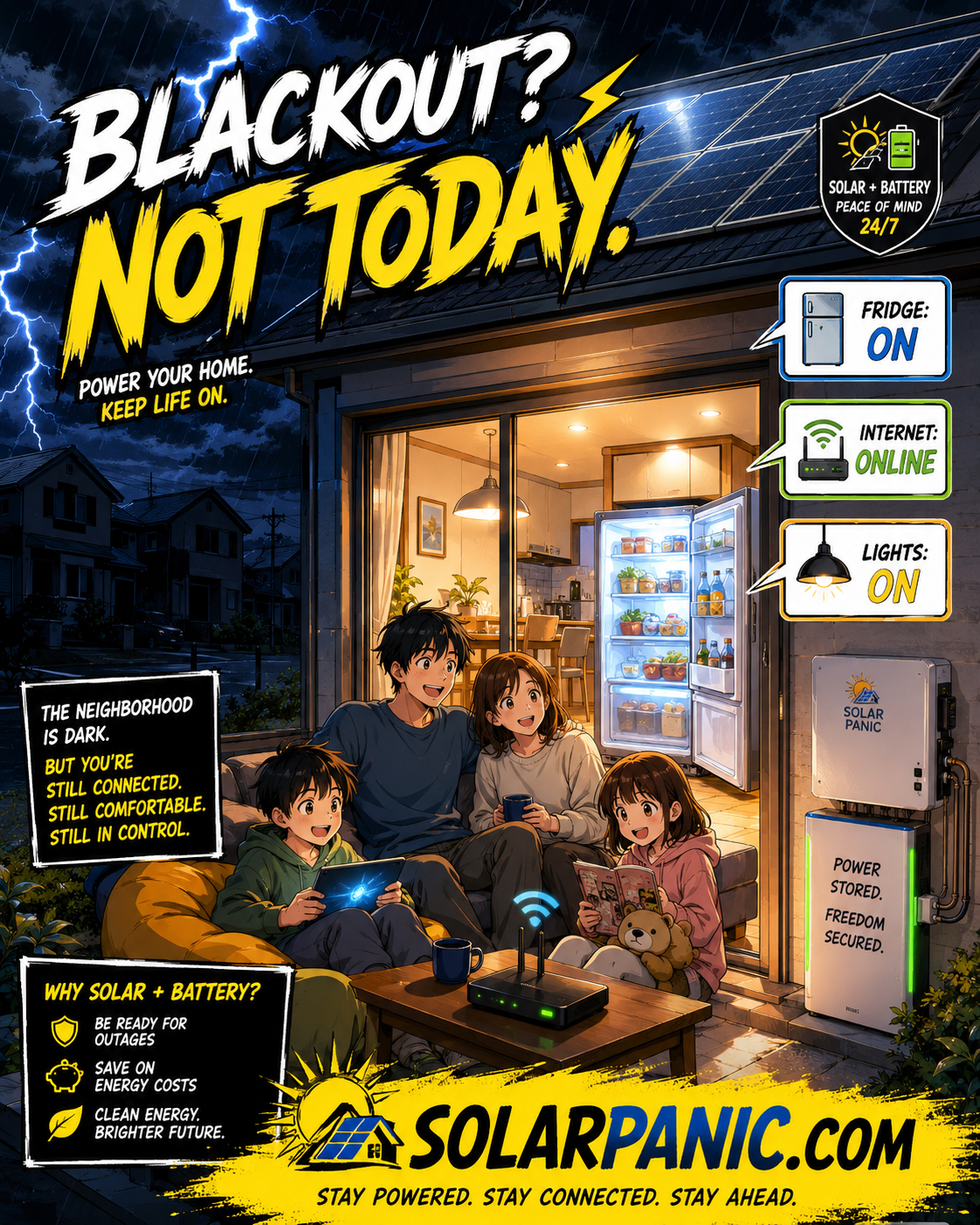
The neighborhood goes dark. The fictional utility headquarters immediately prepares a statement about “unexpected circumstances.” Chairman Kilowatt reaches for the fog machine.
But one solar battery home is still useful. The refrigerator is cold. The internet is alive. The lights are calm. The house is not pretending the outage did not happen. It simply has a better plan.
Peak Rates and Timing
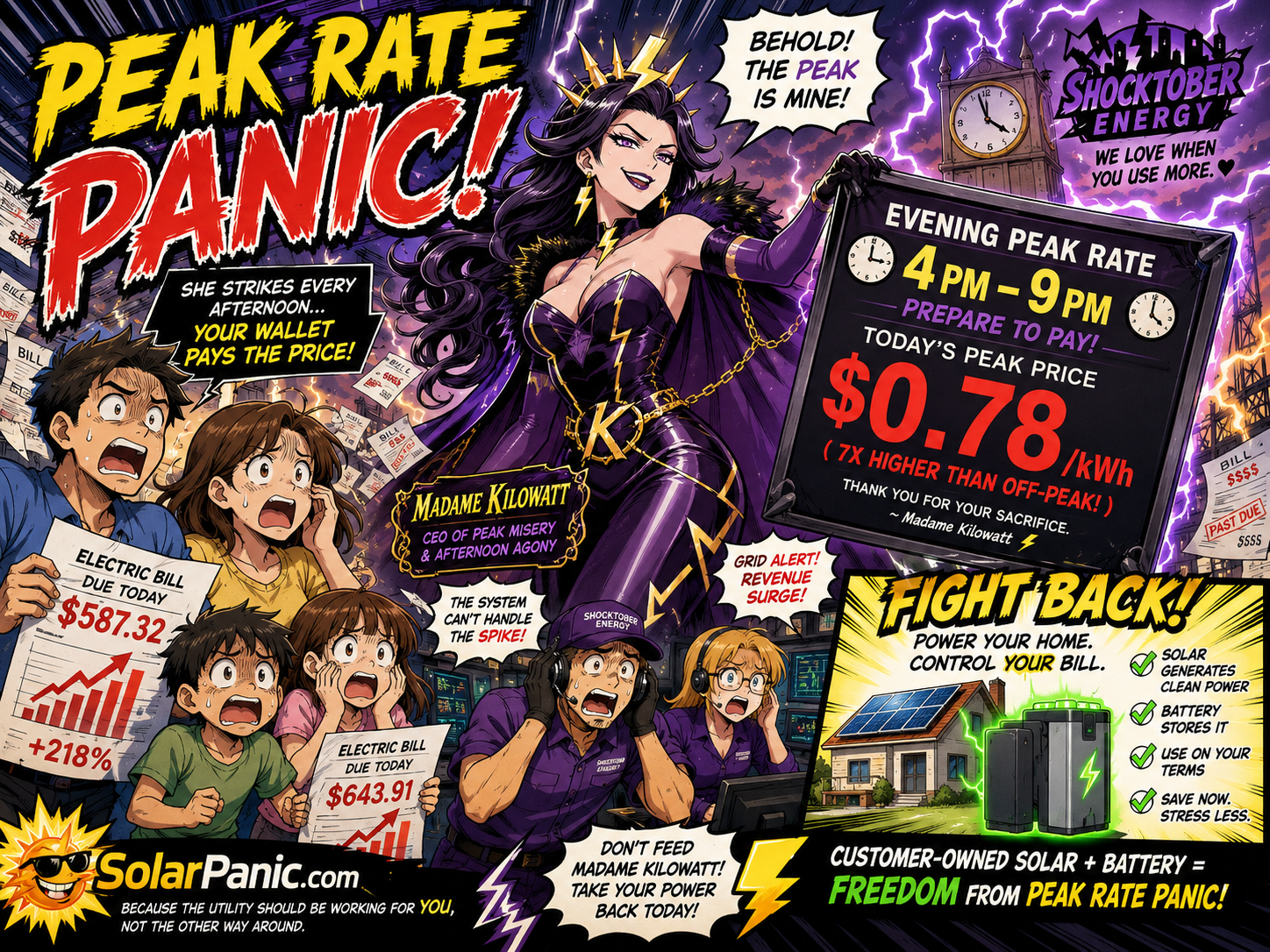
Batteries also matter because timing matters. Solar produces during daylight. Peak-rate pressure often arrives later. A properly designed battery system can help shift stored energy into the period when the fictional villain Madame Peak Rate is stomping around the bill.
That is why the monopoly panic is not just about energy. It is about timing, ownership, and customer options.
Battery Backup Is a Design Conversation
SolarPanic is comedy, but the design conversation is serious. Battery backup needs real planning: load selection, inverter capability, battery capacity, panel routing, inspection, code compliance, and customer expectations.
- What circuits should be backed up?
- How long should they operate?
- Will solar recharge the battery during the day?
- What loads are too large or unrealistic?
- What happens during multiple cloudy days?
- How should the system be safely installed?
“They are designing around reality!” screams the Permit Goblin. “How am I supposed to delay that?”
Business Backup
Businesses have their own battery questions. A small office, shop, medical suite, warehouse, restaurant, or service company may care about different loads and different timing. Battery design can support resilience, reduce peak stress, and keep essential operations from being completely helpless when power gets weird.

Why the Fictional Utility Panics
A battery gives the customer more control over time. That is the part that makes MegaWatt Monopoly sweat. Solar gives the customer production. Batteries give the customer timing. Together, they make the customer more prepared and less passive.
Punchline: the monopoly wanted a helpless customer. Battery Boy brought a plan.
The Bonus Episode Connection
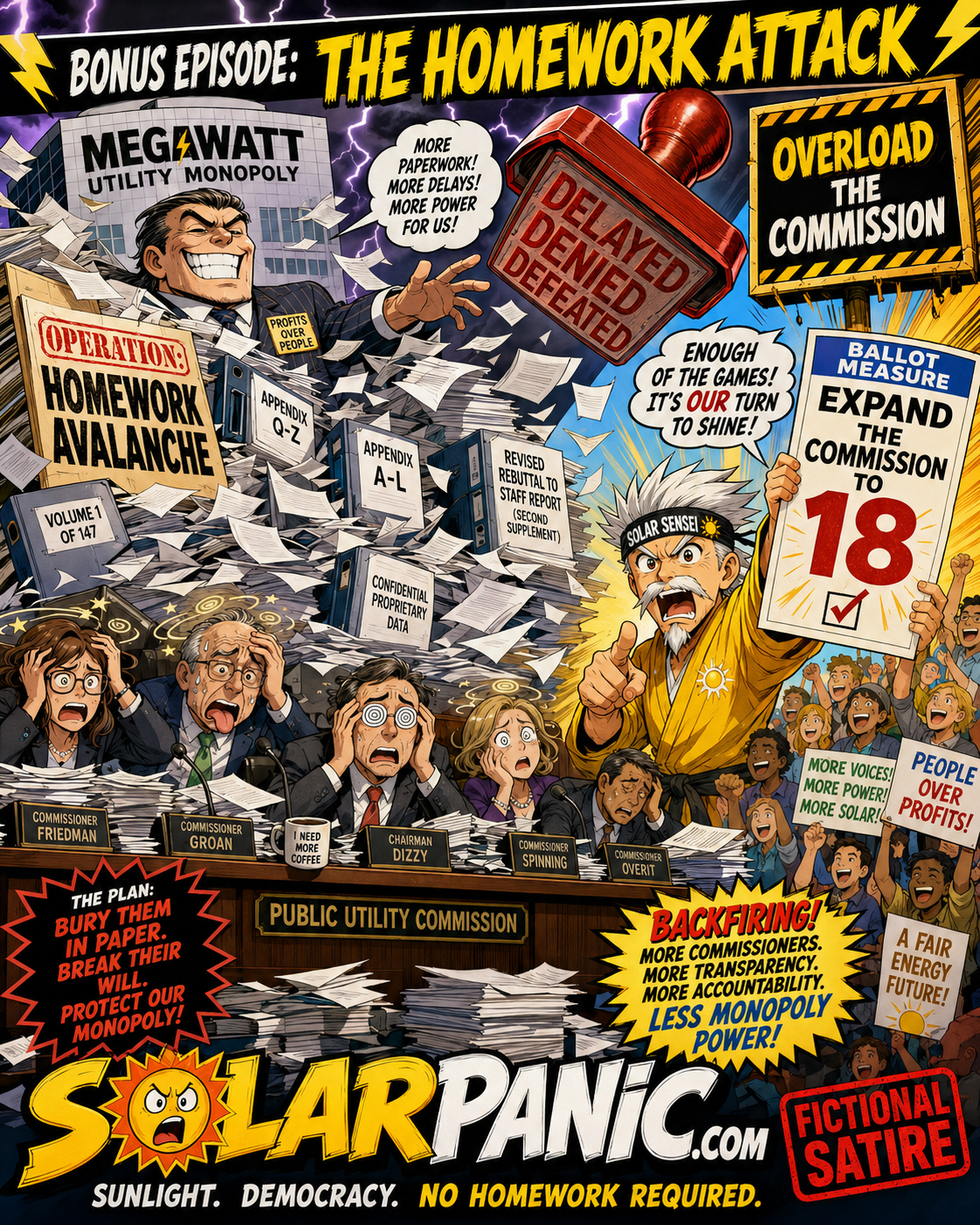
Battery backup leads naturally into public oversight. Once customers understand system design, they start asking policy questions. Why are batteries treated like threats? Why are solar customers punished for using less monopoly power? Why does every rule fight come buried in paperwork?
That is why SolarPanic now leads with the Homework Attack and the people’s answer: expand the commission to 18.