From Rooftop Sunlight to Useful Power
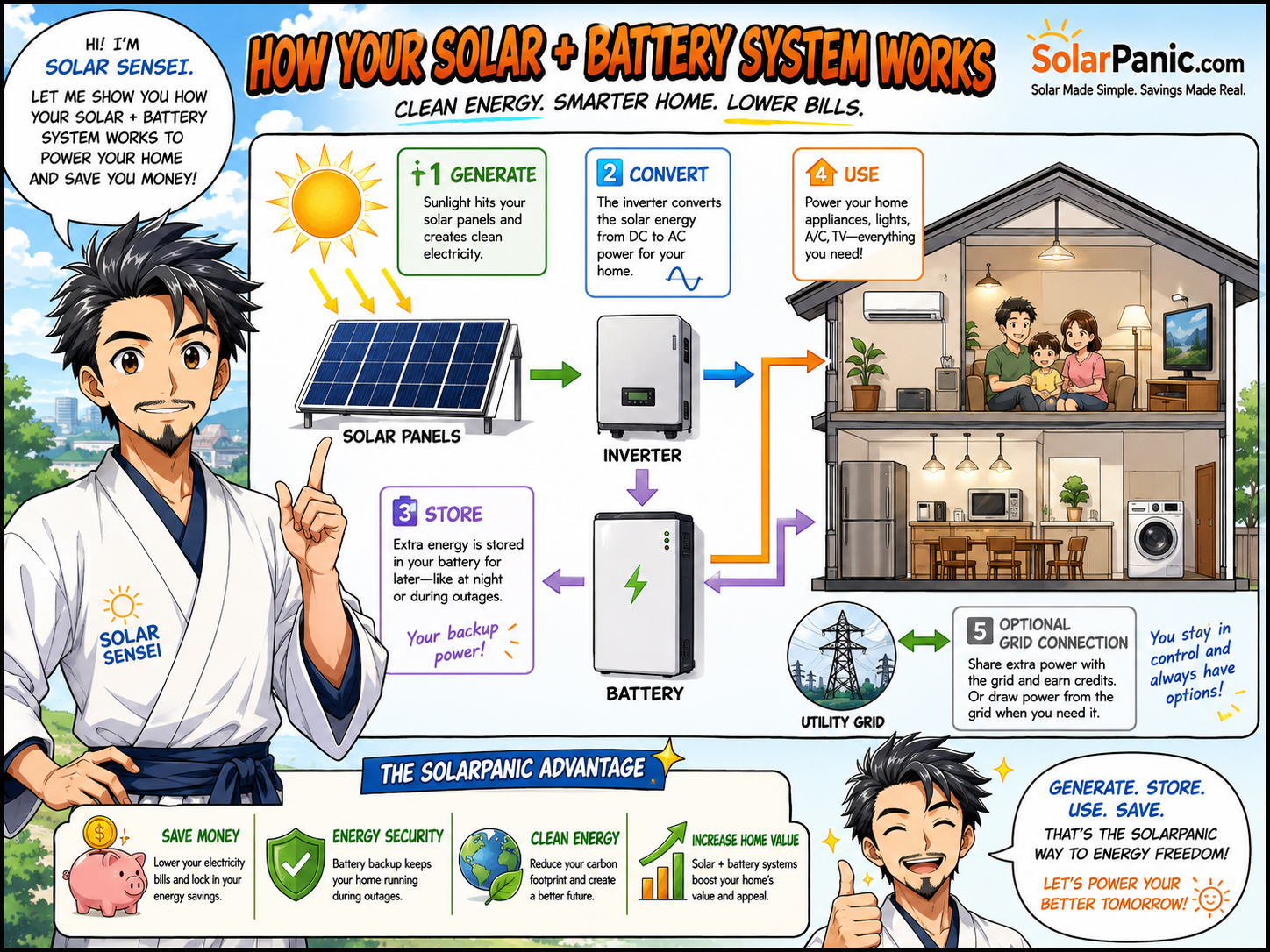
A solar and battery system is not one magic box. It is a coordinated design. Solar panels collect sunlight. The inverter converts power into usable form. Batteries can store energy. A backed-up load panel can support selected circuits. Monitoring helps the customer understand what is happening.
“The monopoly survives on mystery,” Solar Sensei says. “The customer survives on clarity.”
That is why SolarPanic uses comedy. The fictional villains make noise. Solar Sensei makes the system understandable.
Step One: Look at the Roof
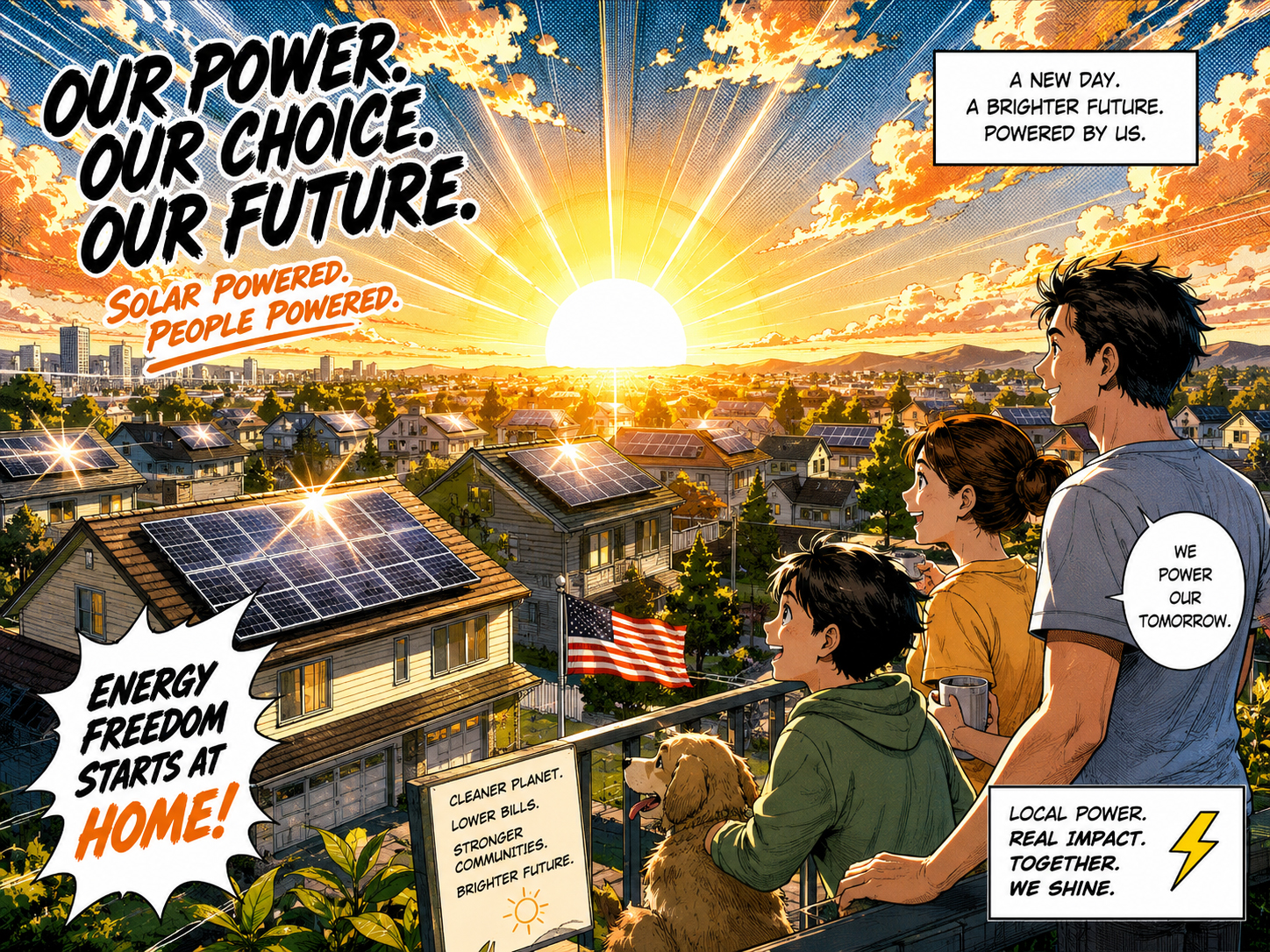
The roof is where most home solar conversations begin. A good design considers available area, shade, orientation, roof condition, electrical access, and whether the site is appropriate for solar.
In the SolarPanic universe, this is the moment Chairman Kilowatt starts sweating. A customer has looked up and realized the roof can do work.
- How much usable roof area is available?
- Is there shading from trees, buildings, or equipment?
- What is the roof condition?
- Where can equipment be safely located?
- How does the system connect to the electrical service?
Step Two: Understand the Loads
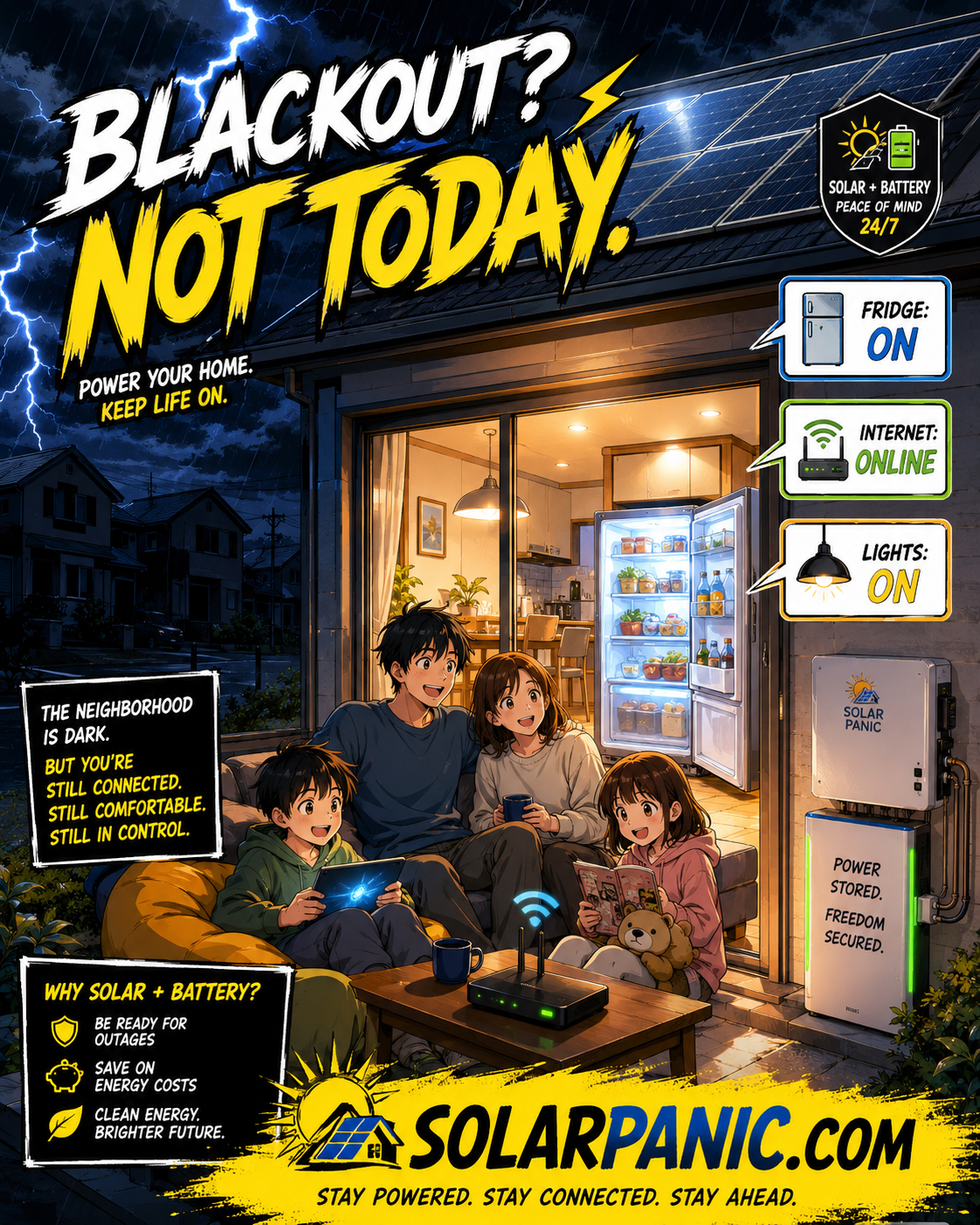
Solar Sensei always asks what the customer is trying to power. A home, business, or facility has real loads with real behavior. Some loads are ordinary. Some loads are heavy. Some loads are critical. Some loads should not be part of the backup plan.
The most important question is not “how big is the battery?” The first question is “what should stay on?”
- Refrigeration and freezers
- Internet and communications
- Selected lighting
- Garage doors, gates, pumps, or controls
- Business-specific critical equipment
- Medical or essential equipment where applicable
Step Three: Size the Solar
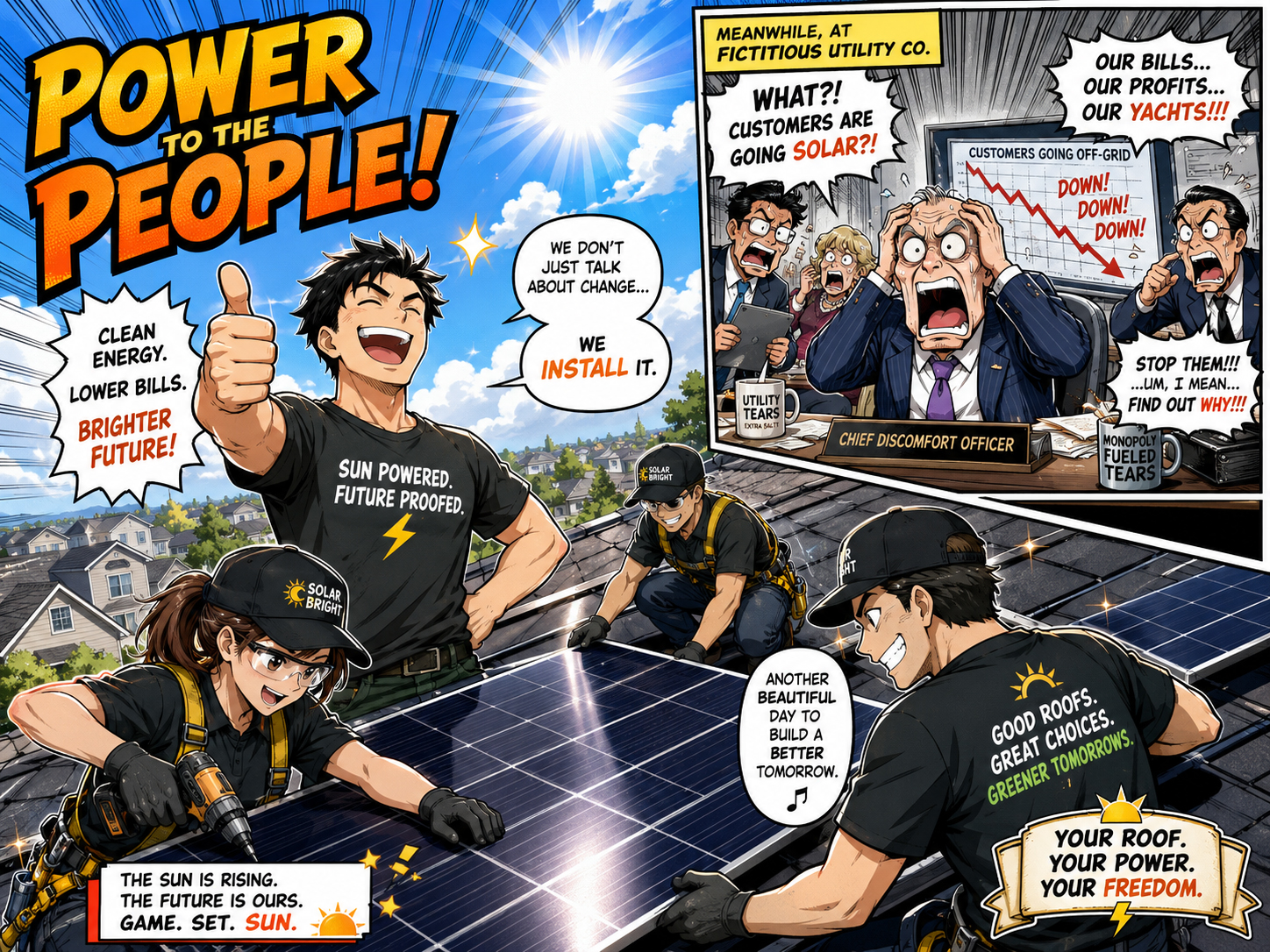
Solar production depends on system size, location, sunlight, roof conditions, equipment, shading, and season. A solar design should match the customer’s site and goals, not a cartoon promise.
The fictional monopoly wants customers to think solar is mysterious. Solar Sensei treats it as design work: estimate production, understand usage, and explain the expected role of the system.
Step Four: Add Battery Strategy
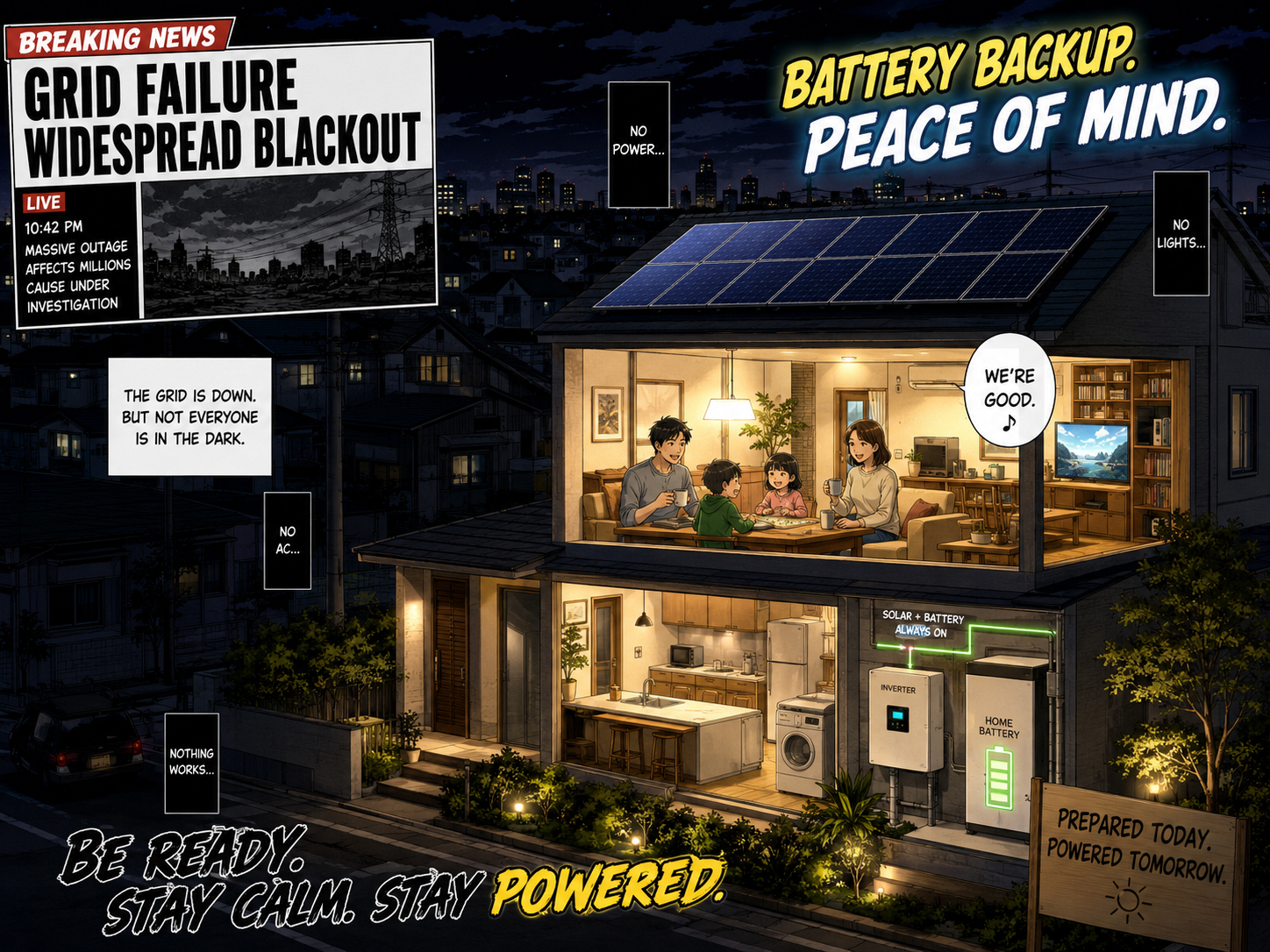
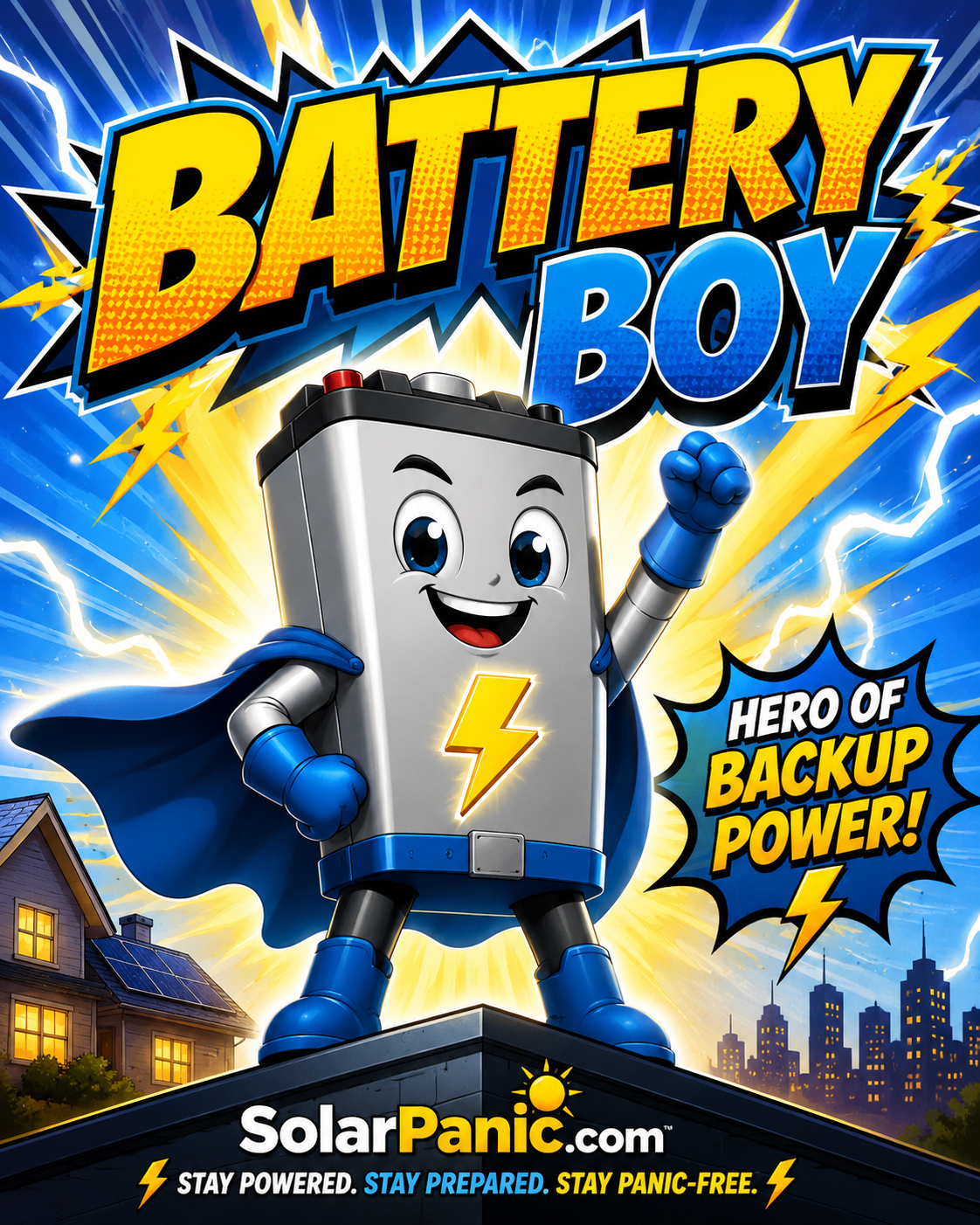
Batteries help with timing and backup. They can store energy, support selected critical loads, and help customers think more clearly about peak-rate periods and outages. But battery systems must be designed honestly.
- How much capacity is installed?
- Which loads are backed up?
- How long should backup last?
- Can solar recharge during daylight?
- What happens during long outages or cloudy weather?
- What loads should the customer avoid during backup operation?
Battery Boy says: “Do not ask me to power everything forever. Ask me to support the right things well.”
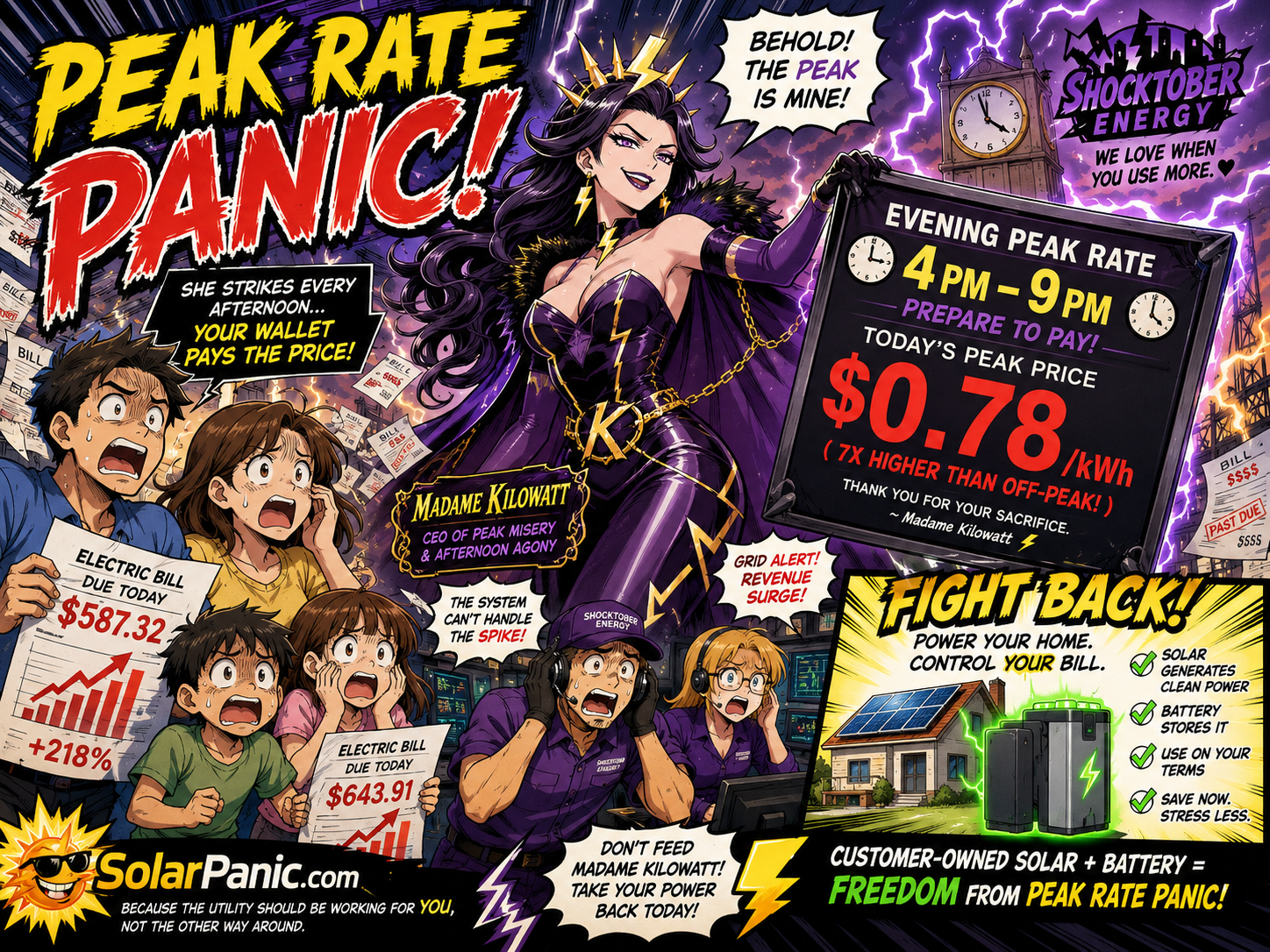
Step Five: Plan for Peak-Rate Timing
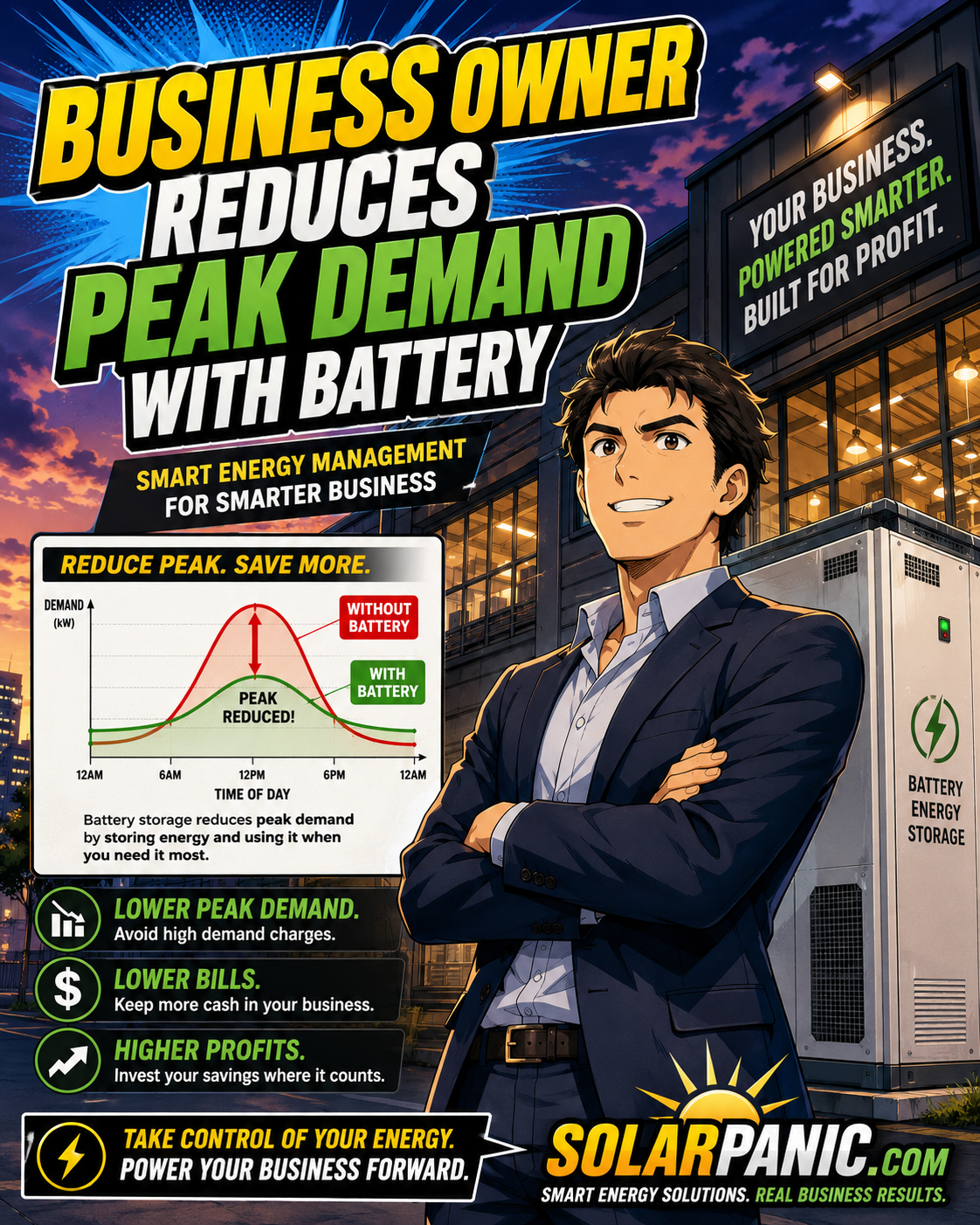
Energy is not only about total usage. Timing matters. Solar may produce during the day. Expensive usage may happen later. A battery can help the customer think about when energy is stored and when it is used.
Madame Peak Rate hates this because her power comes from confusion. Once the customer understands the clock, the bill becomes less mysterious.
Step Six: Permits, Inspection, and Safety
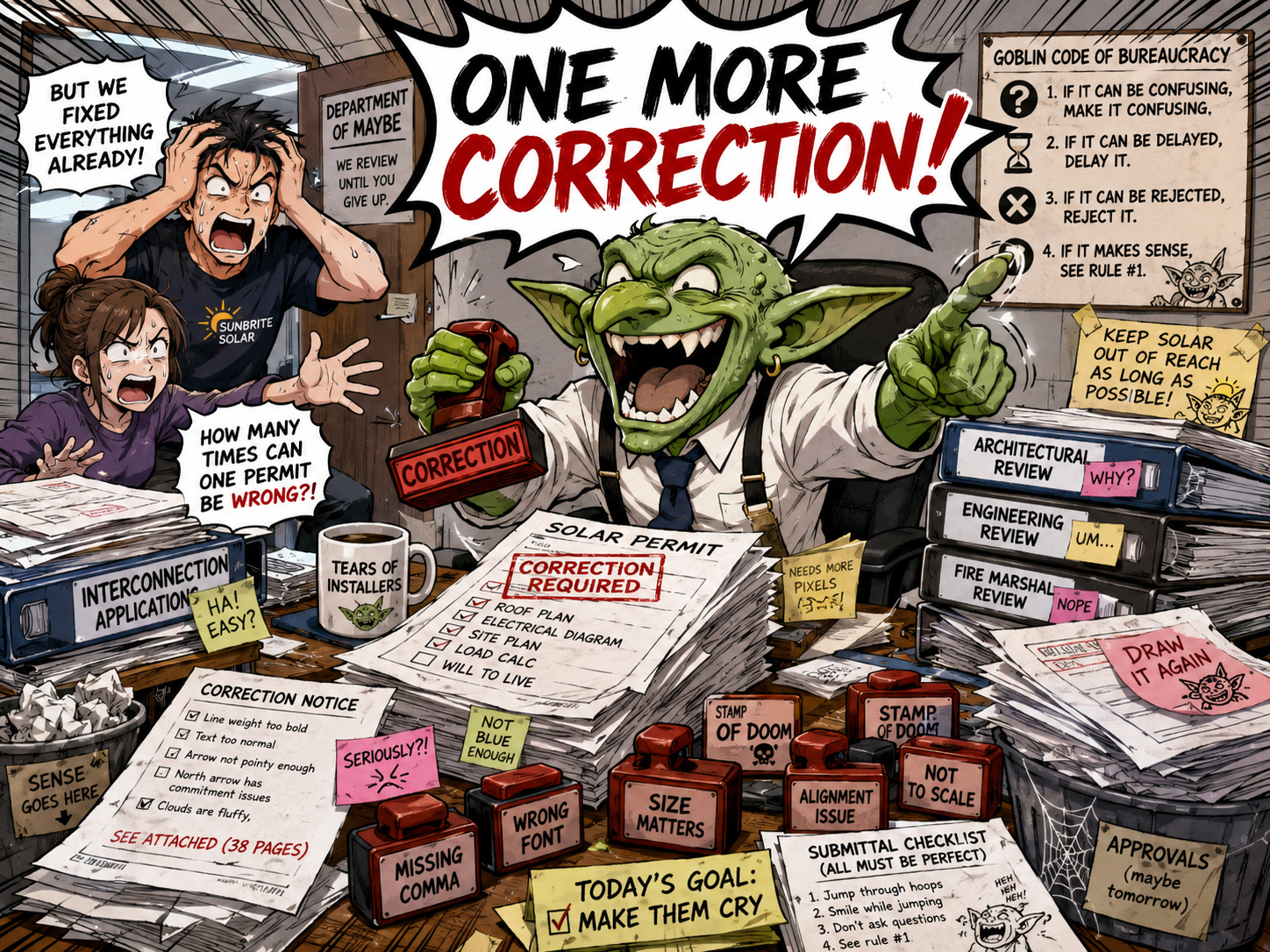
SolarPanic makes fun of the Permit Goblin, but safe permitting and inspection are serious. A good project needs clear documents, proper equipment, code-aware installation, and follow-through.
Safety is not the enemy. Confusion is the enemy.
The Permit Goblin is funny because he represents chaos, not safety. Solar Sensei defeats him by making the work clear enough to review.
Step Seven: Installation and Commissioning
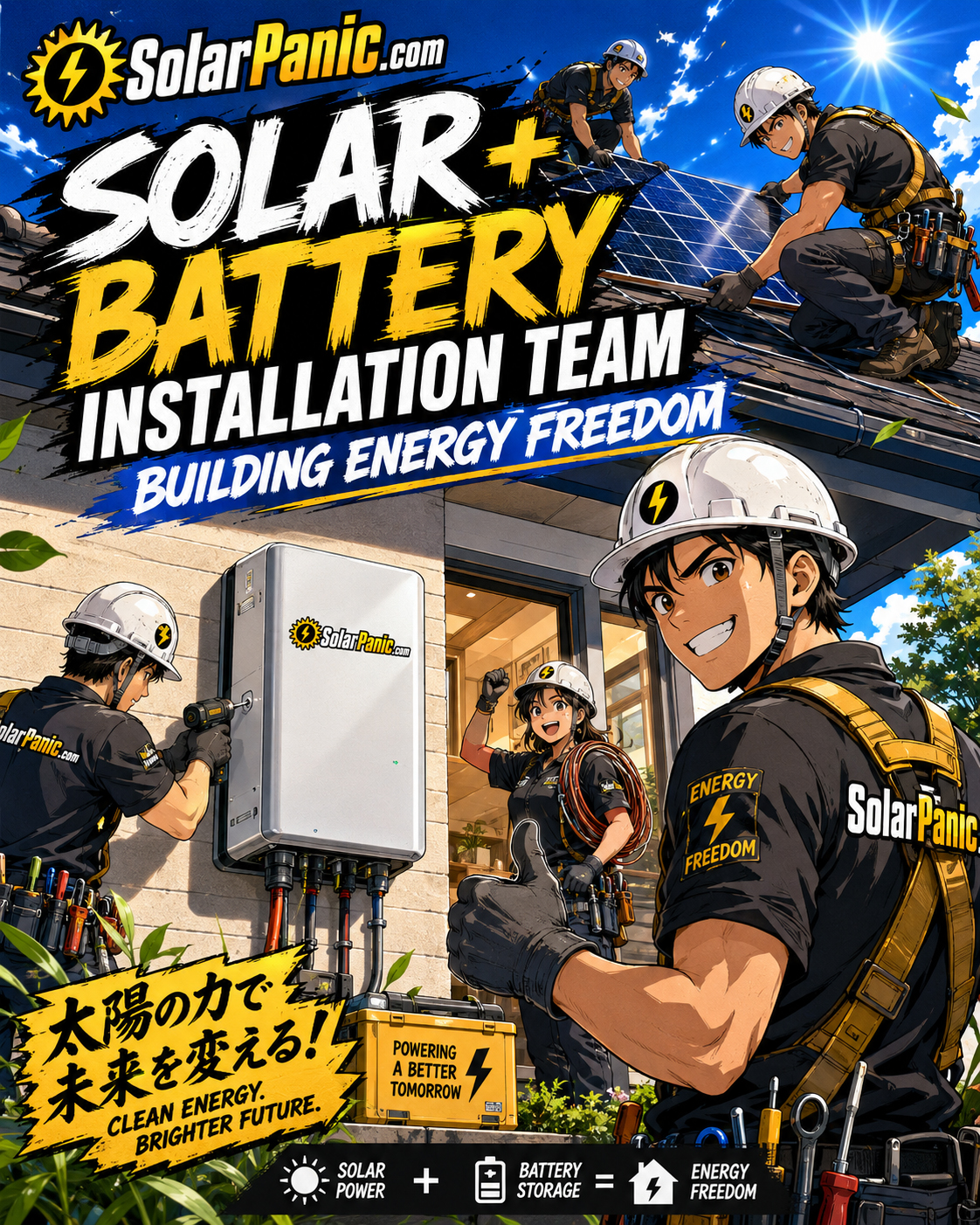
Installation turns the design into a working system. Solar panels, racking, electrical equipment, inverter, battery, backed-up loads, labeling, monitoring, and inspection details must come together correctly.
This is where professional workmanship matters. The manga can be wild. The installation should not be.
Step Eight: Customer Understanding
A completed system is strongest when the customer understands it. What is backed up? What is not backed up? What should the customer avoid during an outage? How does monitoring work? What should be expected during cloudy weather?
Solar Sensei’s final lesson is not dramatic. It is practical.
“The system should not leave the customer confused,” Solar Sensei says.
The Homework Attack Connection
Once customers understand their systems, they begin asking better public questions too. Why are solar customers treated like trouble? Why are batteries framed as threats? Why does public oversight get buried under giant filings?
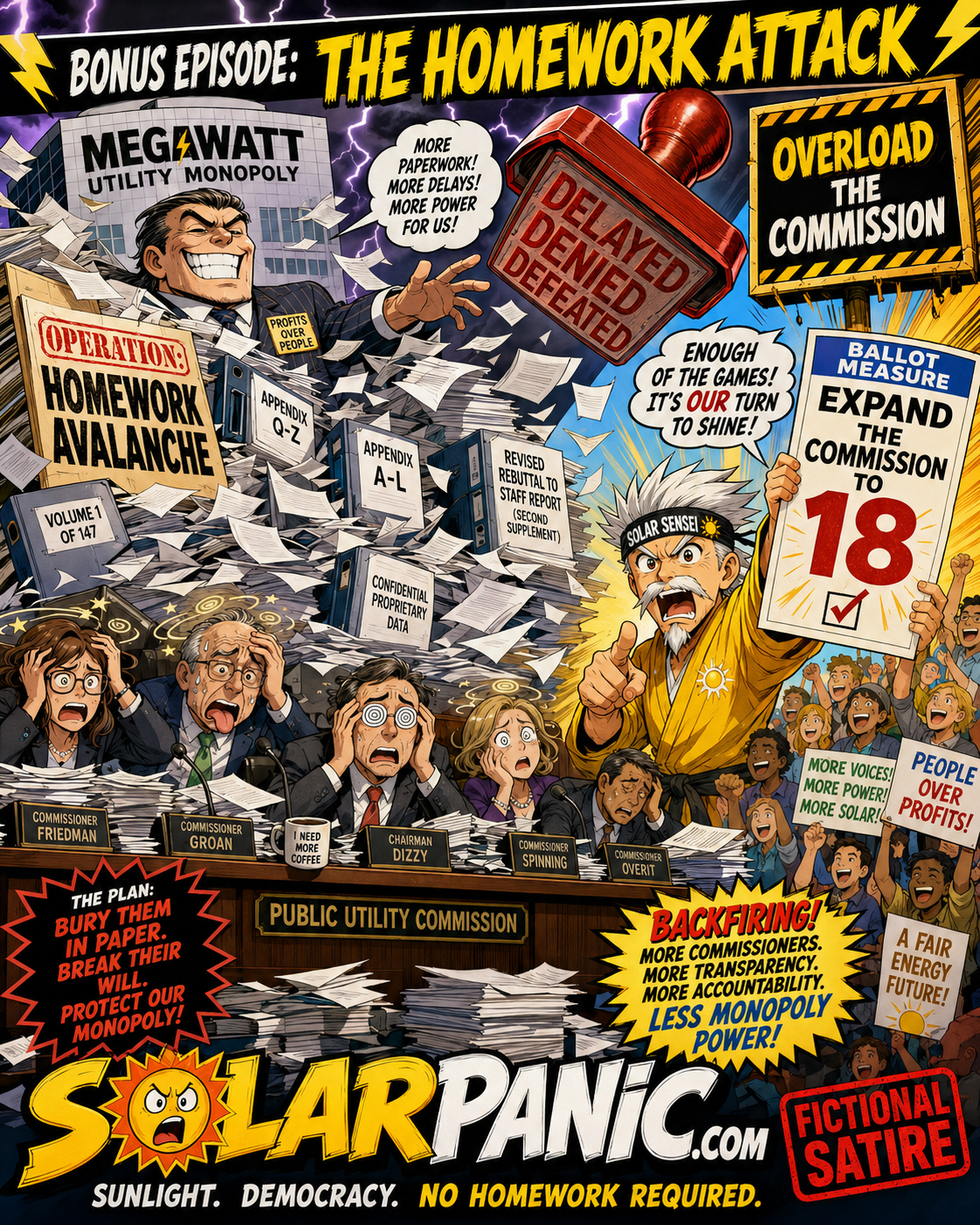
That is why SolarPanic leads with the bonus episode: the fictional utility tries to overwhelm commissioners with homework, and the people answer with Proposition Sunlight and 18 commissioners.
Final caption: no panic, no mystery, no fog — just design the system correctly.