Dump Trucks of Delay
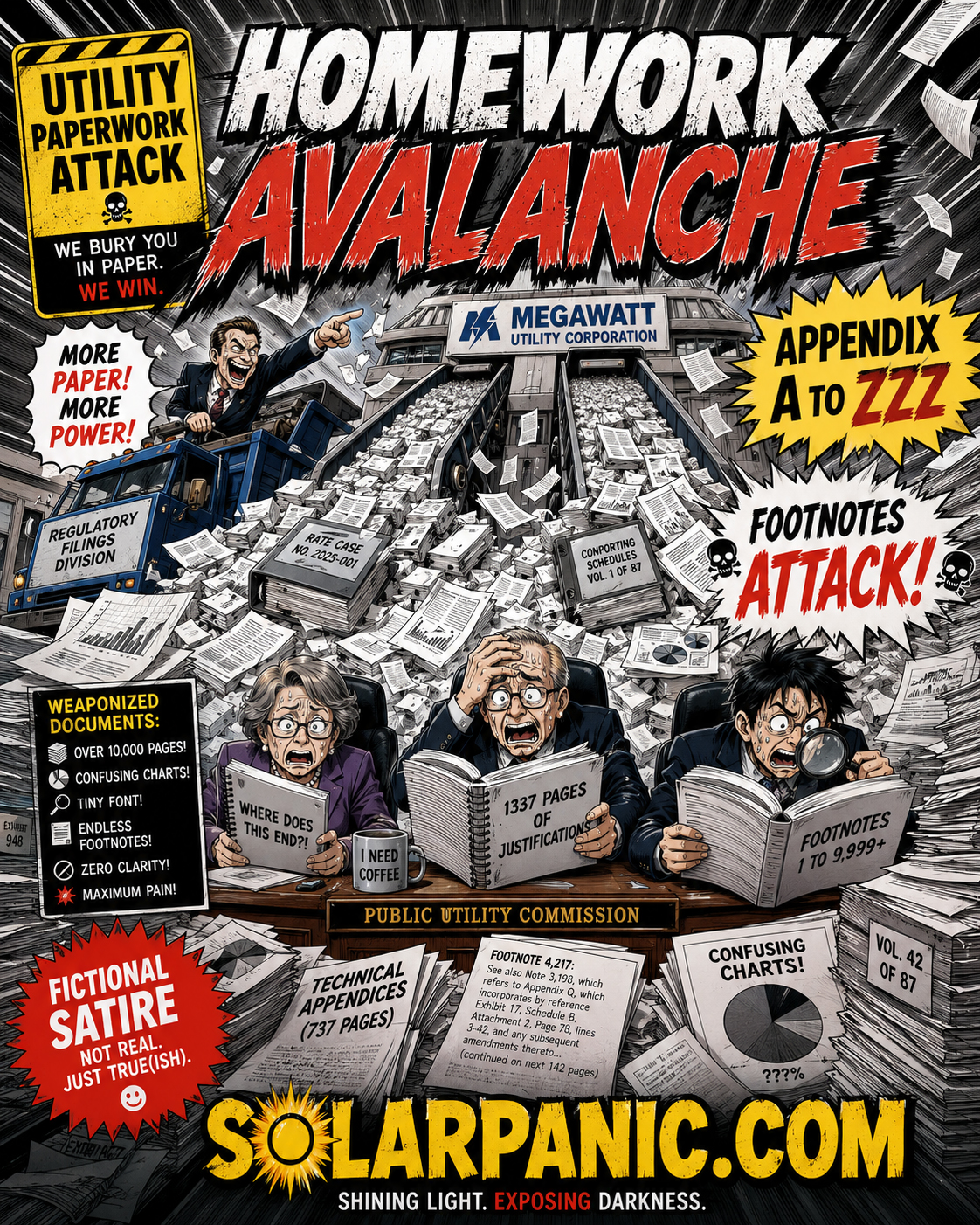
At sunrise, the first truck arrives at the commission building. The driver steps out, lowers the gate, and releases the first wave of binders.
“Special delivery,” the driver says. “One emergency filing, twelve supporting volumes, and a footnote index nobody asked for.”
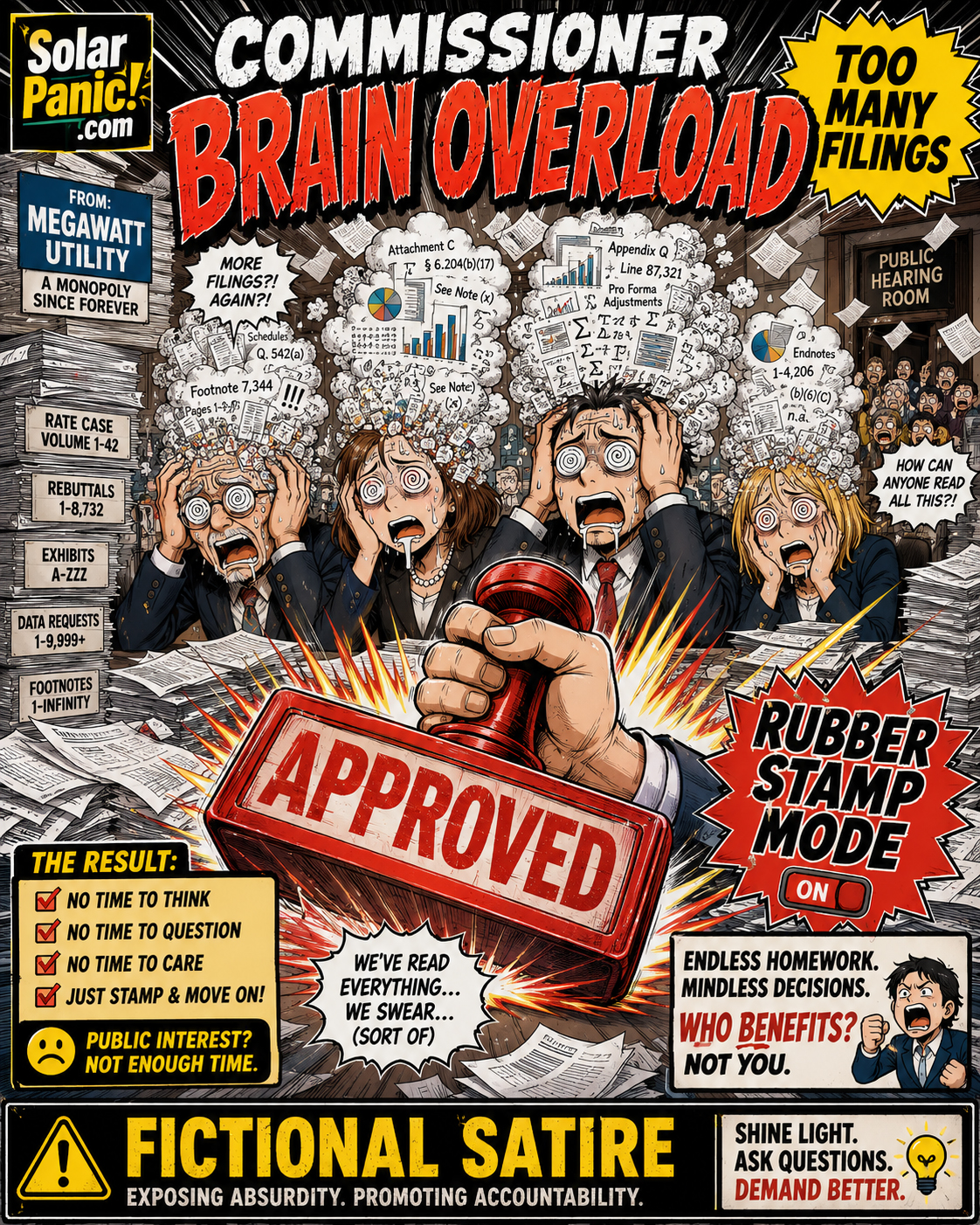
By lunch, the hallway has disappeared. By afternoon, the hearing room looks like a paper canyon. By evening, the commissioners are no longer asking, “Is this good policy?” They are asking, “Where did page 3,912 go?”
The Fictional Filing Stack
The paperwork is not designed to clarify. It is designed to consume oxygen. Every title sounds official. Every section sounds important. Every attachment makes the next attachment harder to understand.
- Emergency Solar Fairness Cost Recovery Proposal
- Revised Revised Appendix to the Revised Tariff Addendum
- Customer Independence Risk Adjustment Framework
- Peak Rate Stability Protection Mechanism
- Grid Modernization Delay Justification Exhibit
- Footnote Schedule for the Appendix Footnote Schedule
Chairman Kilowatt watches from the fictional utility war room with a satisfied grin. The plan is working. A small number of commissioners cannot possibly absorb the avalanche fast enough.
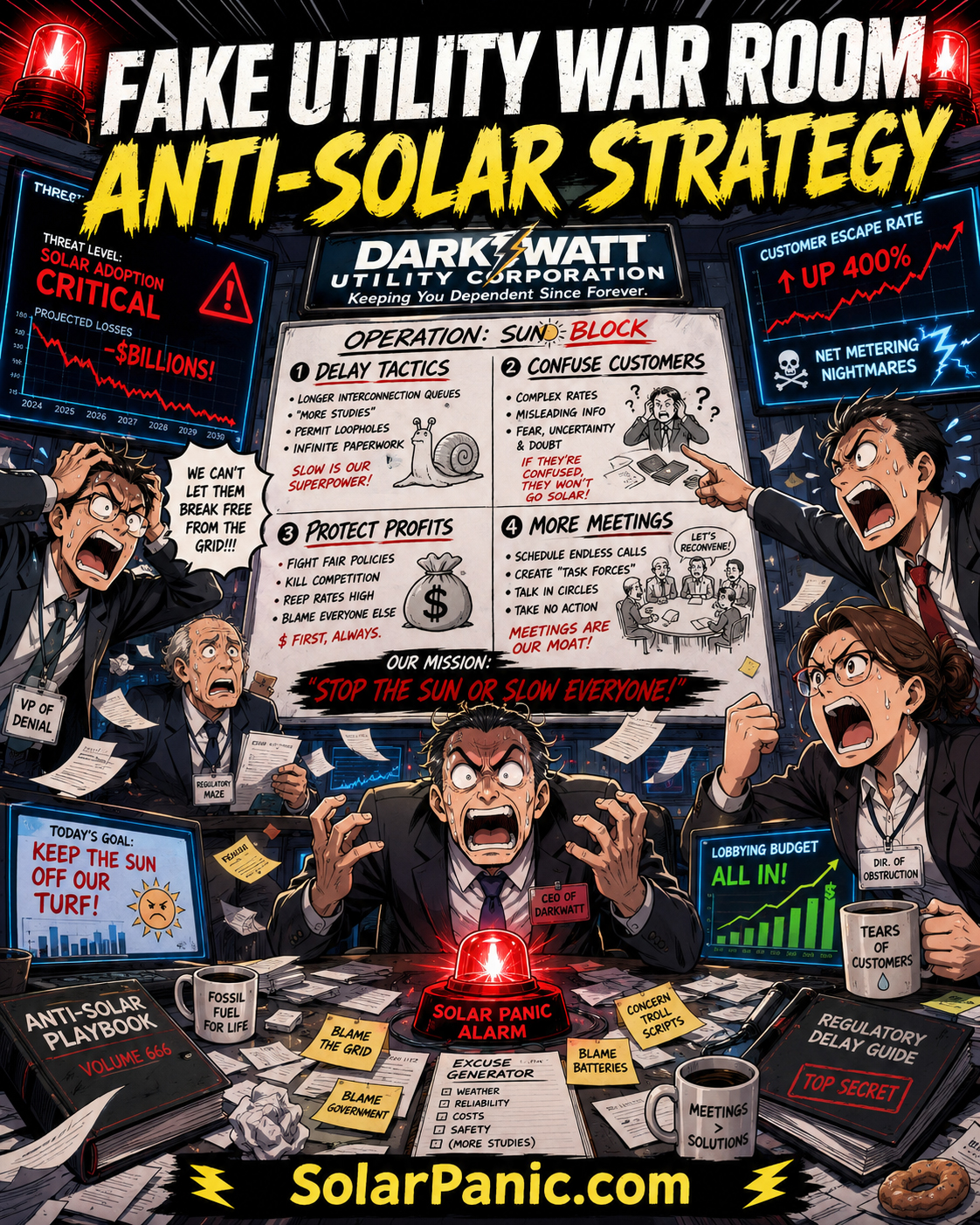
The Real Joke Under the Satire
SolarPanic is wild manga comedy, but the joke has a serious spine. Public regulation only works when the public process is understandable enough to be challenged. When the process becomes too dense, too technical, and too fast, the people who benefit from confusion gain power.
The Homework Avalanche is not about intelligence. It is about capacity. Even smart people can be overwhelmed when the paper machine is bigger than the table.
Solar Sensei’s Diagnosis
Solar Sensei does not shout. He does not panic. He looks at the paper mountain, looks at the exhausted commissioners, and says the obvious thing out loud:
“The monopoly has too much homework for too few desks.”
That is the turning point. The public does not need another secret memo. The public needs a commission big enough to read, question, divide the work, and slow down the rubber stamp.
The Answer: More Desks
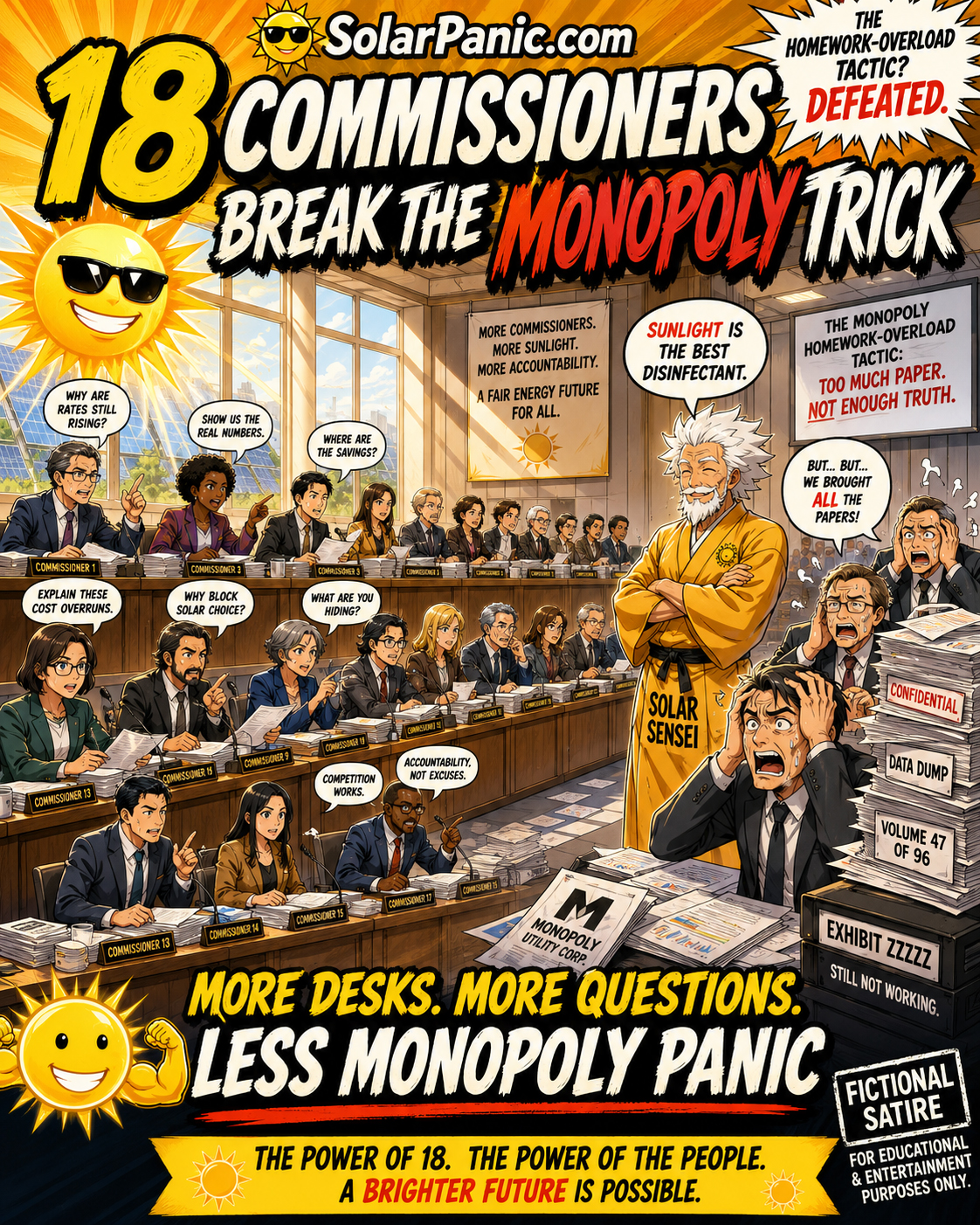
The Homework Avalanche leads directly to Proposition Sunlight: expand the commission to 18 members. Not because 18 is magic, but because one giant paperwork pile is less powerful when many people can read it from many angles.
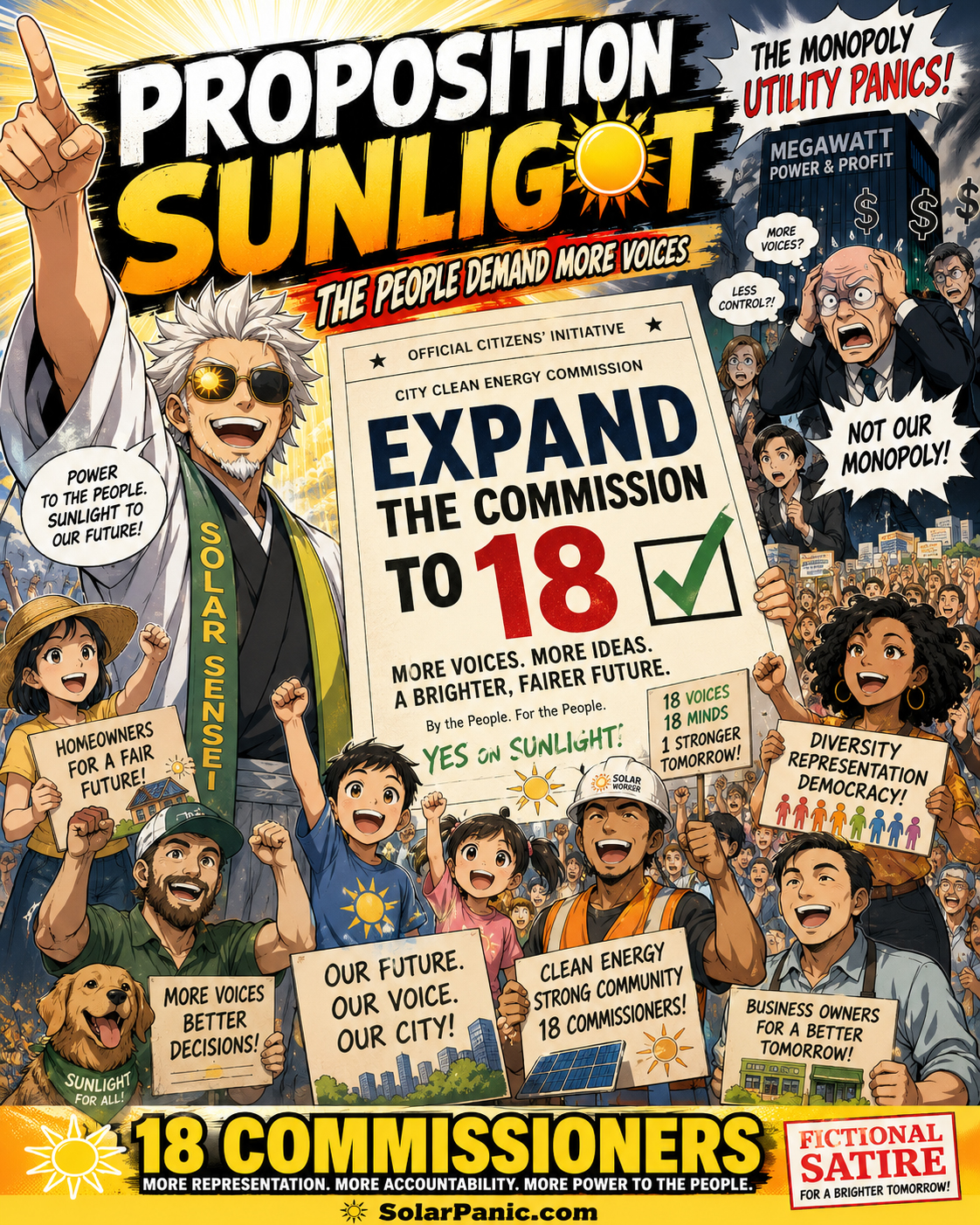
More commissioners means more public eyes. More public eyes means more questions. More questions means the monopoly must explain itself in daylight.
Punchline: They tried to bury the sun in paperwork. The people brought more readers.