The Panic Is About Control
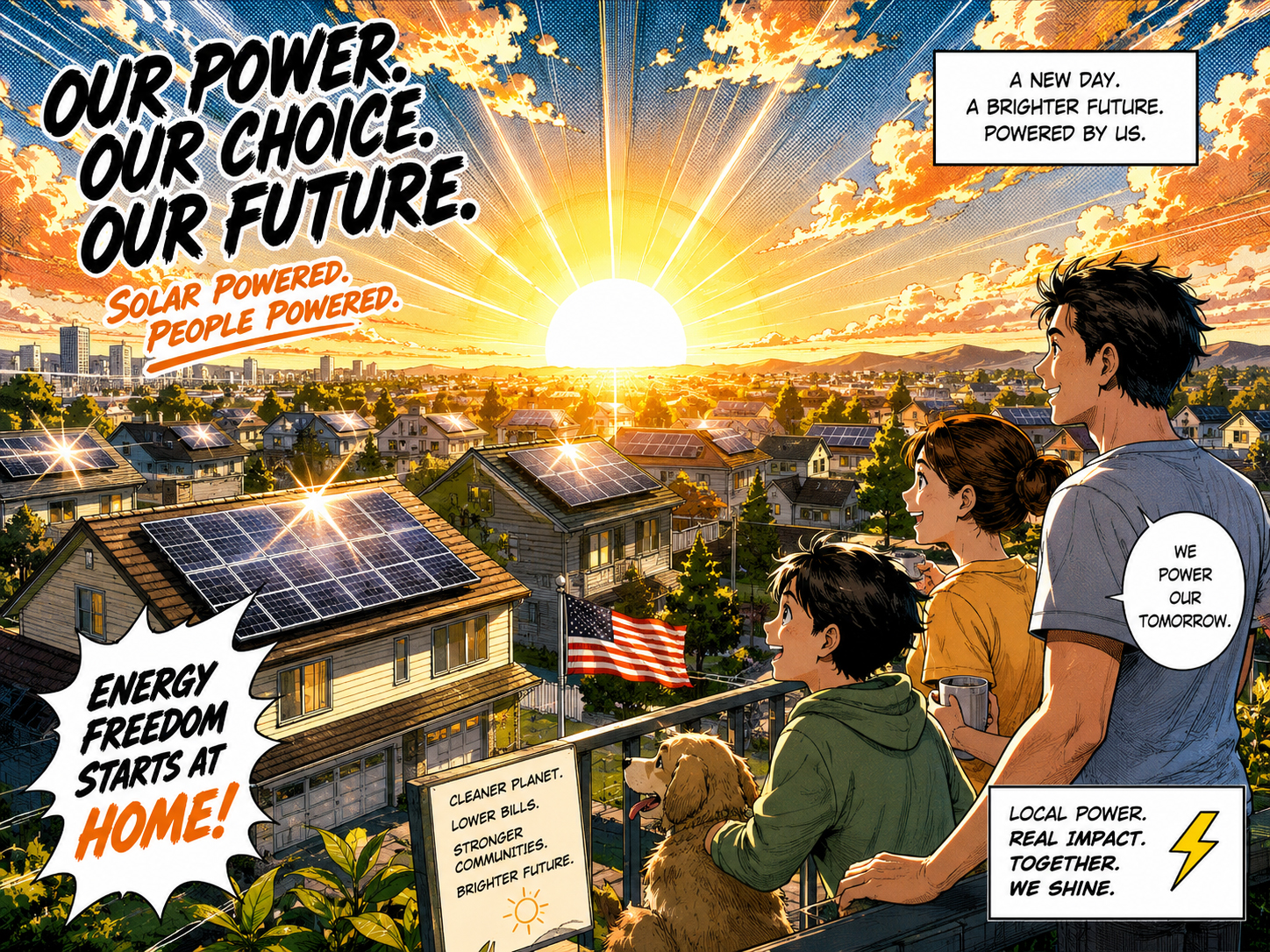
In the SolarPanic story world, the fictional utility company does not panic because solar panels are mysterious. It panics because solar panels are simple. Sunlight hits the roof. Equipment turns that sunlight into usable power. A battery can store some of that power for later. Suddenly, the customer is no longer just a passive meter at the end of a wire.
“If customers own the equipment,” Chairman Kilowatt gasps, “they might start asking why dependence was sold as normal.”
That is the core joke. The monopoly model loves one-way thinking: power comes from them, bills come to you, and questions disappear into a call center. Consumer-owned solar changes the posture of the customer.
Reason One: Solar Makes the Roof Useful
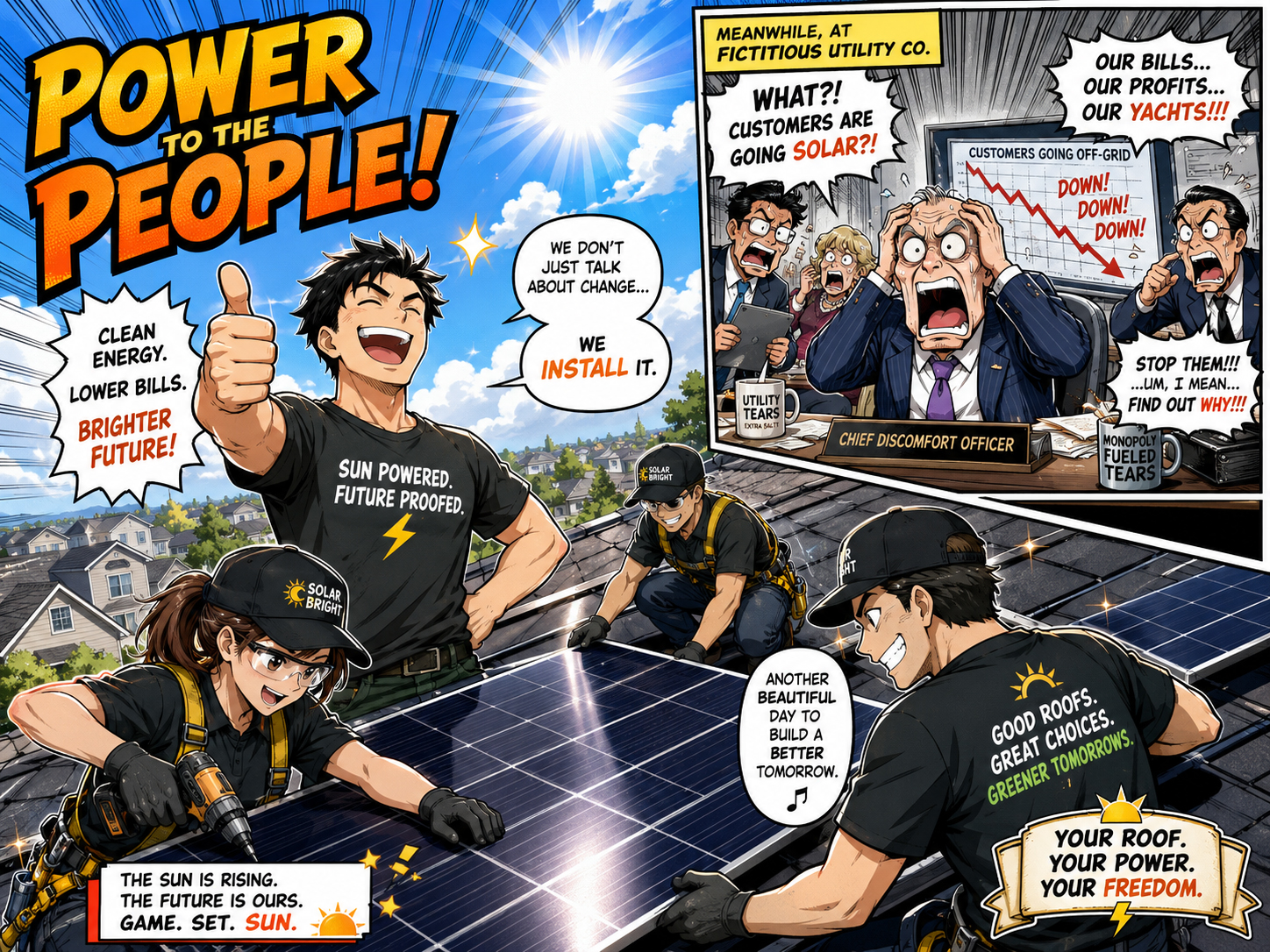
A roof used to be passive. It kept rain out. It got hot. It waited. Then solar arrived and the roof became productive. That one shift is enough to make MegaWatt Monopoly’s fictional strategy department reach for emergency coffee.
Solar turns a building into part of the energy story. The customer is not just buying power. The customer is making some power on-site.
In SolarPanic terms: every panel is a tiny rooftop rebellion.
Reason Two: Batteries Change the Peak-Rate Game
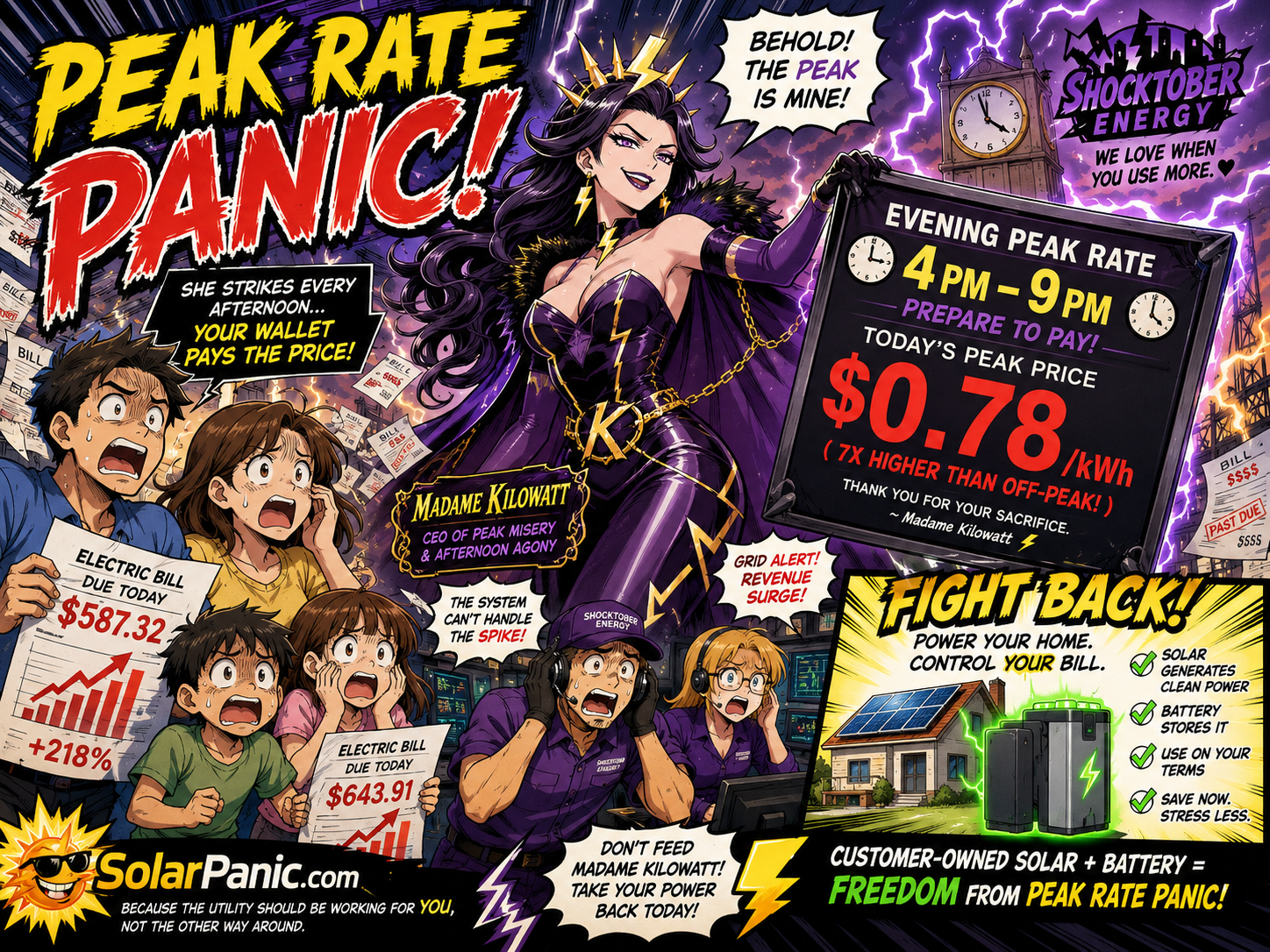
Peak rates are one of Madame Peak Rate’s favorite tricks. She appears in the afternoon and evening with a calculator, a cape, and a bill that looks like it trained at a villain academy.
Batteries do not make every problem disappear, but they give a properly designed system more options. Store energy. Support critical loads. Use stored energy during expensive periods. Stay more useful during outages.
Reason Three: Lower Bills Break the Spell
The fictional monopoly wants the bill to feel like weather: unavoidable, mysterious, and outside your control. SolarPanic laughs at that spell. When customers see that design choices can change their energy life, the old fear starts to crack.
Lower bills are not just dollars. They are evidence. They show that the customer is not powerless.
“Attack of the Lower Bill!” screams the boardroom alarm.
Reason Four: Blackouts Reveal Who Has a Plan
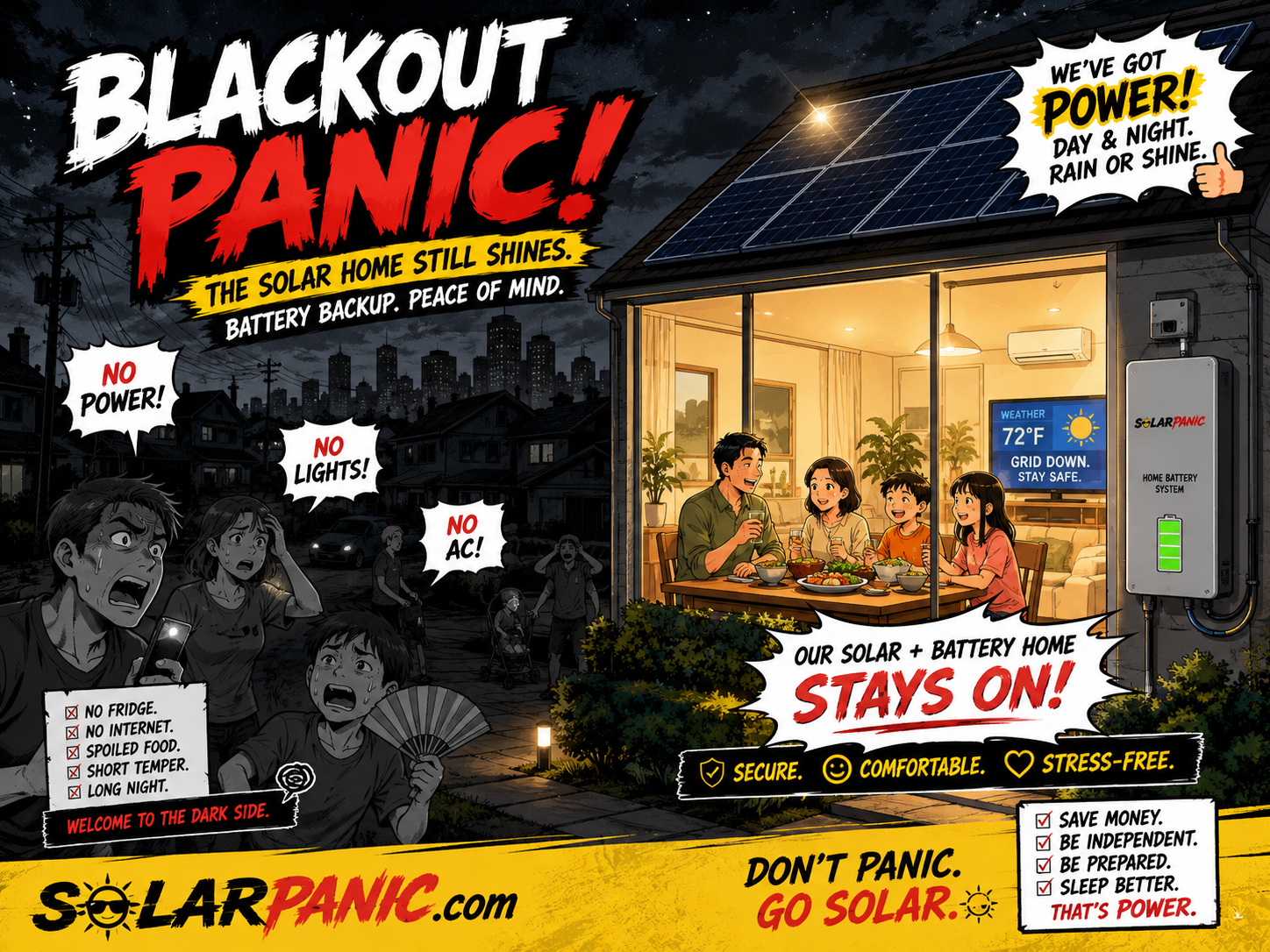
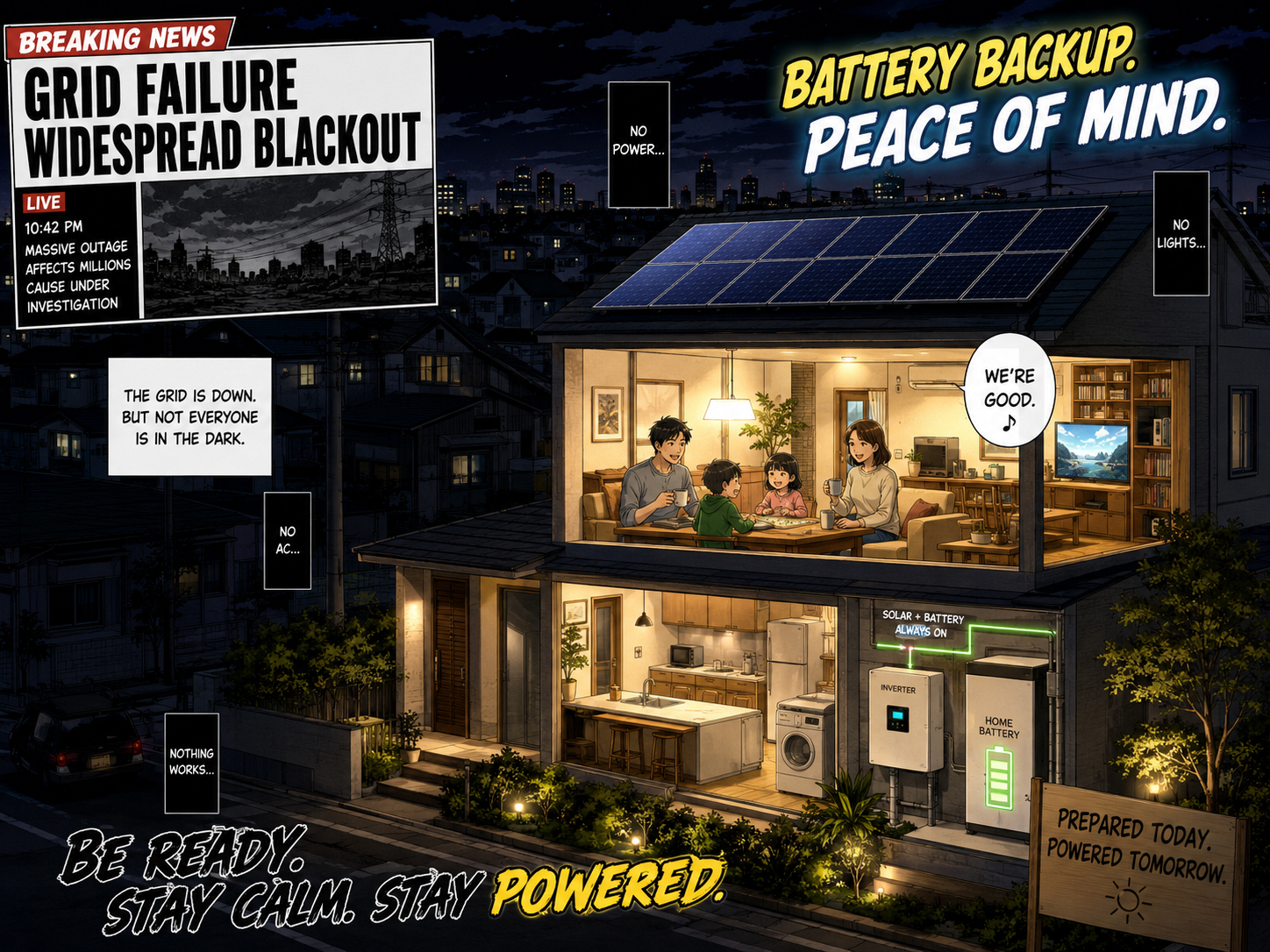
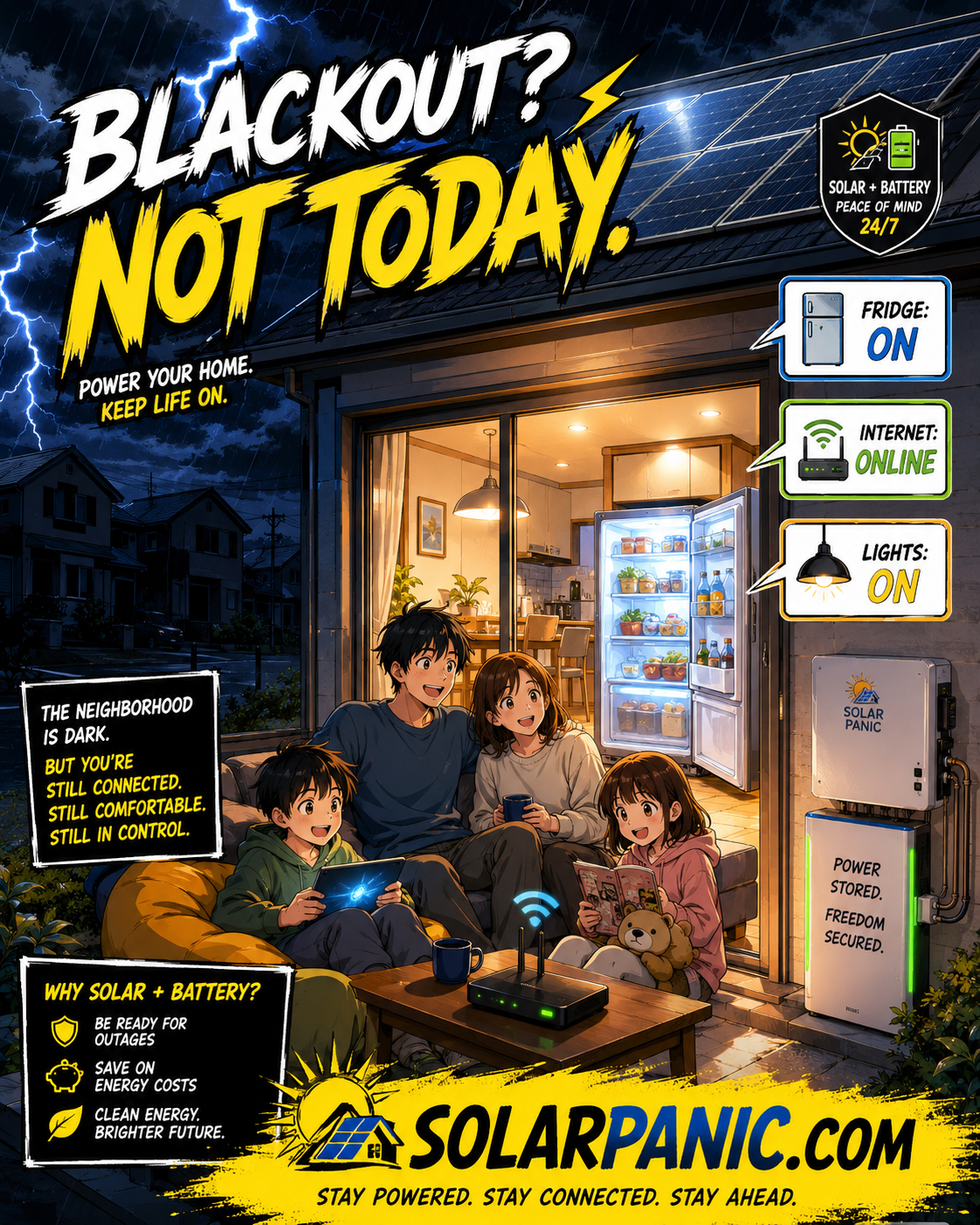
During normal days, the monopoly model hides behind routine. During outages, the question becomes immediate: what still works? Refrigeration, internet, lights, garage doors, medical equipment, pumps, and basic household functions matter more when the grid gets dramatic.
That is why SolarPanic treats battery backup as a quiet hero. Not magic. Not a toy. A serious part of resilience when designed correctly.
Reason Five: Public Oversight Gets Harder to Control
Once customers understand solar and batteries, they also begin to understand policy. They ask why rules are complicated. They ask why interconnection takes time. They ask why simple public questions get buried under technical fog.
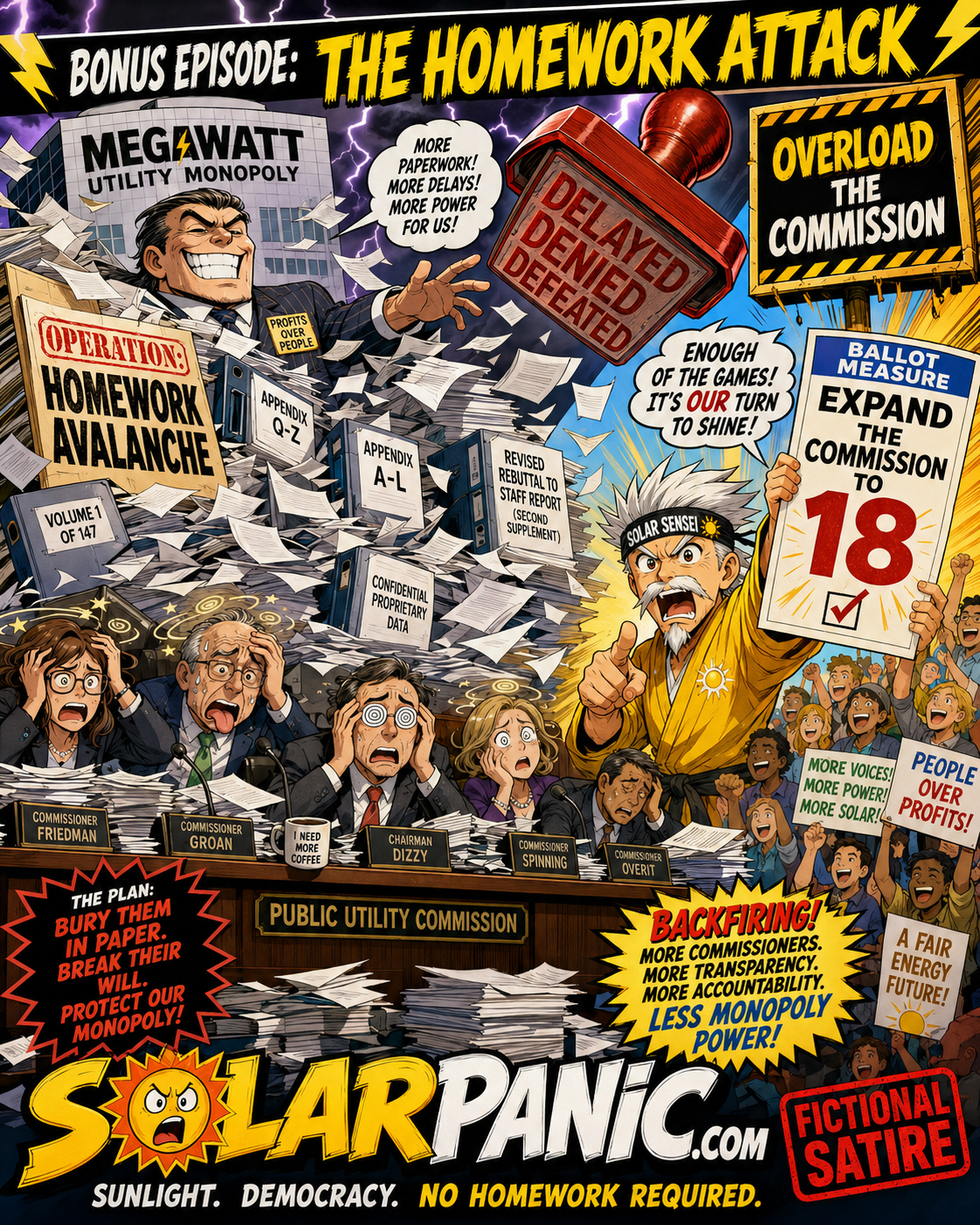
That is why the flagship SolarPanic story is now the bonus episode: The Homework Attack. The fictional monopoly tries to bury the commissioners in paperwork. Solar Sensei answers with a public movement to expand the commission to 18.
The Serious Message Under the Manga
SolarPanic is satire. MegaWatt Monopoly is fictional. Chairman Kilowatt, Madame Peak Rate, and the Permit Goblin are imaginary characters. But the public themes are serious: customer choice, transparent regulation, energy resilience, and the value of owning useful equipment.
The fictional utility panics because the customer stops acting helpless.
That is why SolarPanic is funny. It gives the old monopoly mindset a villain face, a dramatic boardroom, and a giant rubber stamp — then lets the sun walk in and ruin the meeting.