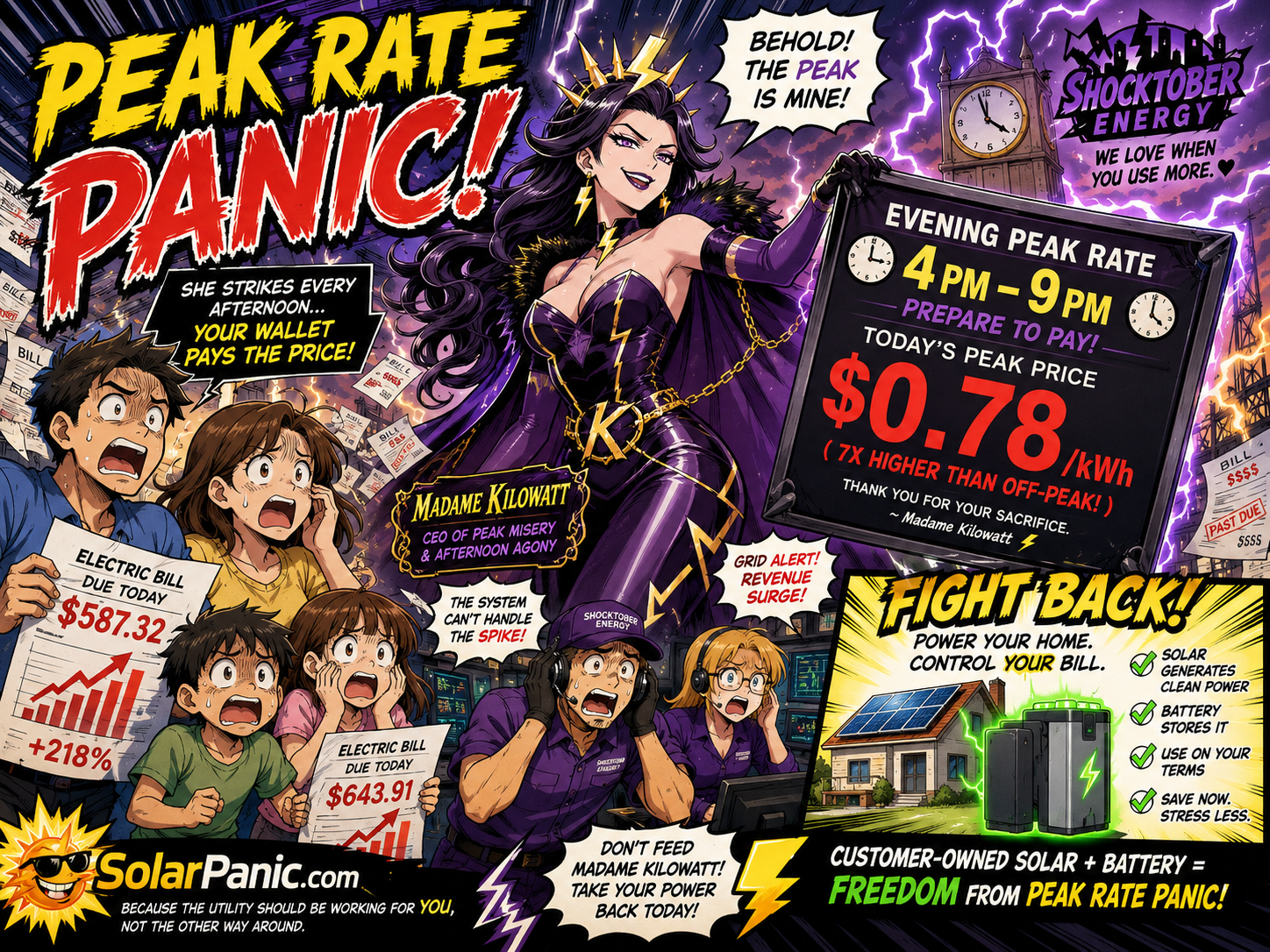

The Bill That Attacked at Sunset
The day begins beautifully. Solar panels are working. The roof is productive. The customer feels smart, calm, and prepared. Then the sun begins to drop, the rate clock changes, and Madame Peak Rate steps through the doorway.
“Good evening,” she says. “I brought your bill. It has drama.”
Chairman Kilowatt smiles from the fictional boardroom. Peak hours are one of his favorite panic tools because they make timing feel mysterious. SolarPanic does what SolarPanic always does: it turns the mystery into a manga villain and lets Solar Sensei explain the trick.
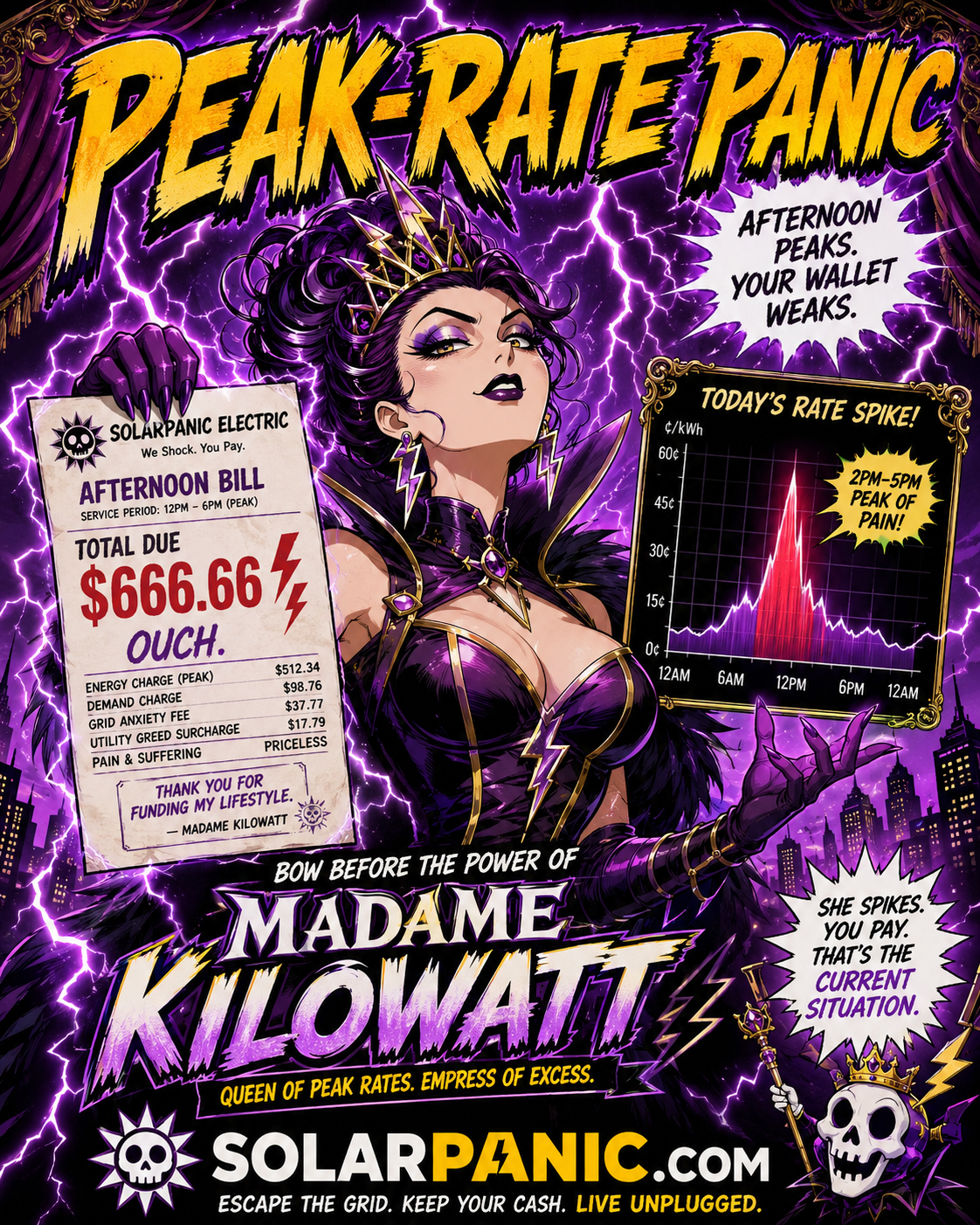
Peak Rates Are About Timing
Solar production and household or business usage do not always line up perfectly. A site may produce lots of solar energy during the day but still need power later. That is why the timing conversation matters.
The fictional monopoly wants the customer to feel trapped inside the rate schedule. Solar Sensei wants the customer to understand the design options.
SolarPanic rule: the villain is not the clock. The villain is confusion about the clock.
Where Batteries Change the Story
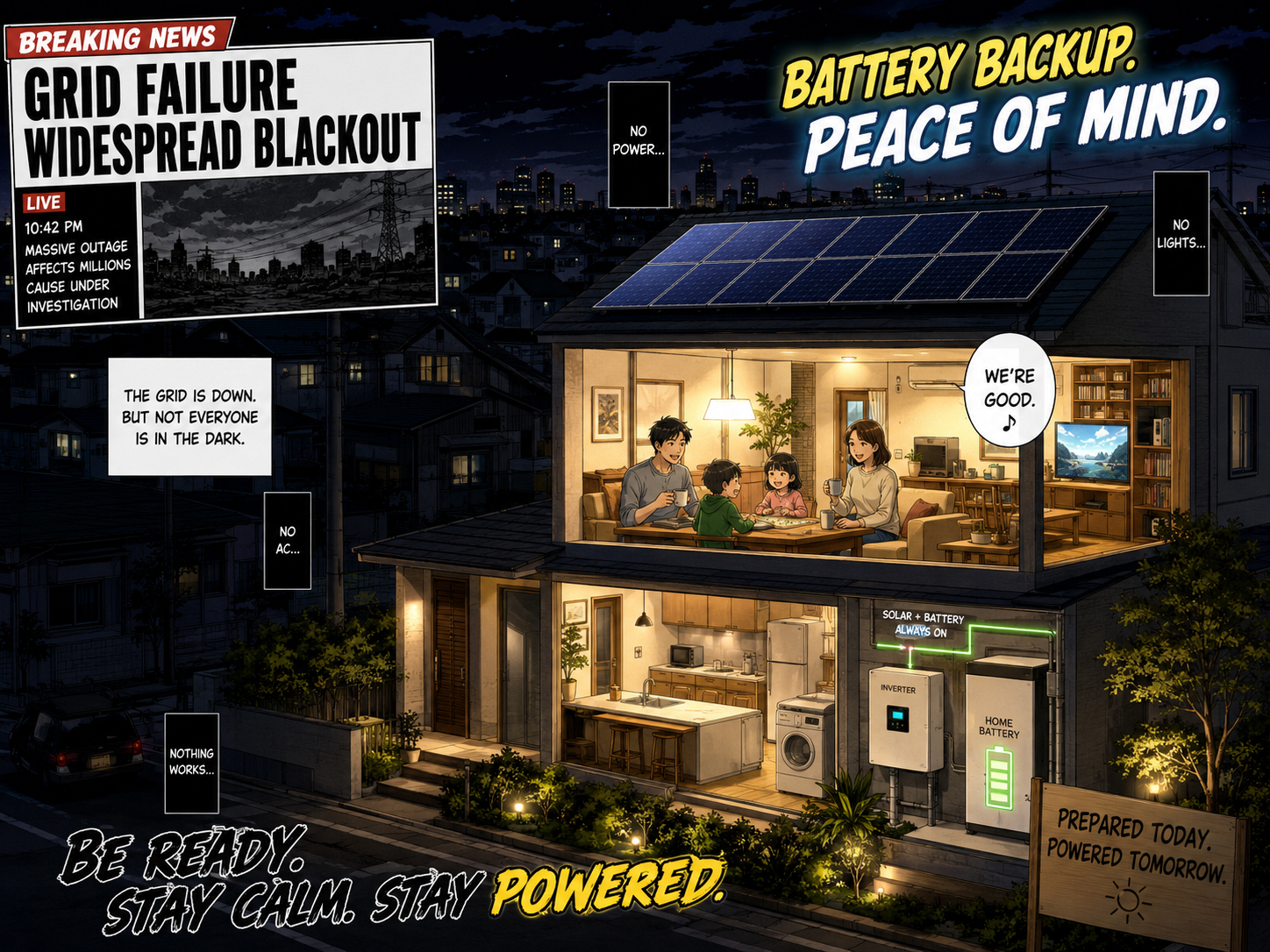
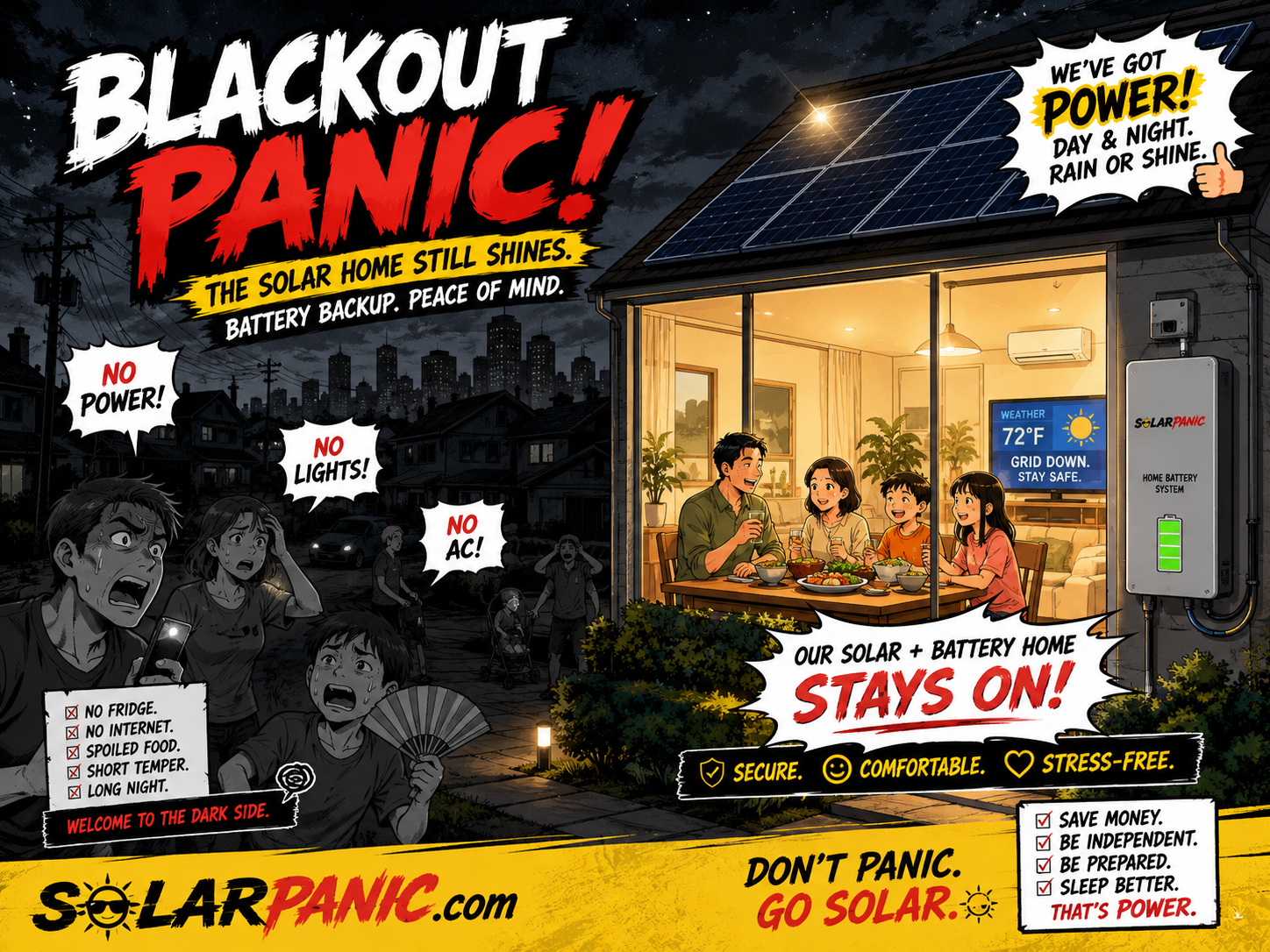
A battery can store energy and support selected loads later, depending on the system design, equipment, battery size, solar production, customer usage, and site conditions. That makes the customer less passive.
In the manga, Battery Boy walks into the room just as Madame Peak Rate raises her calculator.
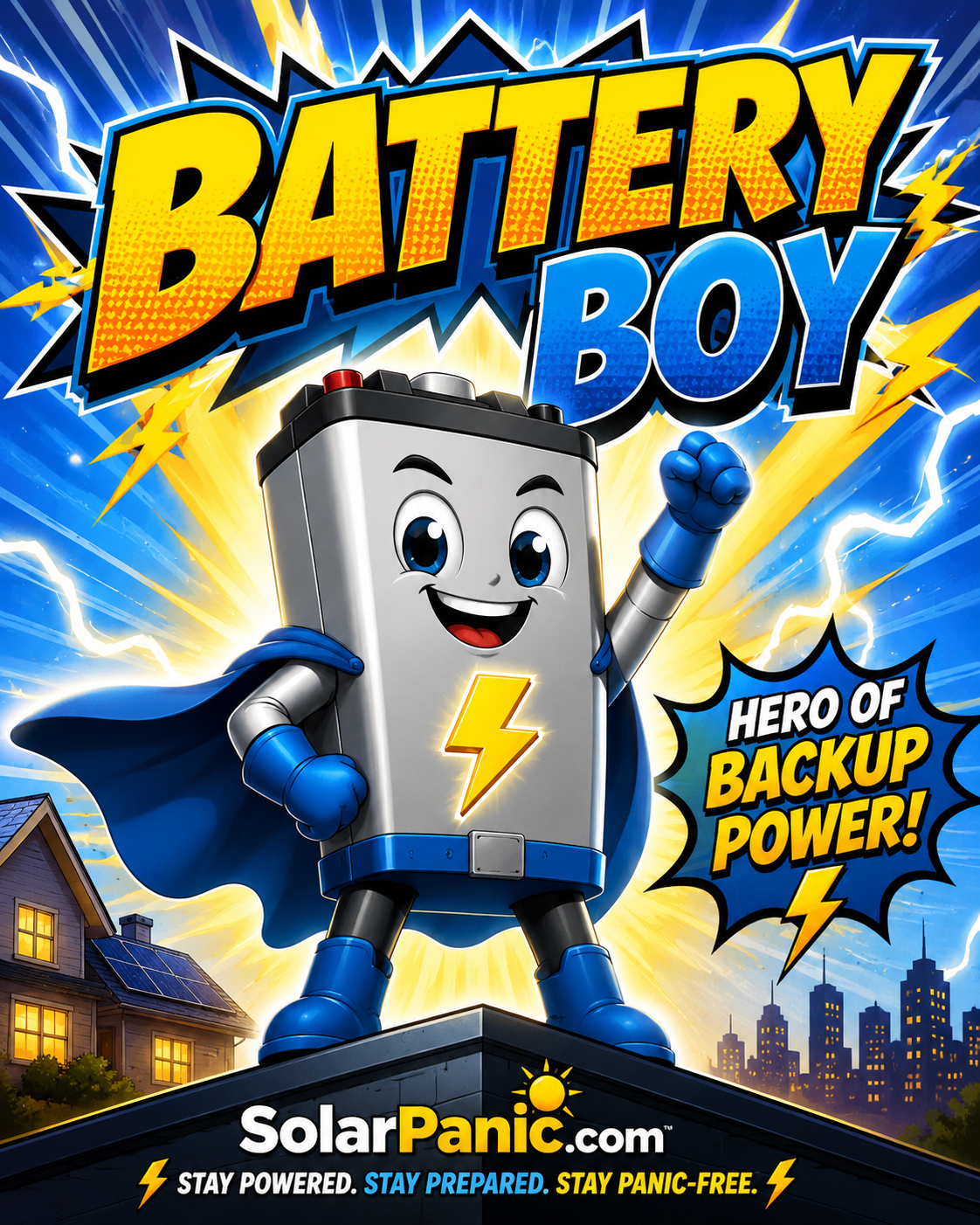
“Not so fast,” Battery Boy says. “Some of that sunlight came with me.”
The Serious Design Questions
Peak-rate planning is not a slogan. It is a design conversation. A useful system starts with real loads and real expectations.
- When does the customer use the most power?
- Which loads are most important during expensive periods?
- How much solar production is available during the day?
- How much battery capacity makes sense?
- What should be backed up during outages?
- How should the system be safely installed and inspected?
SolarPanic jokes about villains, but ABC Solar’s real-world message is practical: design the system around the site, the loads, and the customer’s goals.
Residential Peak Panic
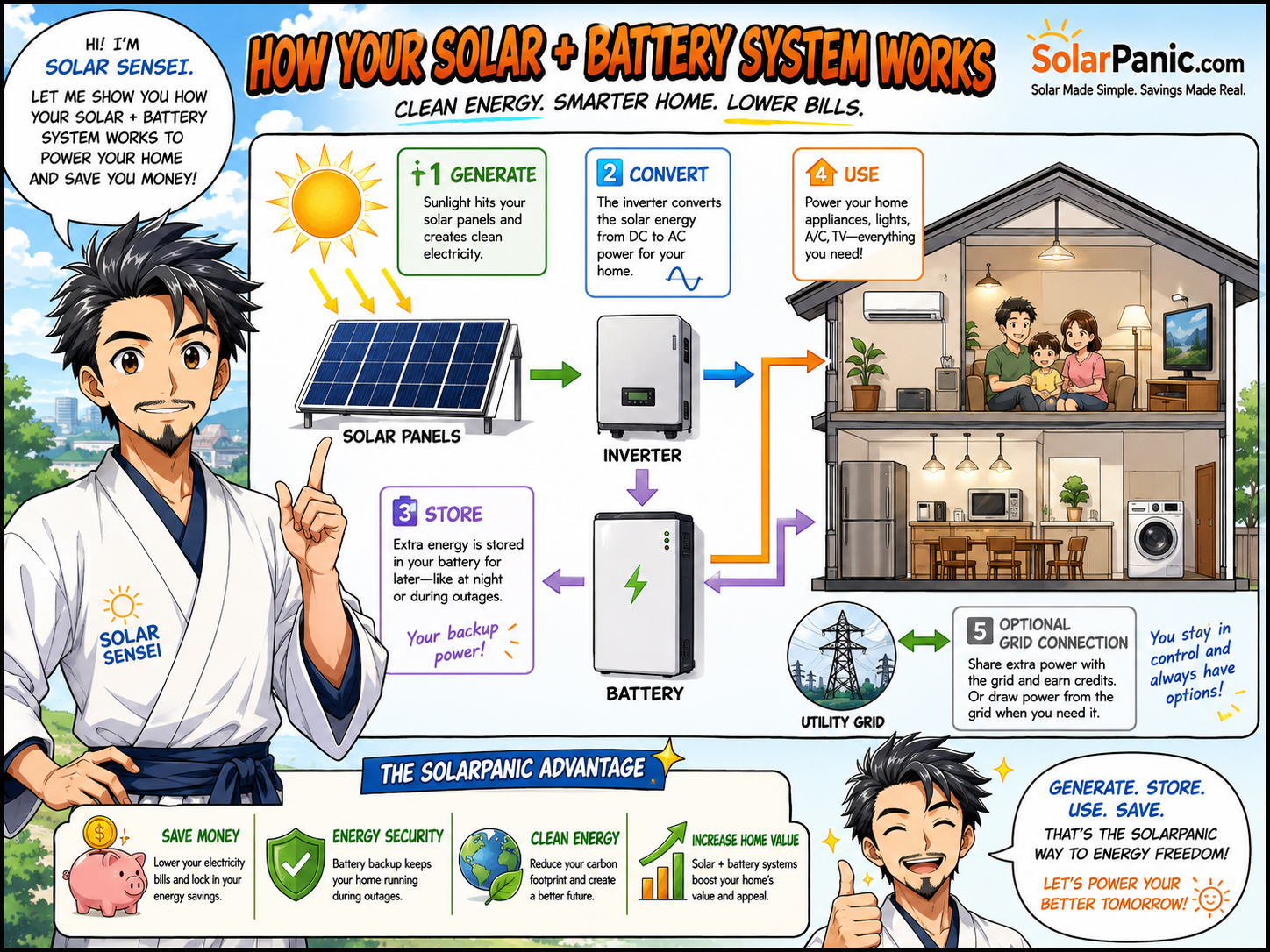
At home, peak-rate stress can show up when cooking, cooling, laundry, lights, entertainment, garage doors, appliances, and evening routines overlap. A solar battery system can be planned around the loads that matter most.
The goal is not to pretend every home is identical. The goal is to ask better questions before the bill becomes a monster.
Business Peak Panic
Businesses can have even more complicated timing. Equipment, refrigeration, pumps, lighting, office loads, EV charging, compressors, security, and operating hours can create a different energy story. Battery planning can help reduce vulnerability to expensive timing and support resilience.

The Fictional Utility Panic
MegaWatt Monopoly Utility Co. panics because batteries give customers a timing tool. Solar gives production. Batteries give flexibility. Together they make the customer less helpless.
Punchline: Madame Peak Rate brought the bill. Battery Boy brought the timing.
Peak Rates and the Homework Attack
Once customers understand timing, they start asking policy questions too. Why are solar customers treated like a problem? Why do batteries get framed as a threat? Why does every rule fight come with a mountain of paperwork?
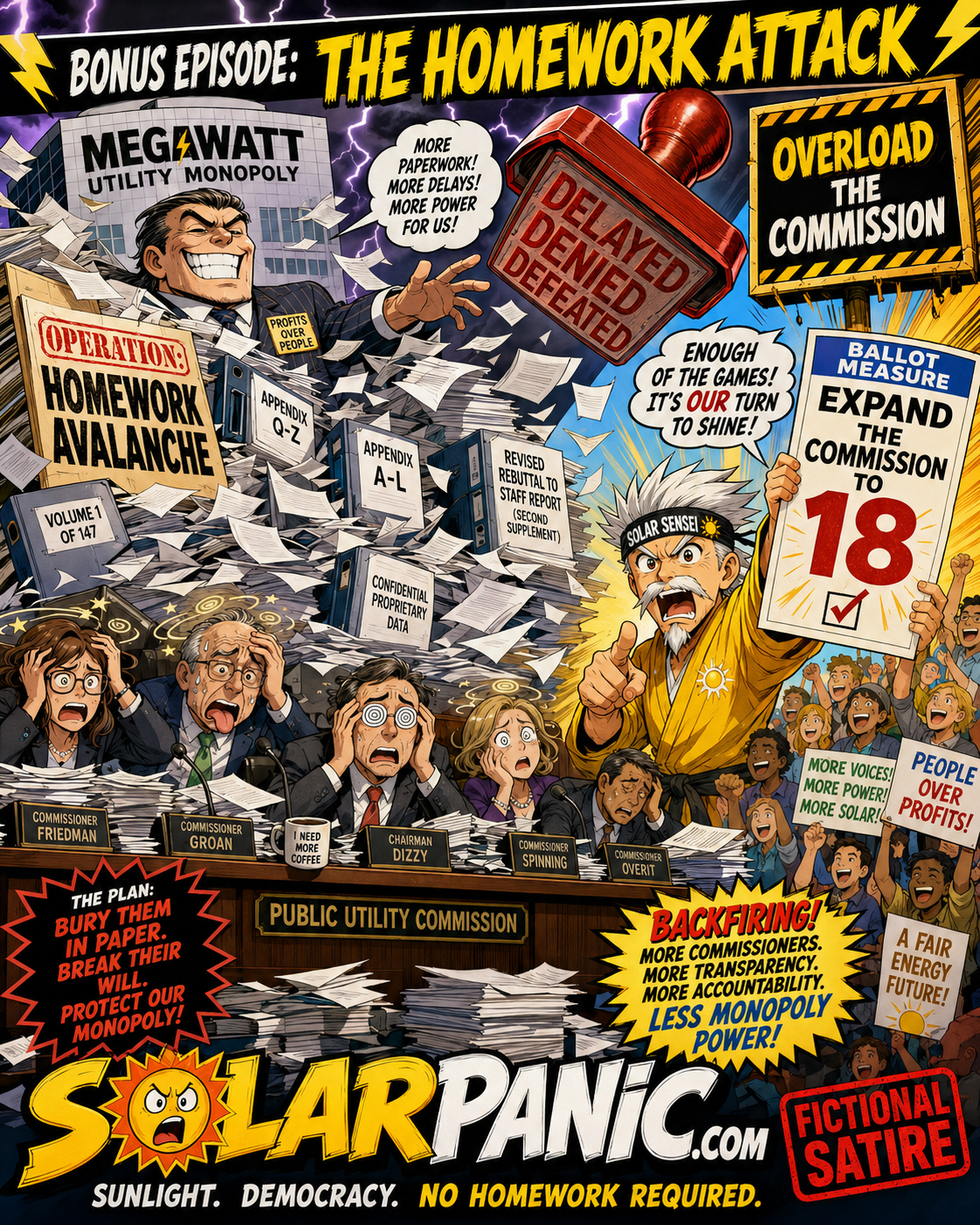
That question leads directly to the flagship SolarPanic bonus episode: the fictional utility tries to bury public oversight in homework, and the people answer by expanding the commission to 18.