The Night the Grid Got Dramatic
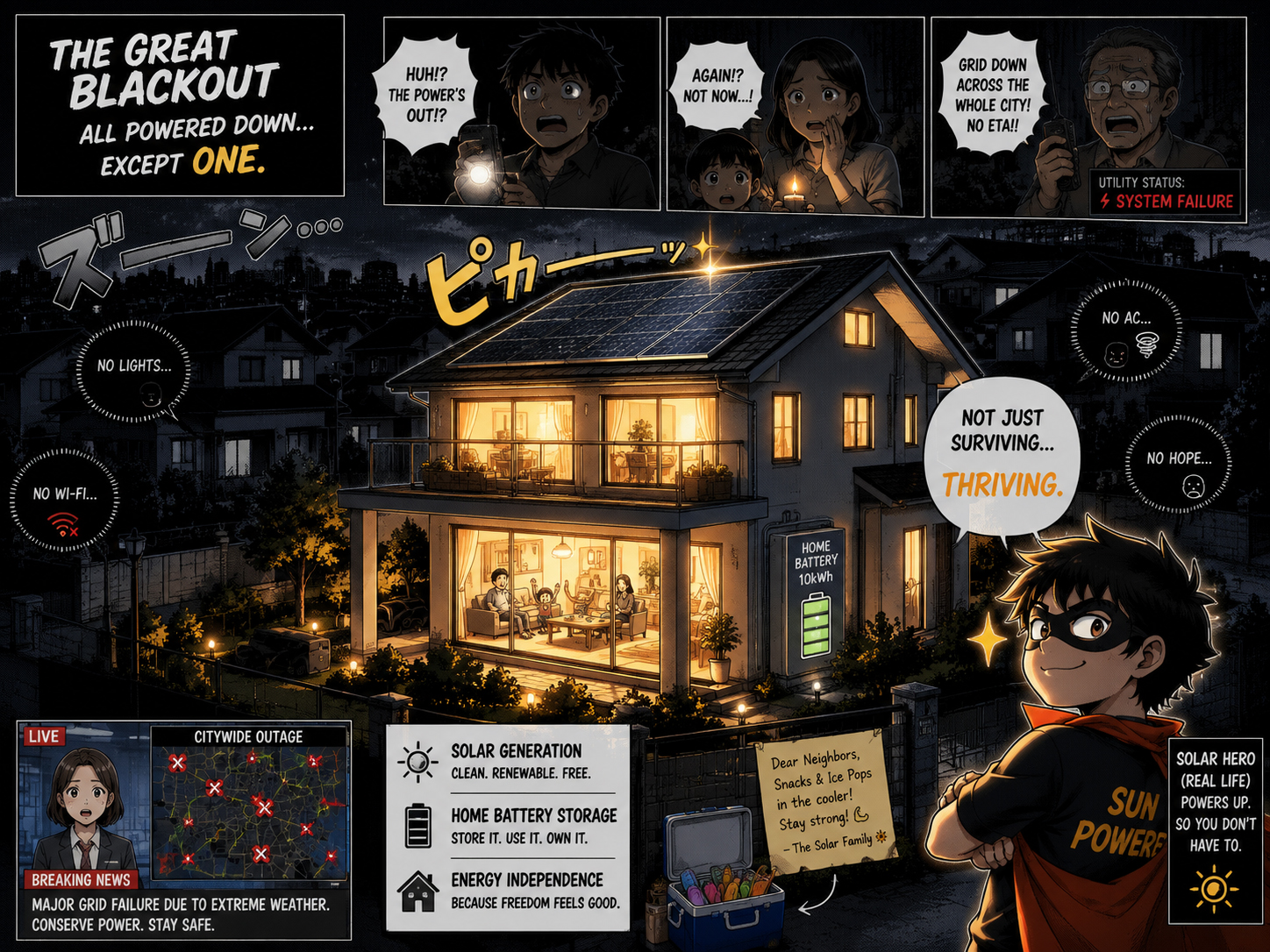
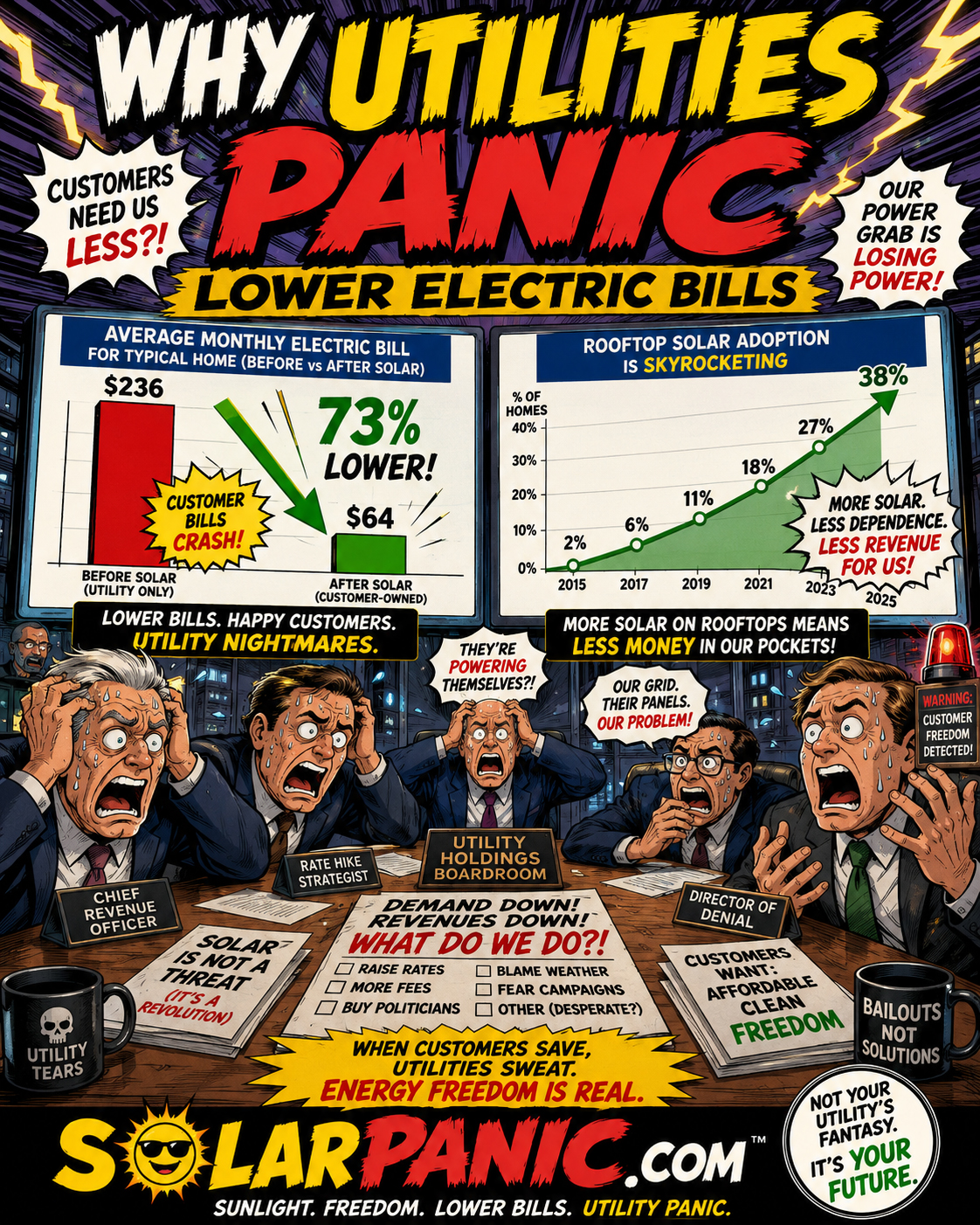
At 8:17 p.m., the neighborhood lights flicker. One second later, everything goes dark. Across town, MegaWatt Monopoly Utility Co. activates its emergency response plan: a vague message, a long estimated restoration window, and a conference room full of nervous executives.
“Prepare the explanation fog!” Chairman Kilowatt shouts. “Nobody must ask why the customer has a better plan than we do.”
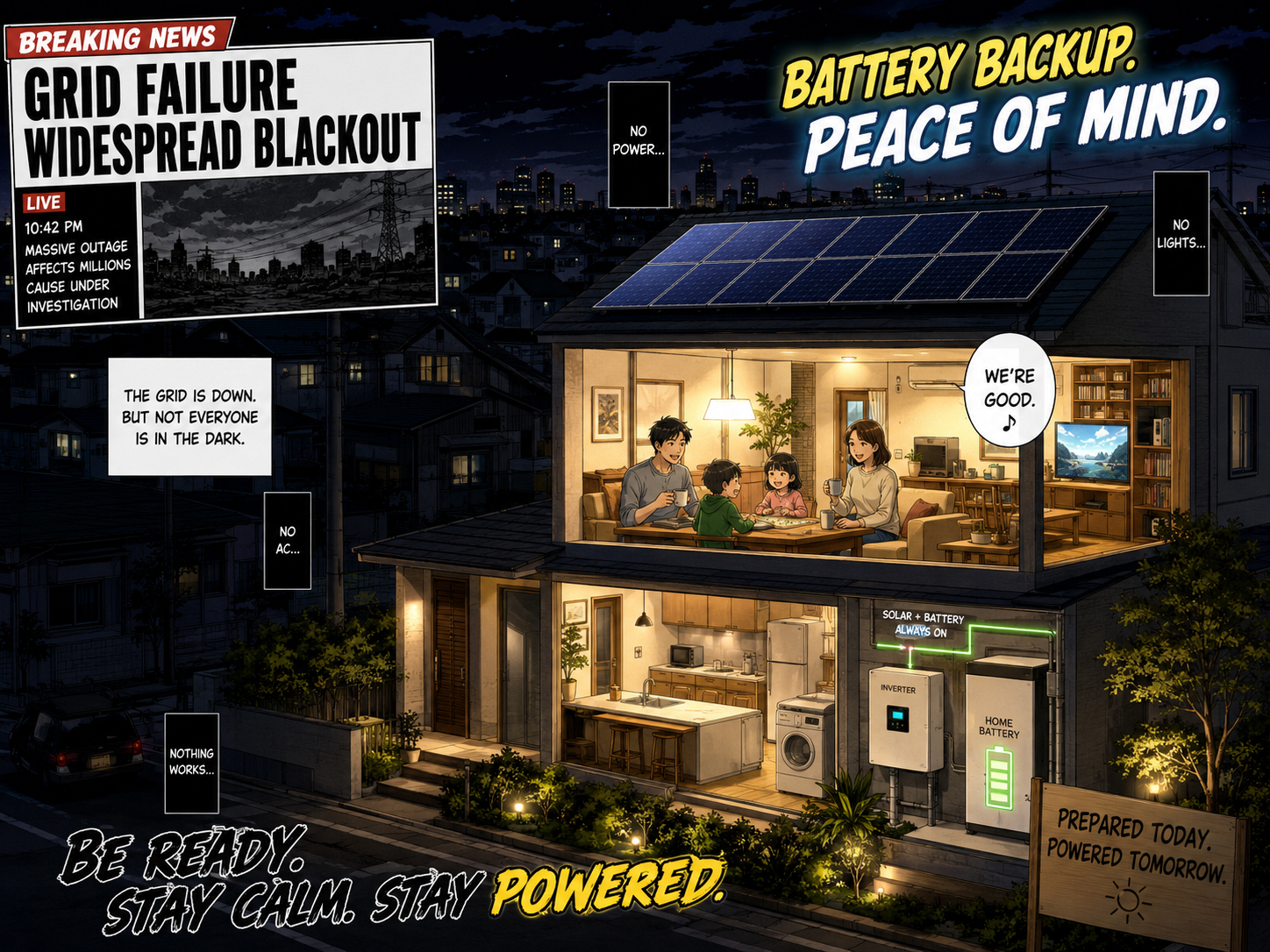
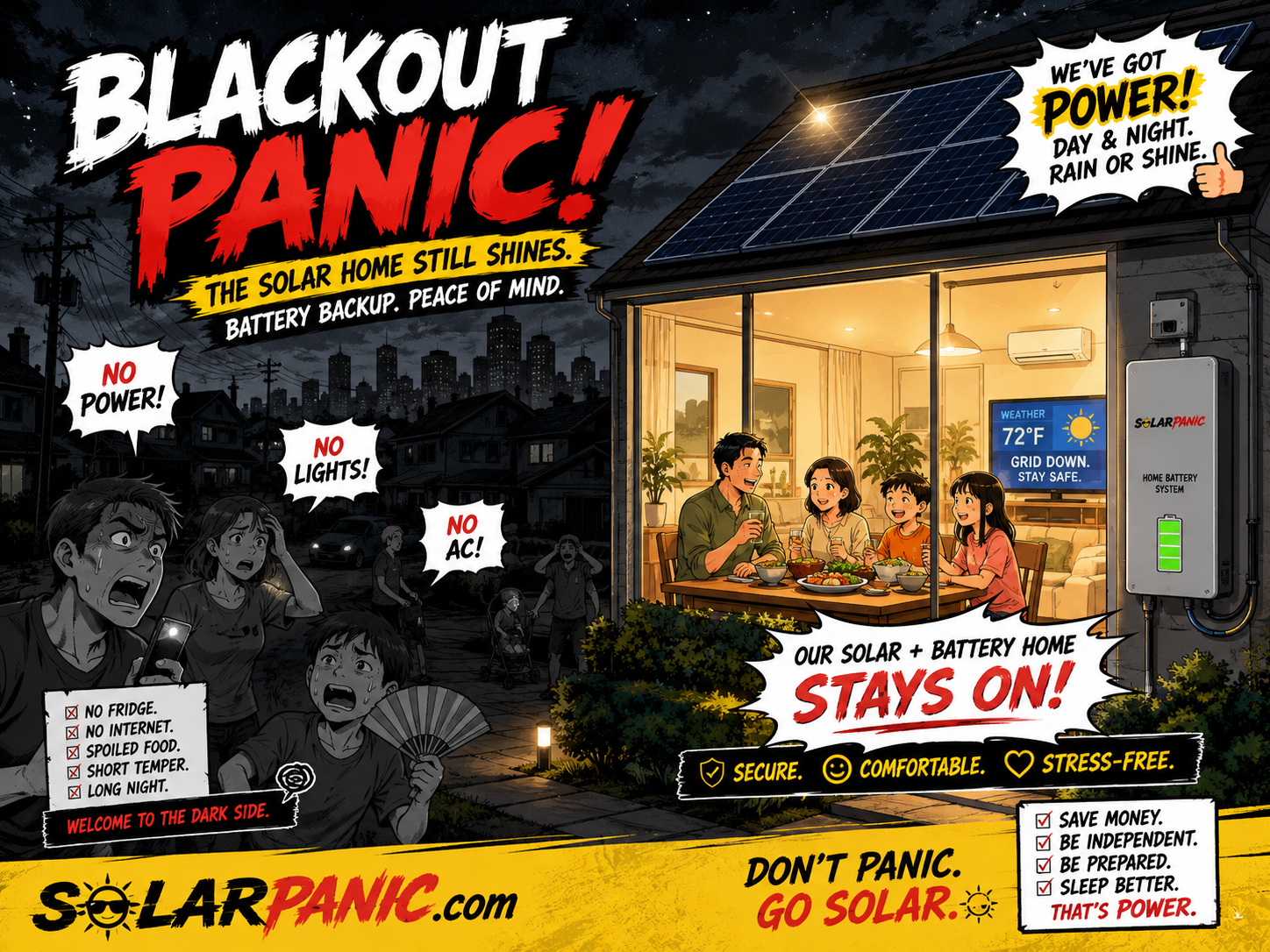
But on one street, a solar battery home glows softly. Not like a stadium. Not like a fantasy castle. Like a practical house with a serious backup plan.
What Still Works?
Blackout planning is not about powering every luxury load forever. It is about deciding what matters most and designing around it.
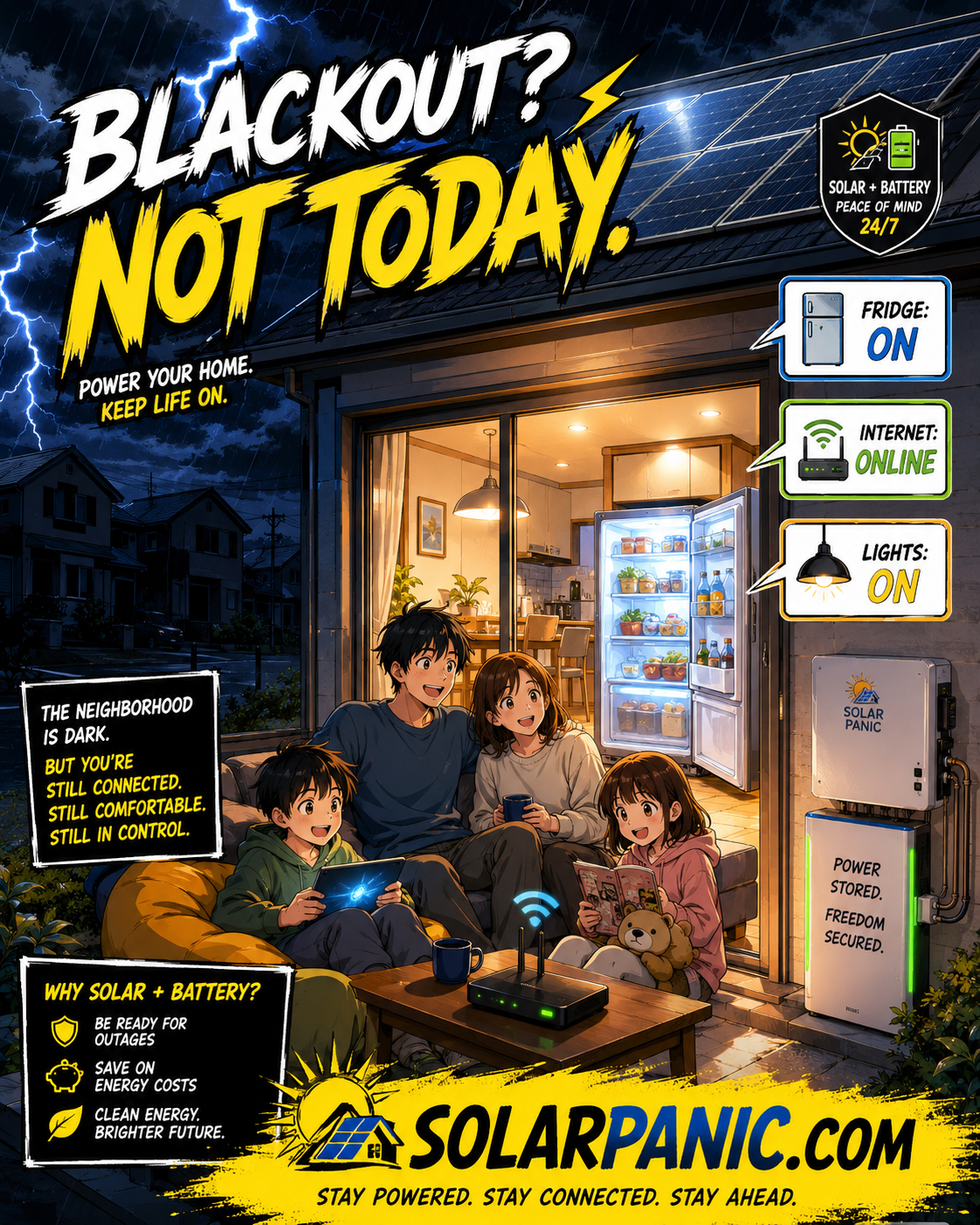
- Refrigerator and freezer
- Internet modem and router
- Selected lights
- Garage door or gate access
- Medical or essential equipment where applicable
- Security, communications, pumps, or controls
Solar Sensei rule: backup power is strongest when it is honest about priorities.
The Refrigerator Becomes a Hero
In the SolarPanic universe, the refrigerator gets its own heroic glow. While the fictional utility boardroom debates how to describe the outage, the fridge simply keeps food cold.
The internet stays alive. A few lights remain on. The family can charge phones, check updates, and move through the house without treating the blackout like the end of civilization.
Battery Boy Does Not Brag
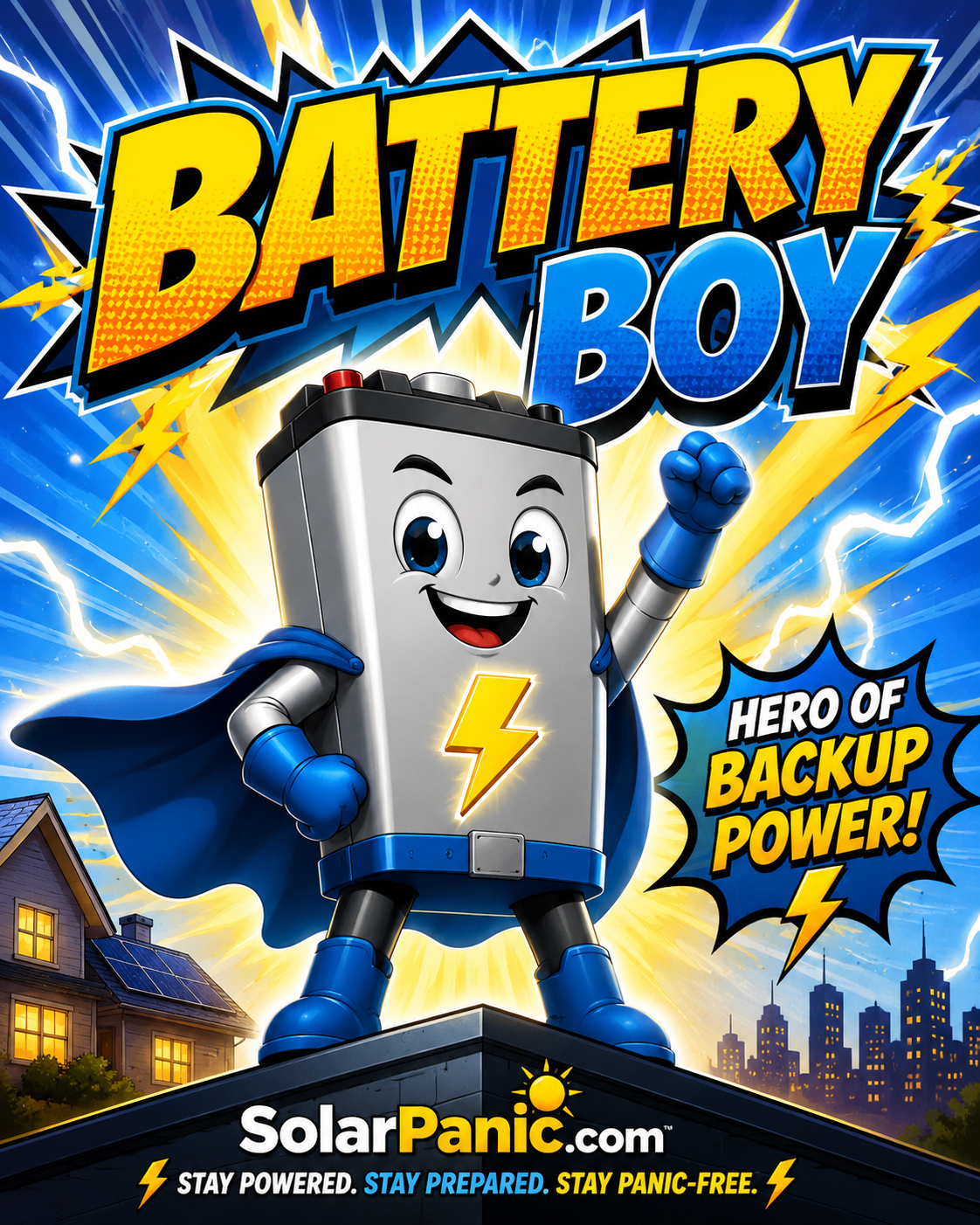
Battery Boy is the quietest hero in SolarPanic. He does not need a speech. He does not need a cape. He charges when the system allows and supports the selected loads when the grid gets weird.
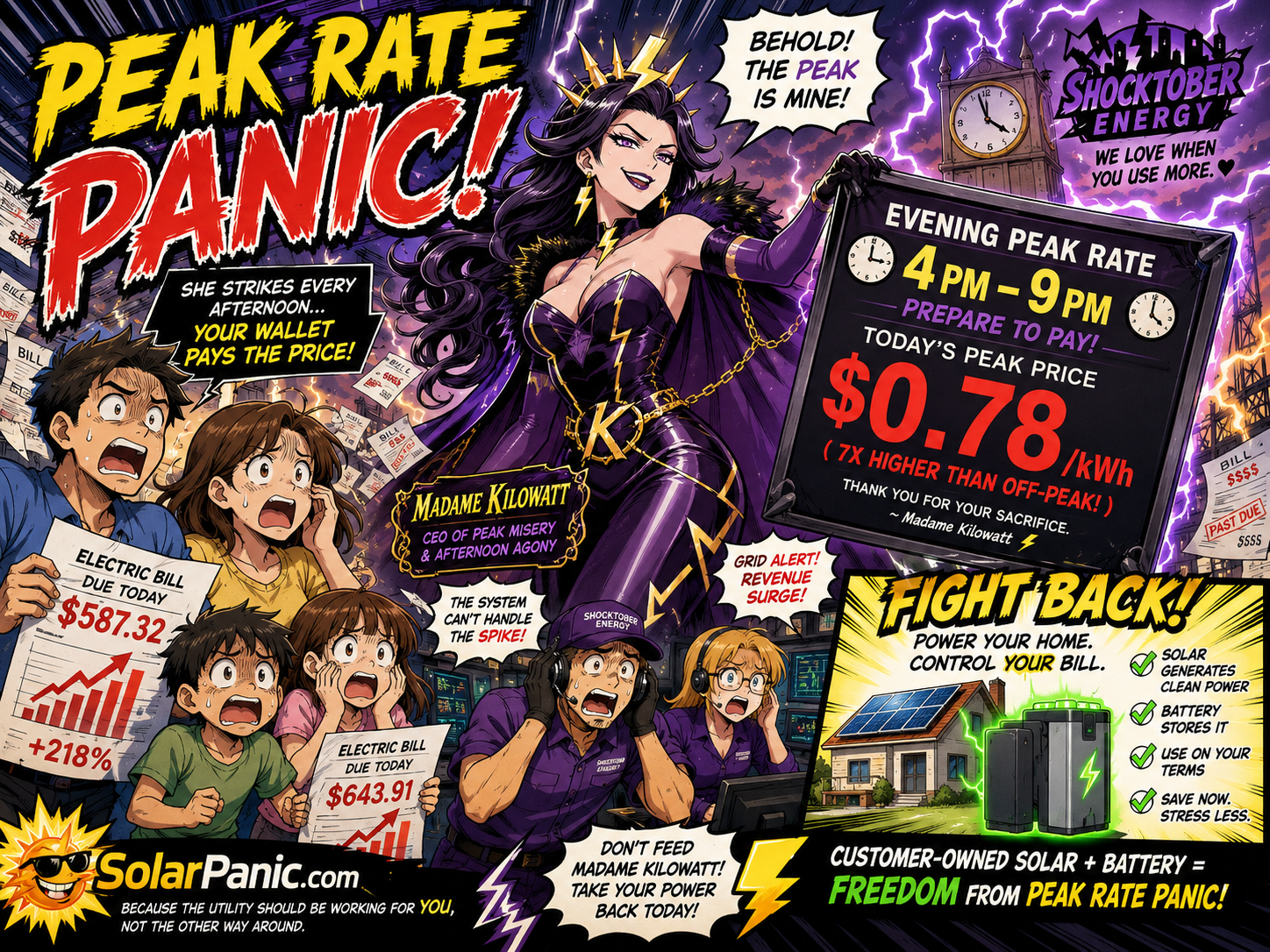
“They are calm during our outage!” Madame Peak Rate screams. “This is terrible for panic!”
That is the real threat to the fictional monopoly mindset: not that the home becomes invincible, but that the customer becomes less helpless.
Solar Recharge During the Day
A solar battery system can be designed so daytime solar helps recharge the battery, depending on equipment, configuration, sun conditions, loads, and installation details. That makes the design conversation serious.
Solar Sensei does not promise magic. He asks the right questions:
- How much solar production is available?
- How much battery capacity is installed?
- Which loads are backed up?
- How much power do those loads actually use?
- What happens during clouds, storms, or long outages?
- What does the customer expect the system to do?
The Business Blackout
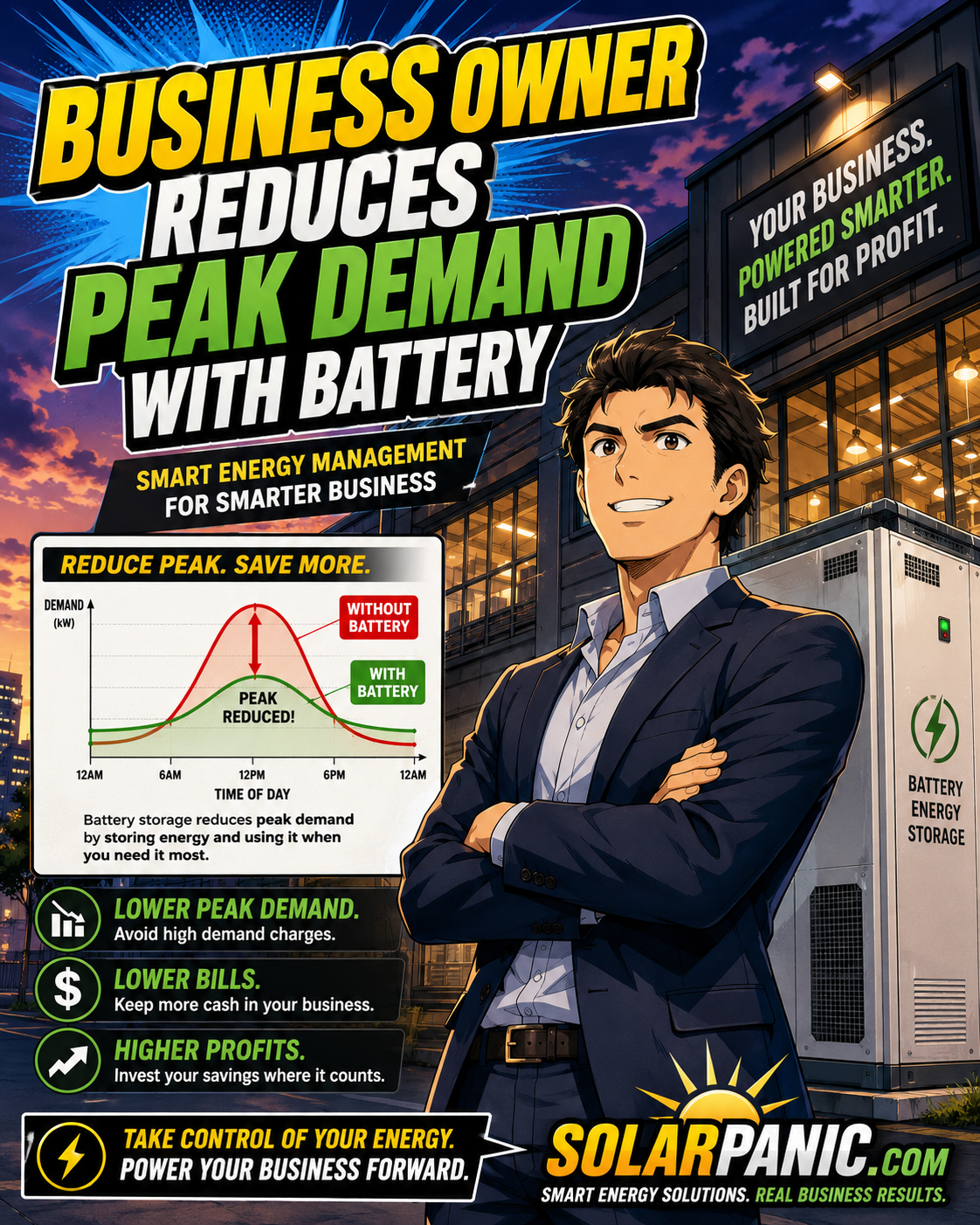
Blackout panic is not only residential. A business may need communications, security, refrigeration, controls, gates, selected lighting, computers, or other carefully chosen loads. A good backup design starts with the real site, not a cartoon promise.
The Fictional Utility Cannot Sell Helplessness Forever
The old panic model depends on the customer feeling stuck. But blackout resilience changes the emotional equation. A customer with solar, battery backup, and a clear critical-load plan is not waiting in the dark the same way.
Punchline: the grid went dark, but the customer’s plan turned on.
The Bigger SolarPanic Story
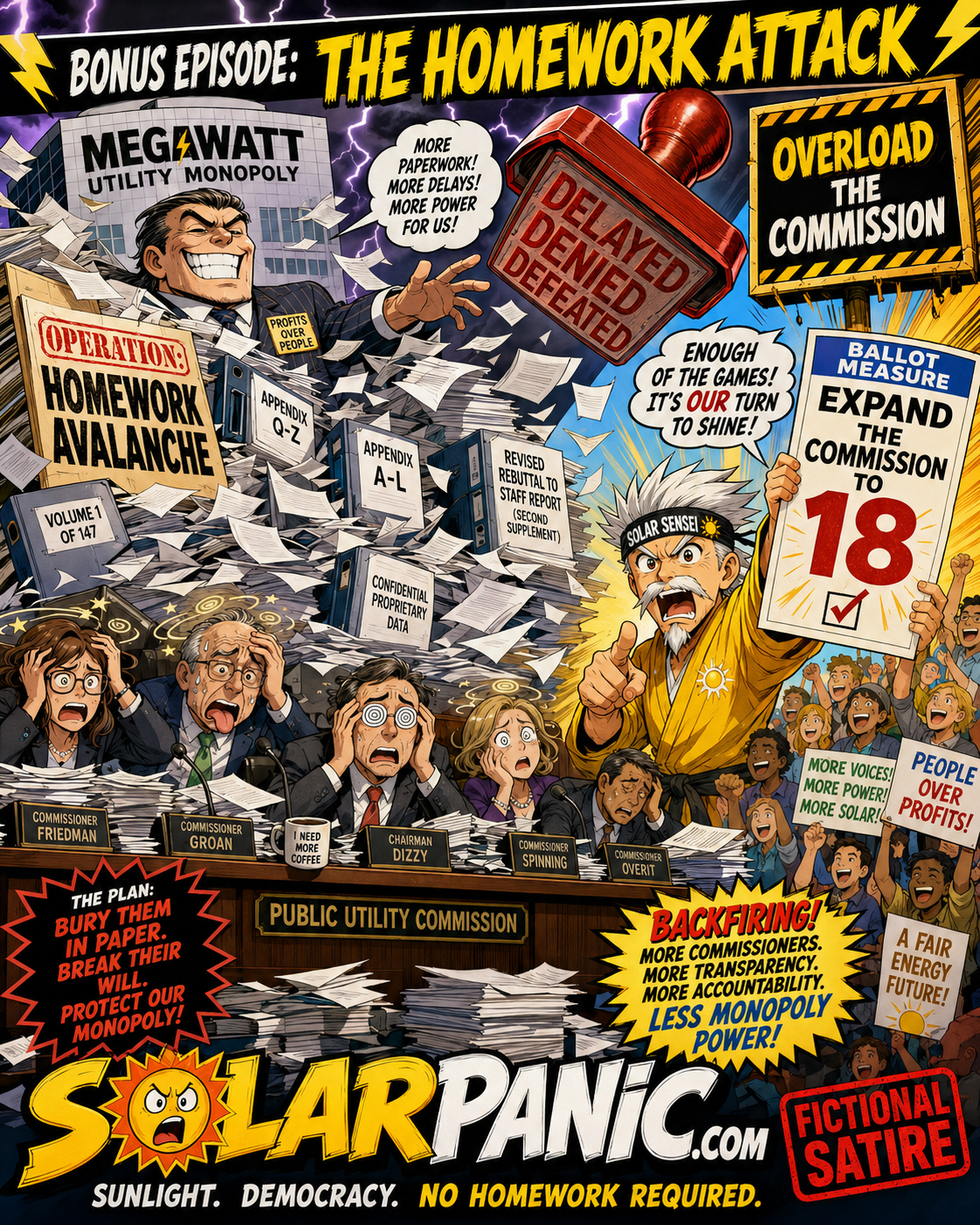
Once customers understand backup power, they begin to understand policy too. They ask why batteries are treated like threats. They ask why consumer-owned systems face paperwork fog. They ask why public oversight can be buried under thousands of pages.
That leads directly back to the flagship SolarPanic bonus episode: The Homework Attack, where the people answer monopoly paperwork overload by expanding the commission to 18.