The Day the Rooftop Fought Back
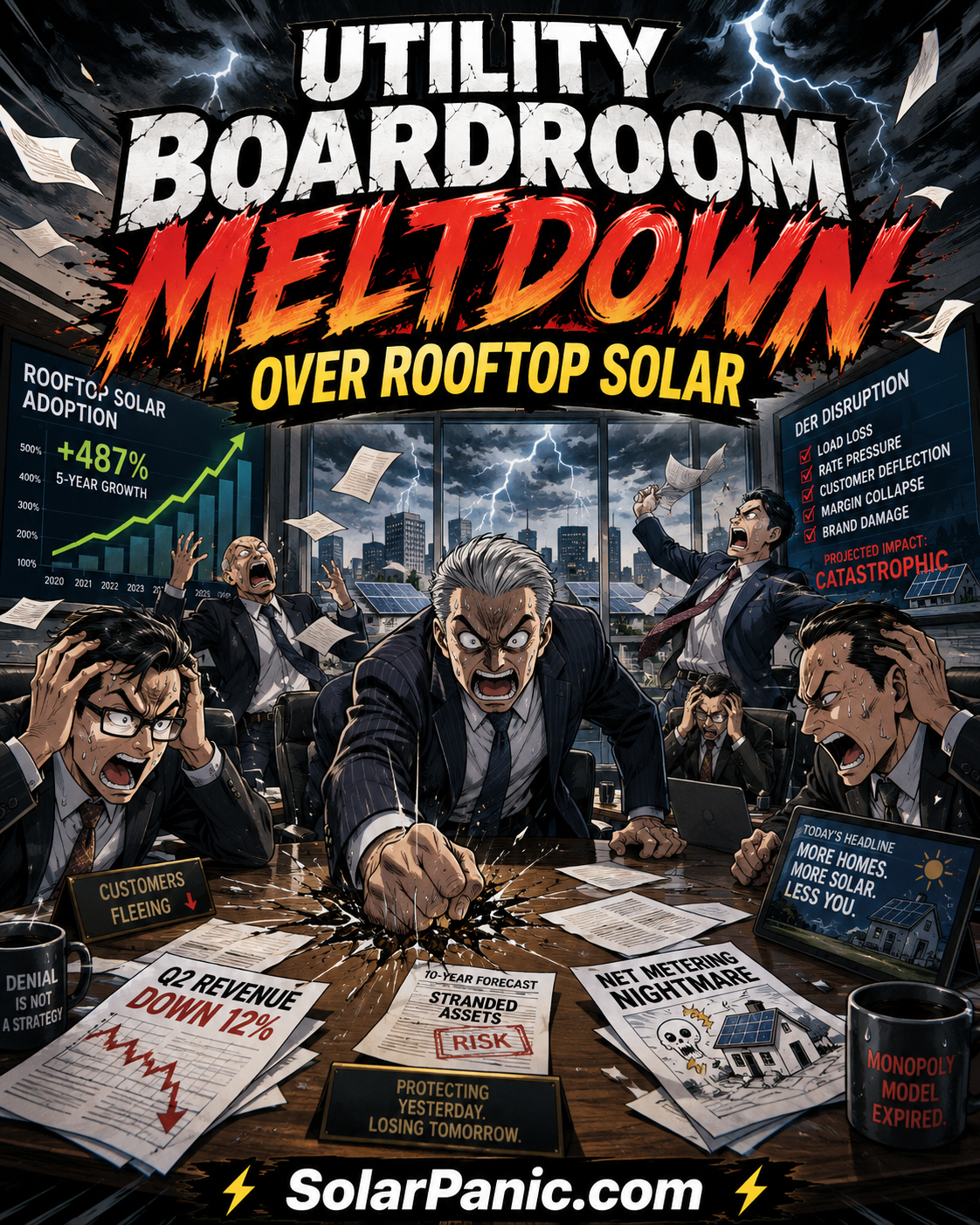
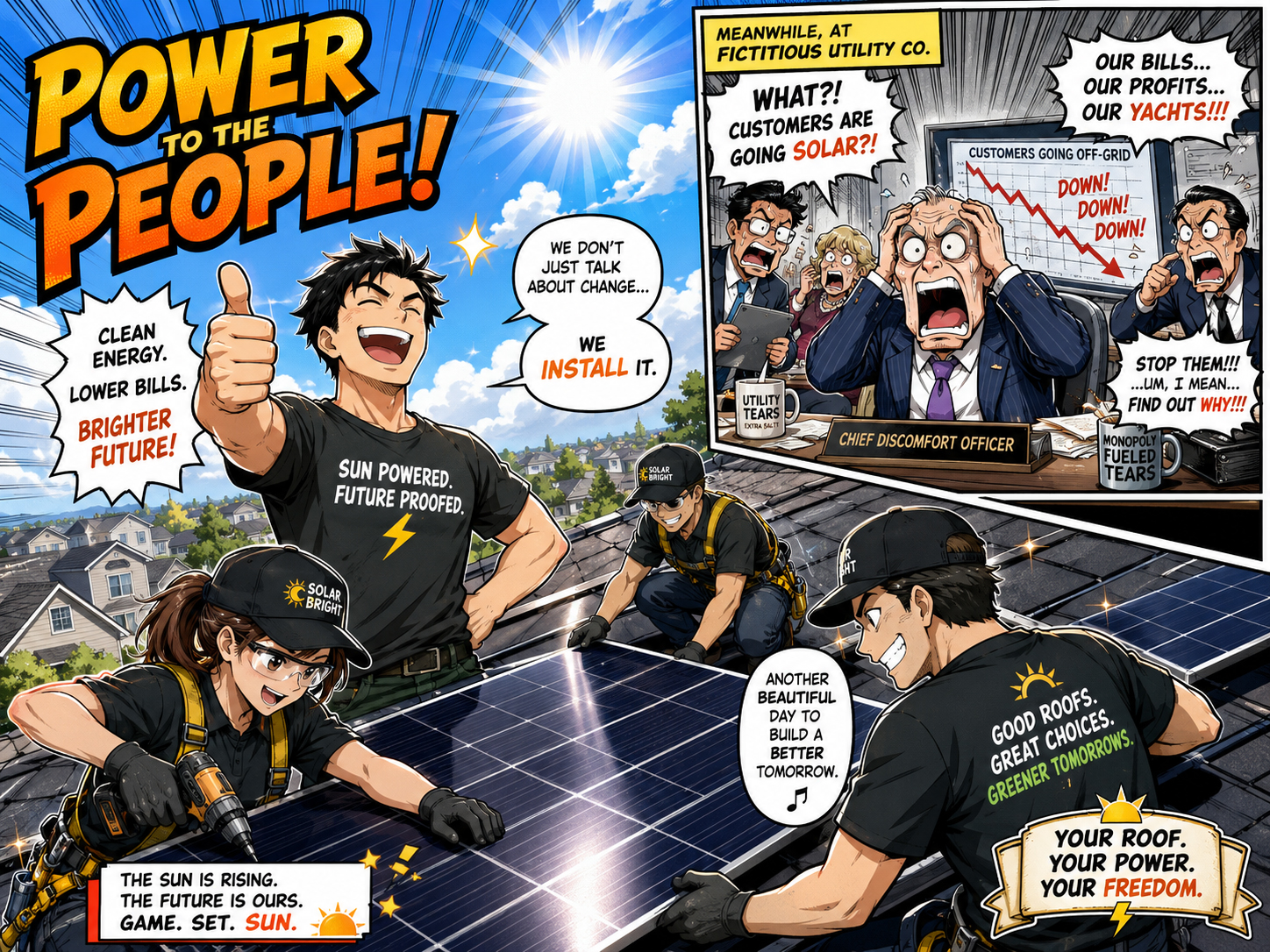
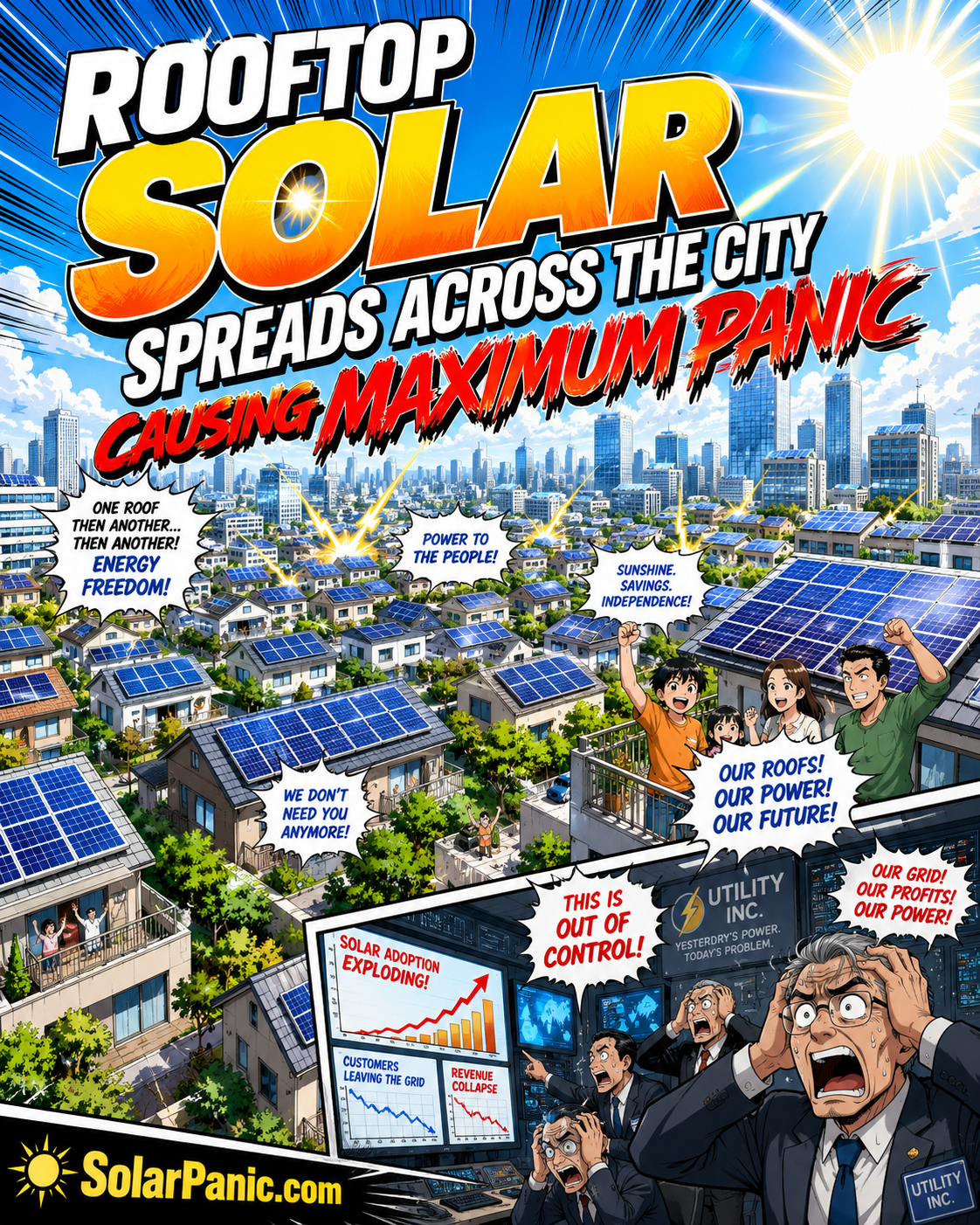
At 9:02 in the morning, a perfectly normal homeowner signs a perfectly normal solar contract. Across town, in the fictional headquarters of MegaWatt Monopoly Utility Co., the emergency siren begins to wail.
“Customer-owned generation detected!” shouts an intern. “Someone is trying to make electricity without asking us first!”
Chairman Kilowatt spins around in his leather chair. Madame Peak Rate drops her calculator. The Permit Goblin falls out of the ceiling holding three correction notices. The boardroom screen flashes one terrifying phrase:
ROOFTOP SOLAR SPREADING.
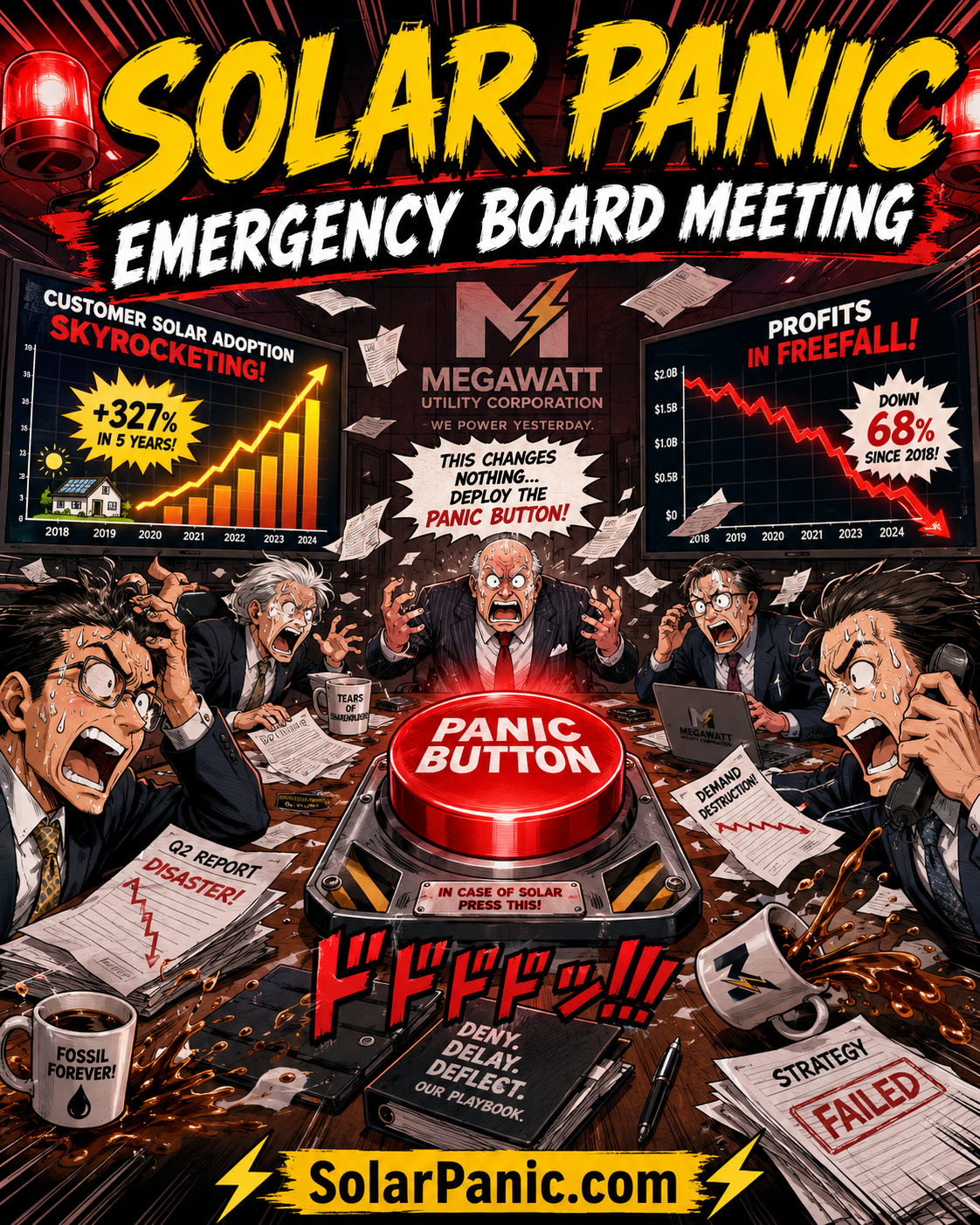
The Emergency Meeting
The executives gather around a giant map. Yellow dots appear across the city. Every dot is a customer thinking dangerous thoughts like:
- “Maybe I should make some of my own electricity.”
- “Maybe a battery would help during blackouts.”
- “Maybe peak rates are not my favorite hobby.”
- “Maybe my roof has a job to do.”
To the people, these thoughts are practical. To MegaWatt Monopoly, they are volcanic.
Chairman Kilowatt’s Big Fear
Chairman Kilowatt does not fear solar panels as objects. He fears what they represent: customer choice. A panel on the roof is not just equipment. In the SolarPanic universe, it is a tiny declaration of independence.
“If they own the panels,” he gasps, “they may start asking why they need us to control everything.”
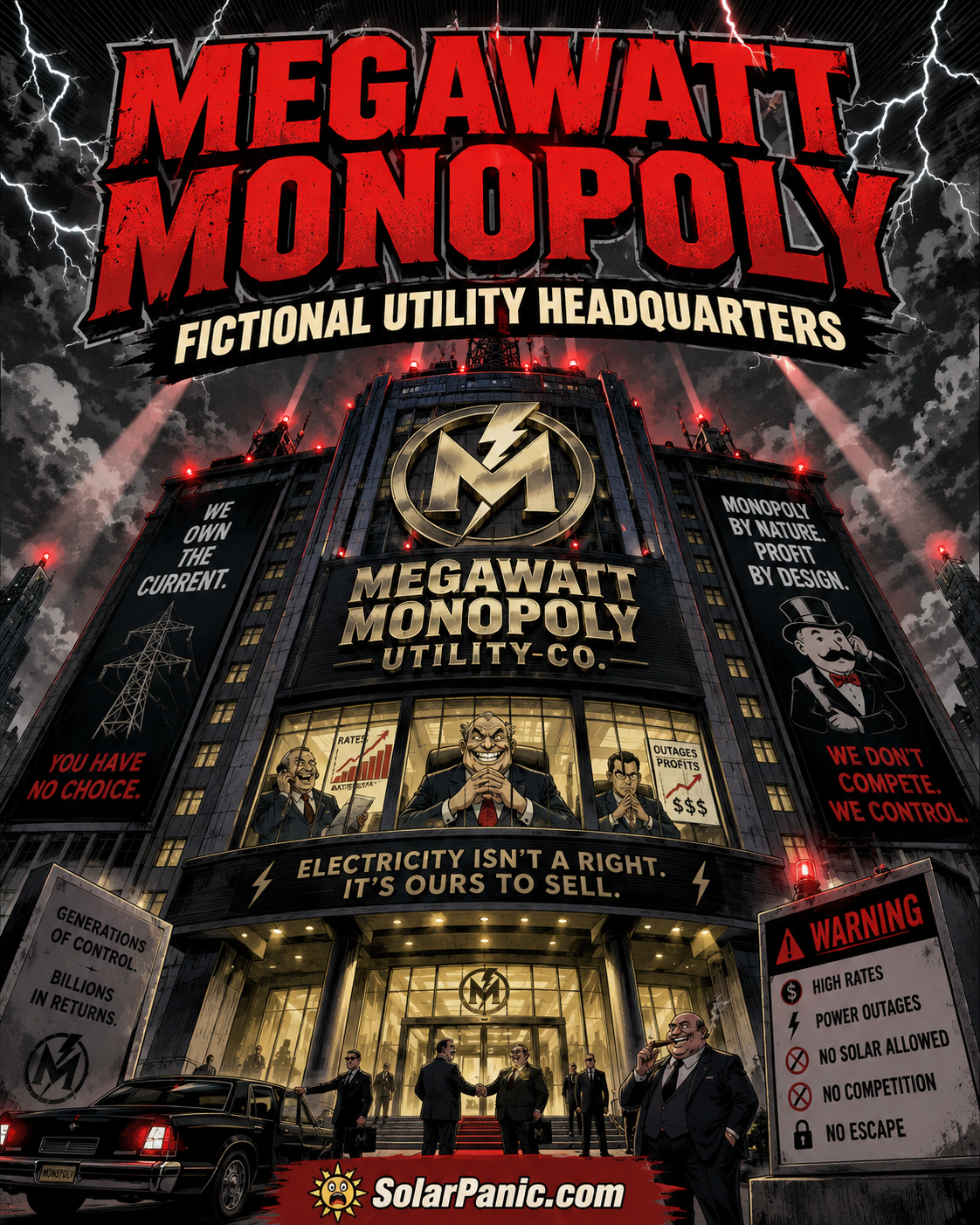
The Panic Spreads
Soon the fictional utility lawyers are running down the hallway. Lobbyists are polishing their delay briefcases. The Permit Goblin begins drafting a form to request permission to ask for another form.
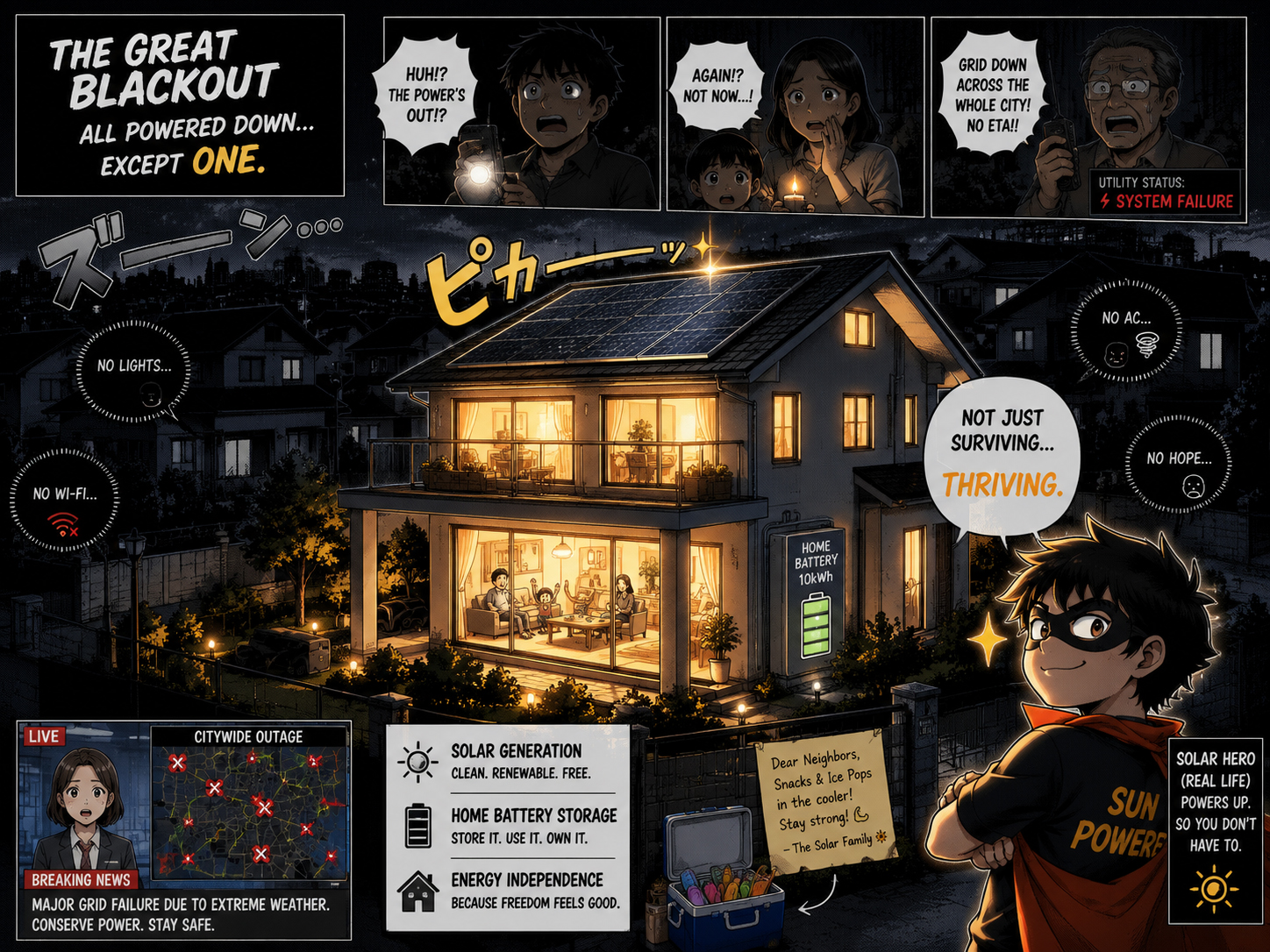
But outside the building, life is calmer. A family watches their solar app. A business owner studies peak demand. A battery quietly charges for the evening. Solar Sensei explains the difference between noise and design.
Why SolarPanic Works
The joke is huge because the idea is simple. A monopoly mindset wants customers to stay confused, dependent, and reactive. Consumer-owned solar and batteries move customers in the opposite direction: more informed, more prepared, and more capable of controlling part of their energy life.
SolarPanic is not about hating electricity. It is about laughing at the old model that panics when customers own useful equipment.
Then Came the Homework Attack
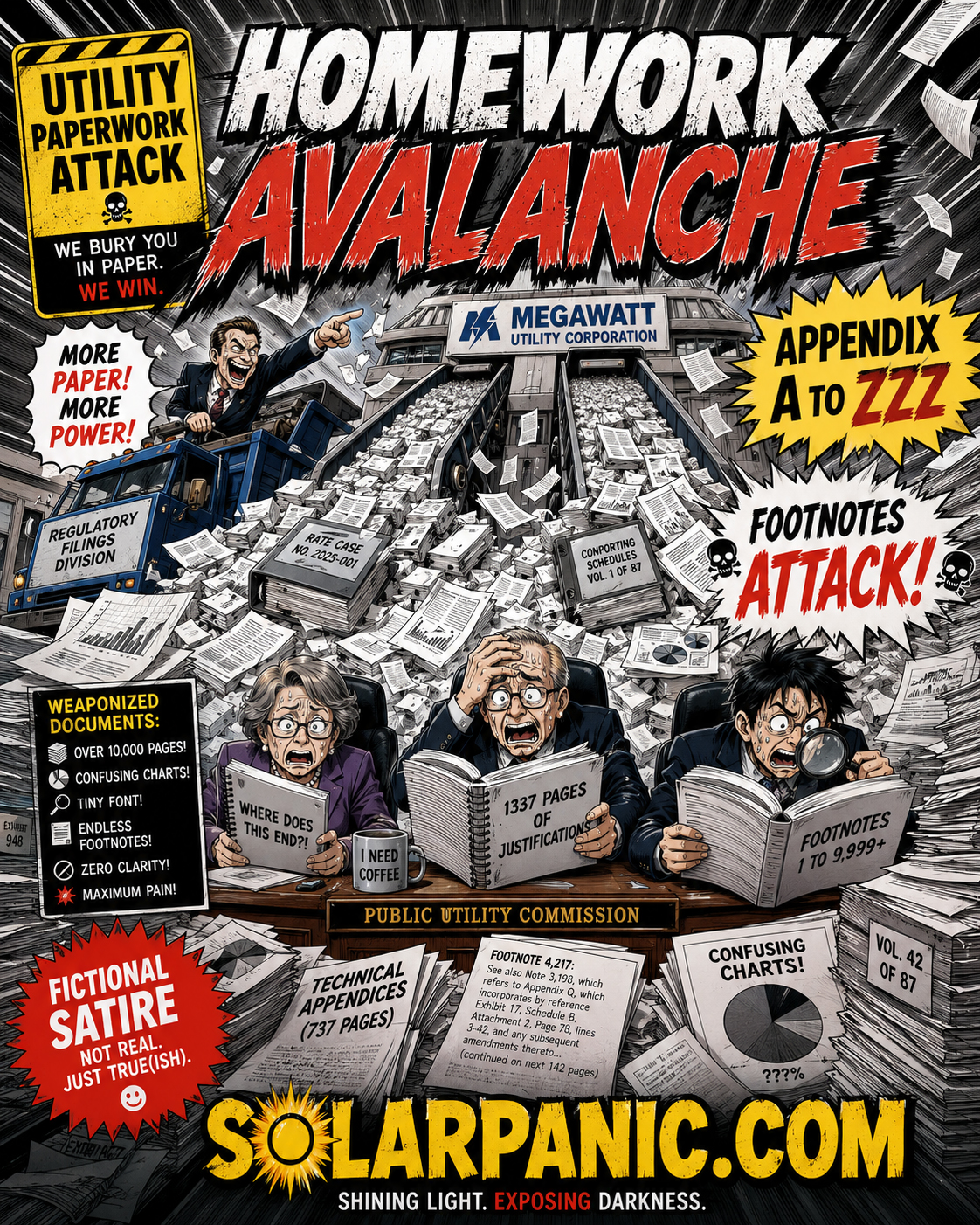
When the fictional monopoly realizes rooftop solar cannot be stopped by yelling at the sun, it discovers a more boring weapon: paperwork. That is why the site now leads with the bonus episode about overwhelming commissioners with homework and the people’s answer: expand the commission to 18.
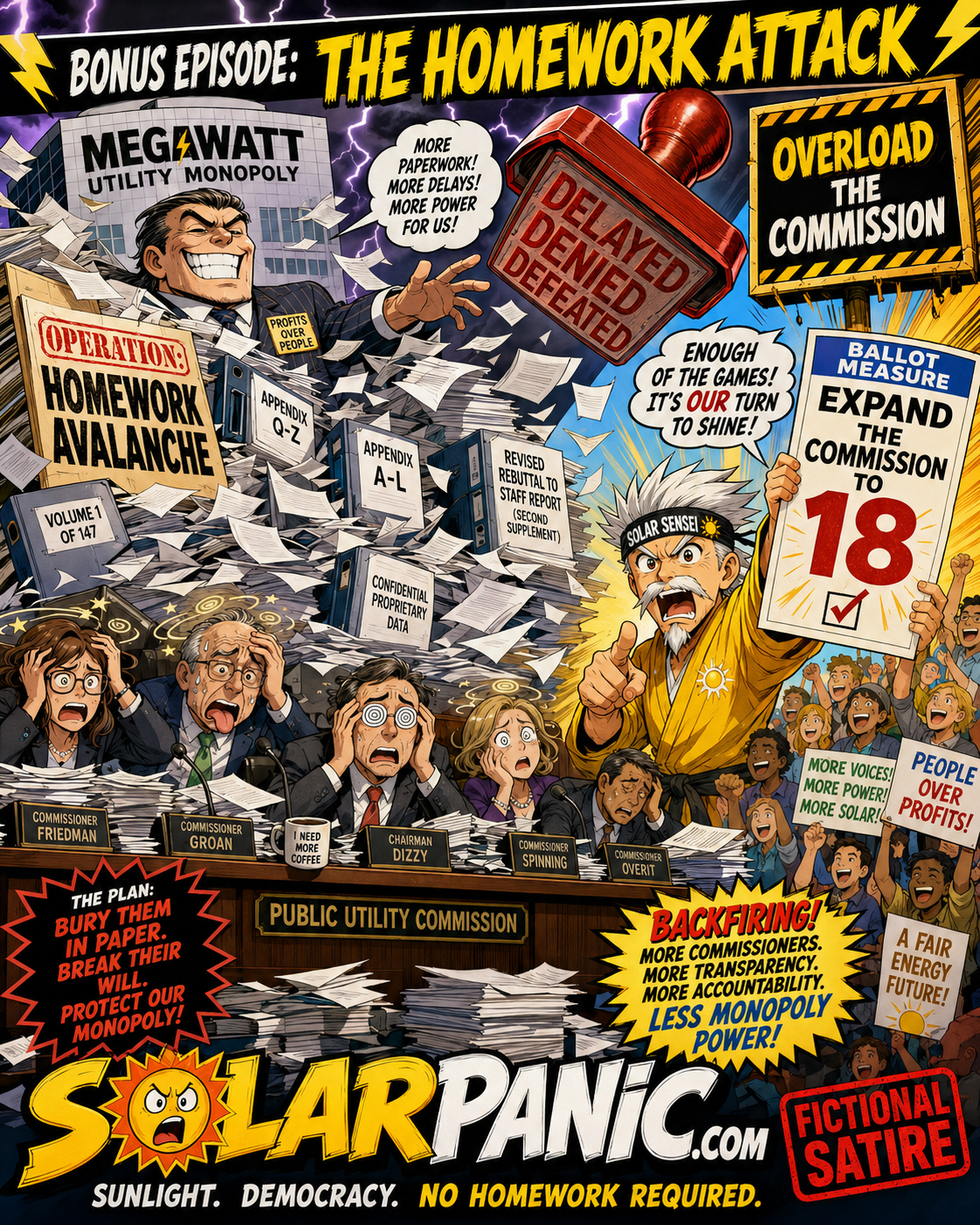
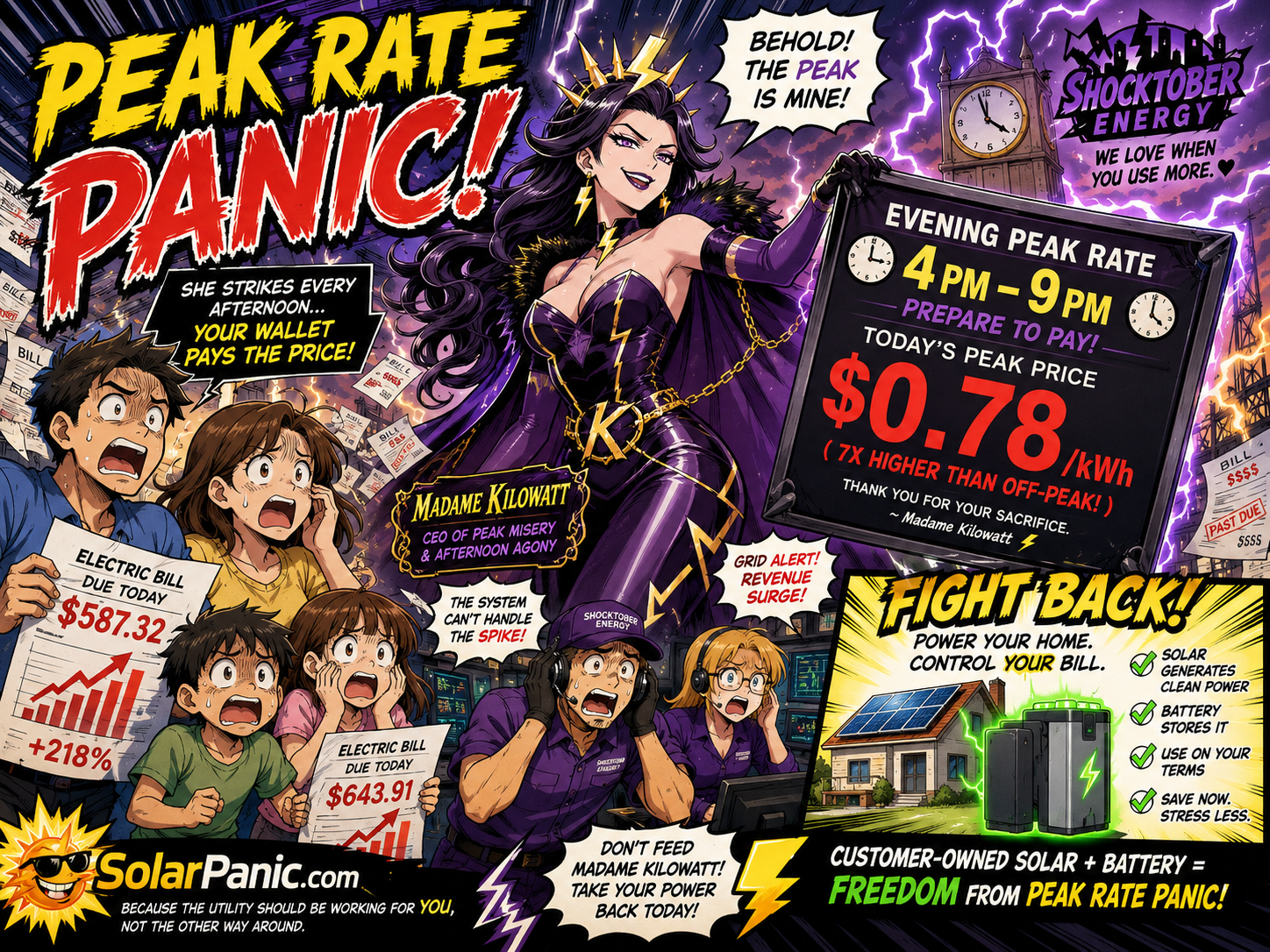
The boardroom meltdown becomes the larger SolarPanic universe: solar panels, batteries, peak-rate villains, blackout resilience, permit chaos, paperwork overload, and the public demand for more sunlight.