The Business Owner Reads the Meter
The business owner had seen high bills before. That was not new. What changed was the question. Instead of asking only, “Why is the bill so high?” the owner began asking, “When are we using power, what loads are driving demand, and what can we control?”
“Emergency!” Chairman Kilowatt screams. “The business customer is looking at the load profile!”
Solar Sensei smiles. That is where the real work begins. Business energy is about usage, timing, operations, equipment, rate structure, and resilience. A good design starts with the site, not a slogan.

What Drives Business Demand?
Every business is different. A restaurant, office, warehouse, shop, medical suite, light industrial space, car wash, cold storage room, or service business can have a completely different load story.
- HVAC and cooling loads
- Lighting and security
- Refrigeration or freezer loads
- Pumps, motors, compressors, and controls
- Office equipment, servers, and communications
- EV charging or specialized equipment
- Operating schedule and peak-hour overlap
SolarPanic rule: a business bill is not just a number. It is an operating story.
Solar Helps Production
Commercial solar can turn unused roof, carport, or site space into productive energy equipment. That makes MegaWatt Monopoly nervous because the business is no longer only buying electricity. It is producing some energy at the place where energy is used.

Solar Sensei starts with practical questions: how much roof space is available, what equipment fits the site, what the electrical service can support, and how the system should be designed safely.
Batteries Help Timing
Battery planning is where timing enters the room. A battery can help support selected loads, shift some stored energy into expensive periods, and improve resilience depending on design, capacity, equipment, and operating patterns.
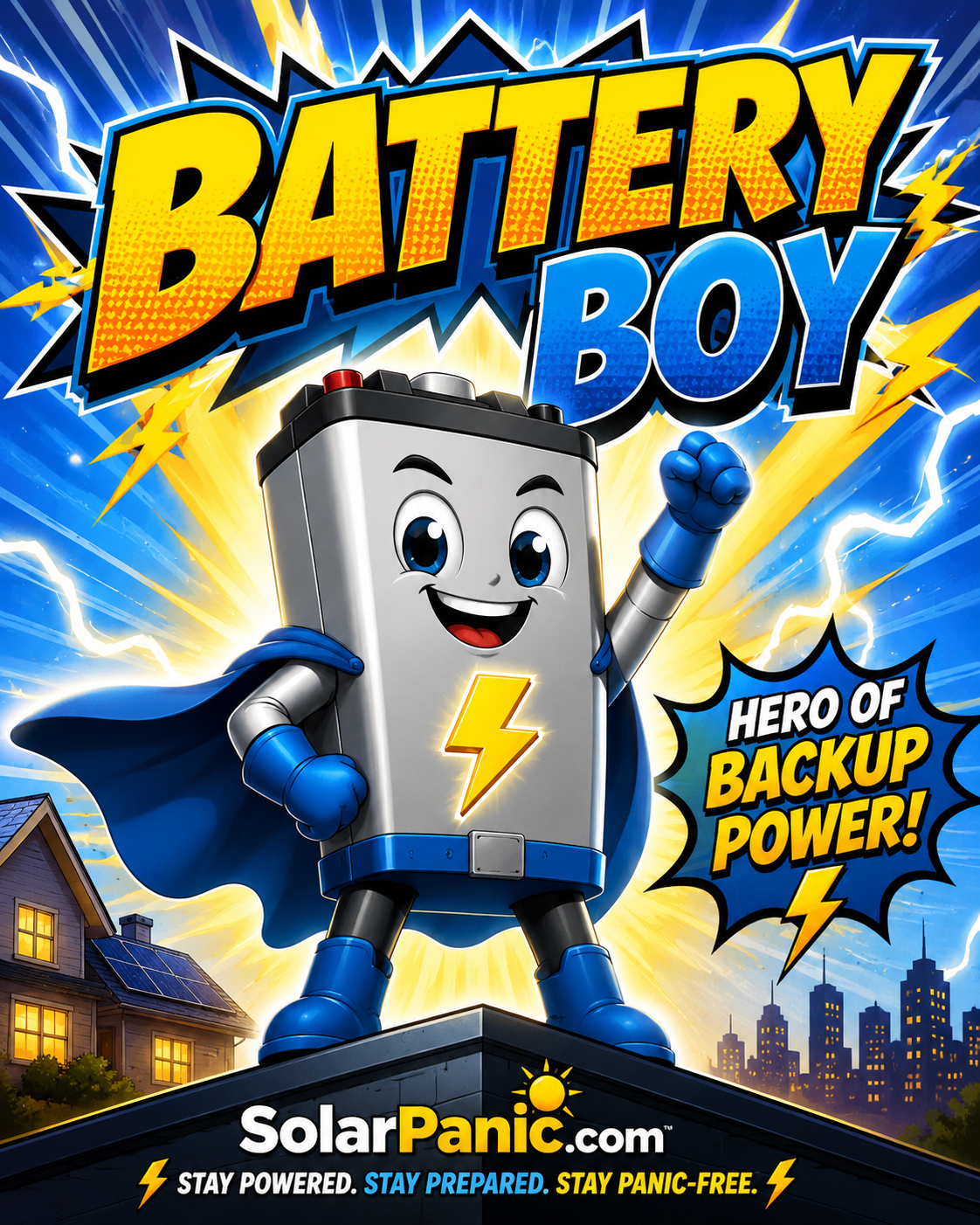
Battery Boy says: “Do not ask me to power confusion. Ask me to support a plan.”
Critical Business Loads
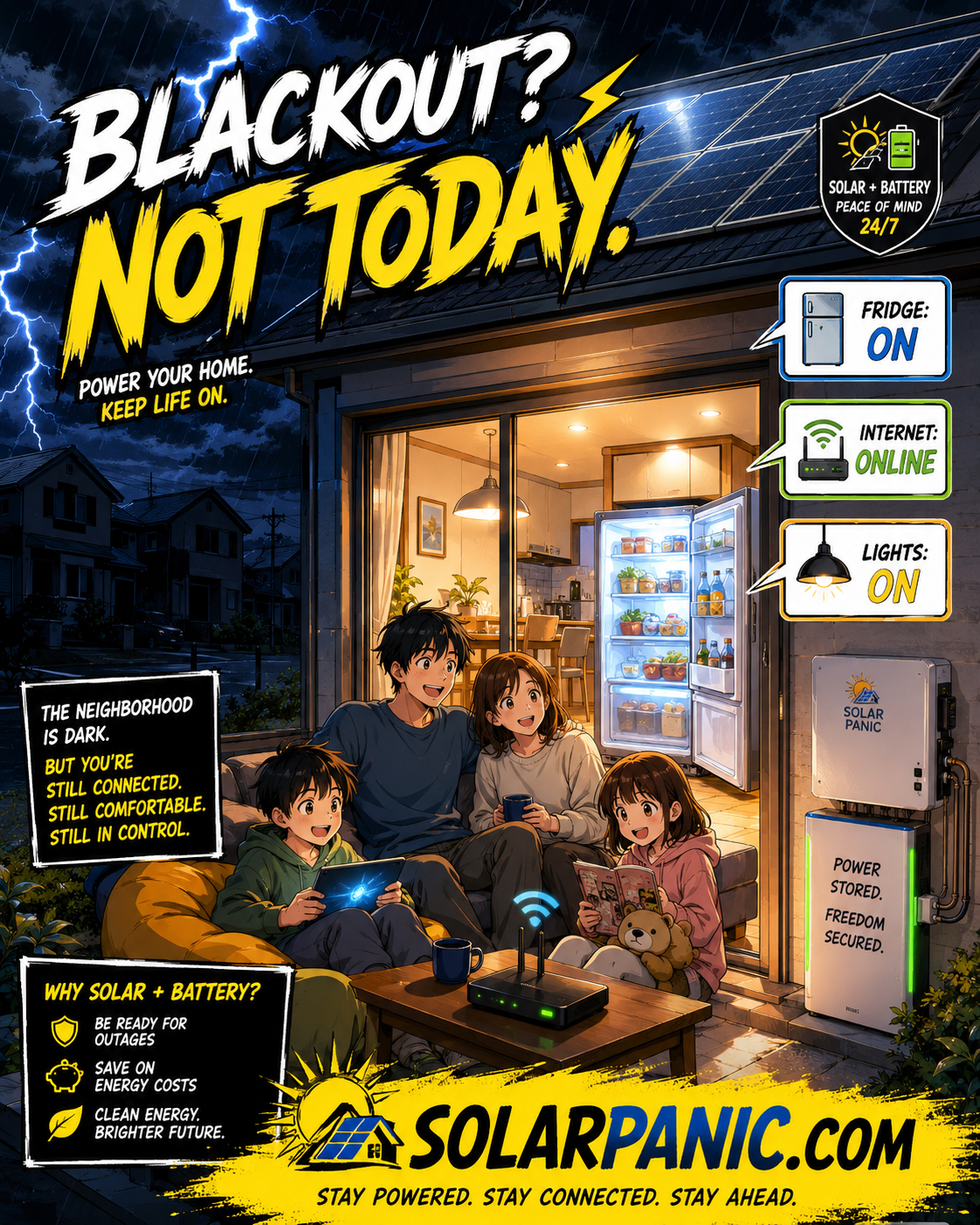
For a business, backup planning should focus on what matters most to operations. Not every load needs to be backed up. The key is identifying what keeps the business safe, responsive, and functional during an interruption.
- Refrigeration, food safety, or product protection
- Communications, internet, and point-of-sale systems
- Security, gates, access controls, and cameras
- Emergency lighting or selected work areas
- Critical pumps, controls, or monitoring equipment
- Business-specific operational loads
Peak Demand Is a Design Conversation
Peak demand is where the fictional utility’s drama gets loud. Madame Peak Rate walks in with a calculator and announces that the business used too much power at the wrong moment.
Solar Sensei answers by turning the drama into questions:
- When do demand spikes occur?
- Which equipment causes them?
- Can operations be shifted?
- Can solar reduce daytime draw?
- Can battery dispatch help with timing?
- What level of resilience does the business need?
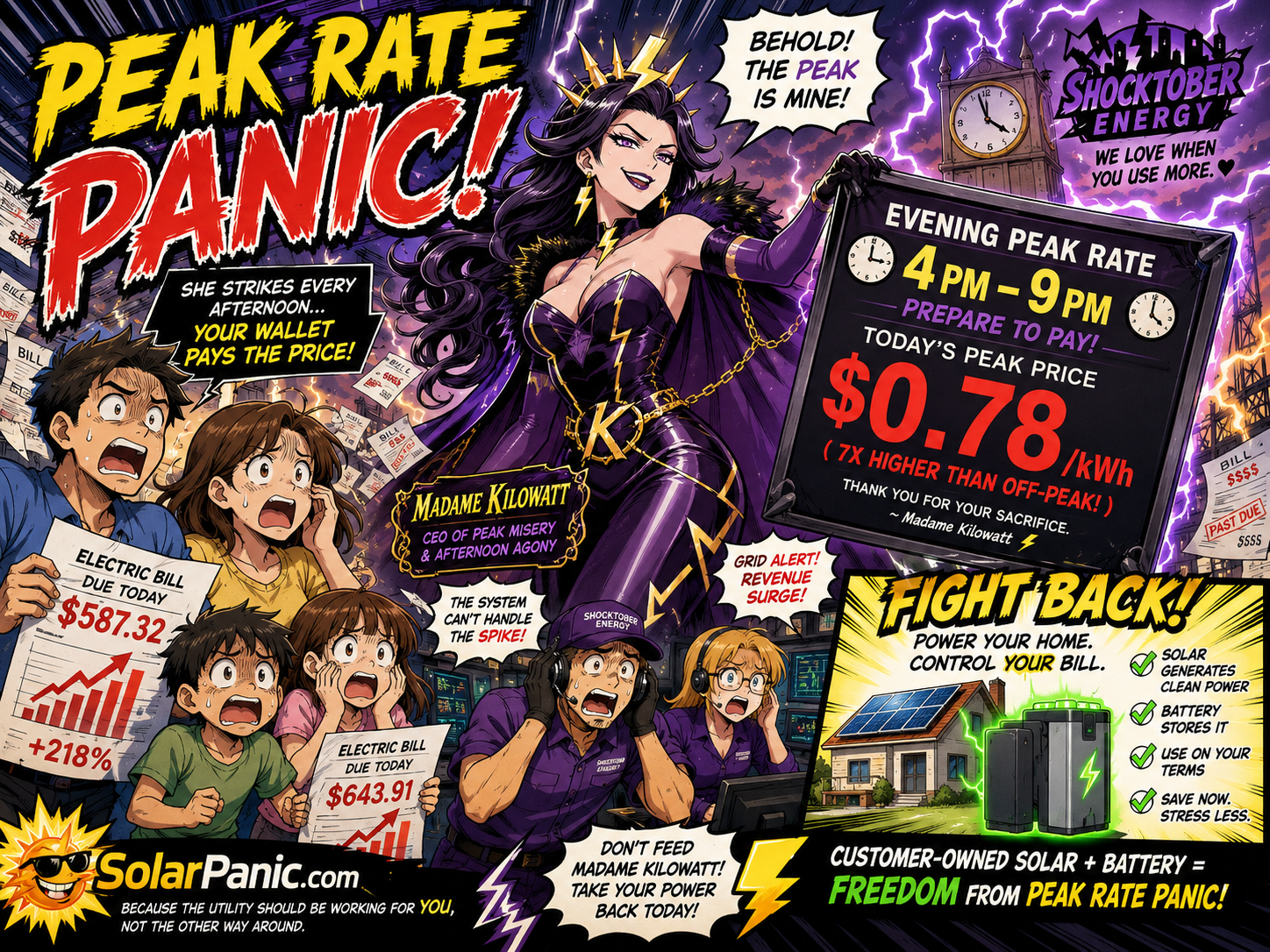
The villain is not the meter. The villain is not understanding what the meter is telling you.
The Monopoly Panic
MegaWatt Monopoly fears business customers who understand their own load profile. A business that knows when and why it uses power is harder to scare with fog. It can ask better questions about rate design, batteries, demand charges, backup loads, and public rules.
“They are turning the bill into operations data!” cries the lobbyist. “Open the delay briefcase!”
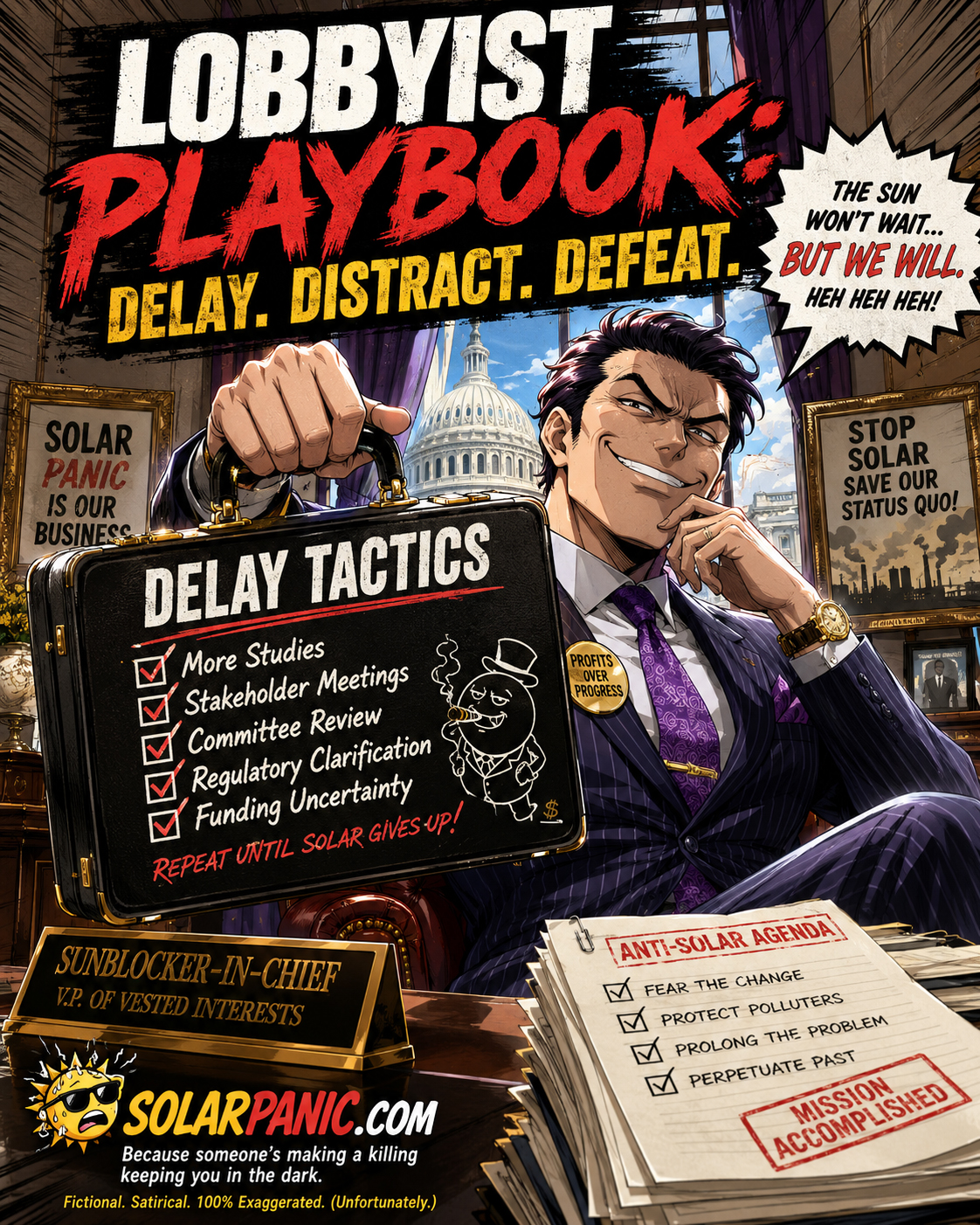
The Homework Attack Connection
Business customers who understand their energy profile also understand policy stakes more clearly. They notice when solar and batteries are treated like problems instead of solutions. They notice when public questions are buried under paperwork.
That leads directly to SolarPanic’s flagship bonus episode: the fictional monopoly overwhelms commissioners with homework, and the people respond with Proposition Sunlight and 18 commissioners.
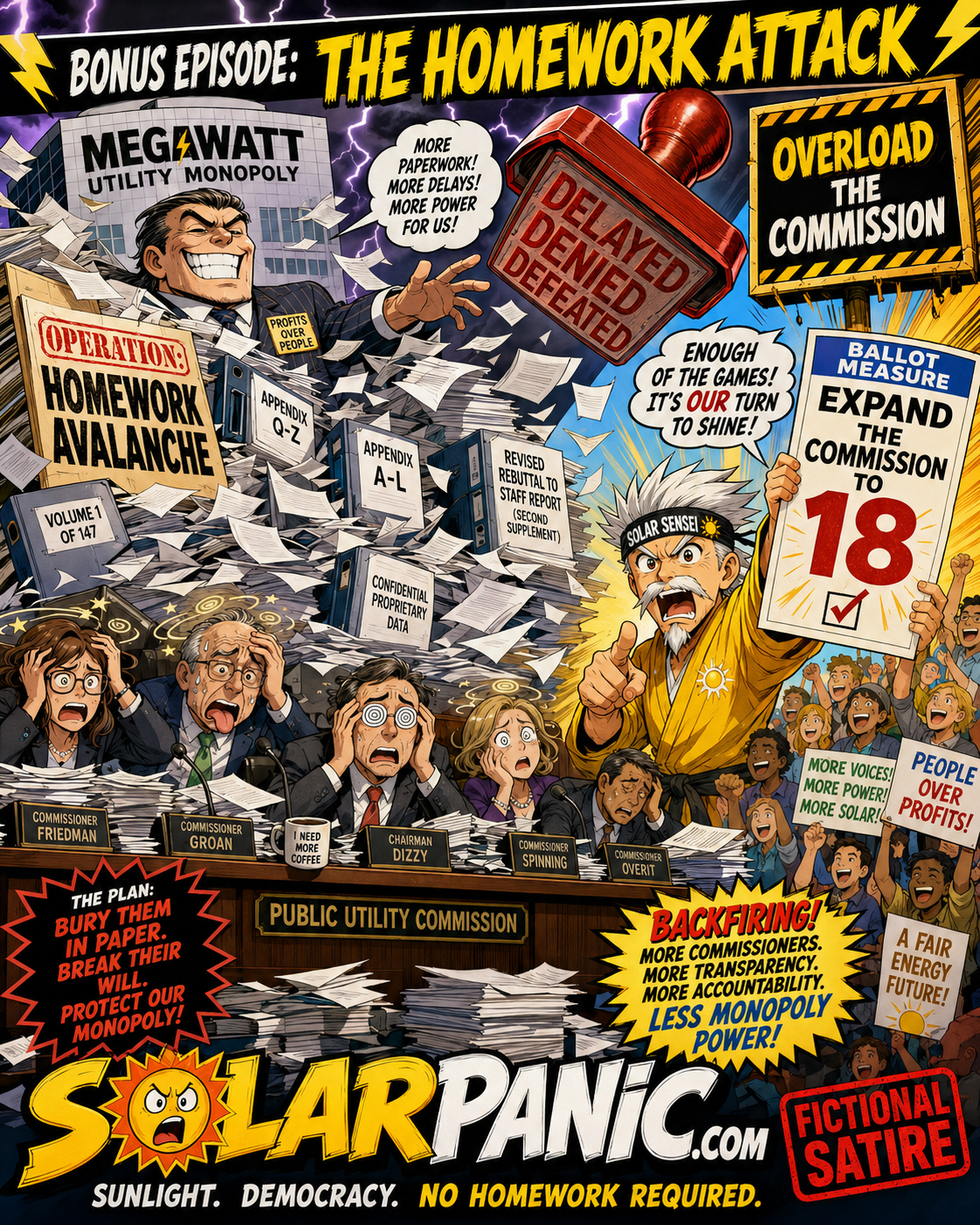
Final caption: a business with a load profile is harder to panic.