The House Stops Being Helpless
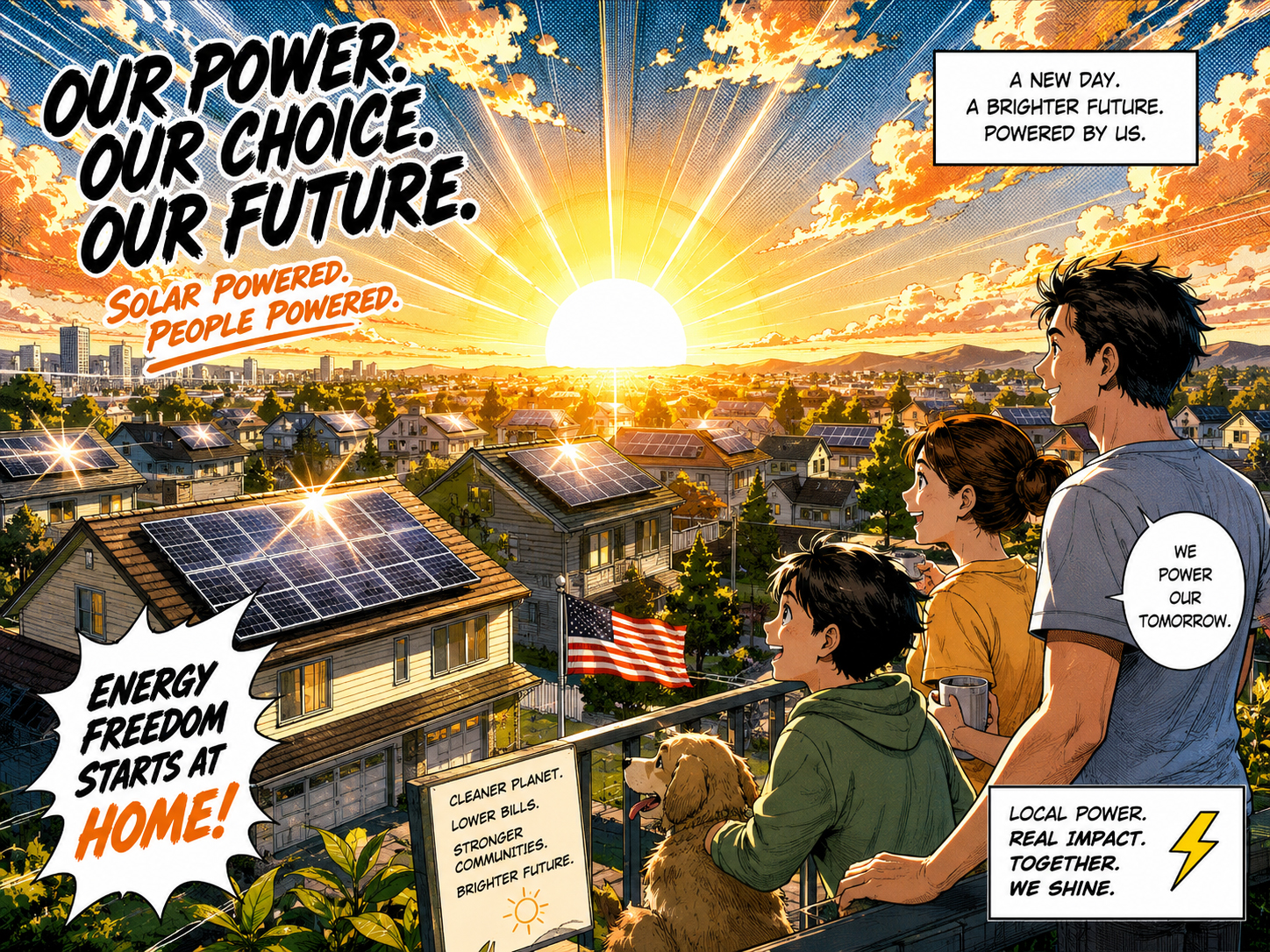
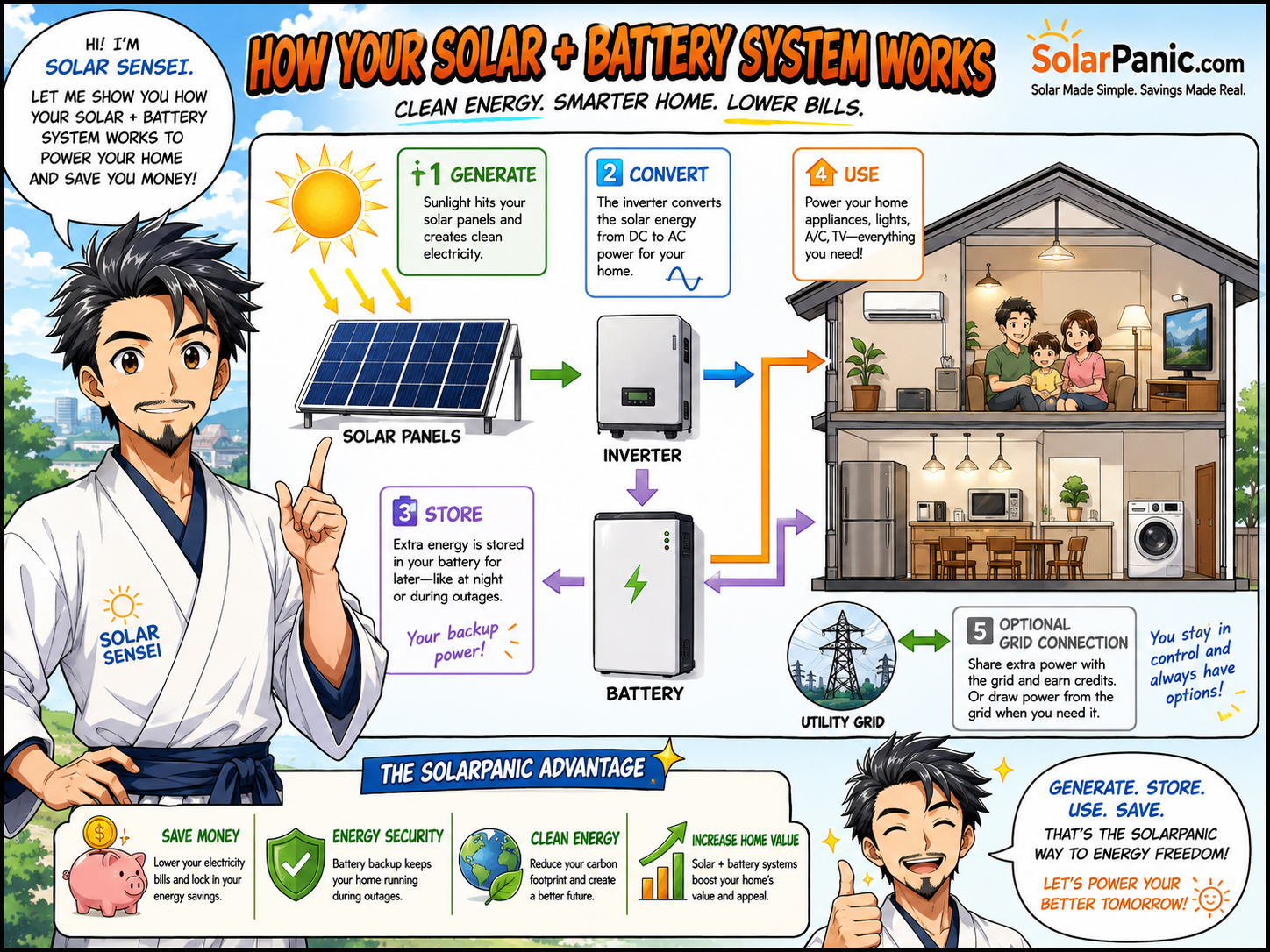
A home solar and battery system is not just a roof decoration. It is a practical energy plan. The roof can produce power. The battery can store energy. Selected loads can be backed up. The homeowner can understand timing instead of just fearing the next bill.
“Customer-owned system detected!” Chairman Kilowatt screams. “They are becoming harder to scare!”
Solar Sensei does not care about the screaming. He starts with the house. What is the roof like? What electrical service exists? What loads matter? What does the customer want during an outage? What does the family expect the battery to do?

Start With the Roof
The rooftop is where the story begins. A good residential solar conversation looks at the actual building: roof space, orientation, shading, structural conditions, electrical service, installation access, and customer goals.
In SolarPanic terms, this is the moment the fictional utility starts sweating. The customer is no longer just staring at a bill. The customer is looking at the building as useful energy real estate.
SolarPanic punchline: the monopoly wanted a passive meter. The roof asked for a job.
Add the Battery Conversation
A battery gives the home timing and backup options. It does not make every load run forever. It does not erase the need for good design. It helps the homeowner plan around selected needs.
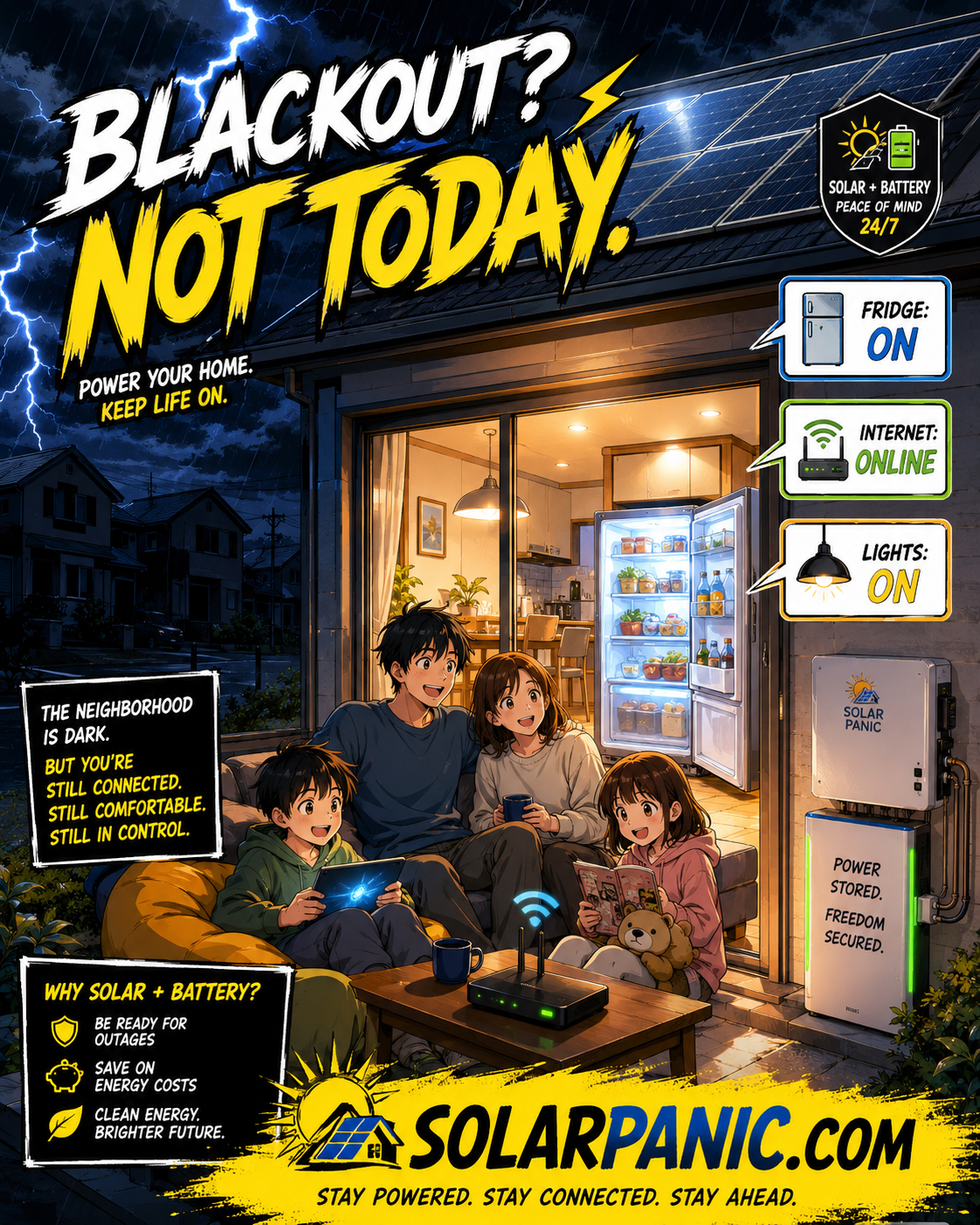
- Refrigerator and freezer
- Internet modem and router
- Selected lights
- Phone charging
- Garage door or gate access where planned
- Medical or essential equipment where applicable
Design Around Critical Loads
The phrase “critical loads” is where fantasy becomes a plan. A home does not necessarily need every load backed up. It needs the right loads backed up. That is how battery capacity is used wisely.
Battery Boy says: “Do not ask me to power every dream. Ask me to support the loads that matter.”
Solar Sensei’s checklist is simple:
- What must stay on?
- What can stay off?
- How long should backup power last?
- How much battery capacity is realistic?
- Can solar recharge during daylight?
- What does the customer need to avoid during backup operation?
Peak-Rate Timing
Residential energy is not only about how much power is used. It is also about when power is used. Afternoon and evening rate periods can change the meaning of the bill. Batteries can help make timing part of the design conversation.
Madame Peak Rate hates this because her best weapon is confusion. Once the homeowner understands timing, the bill becomes less mysterious.
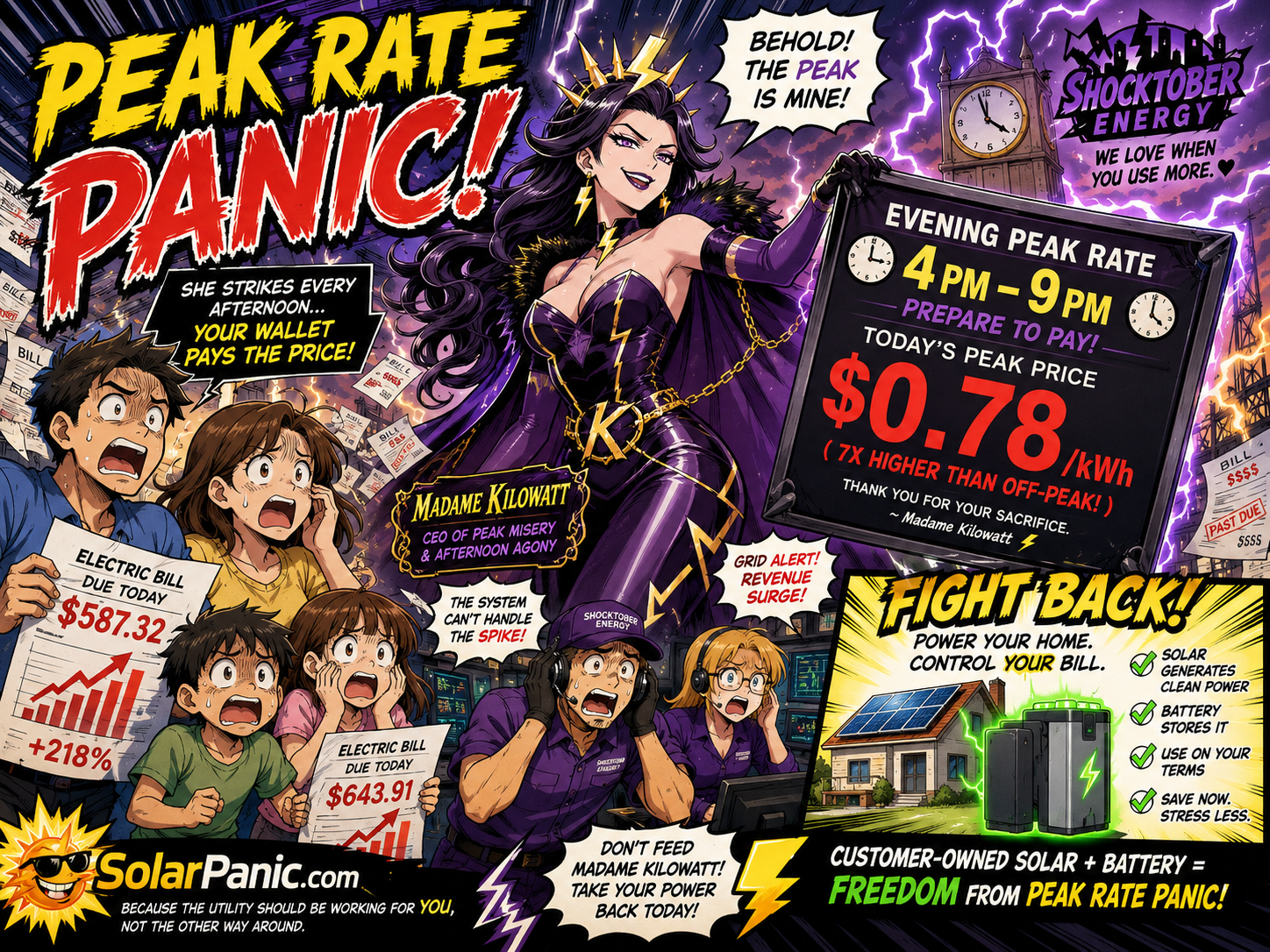
Solar Sensei rule: the villain is not the clock. The villain is confusion about the clock.
Blackout Resilience
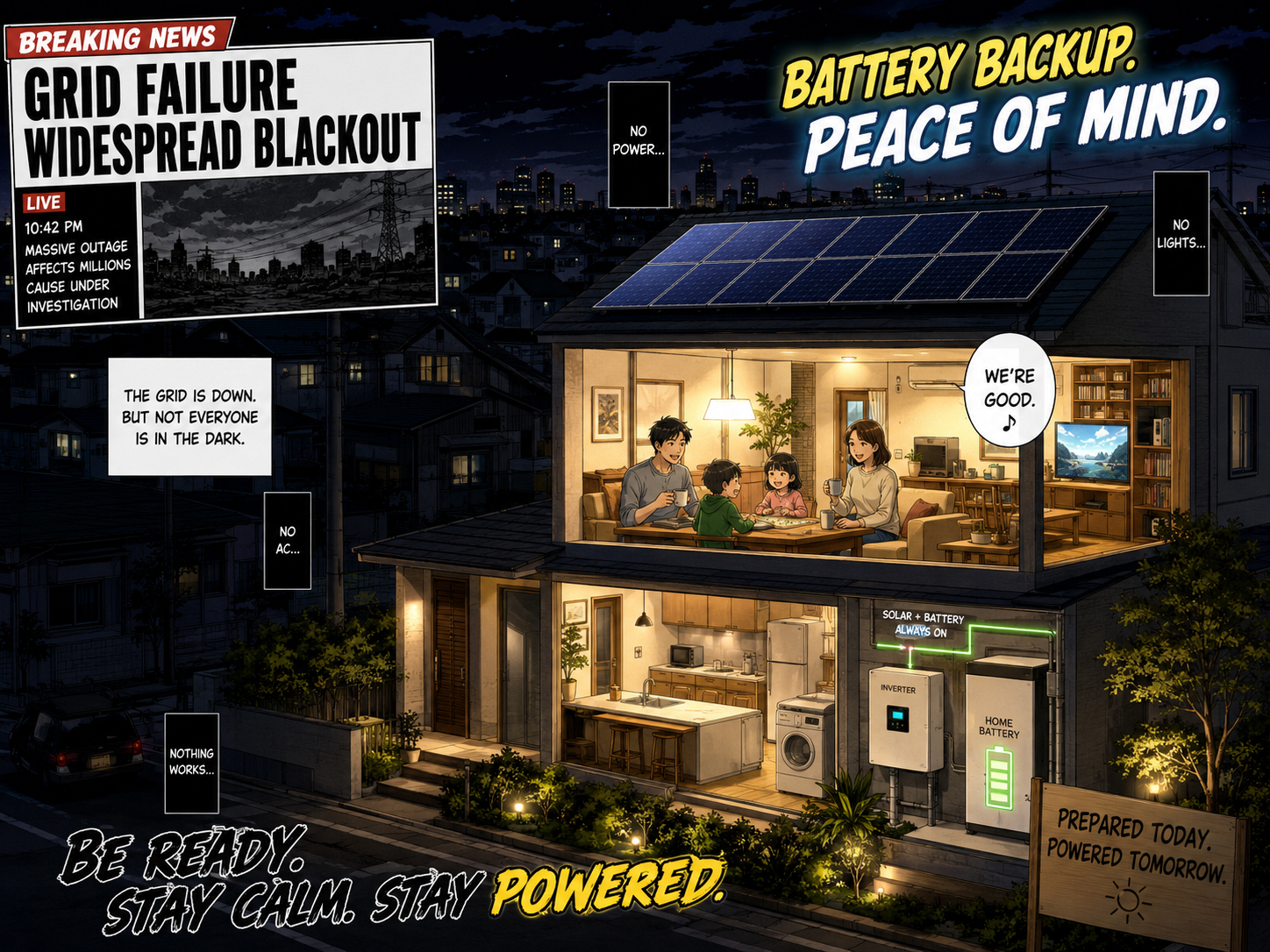
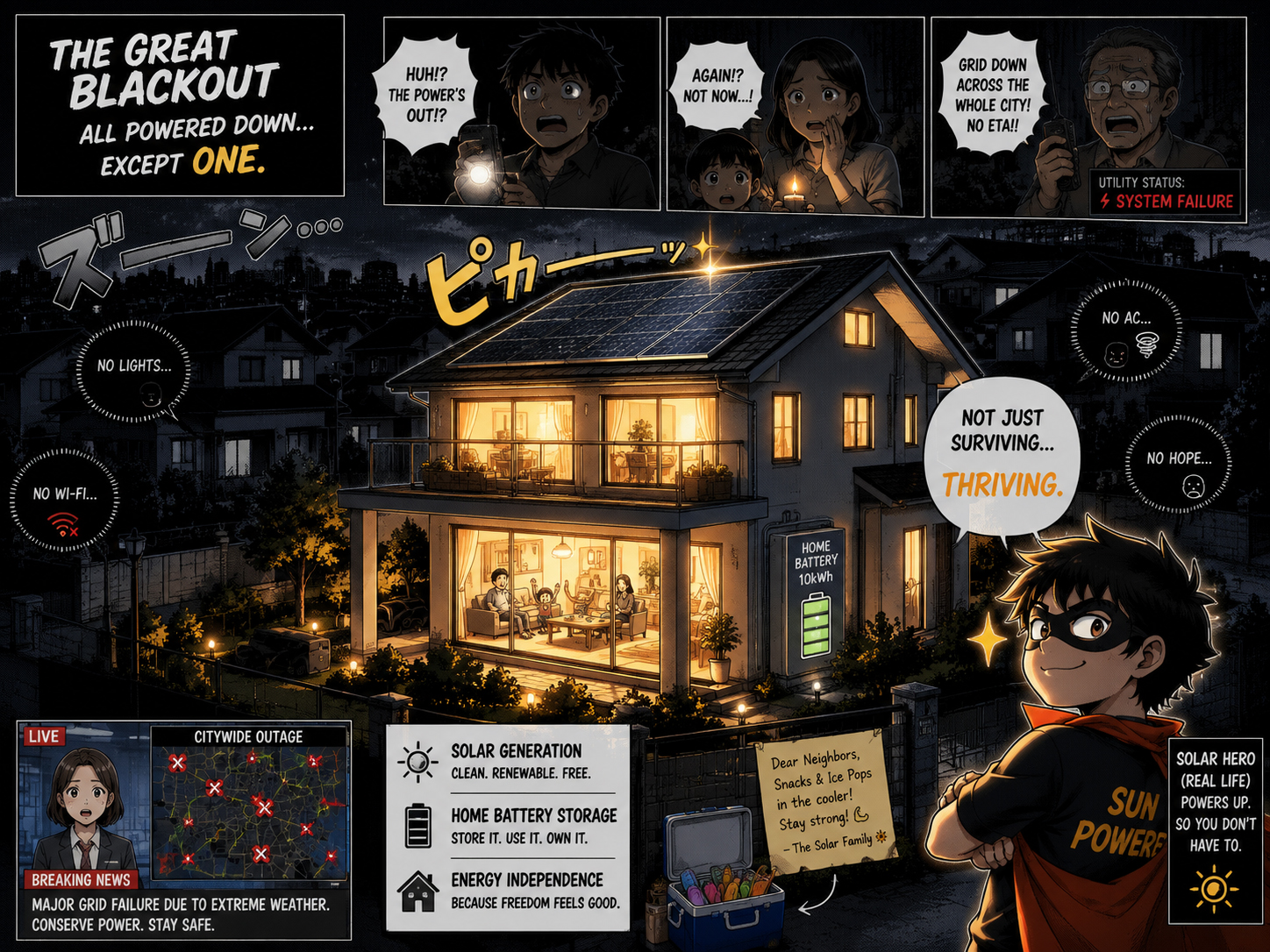
A blackout changes the question from “what does it cost?” to “what still works?” A properly designed solar battery home can be more useful during outages because it has a planned set of backed-up loads.
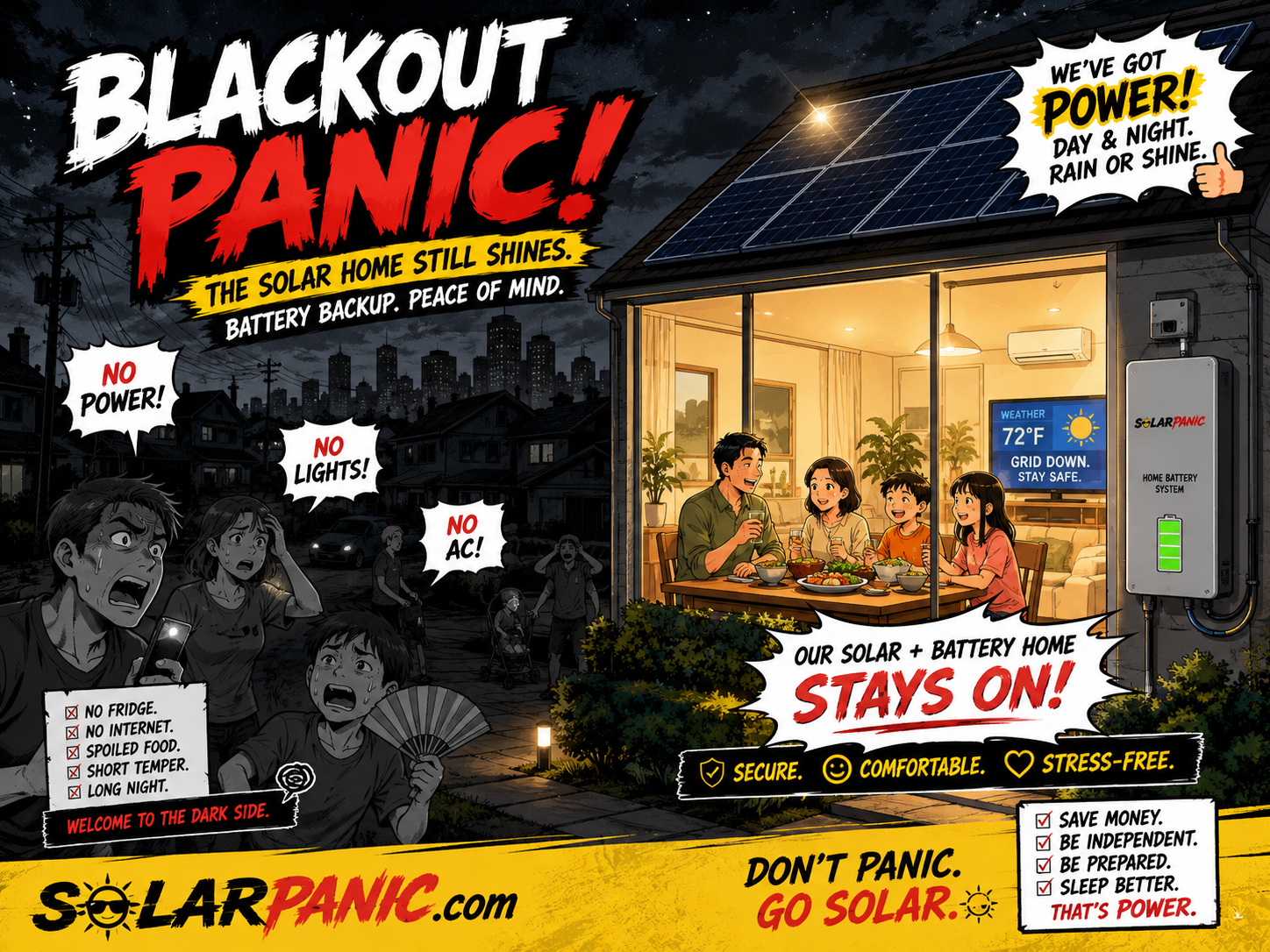
The goal is not to pretend the grid does not matter. The goal is to make the home less helpless when the grid gets dramatic.
The Monopoly Panic
MegaWatt Monopoly fears residential solar and batteries because they change the customer. The homeowner begins to understand production, usage, timing, backup, and policy. A prepared homeowner is harder to confuse.
“They are designing around reality!” cries the Permit Goblin. “This is terrible for confusion!”
The Bigger SolarPanic Story
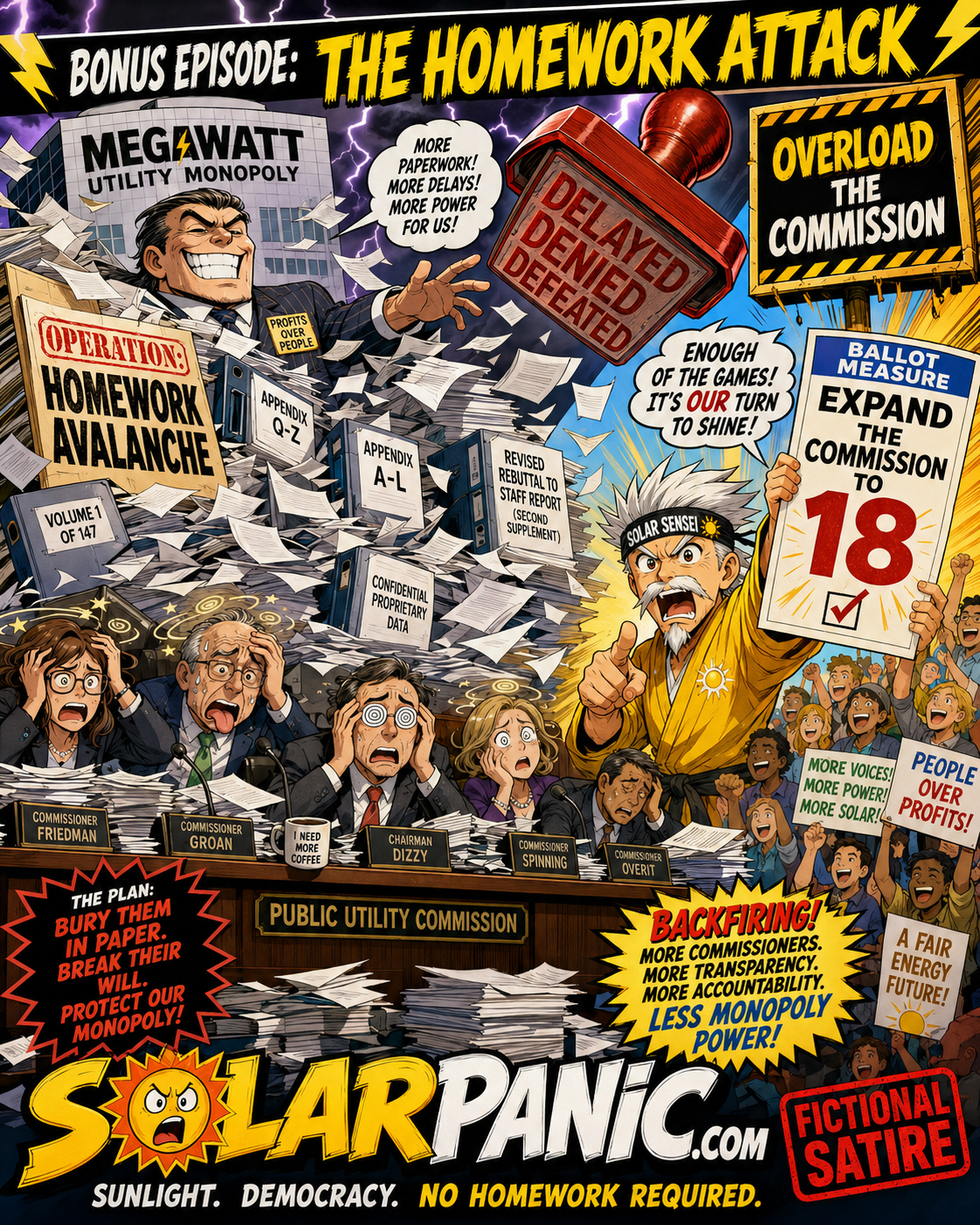
Home solar and battery design connects directly to the flagship bonus episode. Once customers understand their systems, they start asking public questions: why are solar customers treated like trouble? Why are batteries framed as a threat? Why do simple regulatory issues get buried under homework?
That path leads to Proposition Sunlight and the 18-commissioner solution.
Final caption: a home with a plan is harder to panic.