The Clock Turned Villain
At 4:59 p.m., the house was peaceful. Solar panels had worked all day. The family felt good. Battery Boy had quietly stored energy. Solar Sensei reviewed the load plan with a calm nod.
Then the clock struck five.
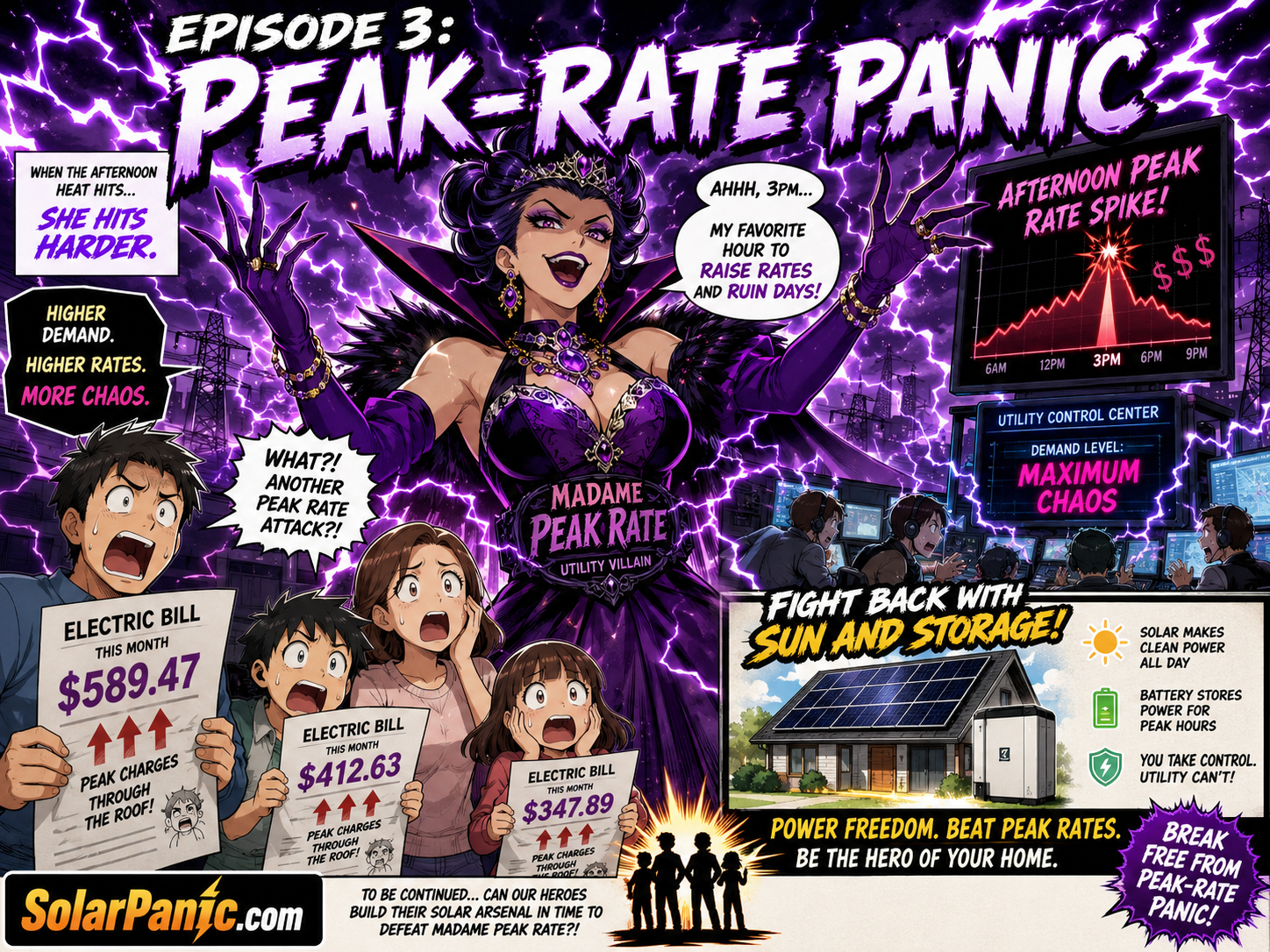
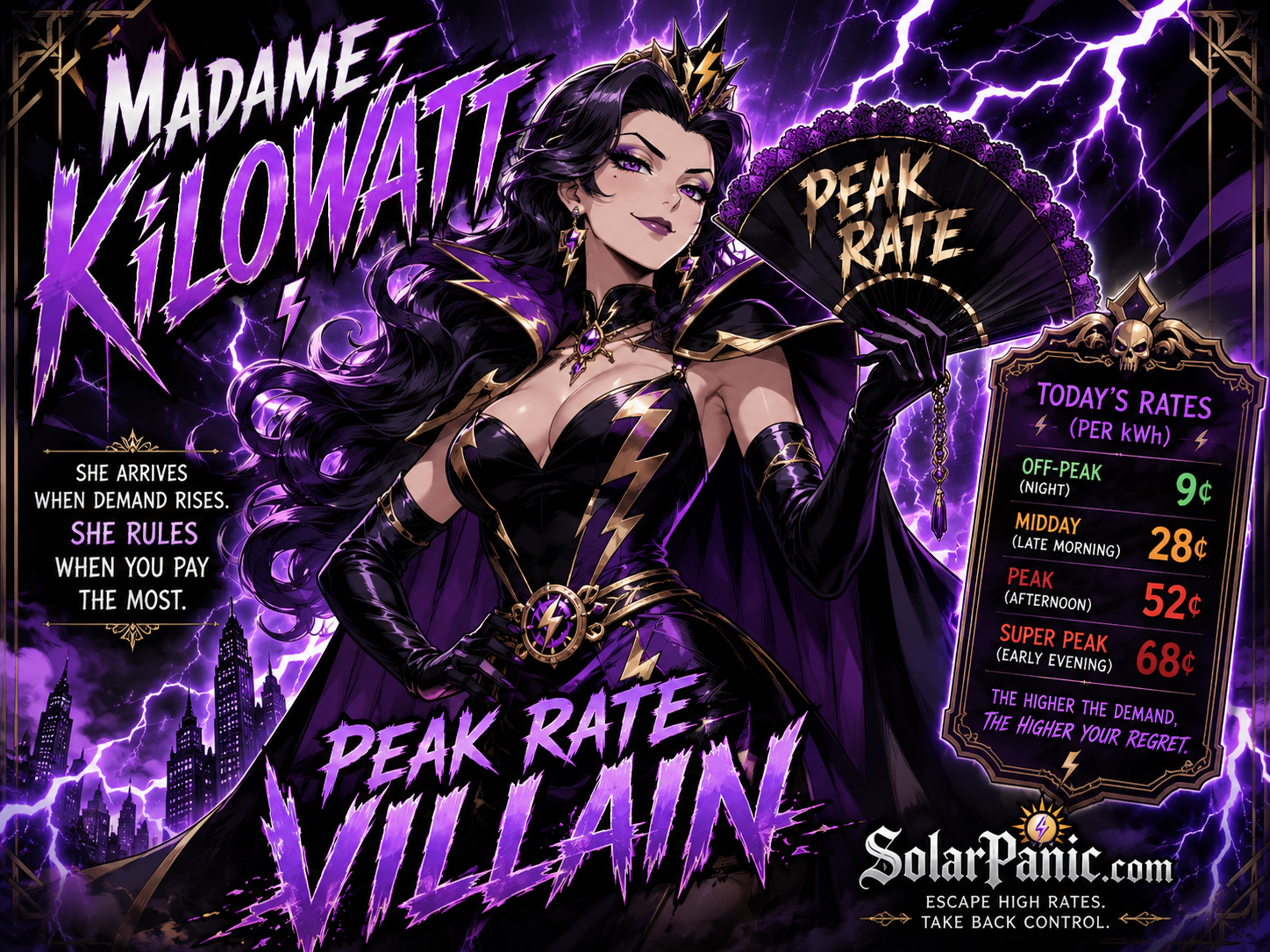
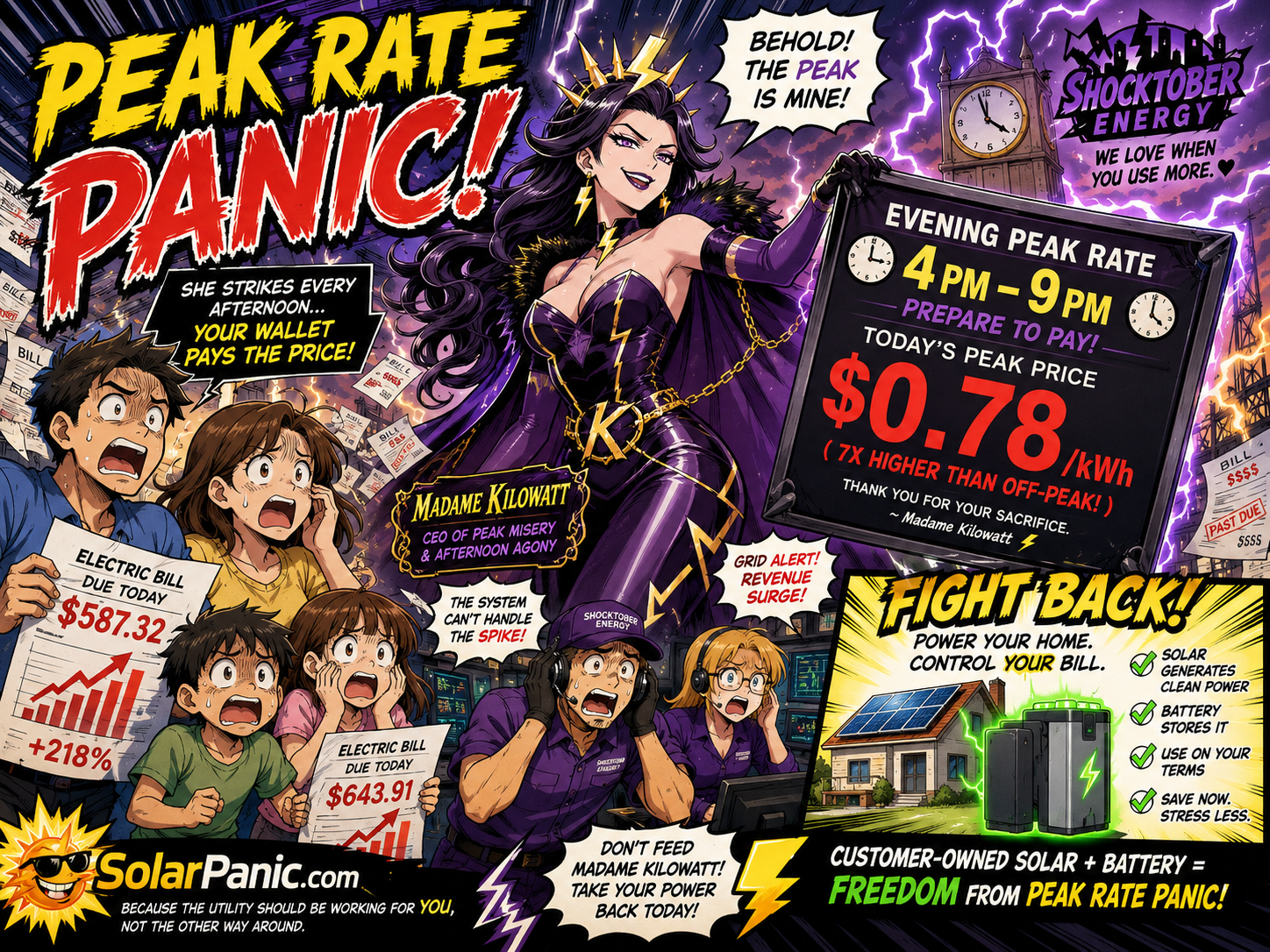
“Behold!” cried Madame Peak Rate. “The expensive part of the day has arrived!”
She burst through the doorway in a cape made of utility bills. Her calculator sparked. Her glasses flashed. Somewhere far away, Chairman Kilowatt applauded like a man watching his favorite disaster movie.
The Boardroom Loves Confusion
Inside MegaWatt Monopoly Utility Co., the executives gathered around the big screen. It showed a customer trying to understand energy timing.
WARNING: CUSTOMER MAY BE LEARNING WHEN POWER COSTS MORE.
The boardroom gasped. A confused customer is easy to scare. A customer who understands timing becomes harder to push around.
Solar Sensei Explains the Trick
Solar Sensei stepped between the family and Madame Peak Rate.
“The villain is not the clock,” he said. “The villain is confusion about the clock.”
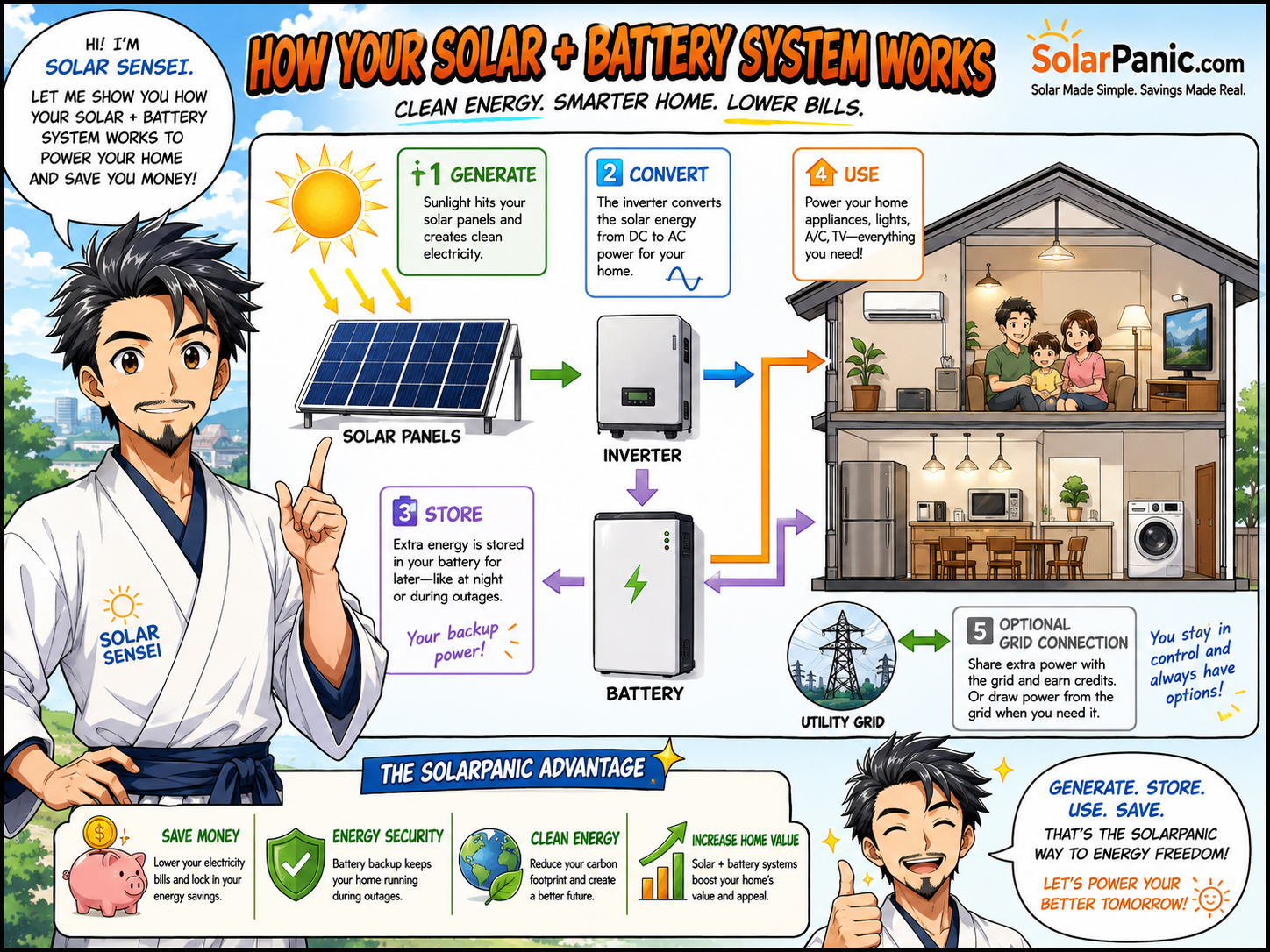
He drew three simple columns: production, usage, and storage. Solar can produce during daylight. The home may use energy later. A battery can help bridge some of that timing, depending on the system, load choices, capacity, and installation.
Battery Boy Steps Forward
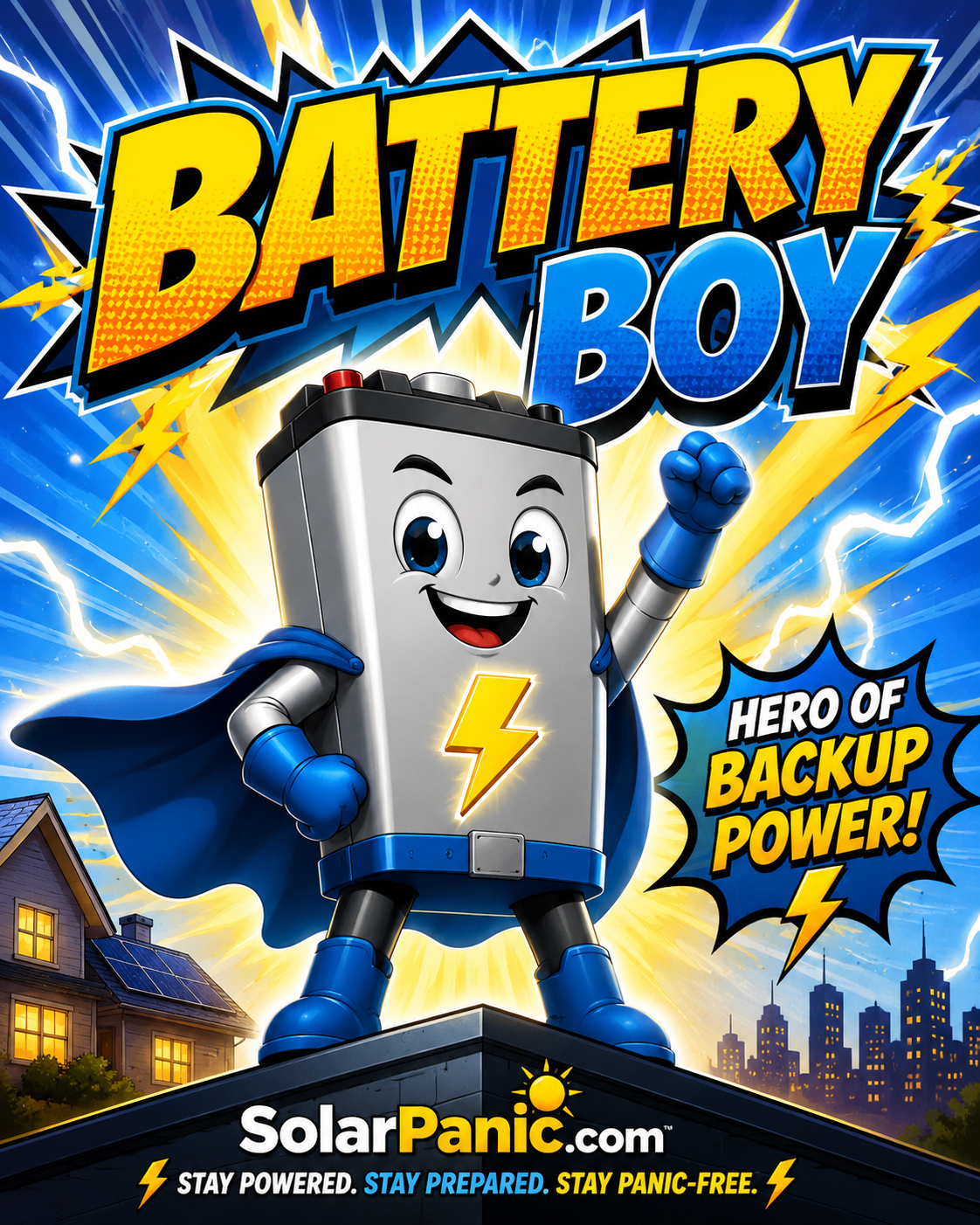
Madame Peak Rate raised her calculator and prepared the afternoon attack. Battery Boy rolled forward with a quiet green glow.
“Some of the daylight came with me,” Battery Boy said.
The calculator flickered. Madame Peak Rate hated stored sunlight. Not because it solved everything, but because it gave the customer timing options.
The Customer Learns the Right Questions
Solar Sensei handed the family a checklist. Not a magic spell. Not a sales slogan. A design checklist.
- When does the site use the most energy?
- Which loads matter during expensive periods?
- How much solar production is available?
- How much battery capacity is realistic?
- What should be backed up during outages?
- How should the system be installed safely?
Every question made Madame Peak Rate shrink a little. Not vanish. Shrink. The customer was no longer just afraid of the bill. The customer was learning how the bill worked.
The Monopoly Panic Alarm
Back at MegaWatt Monopoly, the panic alarm changed from red to extra red. Chairman Kilowatt grabbed the microphone.
“They are no longer scared of timing! They are designing around it!”
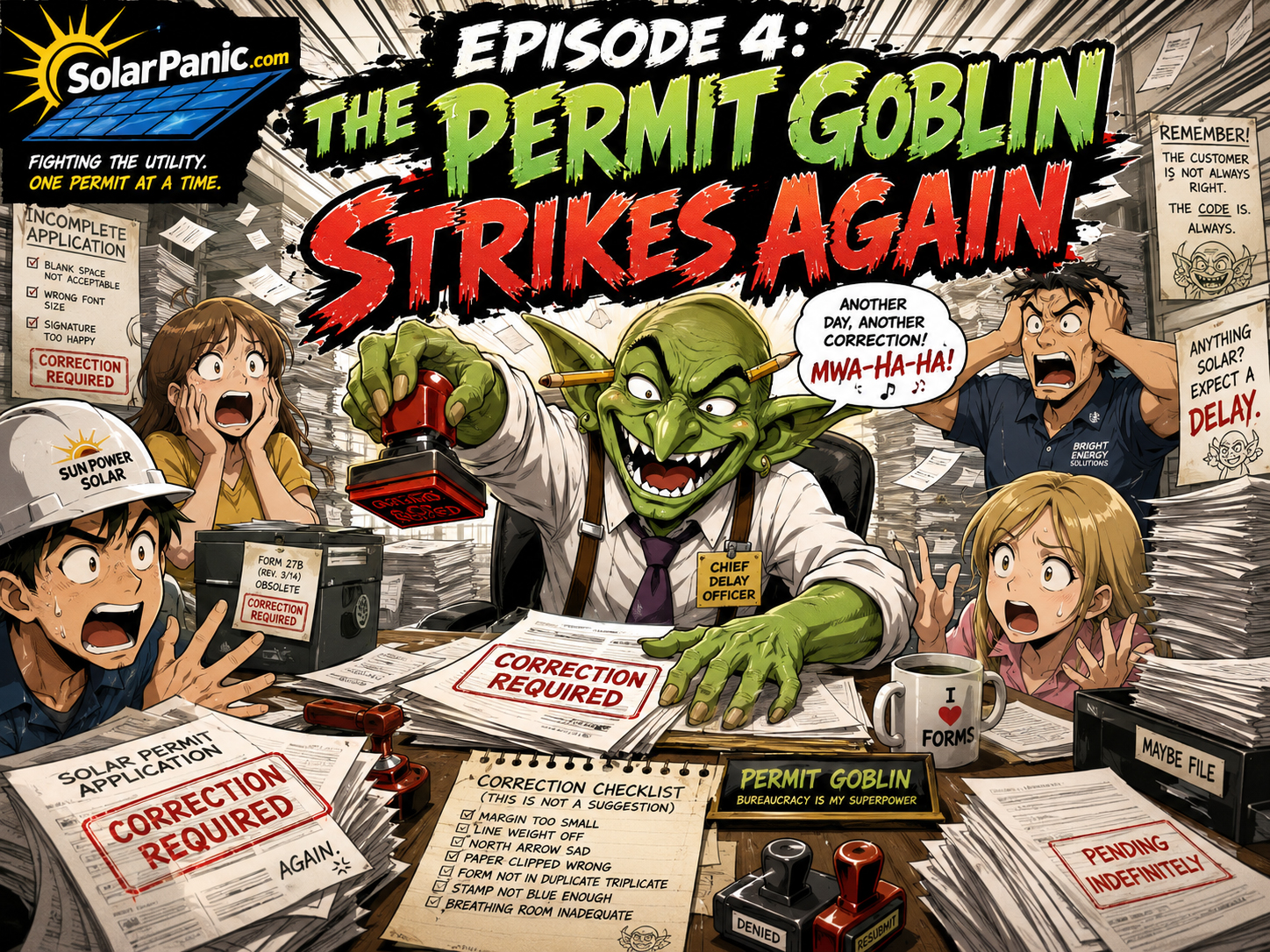
The Permit Goblin tried to help by throwing paperwork in the air, but Solar Sensei simply labeled it “questions for later” and kept explaining the system.
Why This Episode Matters
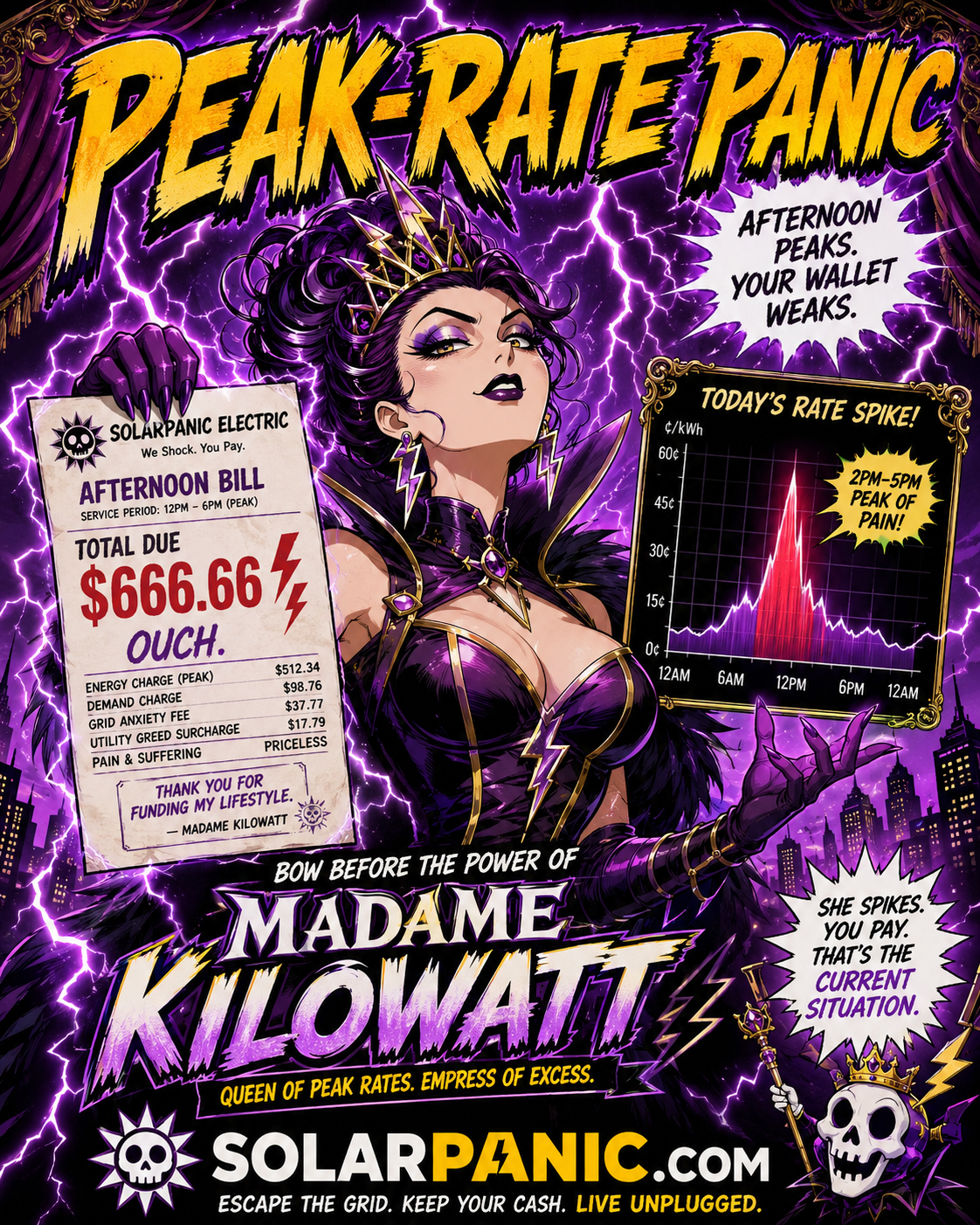
Peak Rate Panic matters because it connects money to timing. The customer can see that solar is not only about panels and batteries are not only about blackouts. Together, solar and batteries can become a practical conversation about when power is produced and when power is needed.
SolarPanic punchline: Madame Peak Rate brought the bill. Battery Boy brought the schedule.
The Road to the Homework Attack
Once customers understand timing, they start asking bigger policy questions. Why are solar customers treated like trouble? Why are batteries framed as a threat? Why does every public rule fight arrive buried in technical paperwork?
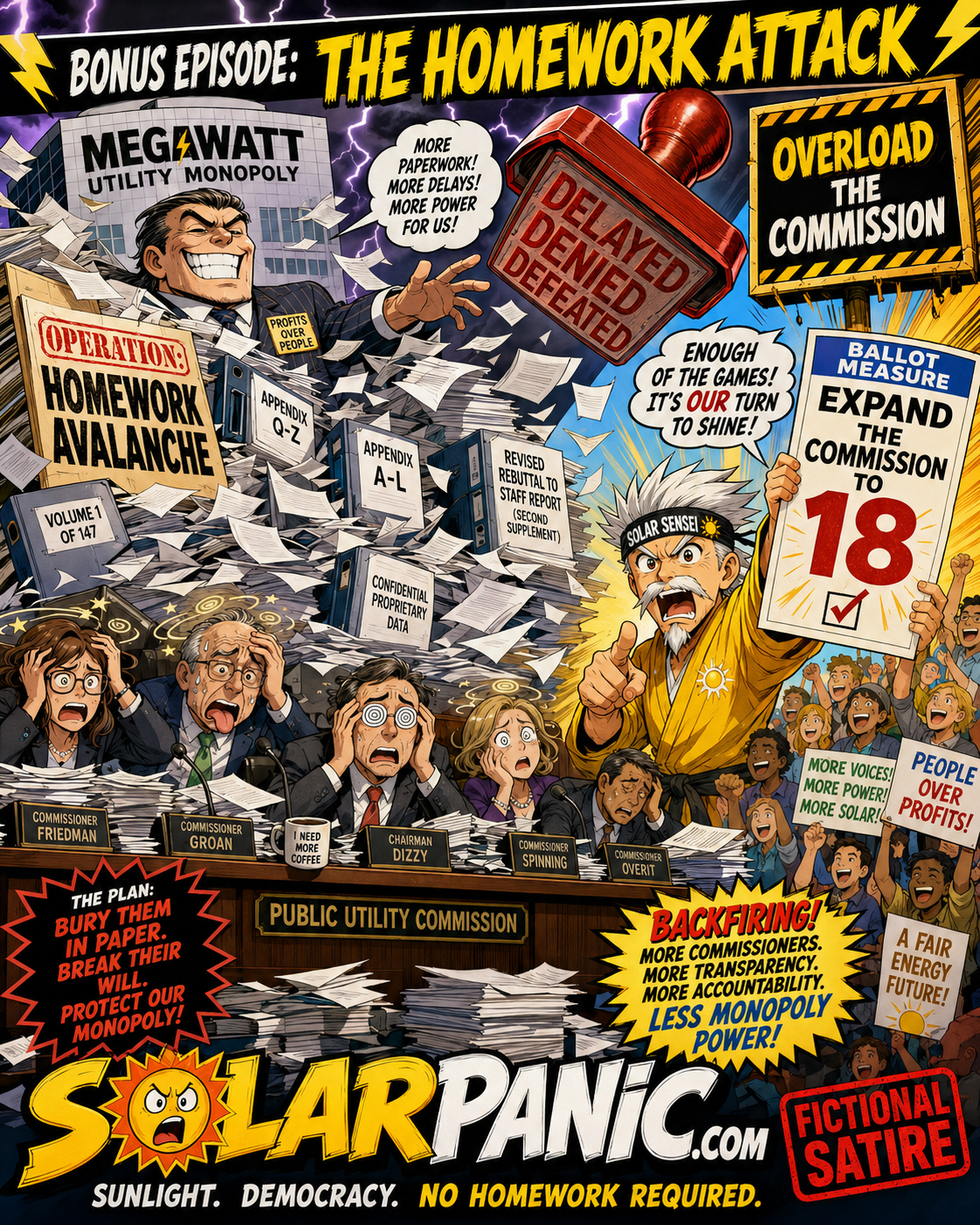
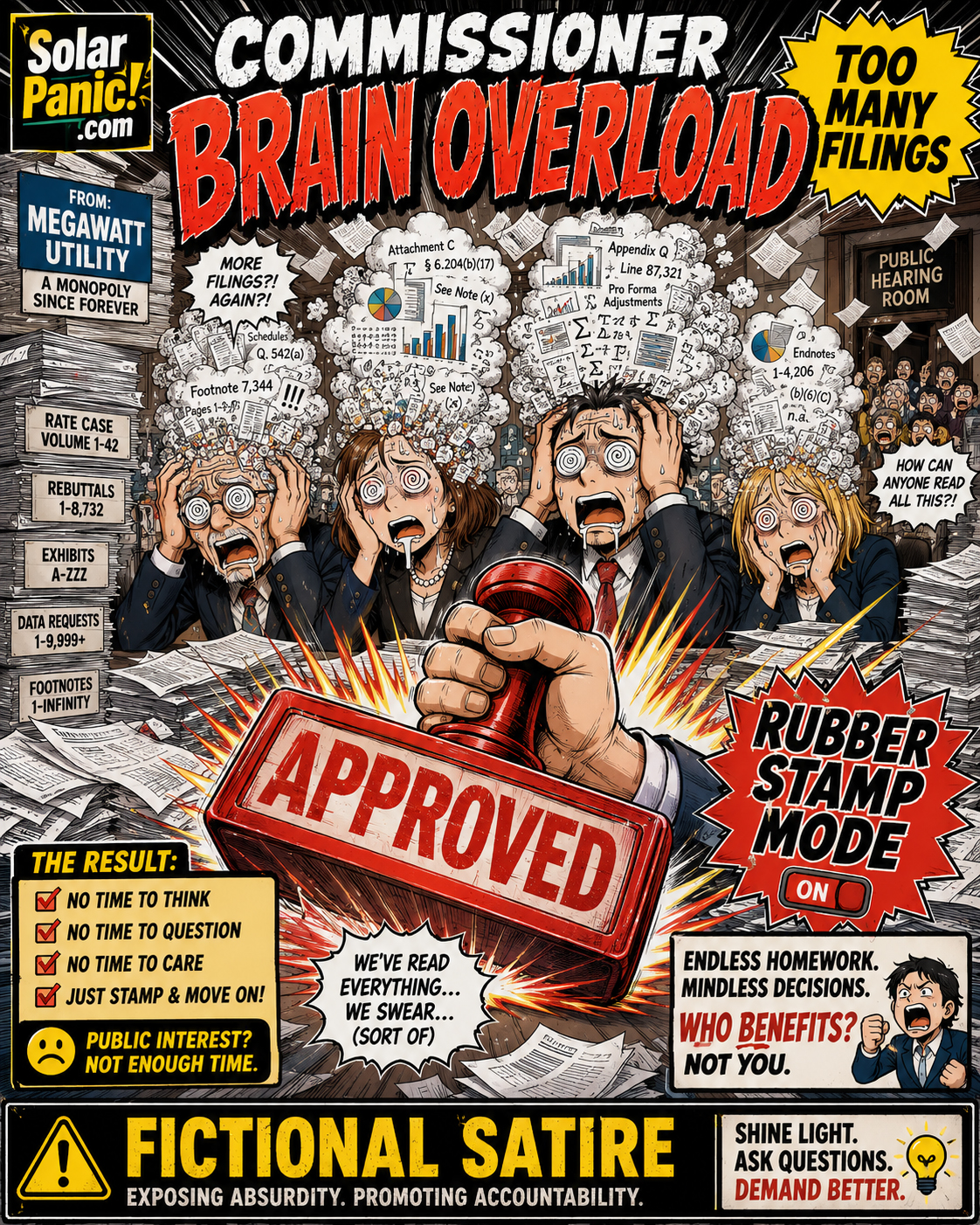
That path leads directly to the flagship bonus episode: The Homework Attack, where the fictional monopoly tries to overwhelm commissioners and the people answer with 18 commissioners.