The Map of Trouble
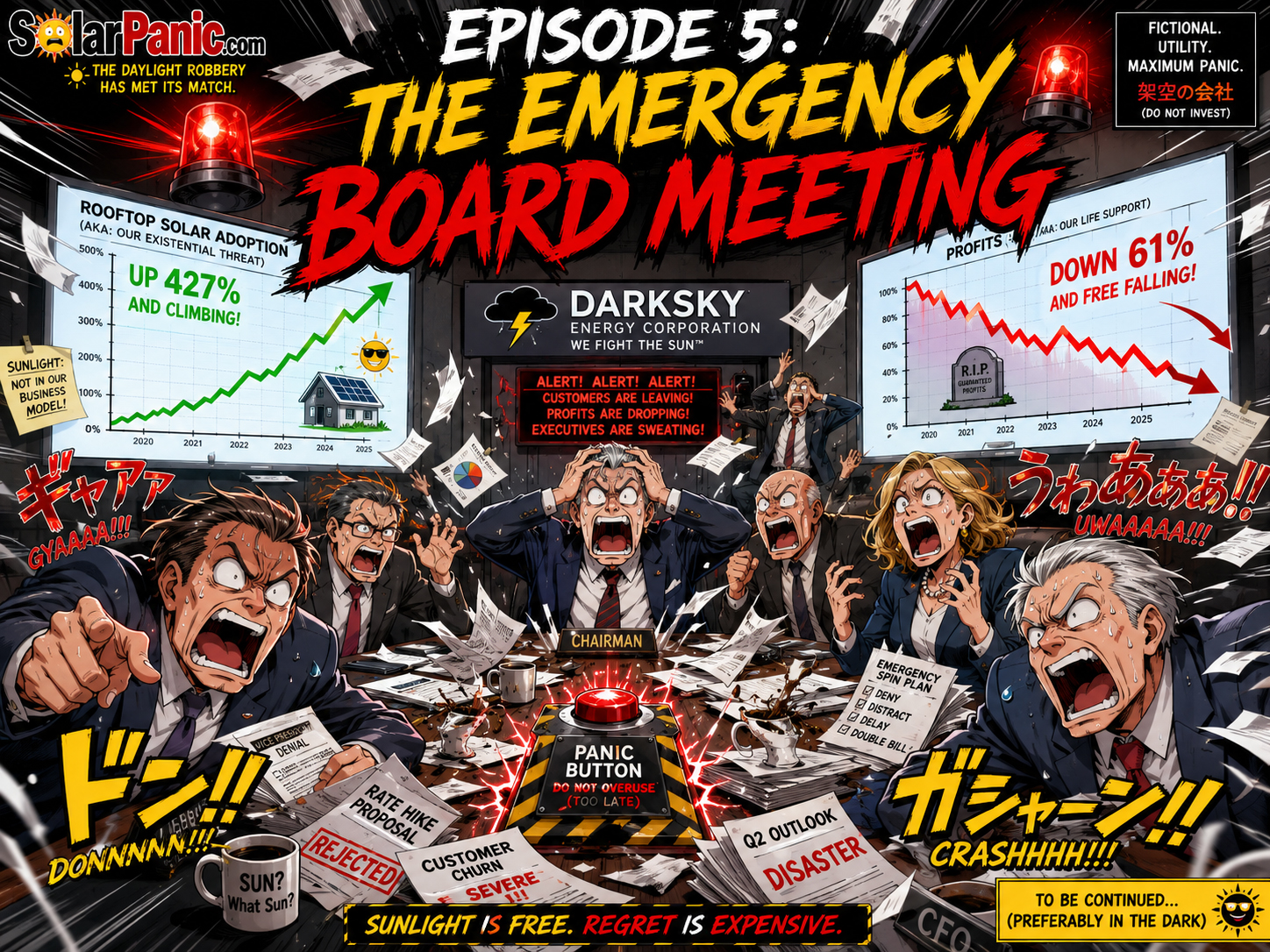
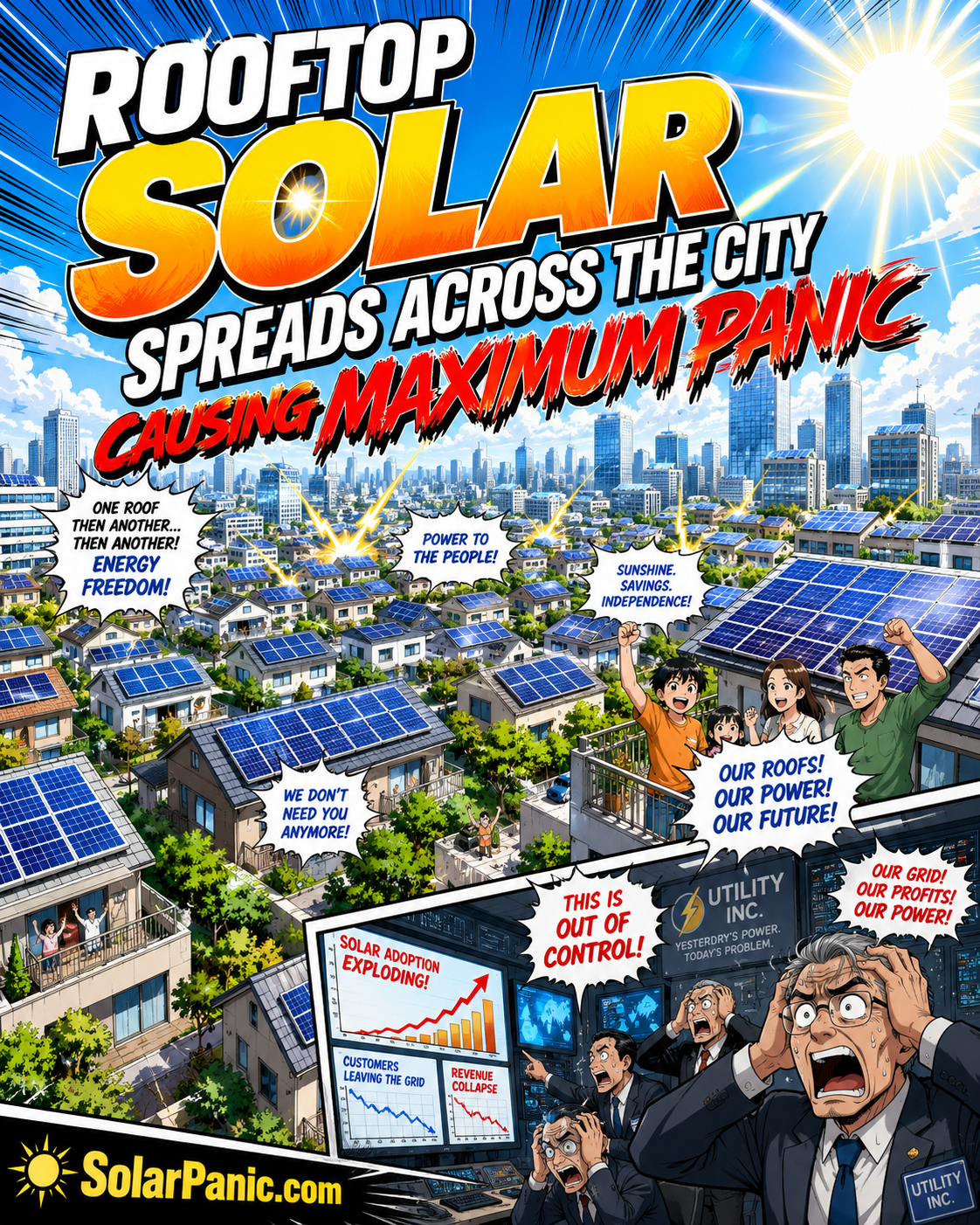
The meeting began with a giant screen. At first, the map showed only one yellow dot: a single customer-owned solar system. Chairman Kilowatt had dismissed it as a “minor rooftop incident.”
Then the second dot appeared. Then the tenth. Then the hundredth. Soon the map looked like a city full of tiny suns.
“This is not a map,” Chairman Kilowatt whispered. “This is a rebellion with addresses.”
The Boardroom Declares an Emergency
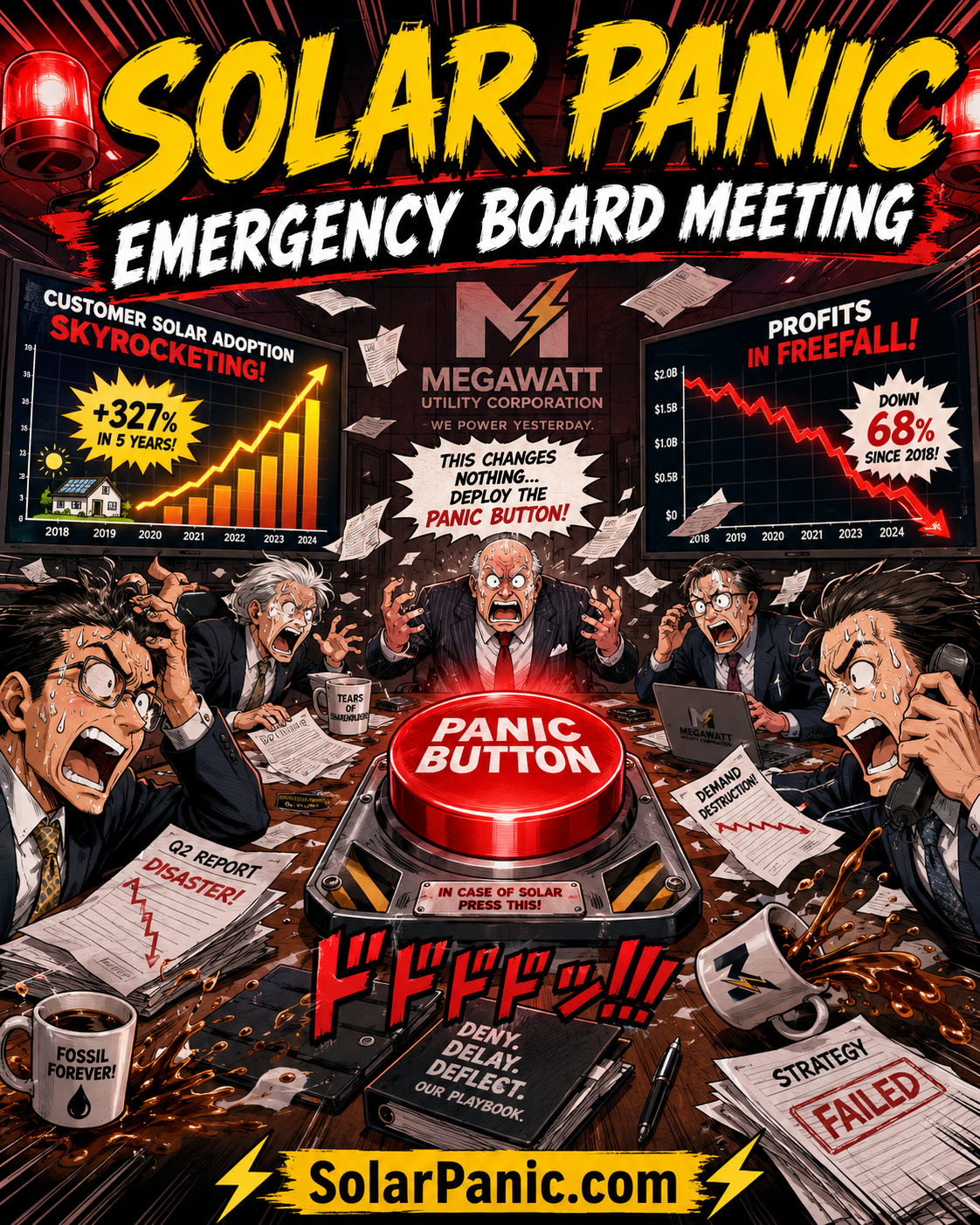
Madame Peak Rate slammed a stack of electric bills onto the conference table. The Permit Goblin crawled out of a drawer with emergency correction notices. The lobbyist opened a briefcase labeled “Delay Tactics.” The utility lawyers stretched in the hallway like sprinters before a race.
EMERGENCY TOPIC: CUSTOMERS OWN USEFUL EQUIPMENT.
Nobody in the fictional boardroom wanted to say the real fear out loud. It was not just solar. It was customer awareness. It was customers learning about loads, batteries, timing, blackouts, and public rules.
The Bad Ideas Begin
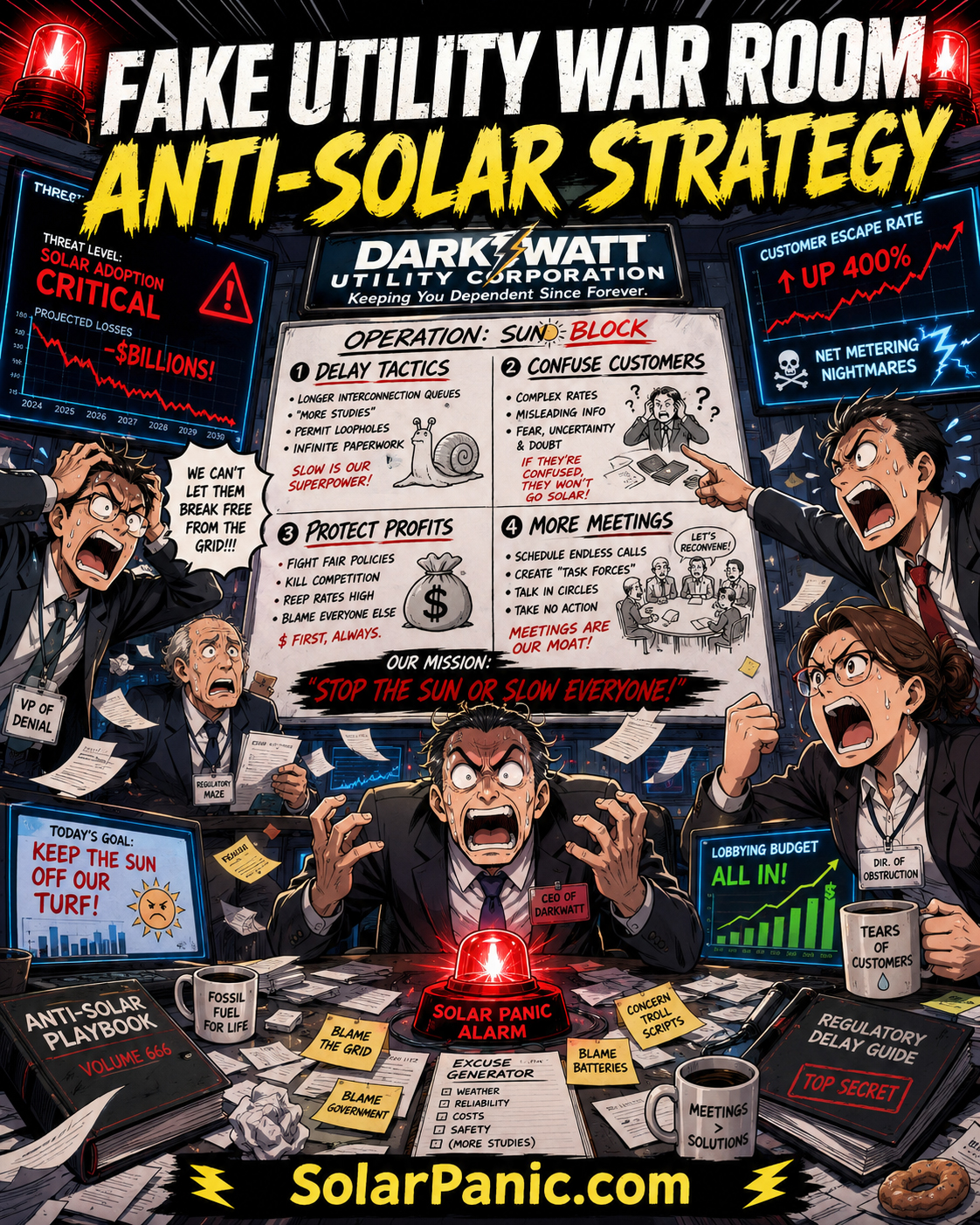
The emergency board meeting produced a wave of terrible ideas.
- Make the bills more confusing.
- Rename delays as “customer protection.”
- Send the Permit Goblin to every plan set.
- Blame the roof for being sunny.
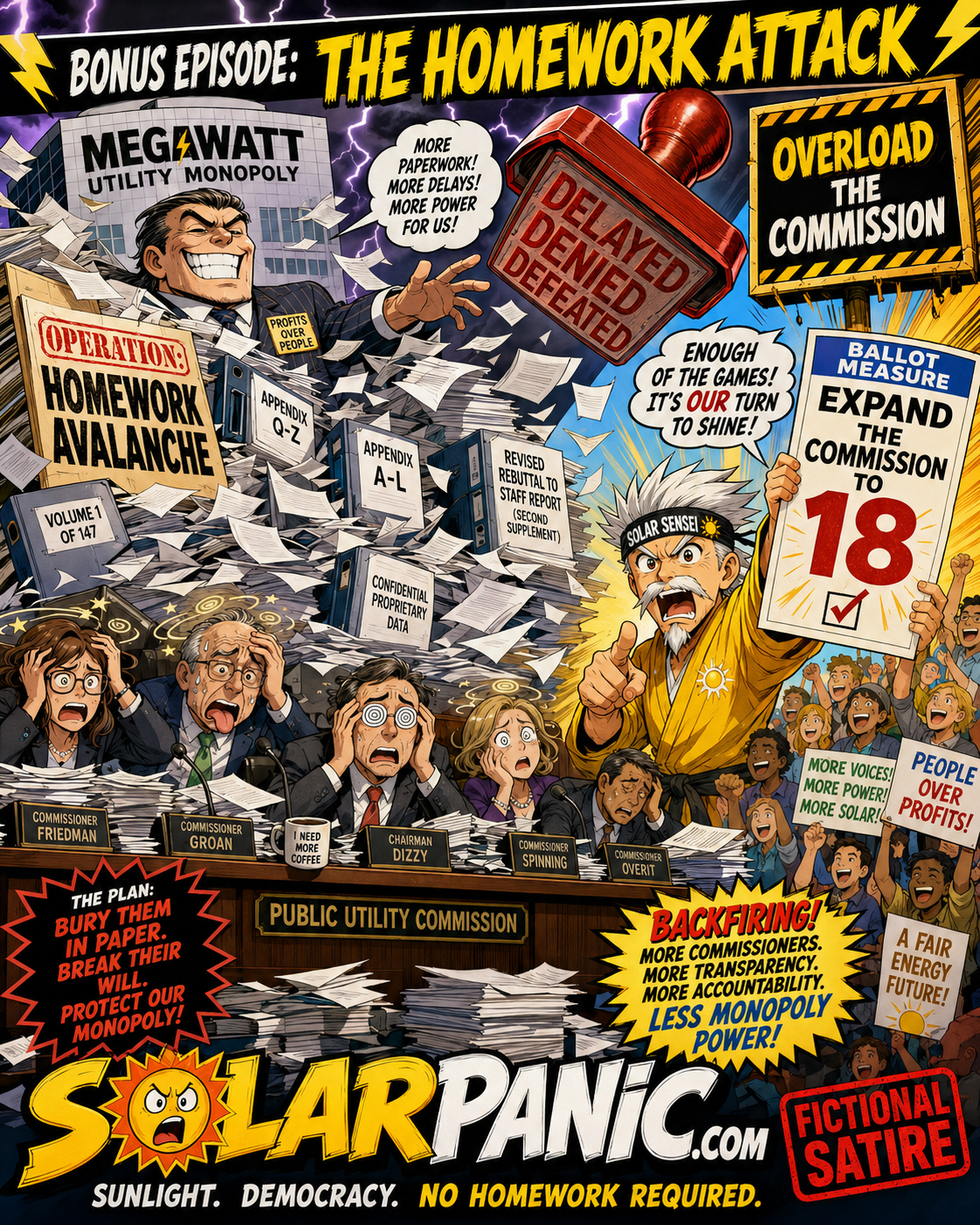
- Write a 900-page explanation of why simple questions are complicated.
- Ask the lobbyist to carry the delay briefcase faster.
The boardroom cheered. Then Solar Sensei appeared on the screen, calmly helping another customer understand a solar and battery design.
“They are explaining the system in plain English!” cried Madame Peak Rate. “This is extremely dangerous to confusion.”
Solar Sensei Keeps Teaching
While the fictional executives panicked, Solar Sensei kept doing the boring heroic work: explaining how the system fits the site. Roof conditions. Solar production. Battery capacity. Critical loads. Peak-rate timing. Inspection. Safety. Realistic expectations.
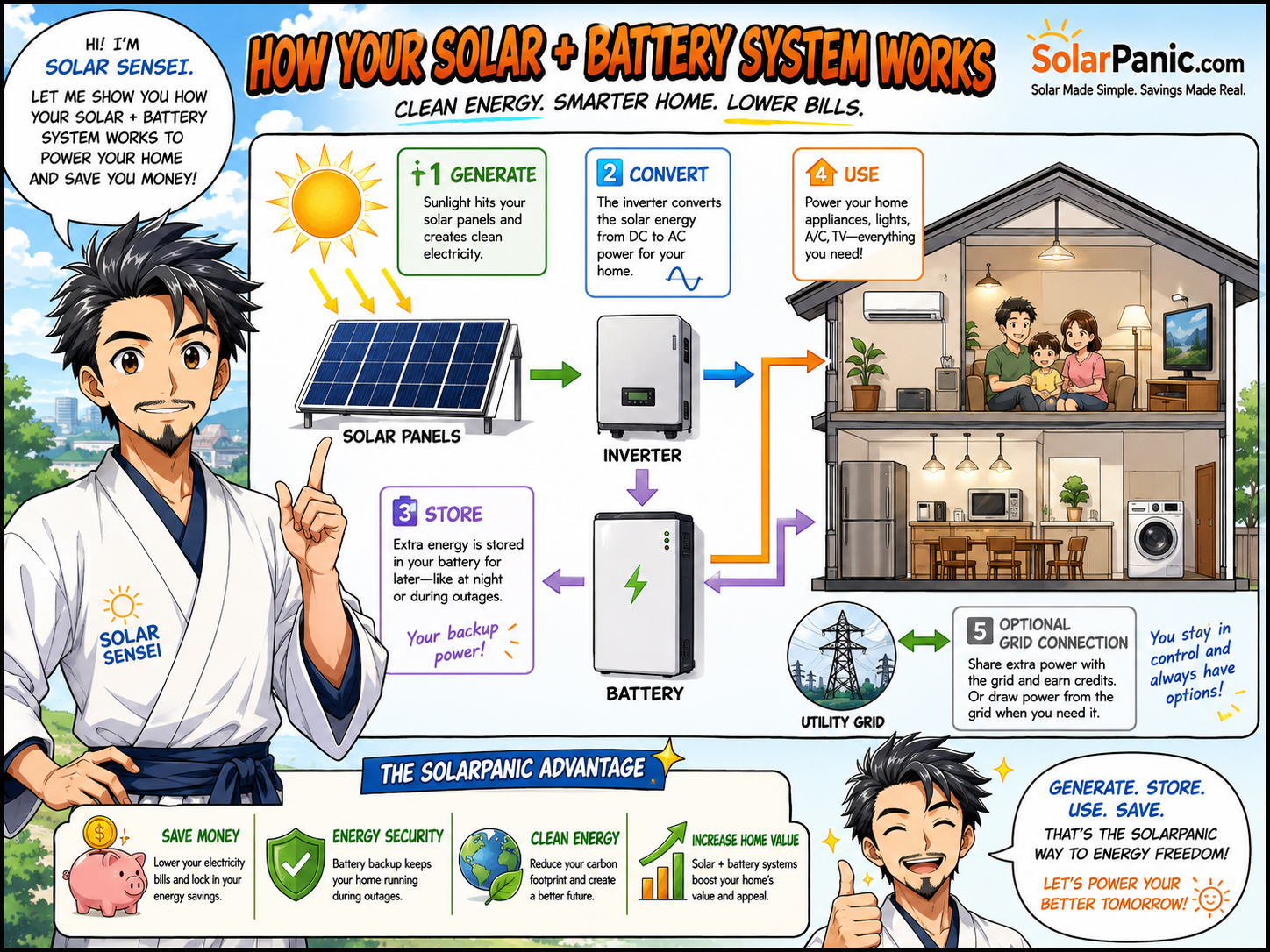
The customer did not need monopoly panic. The customer needed a design conversation.
SolarPanic rule: the more customers understand, the less the boardroom can scare them.
The Lawyers Run
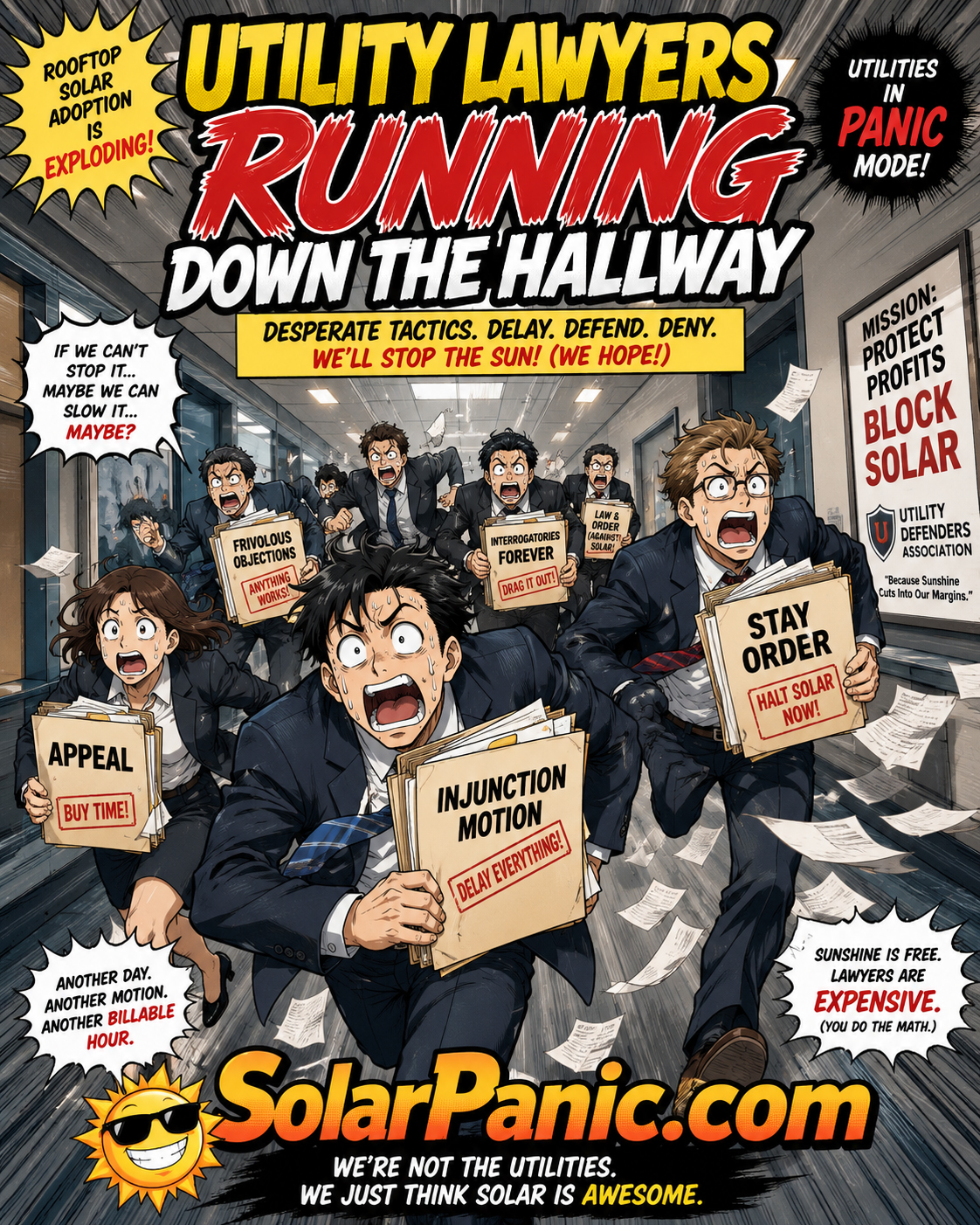
Chairman Kilowatt ordered the utility lawyers into action. They sprinted down the hallway carrying binders, tabs, and expressions of professional alarm.
Their mission was not to answer the customer’s questions. Their mission was to create enough fog that nobody could remember the original question.
The Lobbyist Opens the Briefcase
Then the lobbyist stood at the end of the table and opened the delay briefcase. Inside were the old tools: doubt, delay, complexity, scary charts, and talking points about how customer-owned solar was somehow dangerous because it worked.
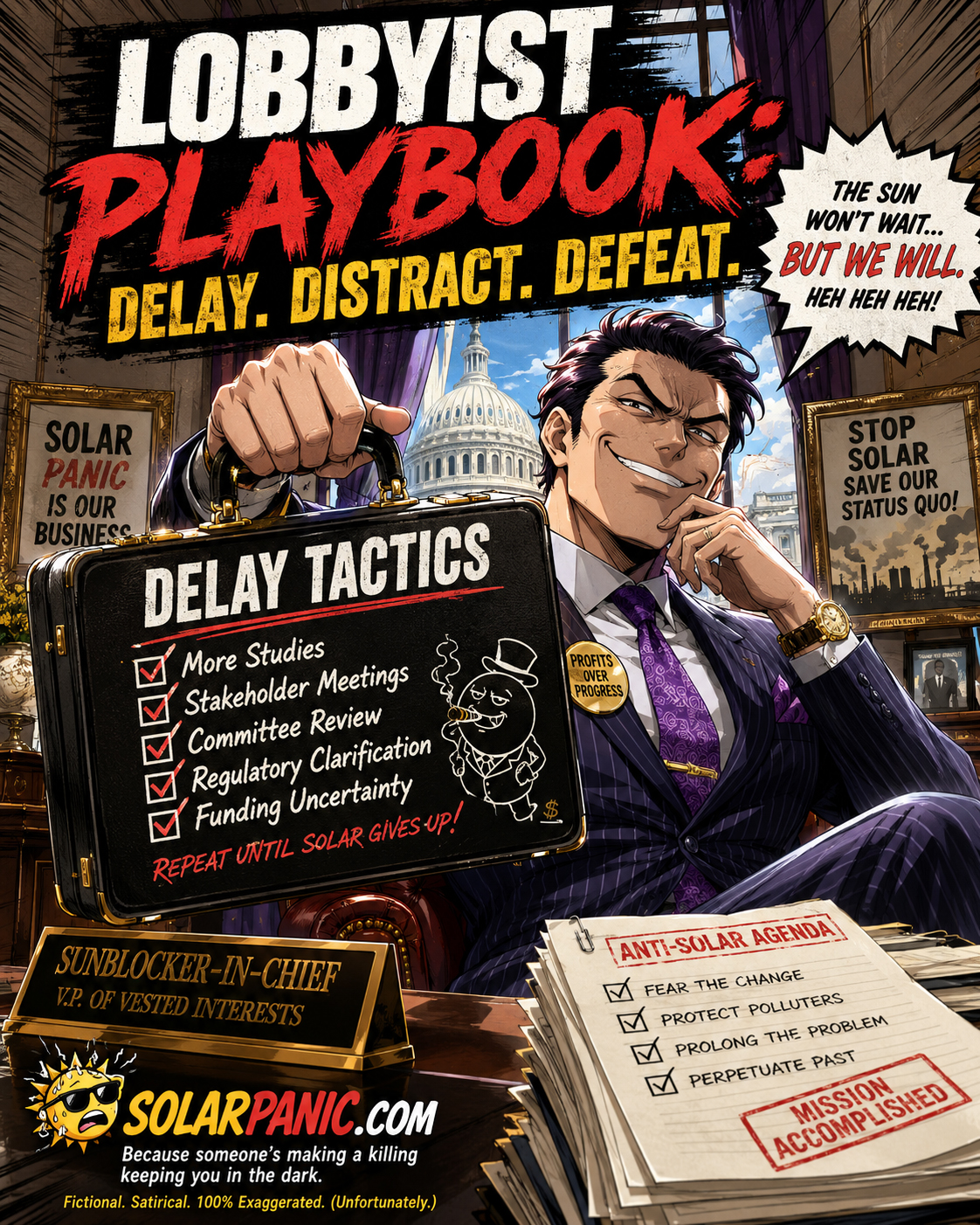
“We must protect customers from the dangerous idea of helping themselves,” the lobbyist announced.
The Meeting Backfires
The more the boardroom panicked, the clearer the story became. If rooftop solar and batteries were useless, why so much fear? If customers were helpless, why so much effort to keep them confused? If the rules were fair, why so much paperwork fog?
SolarPanic turns the emergency meeting into comedy because the panic itself becomes evidence.
Punchline: the boardroom called an emergency because the customer learned how to ask questions.
The Road to Episode 6
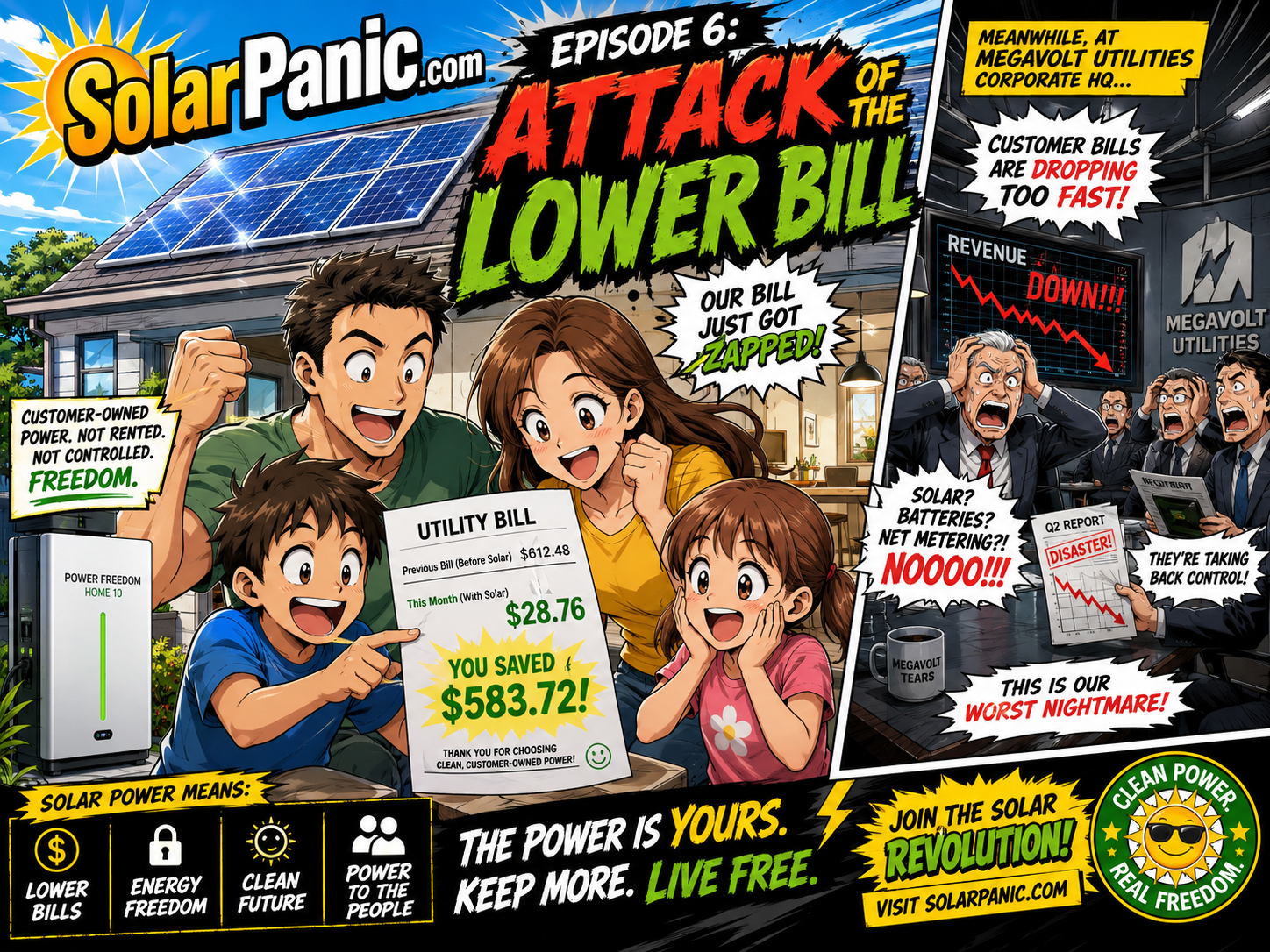
The emergency meeting fails to stop the solar dots. Then comes an even more terrifying villain for the fictional monopoly: the lower bill.
When the customer sees results, the old panic machine gets louder.