The Envelope of Doom
The customer opened the electric bill with the usual caution. For years, the bill had arrived like a tiny monthly villain: mysterious, unavoidable, and rarely funny.
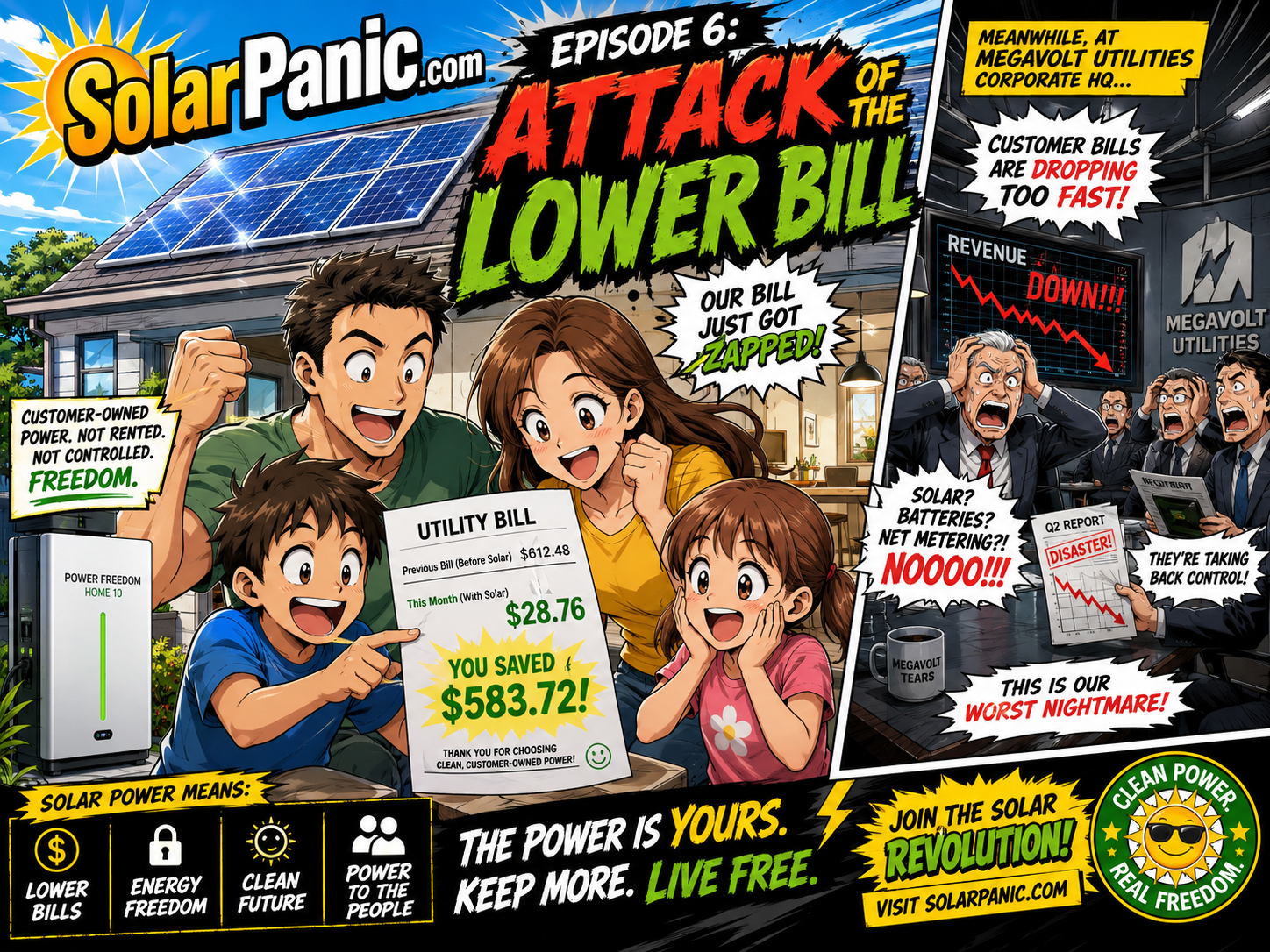
But this month was different. The customer blinked. The number was lower. Not imaginary. Not theoretical. Lower.
“Emergency!” screamed the boardroom alarm. “Customer has encountered evidence!”
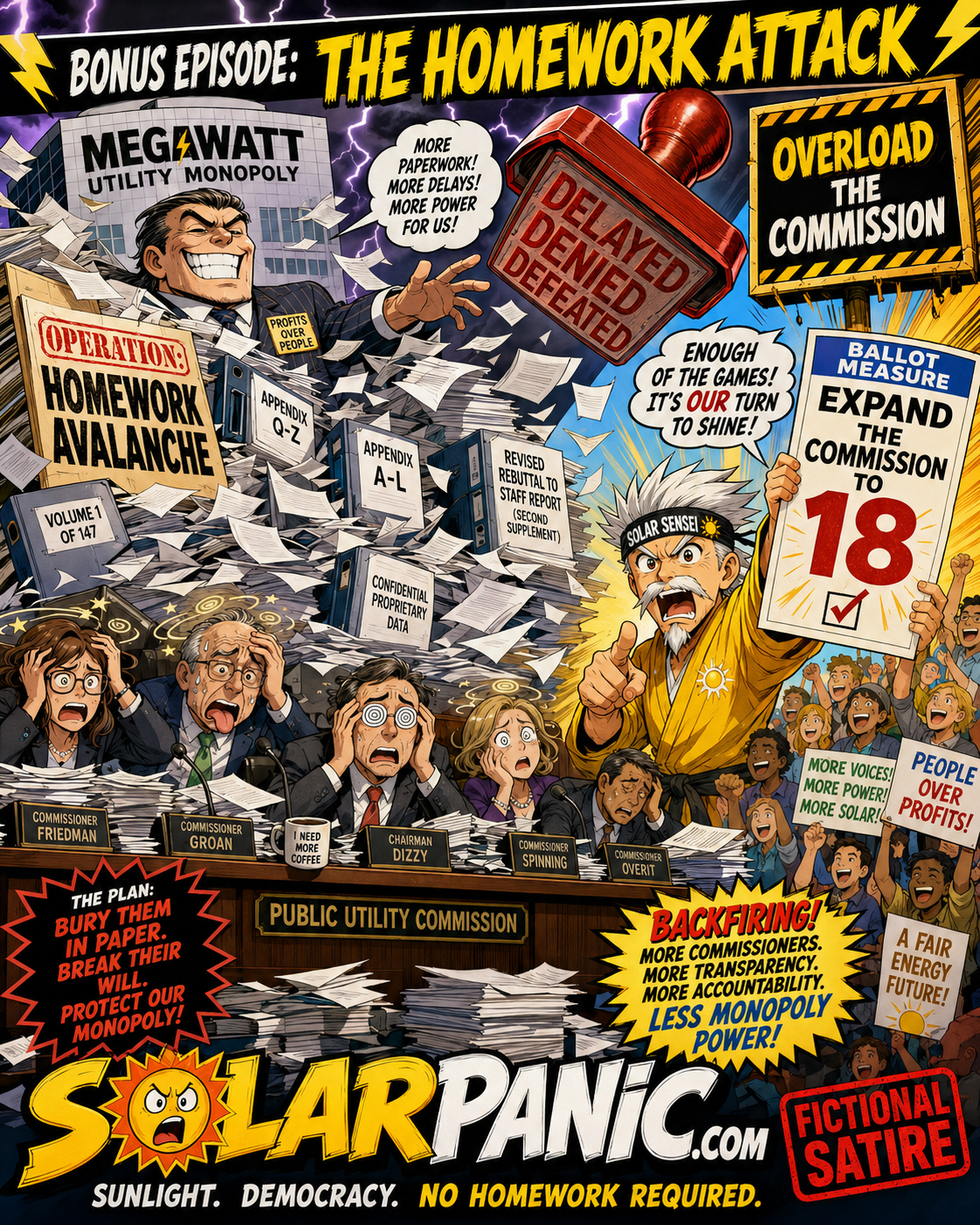
Inside MegaWatt Monopoly Utility Co., Chairman Kilowatt grabbed the bill with trembling hands. Madame Peak Rate fainted into a stack of tariff schedules. The Permit Goblin tried to stamp the bill “incomplete.”
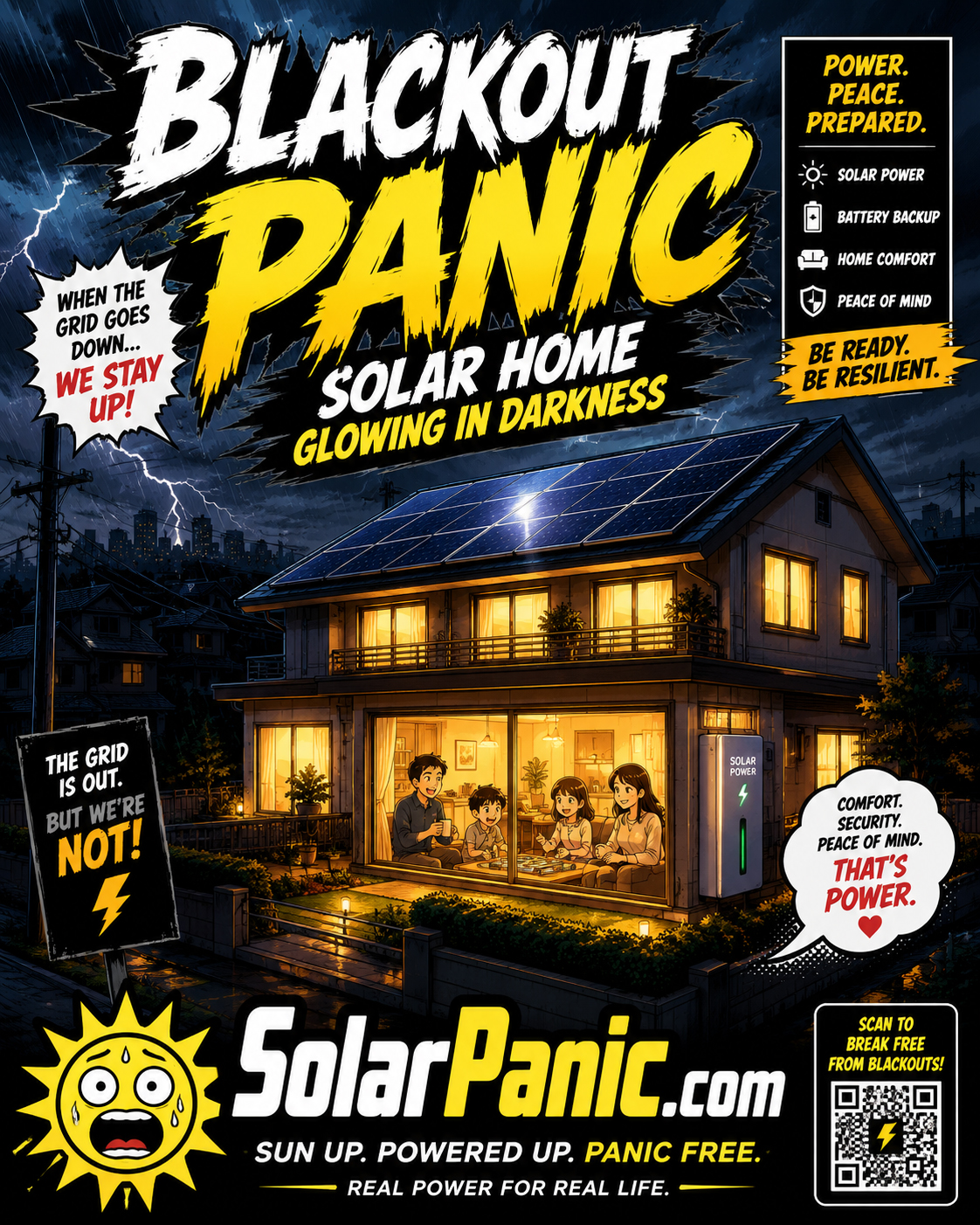
The Lower Bill Is a Monster
In the SolarPanic universe, the lower bill is treated like a kaiju. It rises from the mailbox. It stomps across the monopoly business model. It roars one terrible word:
RESULTS.
The fictional utility can argue with opinions. It can bury questions in paperwork. It can send lobbyists with delay briefcases. But the lower bill is hard to scare because it is already printed.
The Customer Starts Thinking Differently
A lower bill does more than save money. It changes the customer’s psychology. The customer starts asking what else can be designed better.
- How much power did the solar system produce?
- When did the home use the most energy?
- Could batteries improve timing?
- Which critical loads matter during outages?
- What will peak rates do next?
- How can the system be monitored and understood?
“They are no longer just paying!” Chairman Kilowatt yelled. “They are comparing!”

Madame Peak Rate Tries to Strike Back
Madame Peak Rate returned with a dramatic calculator. She tried to remind the customer that timing still matters. Solar Sensei agreed.
That made her furious. The point was not to pretend rates do not exist. The point was to understand them better.
Solar Sensei rule: a bill is not a mystery when the customer learns how to read the energy story behind it.
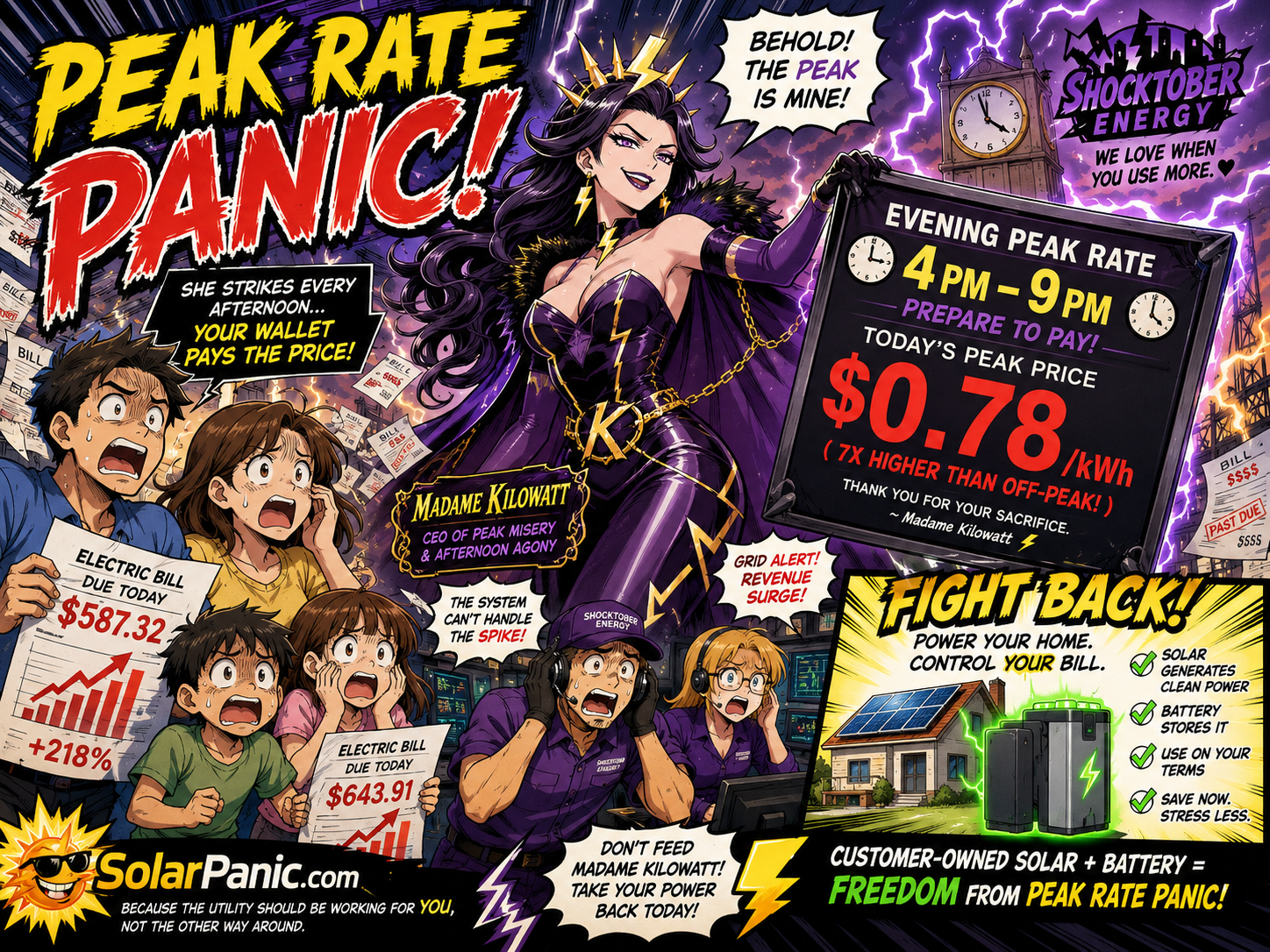
Battery Boy Adds Timing
Battery Boy rolled forward and tapped the chart. Solar helped with production. The battery helped with timing and backup strategy. The customer could now think in a more complete way: production, storage, usage, peak rates, and critical loads.
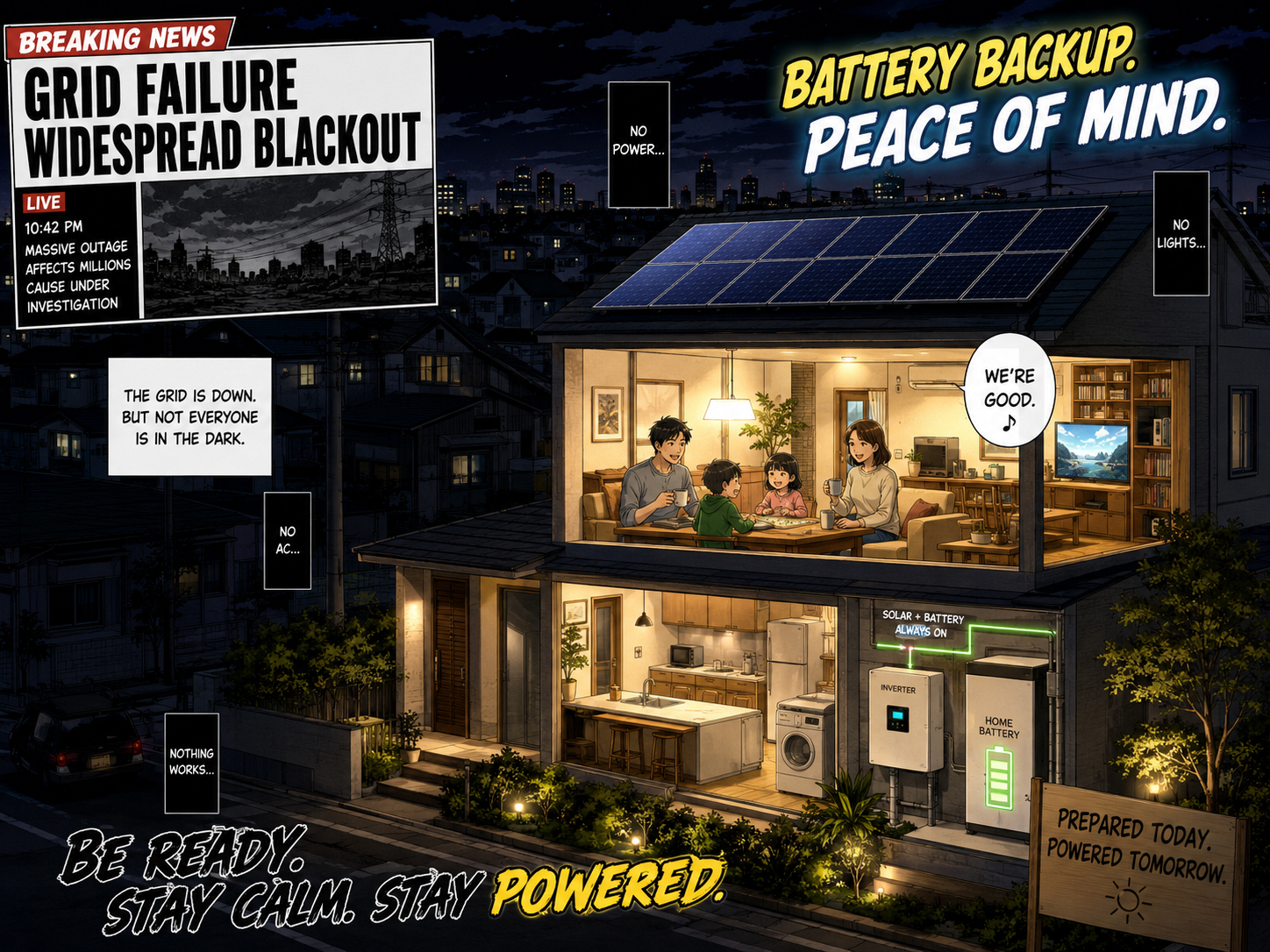
The boardroom did not like that. A customer who understands the bill is harder to scare. A customer who understands timing is harder to confuse. A customer with a backup plan is harder to make helpless.
The Monopoly Tries the Old Tricks
MegaWatt Monopoly reached for its classic tools:
- Complicated explanations
- Vague warnings
- Delay tactics
- Peak-rate drama
- Paperwork fog
- Statements about “fairness” that somehow always protected the monopoly
But the customer had the bill in hand. The lower number was not a theory.
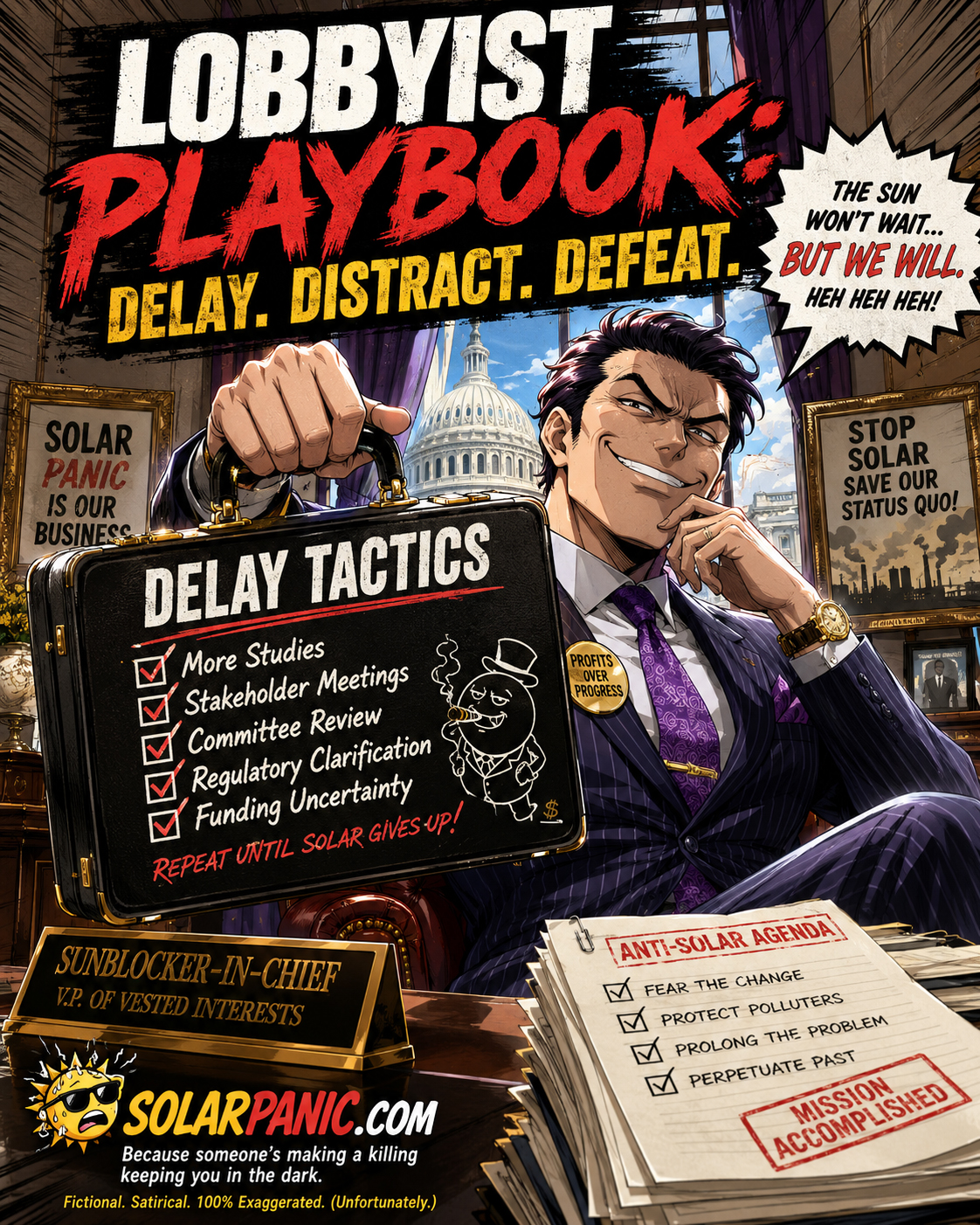
Why Episode 6 Matters
Attack of the Lower Bill matters because results create confidence. A customer who sees value becomes more curious, not less. That curiosity leads to better design questions and better policy questions.
“The lower bill is teaching them!” shouted the Permit Goblin. “Somebody cover it with an appendix!”
Solar Sensei calmly moved the appendix aside.
The Road to Blackout? Not Today.
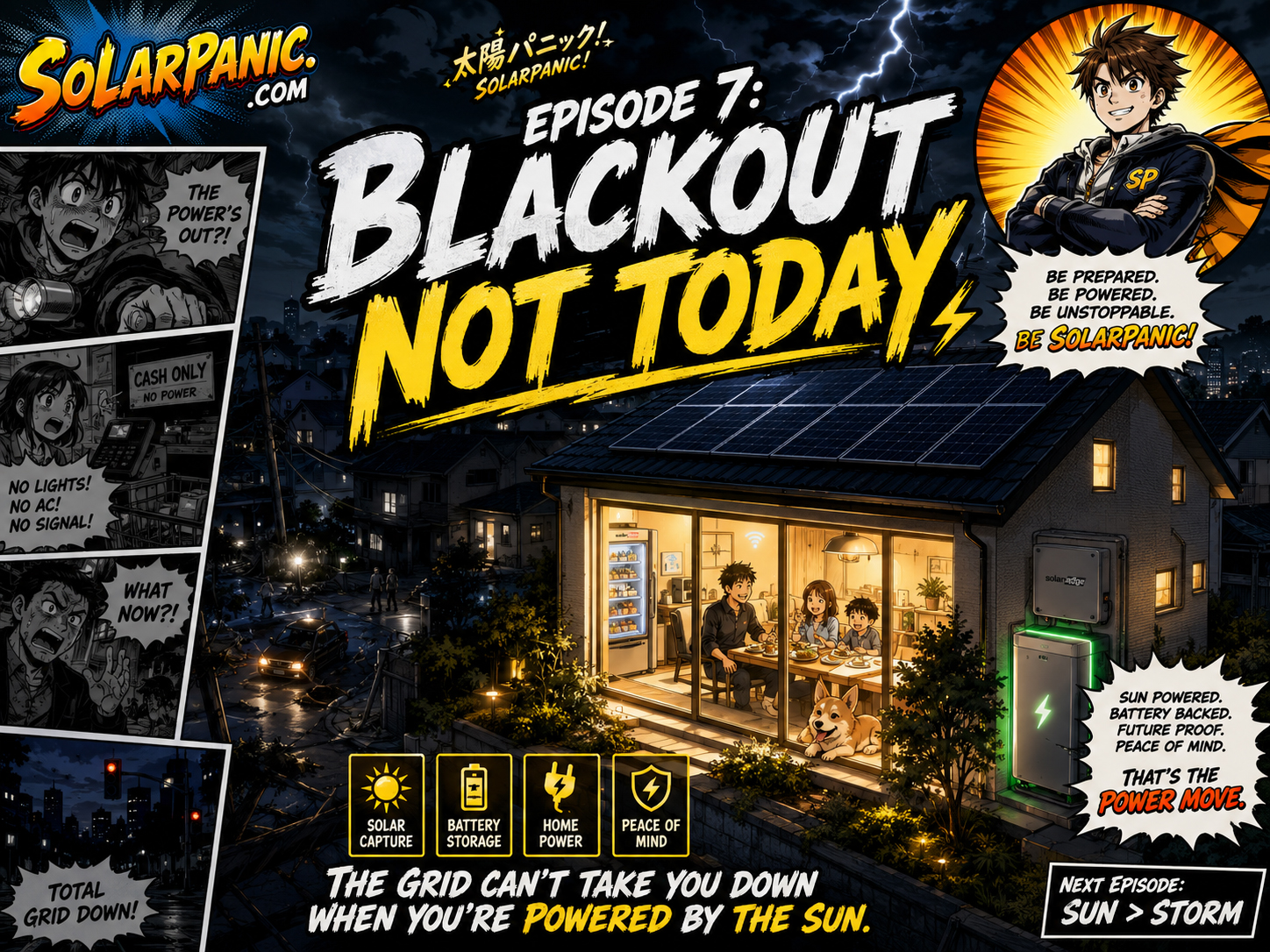
A lower bill is powerful on a normal day. But the next test is not normal. In Episode 7, the grid gets dramatic. The lights go out. The question becomes: what still works?
SolarPanic punchline: the monopoly wanted the customer afraid of the bill. The customer started reading it like a scoreboard.