The Night the Lights Went Out
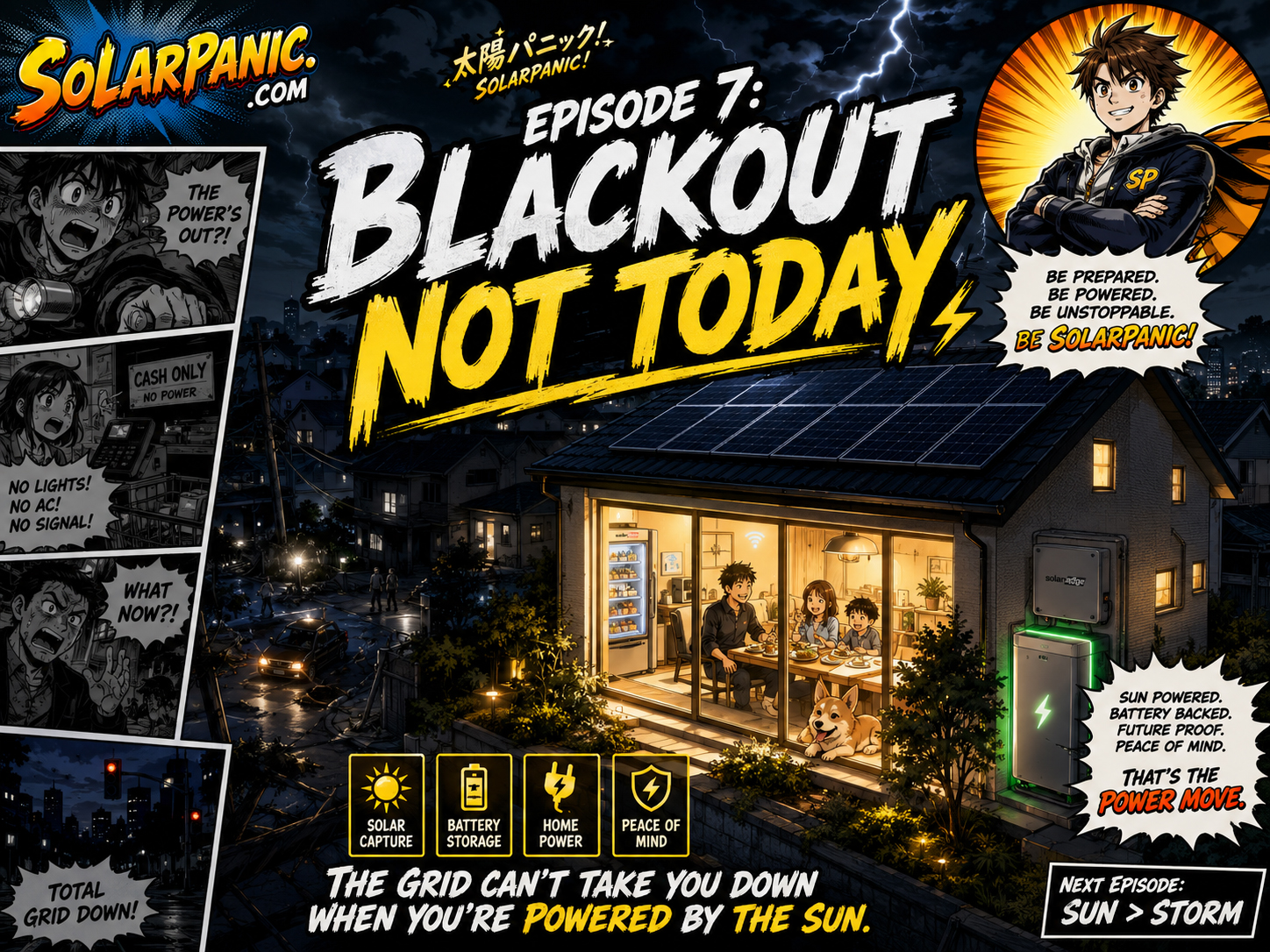
The evening started normally. Dinner was cooking. Phones were charging. The refrigerator was humming. The internet was doing internet things.
Then the lights flickered.
“Prepare the vague outage statement!” Chairman Kilowatt shouted from the fictional utility boardroom.
The neighborhood went dark. Somewhere in the distance, the Permit Goblin tried to file a blackout correction notice. Madame Peak Rate looked around and realized nobody could see her dramatic cape.
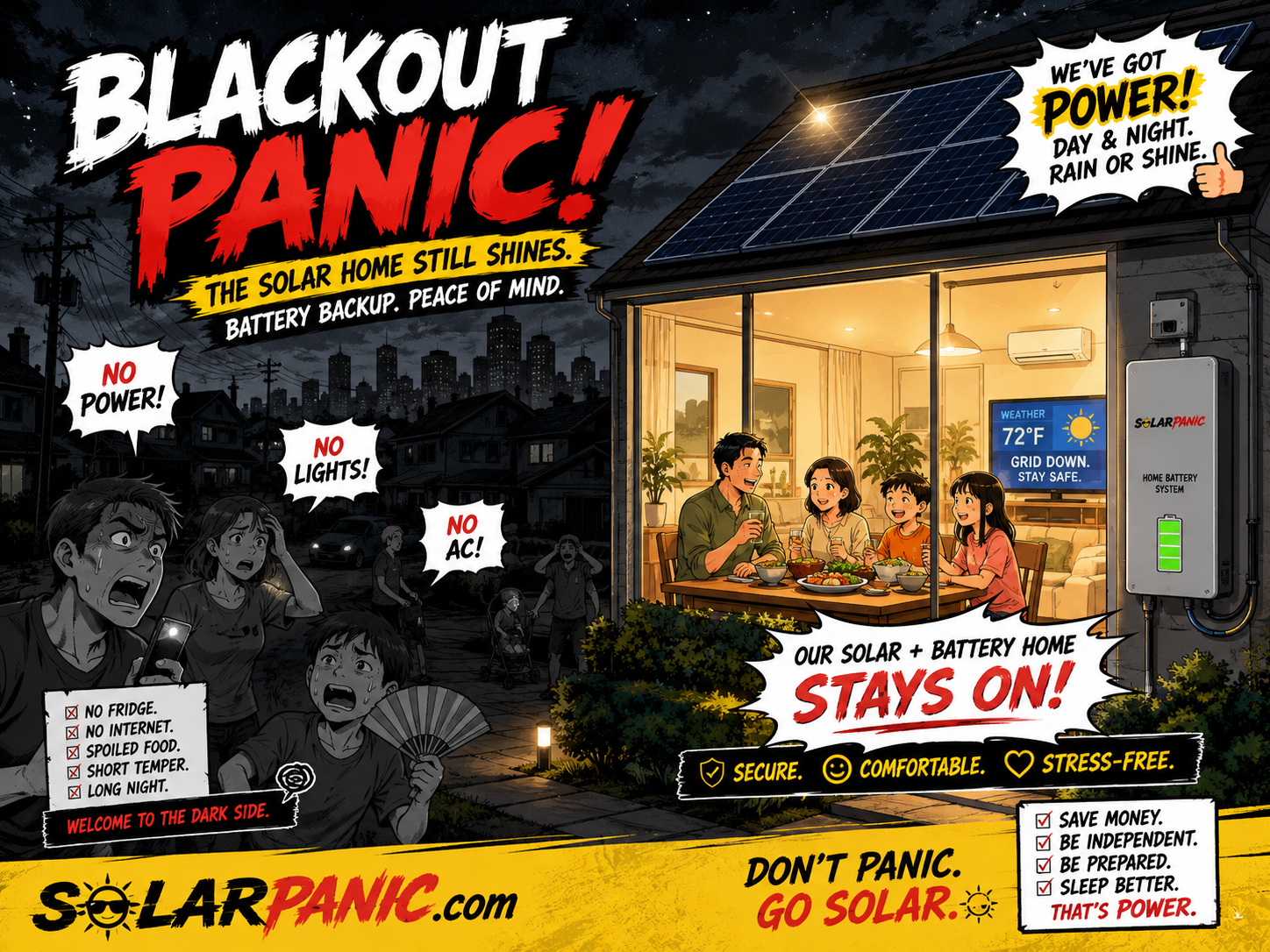
The House With a Plan
One home did not pretend the blackout was harmless. It simply had a plan. The solar battery system was designed around selected critical loads, not fantasy. The family knew what should stay useful.
- Refrigerator and freezer
- Internet modem and router
- Selected lights
- Phone charging
- Garage door or gate access where planned
- Essential medical or equipment loads where applicable
Solar Sensei rule: backup power is strongest when it is honest about priorities.
Battery Boy Holds the Line
Battery Boy stood beside the critical-load panel with a calm green glow. He was not powering every luxury load in the neighborhood. He was doing something better: supporting the loads the system was designed to support.
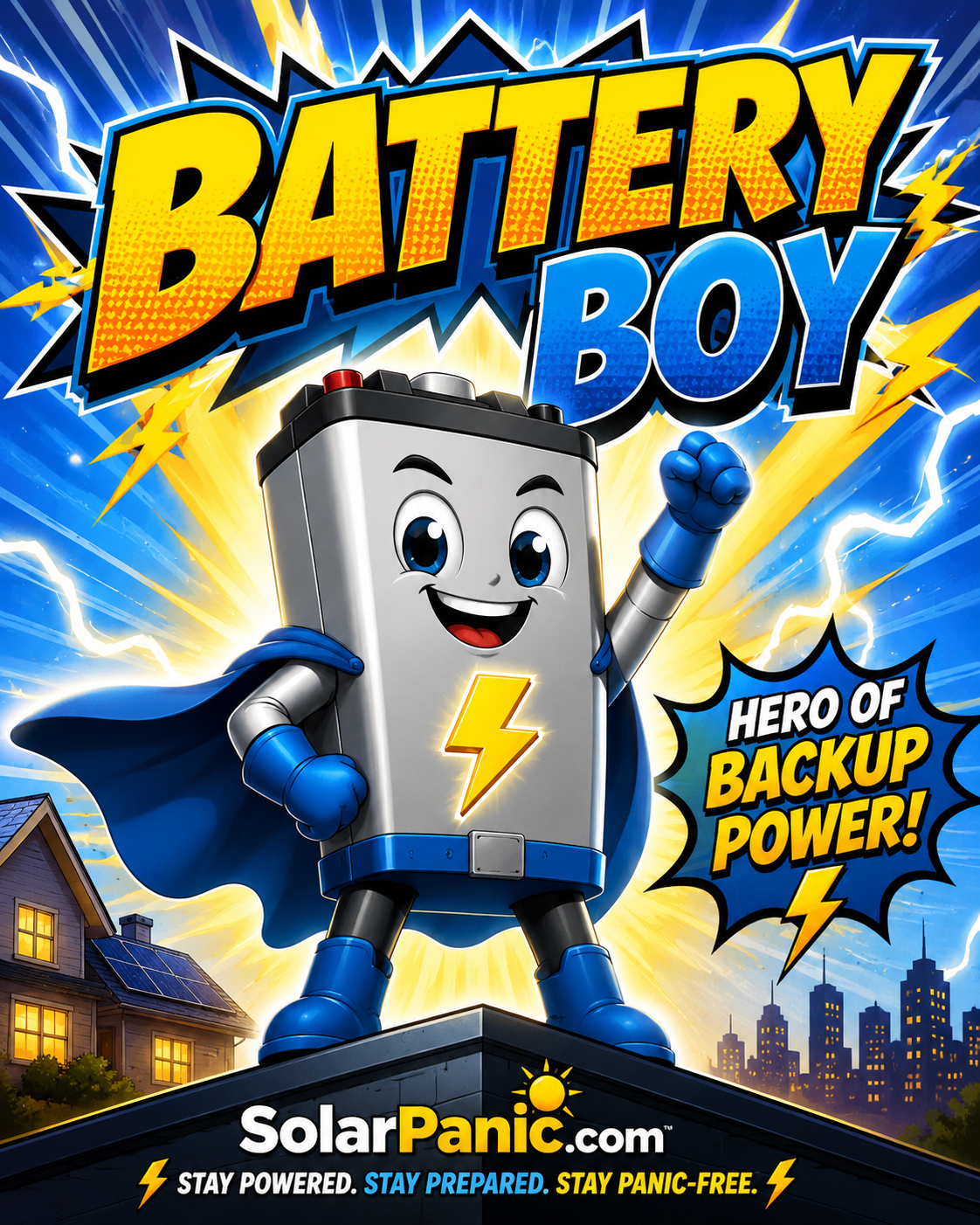
“They are not helpless in the dark!” cried Chairman Kilowatt. “This is a serious threat to panic!”
The Refrigerator Becomes Legendary
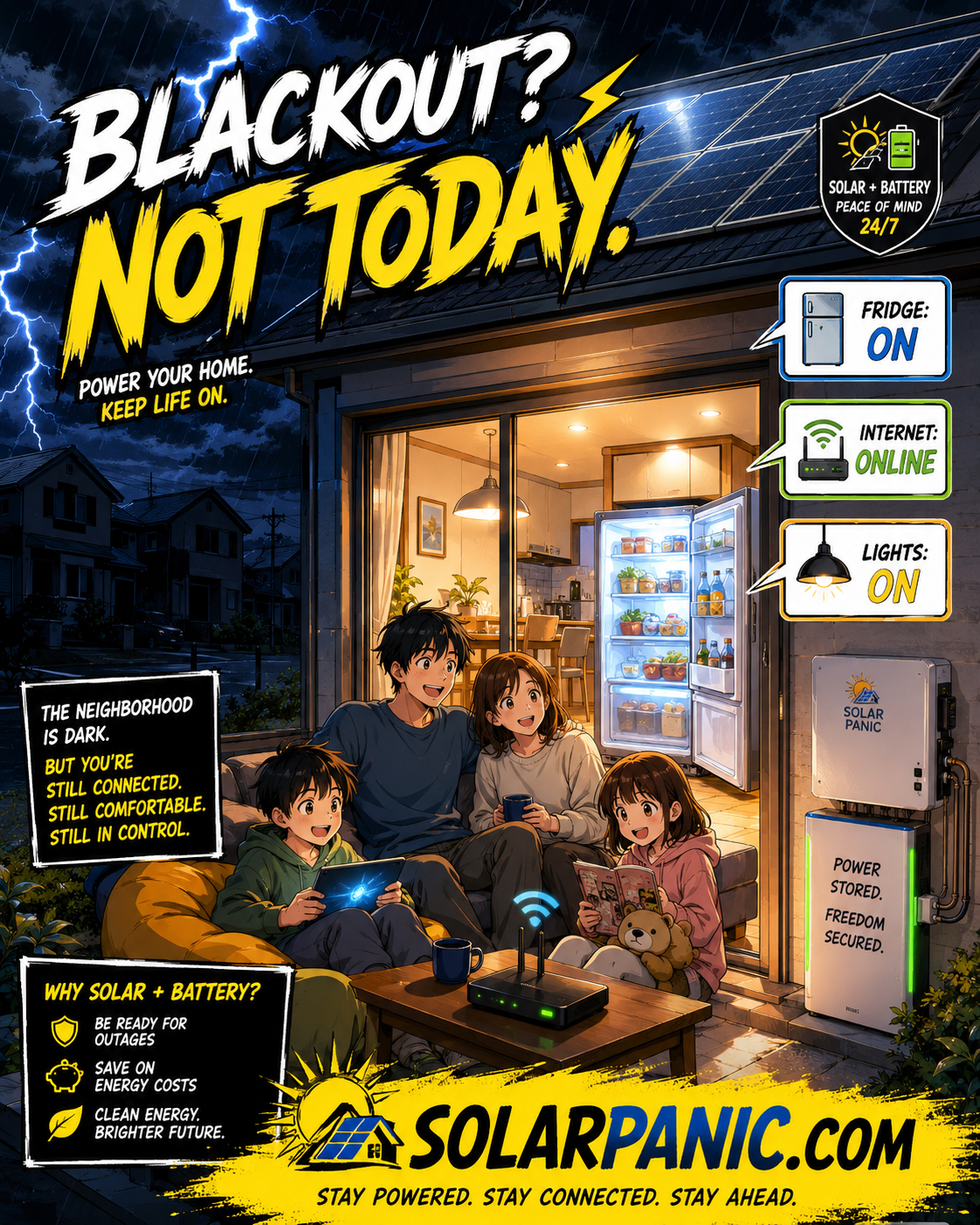
In the SolarPanic manga universe, the refrigerator gets a heroic close-up. It does not make speeches. It does not wear a cape. It simply stays cold.
That is the beauty of critical-load design. During an outage, small practical functions can matter a lot. Cold food, communication, lighting, access, and essential equipment can change the whole feeling of the night.
Solar Sensei Explains the Limits
Solar Sensei stopped the celebration before it became sloppy. A battery system has limits. Runtime depends on battery capacity, load size, solar recharge, weather, equipment, installation design, and customer behavior.
He drew the honest diagram:
- What is backed up?
- What is not backed up?
- How much energy do those loads use?
- How much battery capacity is available?
- Can solar recharge during daylight?
- What should the customer avoid during an outage?
SolarPanic punchline: the best backup plan is not magic. It is clarity with wiring.
The Fictional Utility Tries to Reclaim the Fear
MegaWatt Monopoly sent a message that used many words and explained very little. The boardroom hoped confusion would return. But the family was busy checking the refrigerator, lights, internet, and battery status.
Fear had not disappeared. But helplessness had taken a serious hit.
The Blackout Lesson
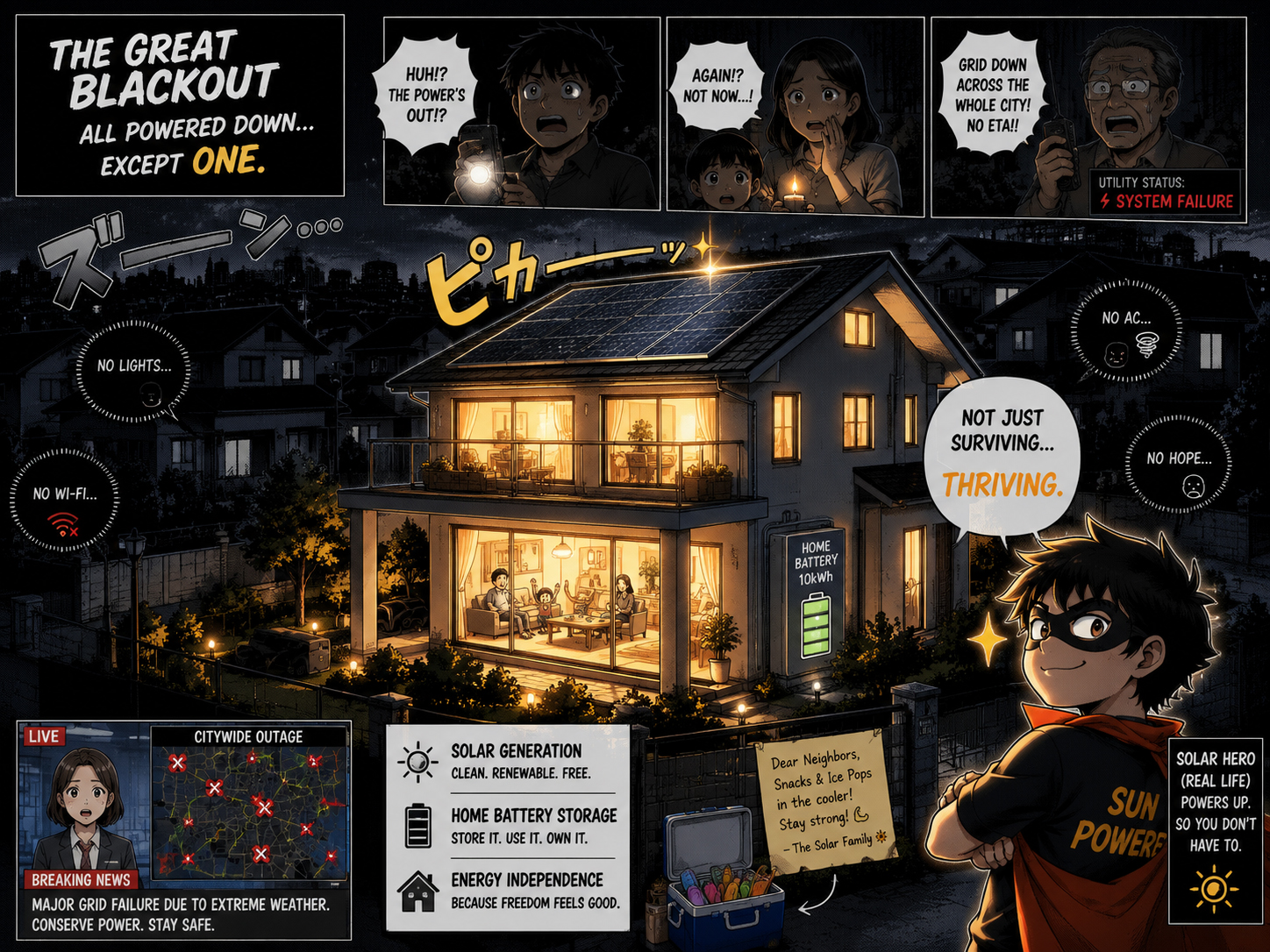
Episode 7 is where the customer understands that solar and batteries are not just about bills. They are about resilience. They are about what happens when normal service fails and the site still needs to function.
“They are planning around reality!” screamed the Permit Goblin. “This is terrible for confusion!”
The Road to Episode 8
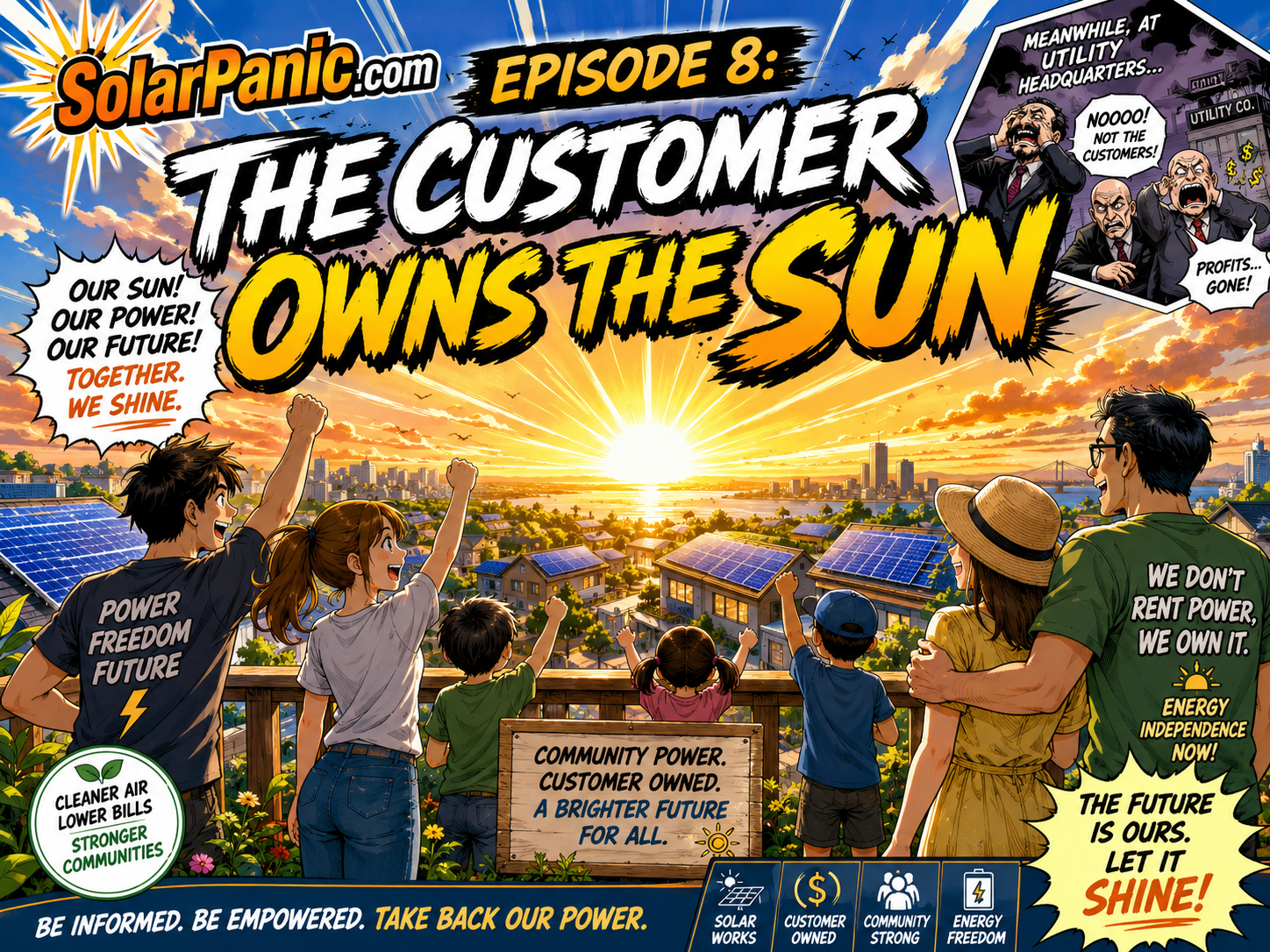
The blackout ends, but the customer has changed. The family has seen the value of ownership, timing, and backup design. Now comes the final original episode: the customer owns useful solar equipment, and the fictional monopoly must face the idea it feared most.
Final caption: the grid went dark, but the customer’s plan turned on.