The Morning After the Blackout
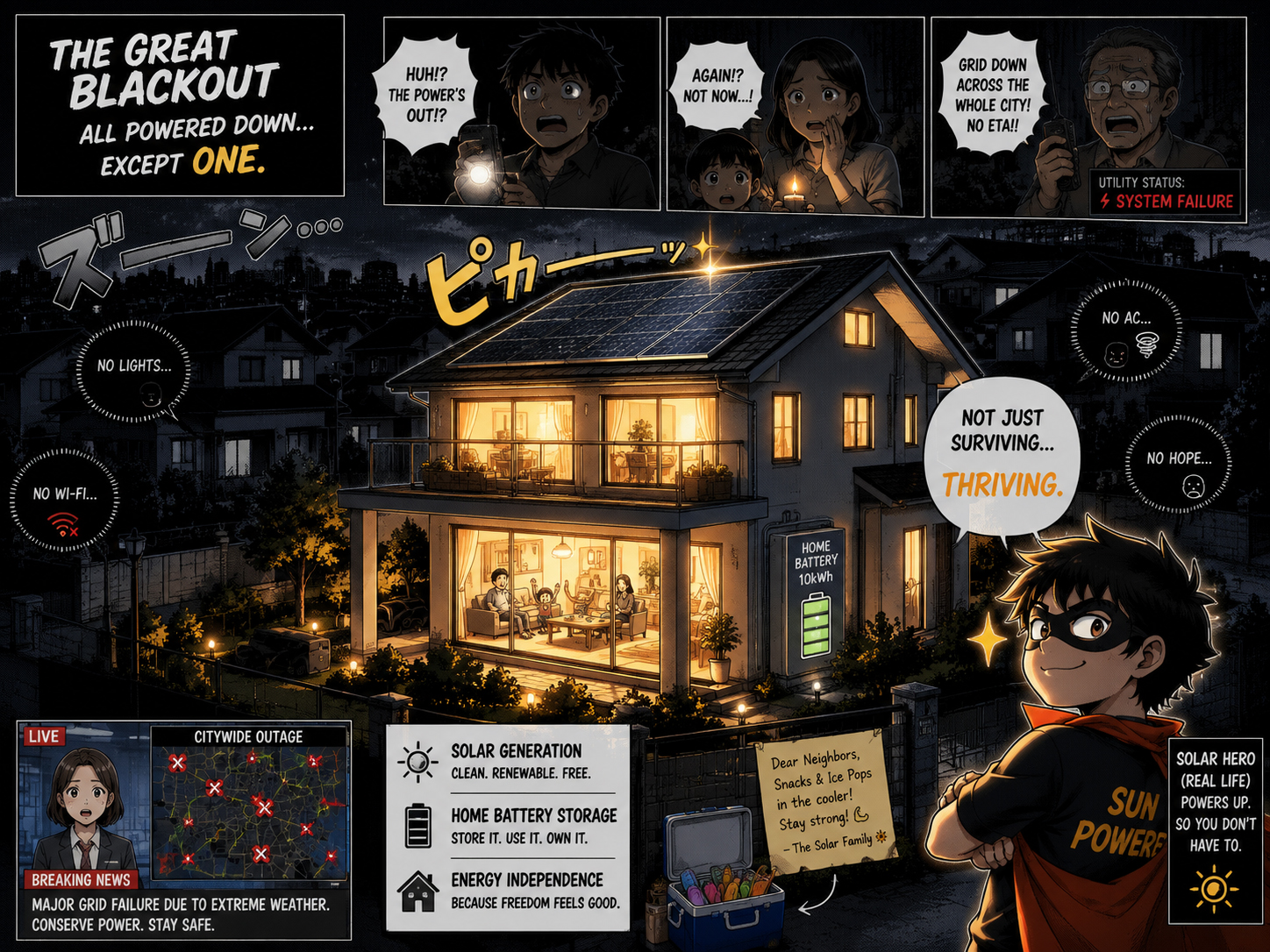
The blackout was over. The refrigerator was still cold. The internet had stayed useful. Battery Boy had done his job. Solar Sensei had explained the limits honestly. The family had seen the difference between panic and planning.
The next morning, sunlight returned to the roof.
“Do not let them look up!” Chairman Kilowatt screamed. “That is where the dangerous idea lives!”
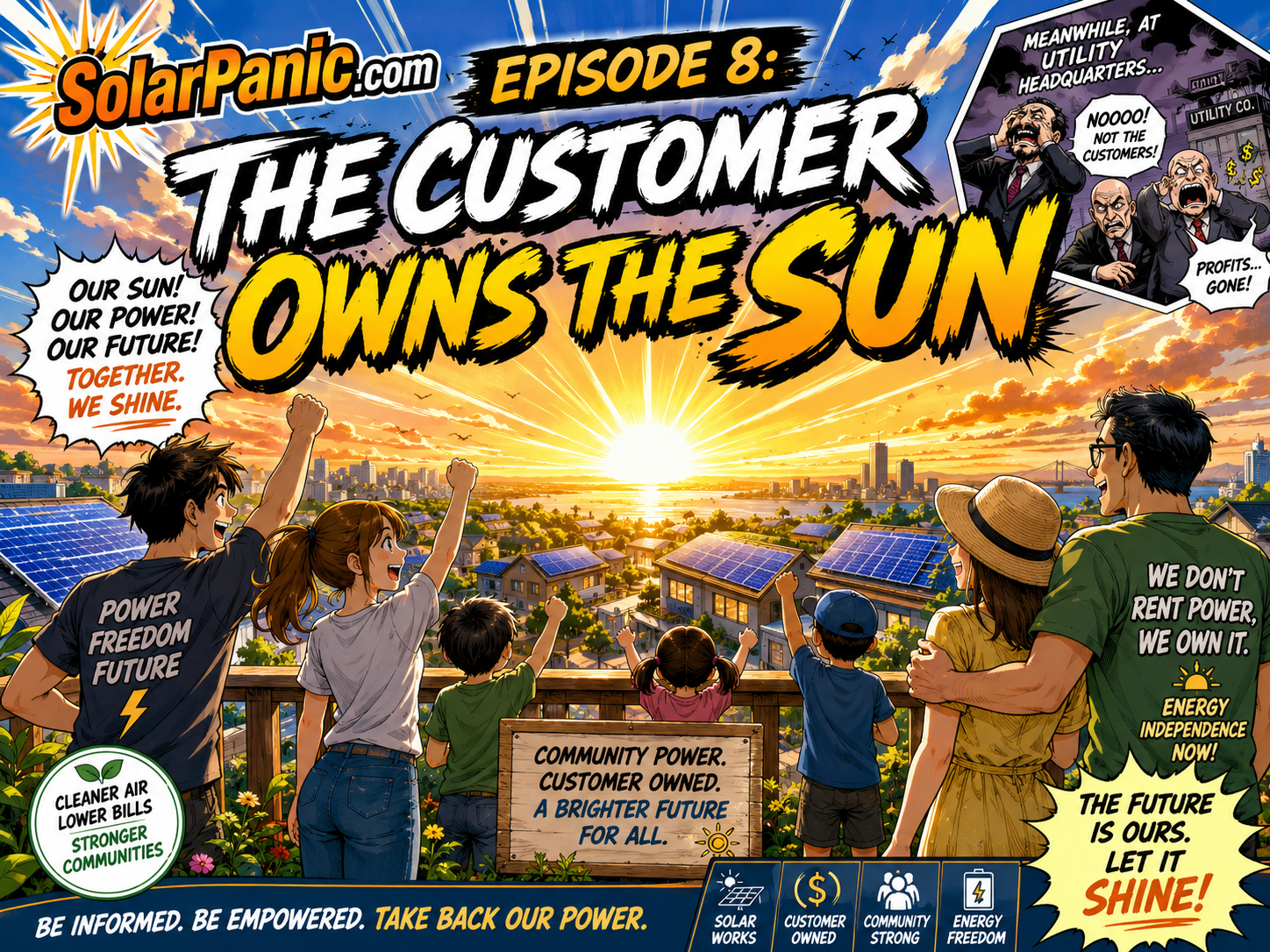
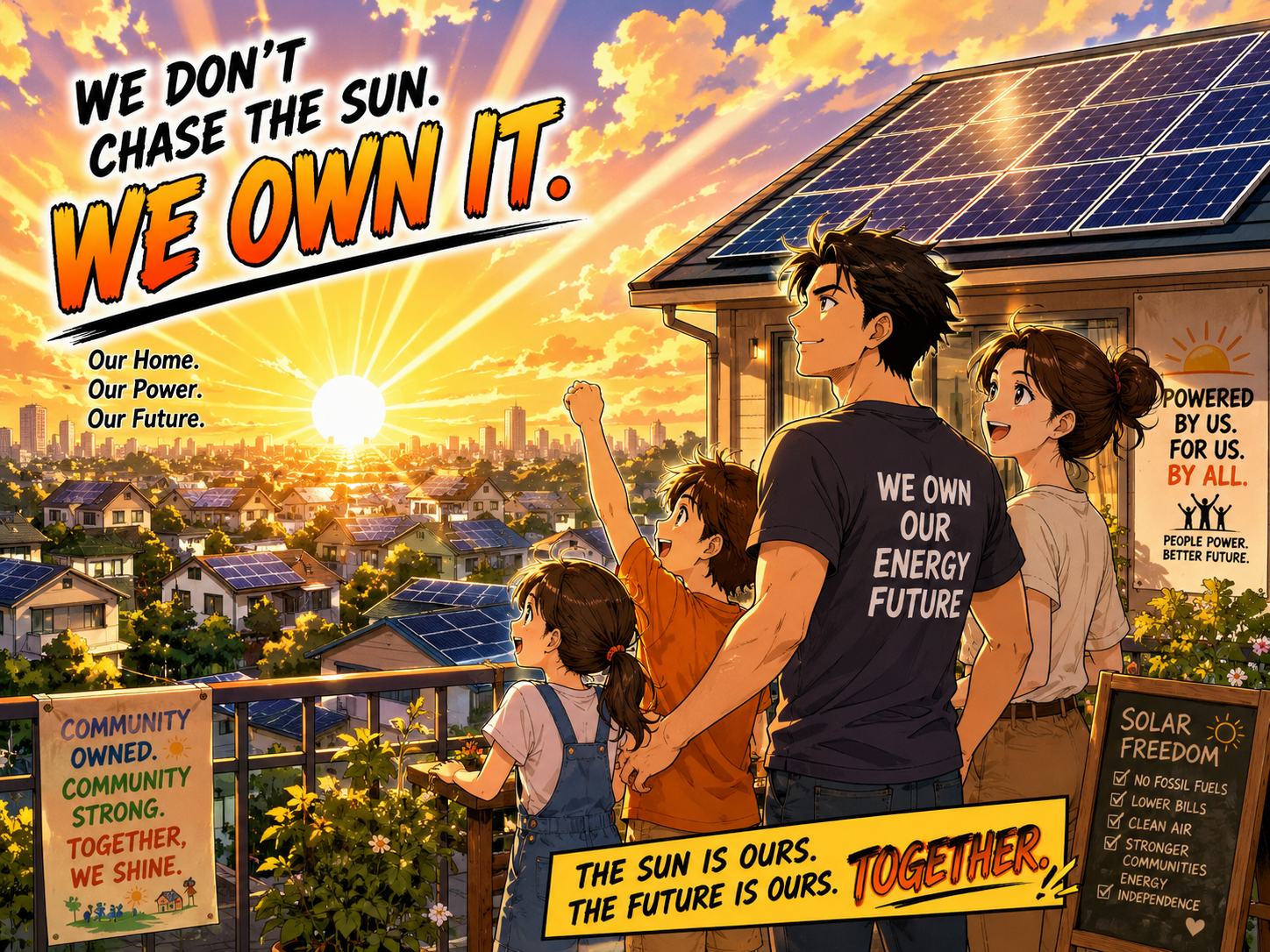
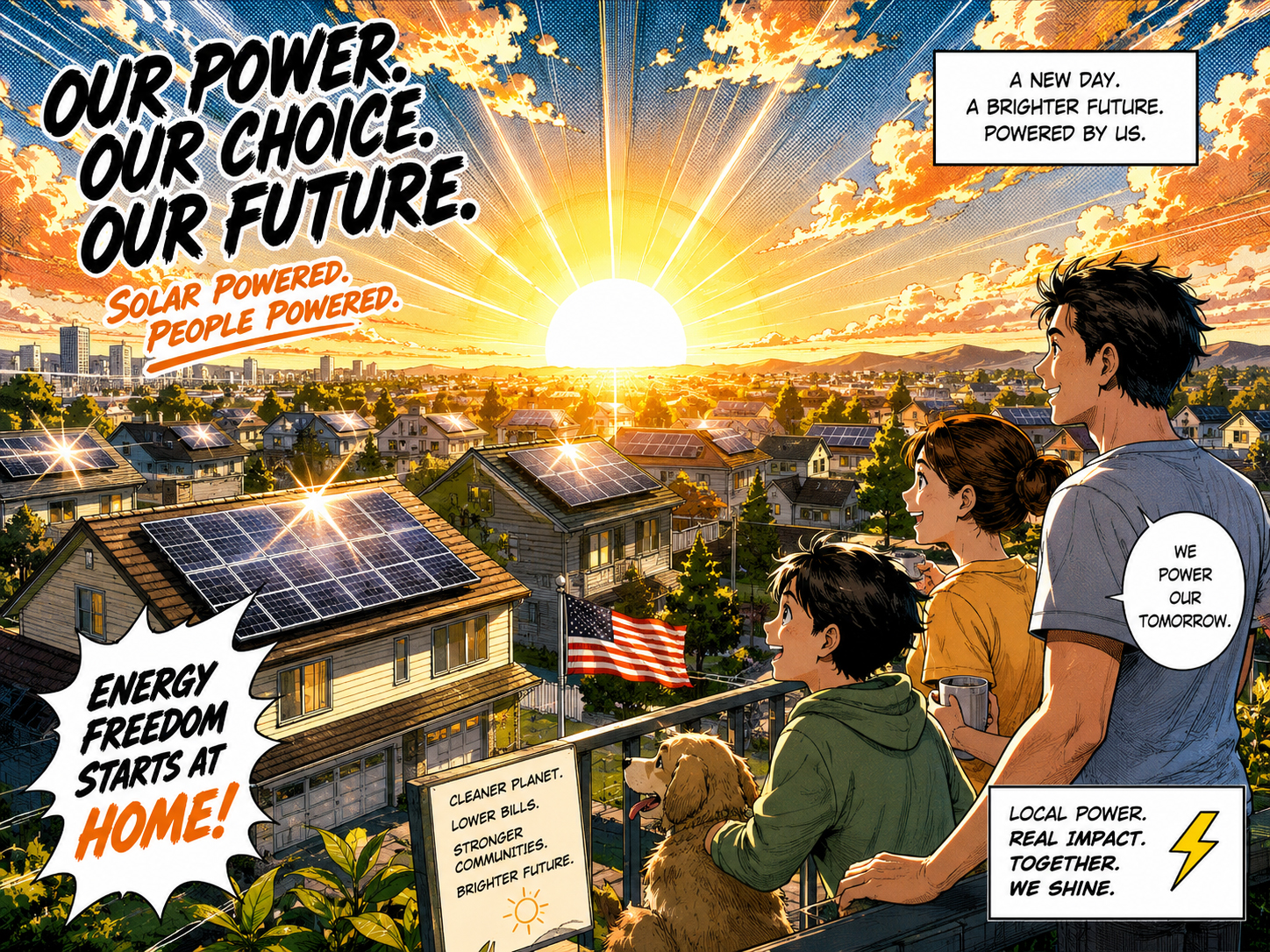
But the customer looked up anyway. The roof was no longer just a roof. It was productive. It was part of the plan. It was customer-owned solar.
The Monopoly Tries One Last Speech
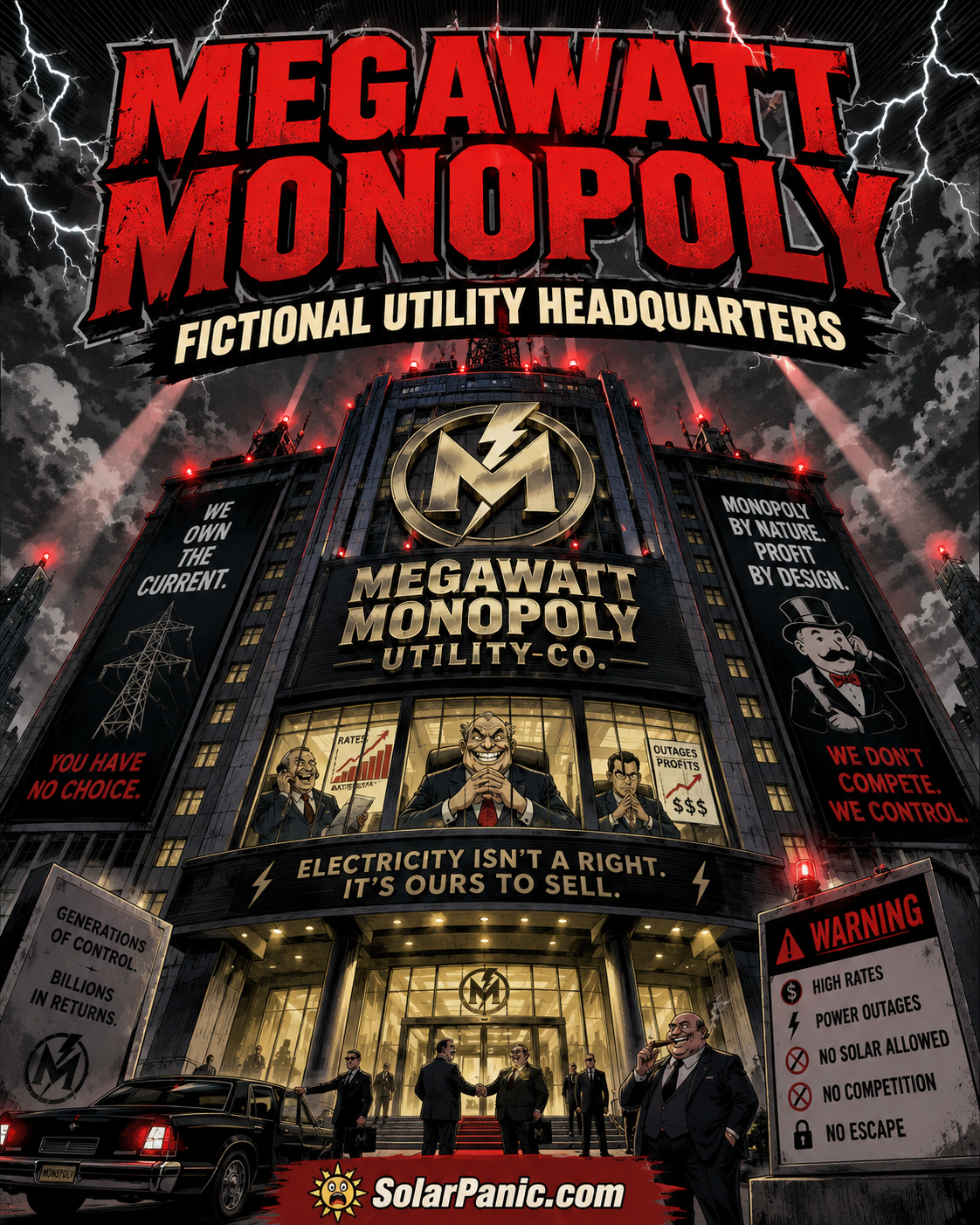
MegaWatt Monopoly Utility Co. called a final emergency meeting. Chairman Kilowatt stood beneath a giant banner reading “DEPENDENCE IS COMFORT.” Madame Peak Rate adjusted her calculator. The Permit Goblin sharpened a red pen.
“Customers should not own the sun!” Chairman Kilowatt declared.
Solar Sensei calmly corrected him.
“The customer does not own the sun,” Solar Sensei said. “The customer owns equipment that makes sunlight useful.”
The Customer Has Learned Too Much
The old panic tricks no longer work the same way. The customer has learned the language of their own energy life.
- Solar production is not mysterious.
- Battery timing can be designed.
- Critical loads can be selected.
- Peak rates can be understood.
- Blackout planning can be practical.
- Public rules can be questioned.
That knowledge is what MegaWatt Monopoly feared. Not one panel. Not one battery. The prepared customer.
Battery Boy Takes a Bow
Battery Boy rolled into the sunlight and bowed politely. He had not promised to power the universe. He had supported the loads that mattered. He had helped the family understand timing. He had shown that backup power is strongest when it is honest about priorities.
Battery Boy’s final lesson: “A good plan does not need to brag. It needs to work.”
Madame Peak Rate Loses the Mystery
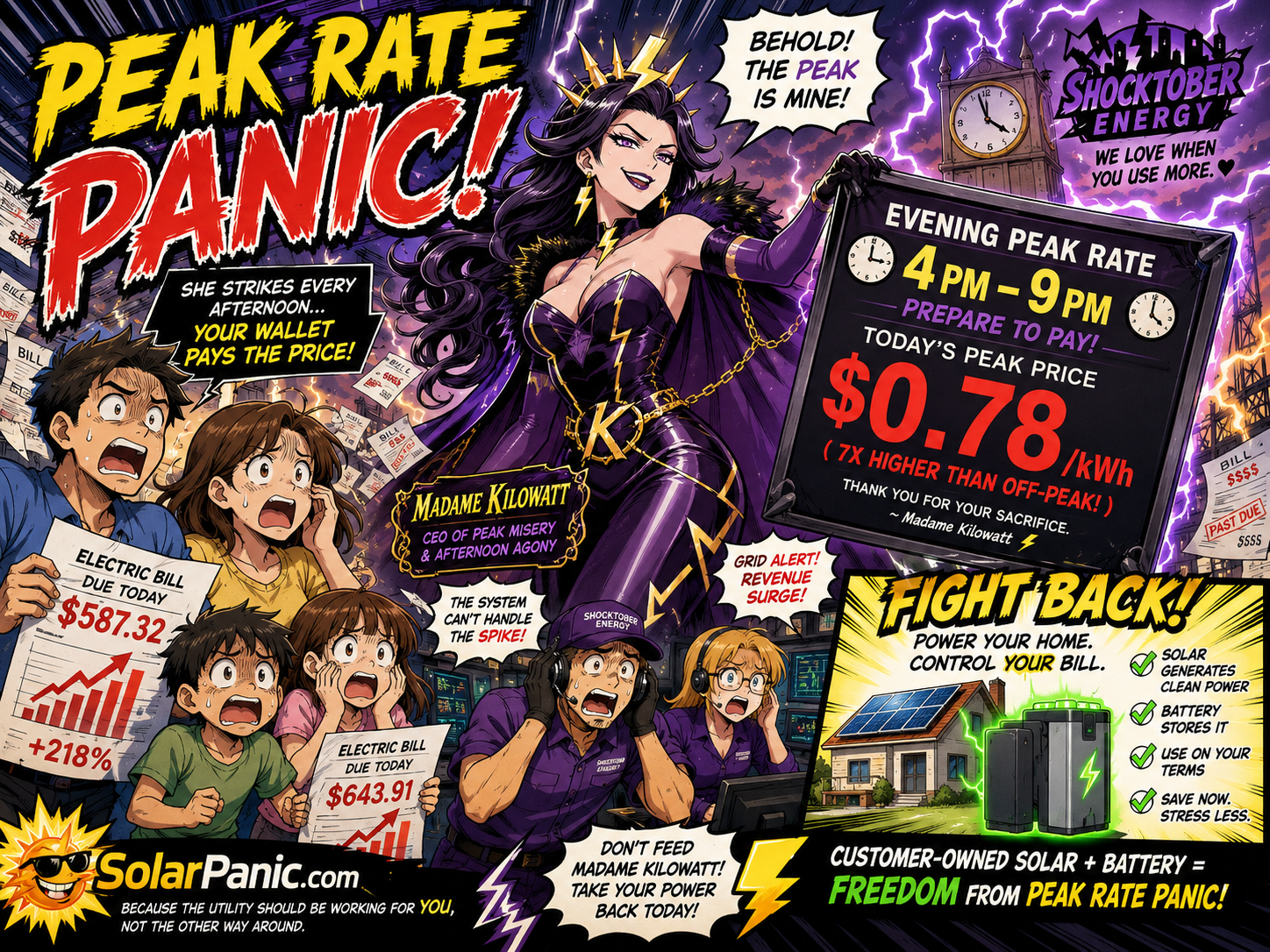
Madame Peak Rate tried one more dramatic entrance, but something had changed. The customer no longer saw the rate schedule as a fog machine. The customer saw timing, load choices, solar production, and battery strategy.
She could still be expensive. But she was no longer mysterious.
The Permit Goblin Meets Clarity
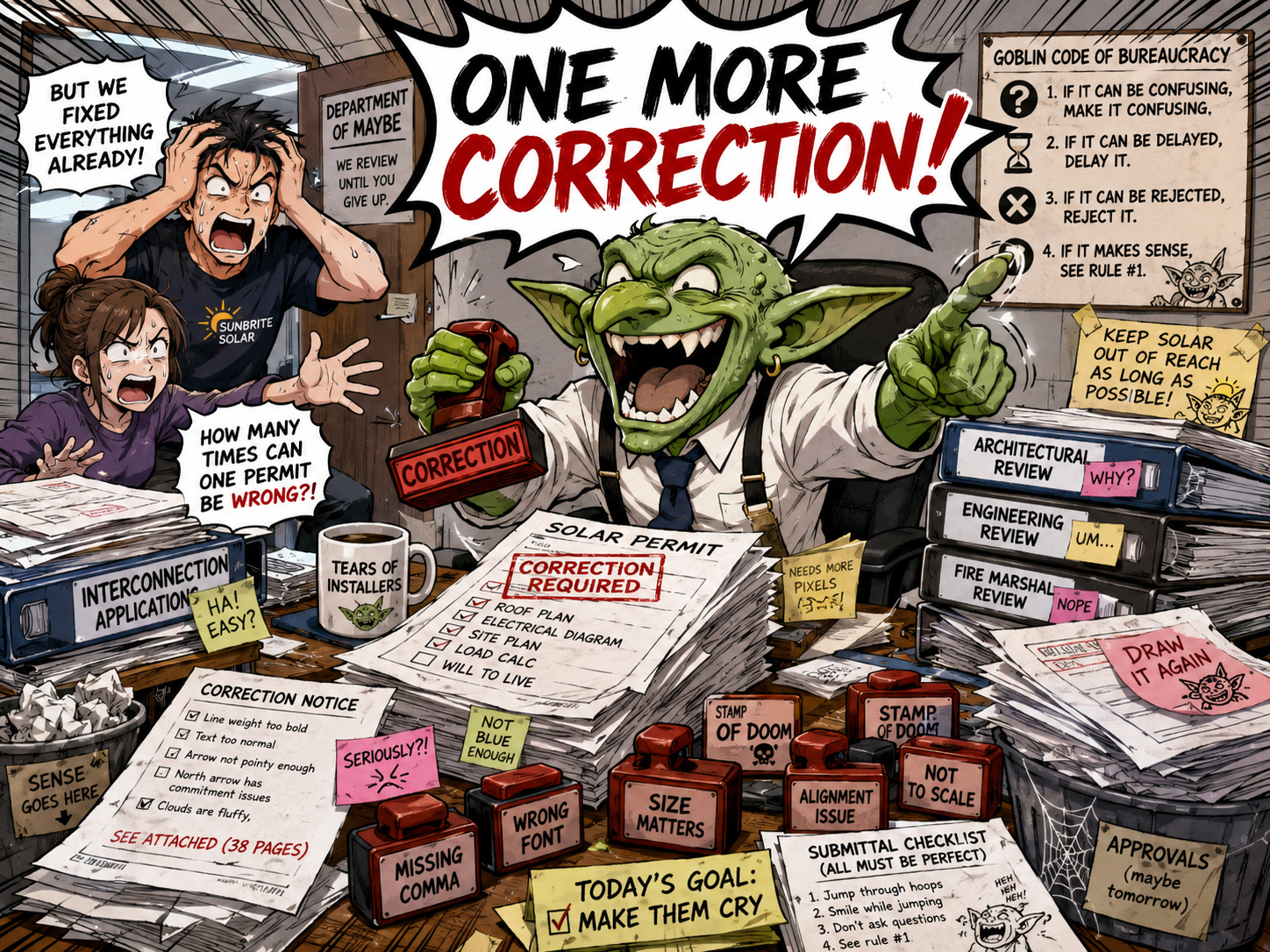
The Permit Goblin jumped out with one final correction notice. Solar Sensei read it, sorted it, answered it, and put it into the project file.
“No!” cried the Permit Goblin. “They are treating paperwork like work instead of panic!”
Clarity made him smaller. Follow-through made him squeak. Complete documentation made him almost transparent.
The Final Boardroom Meltdown
Chairman Kilowatt stared at the city map. Solar dots. Battery dots. Customers asking questions. Businesses thinking about peak demand. Families asking what should stay on during outages.
The boardroom no longer had a simple fear machine. The customer had become informed.
SolarPanic punchline: the monopoly wanted a passive meter. The customer became a power planner.

Why the Story Continues
Episode 8 completes the original manga run, but it does not end SolarPanic. Once customers understand ownership, they begin asking bigger public questions. Why are solar customers treated like trouble? Why are batteries framed as a threat? Why are simple regulatory questions buried under giant filings?
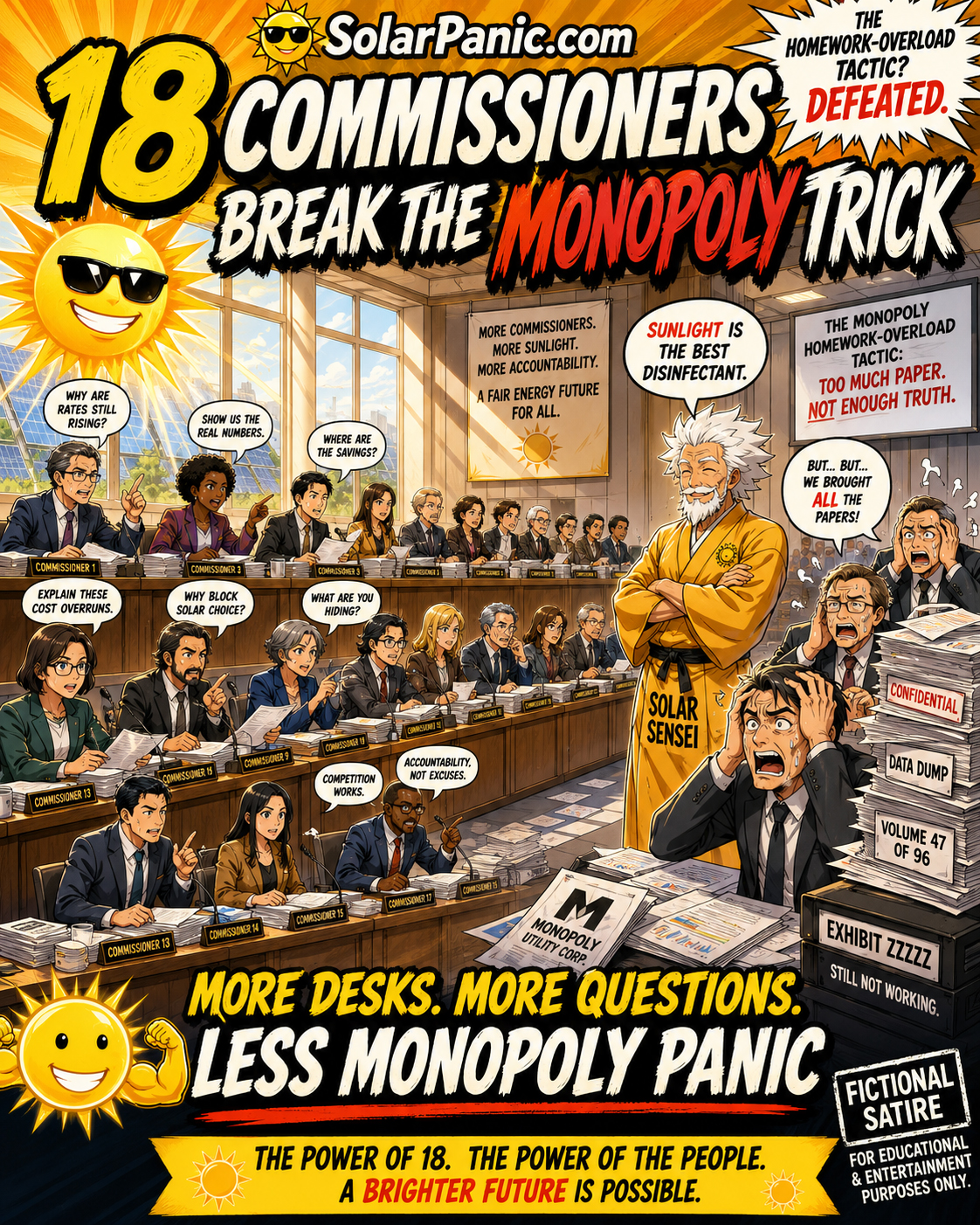
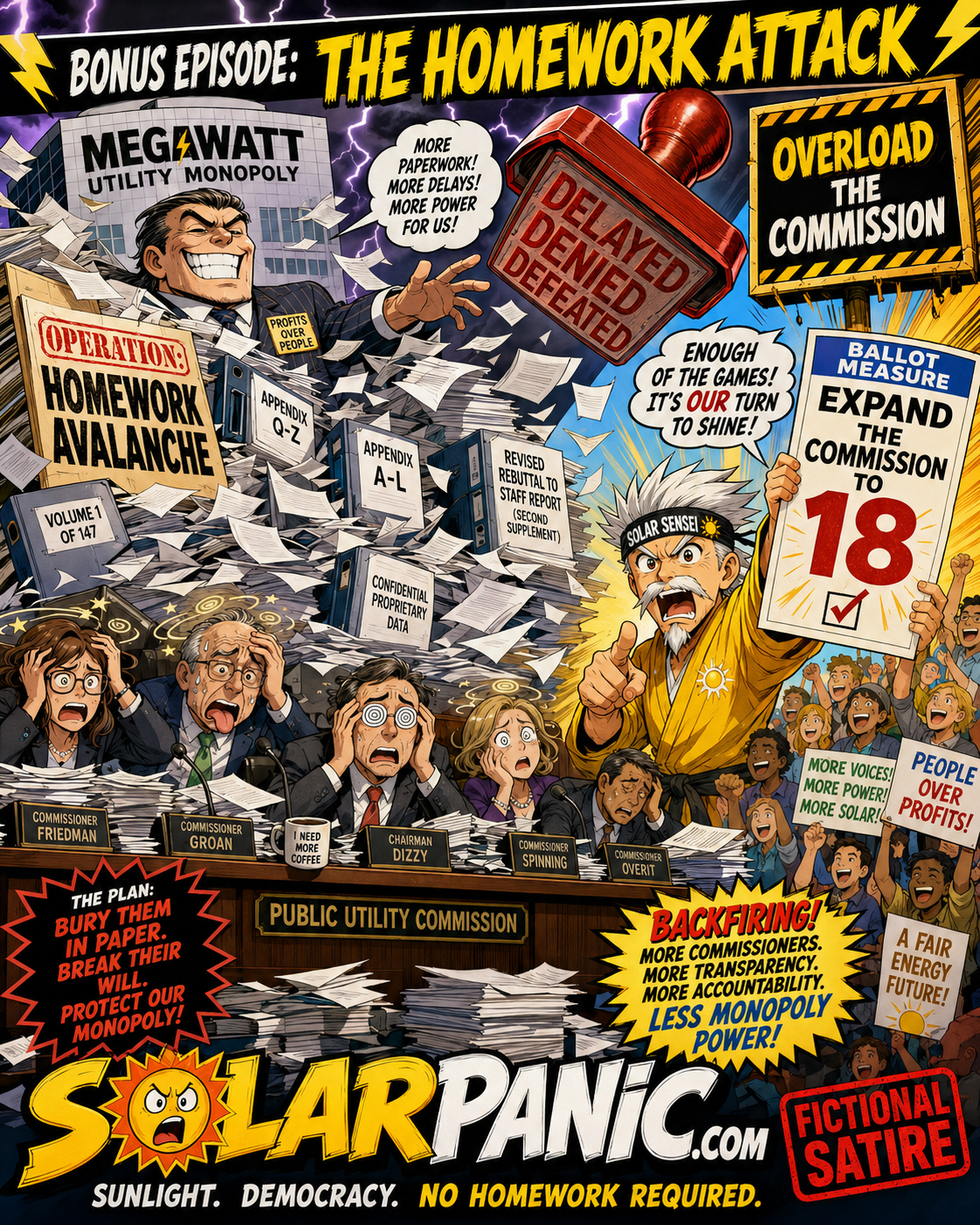
That is why SolarPanic now leads with the bonus episode: The Homework Attack. The fictional monopoly tries to bury commissioners in homework, and Solar Sensei takes the issue to the people. The answer is Proposition Sunlight and 18 commissioners.
Final caption: the sun was always there. The customer finally owned a way to use it.