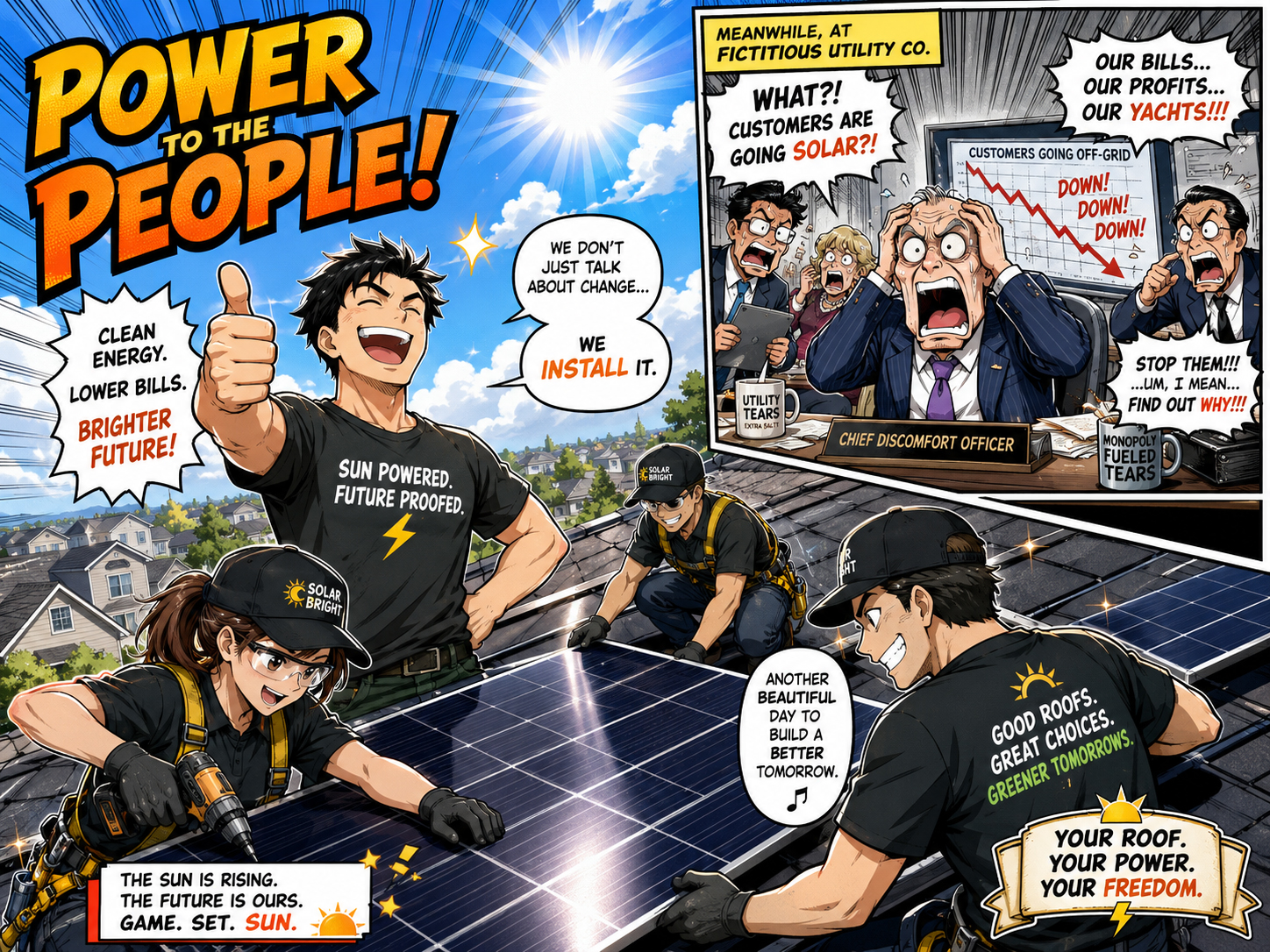
The Day the Roof Became Useful
The homeowner had walked under that roof for years. Rain protection. Shade. Attic heat. Occasional bird drama. Nothing special.
Then Solar Sensei pointed upward.
“The roof is not sleeping,” Solar Sensei said. “The roof is waiting for a job.”
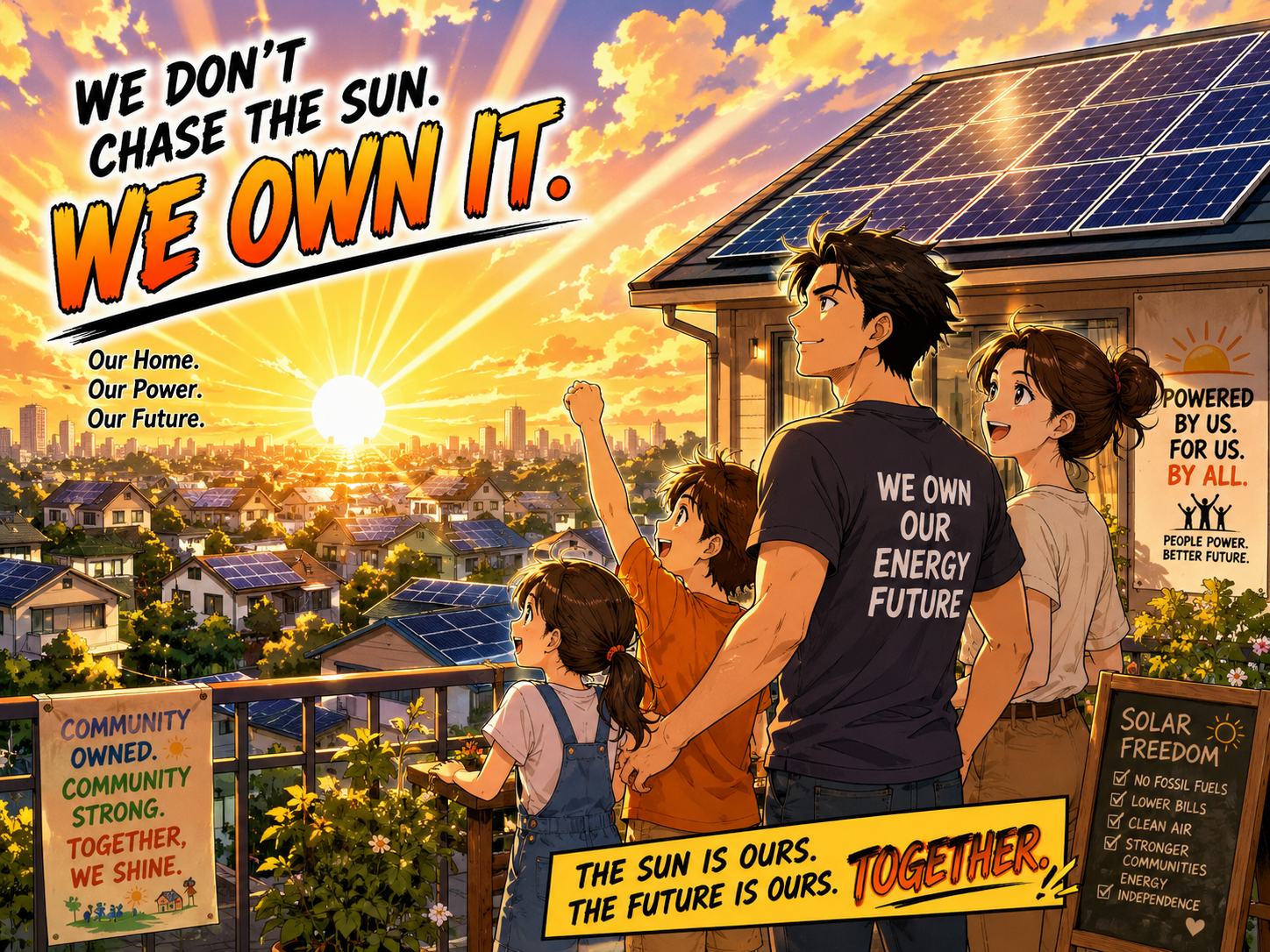
The homeowner looked again. Sunlight was landing there every day. The roof was not just a lid on the house. It was a platform. A resource. A place where the customer could own useful equipment.
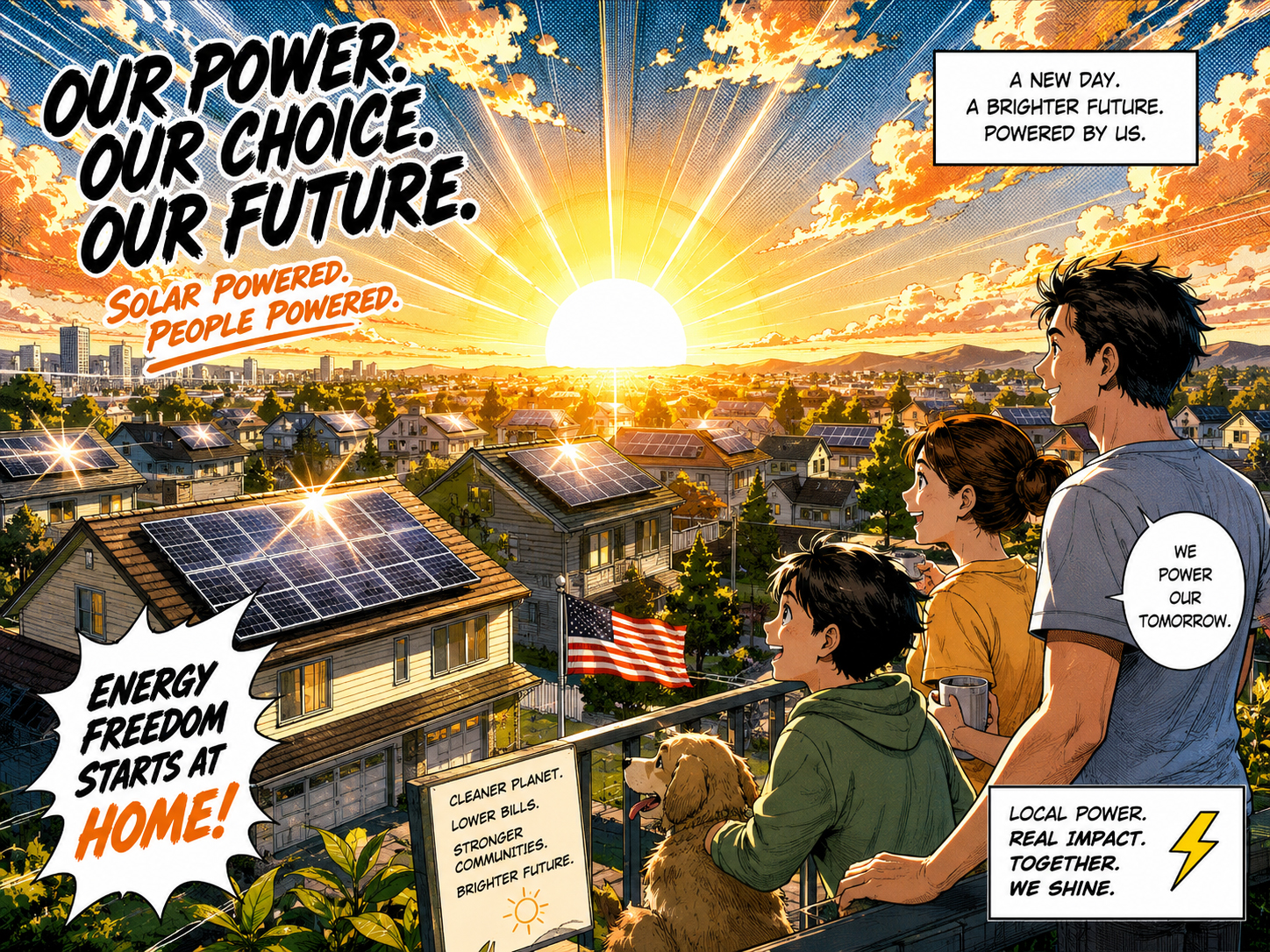
Alarm at MegaWatt Monopoly
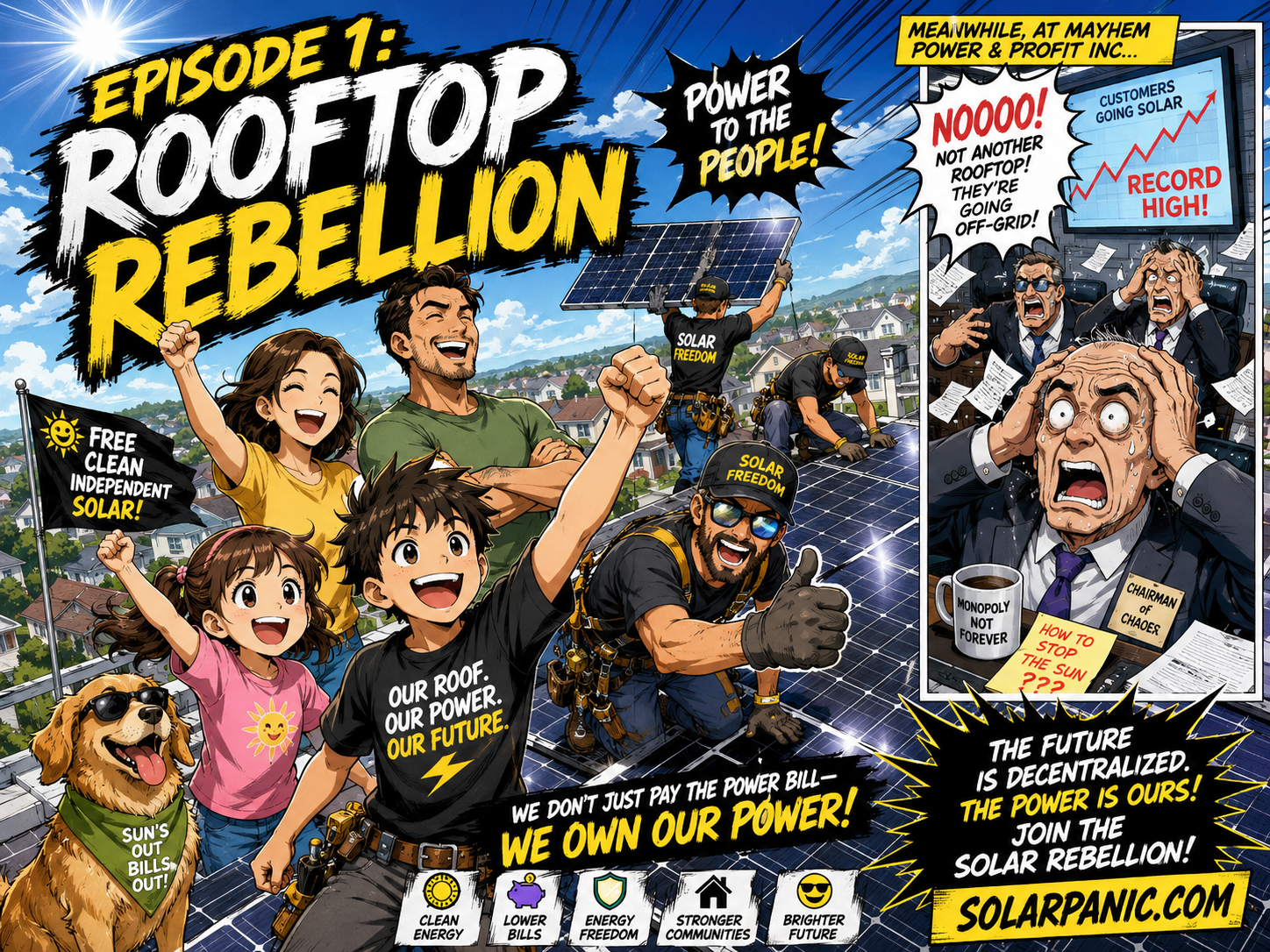
At the exact moment the first panel touched the rack, a red light flashed inside MegaWatt Monopoly Utility Co. The fictional utility’s emergency boardroom doors flew open.
CUSTOMER HAS DISCOVERED THE ROOF.
Chairman Kilowatt staggered backward. Madame Peak Rate dropped her calculator. The Permit Goblin fell through a ceiling tile carrying three correction notices and a tiny sandwich.

The Boardroom Misunderstands Everything
The fictional executives stared at a city map. A yellow dot appeared on one roof. Then another. Then another. Each dot was a customer thinking dangerous thoughts:
- Maybe my roof can make power.
- Maybe my home can be part of the solution.
- Maybe batteries are worth understanding.
- Maybe I should ask what happens during peak rates.
- Maybe I do not have to be helpless during a blackout.
To normal people, these were reasonable questions. To MegaWatt Monopoly, they were a five-alarm philosophical disaster.
“Stop them before they understand their own loads!” Chairman Kilowatt yelled.
Solar Sensei Explains the Rebellion
Solar Sensei was not trying to create chaos. He was trying to create clarity. A solar system should be designed around the real site, the real roof, the real electrical service, the real usage pattern, and the customer’s actual goals.
That is why the rooftop rebellion is not reckless. It is disciplined. A roof becomes useful when the system is planned, permitted, installed, inspected, and operated correctly.
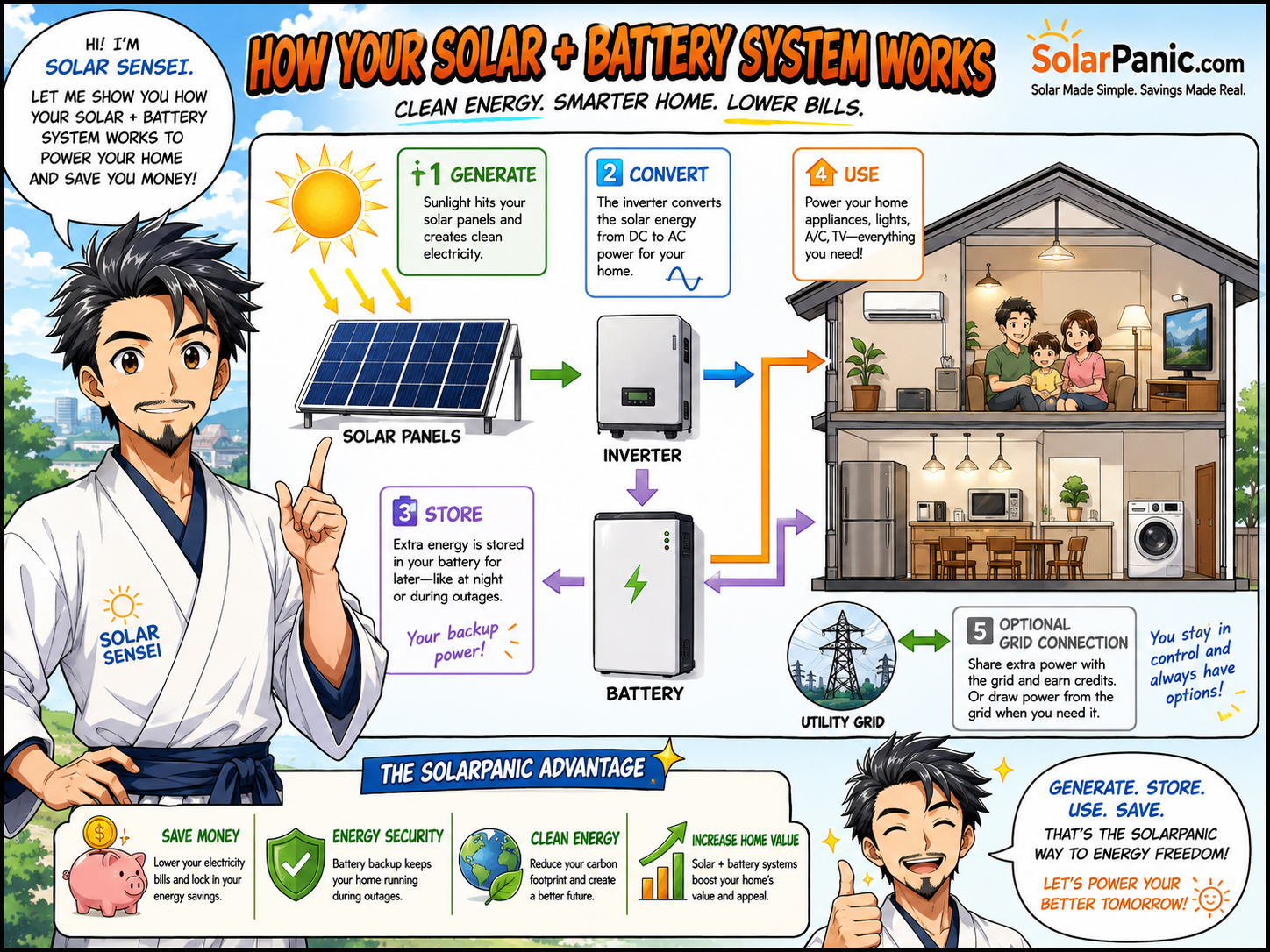
The Real Meaning of the Rebellion
In SolarPanic, the word “rebellion” is funny because the act is practical. A customer is not building a villain fortress. A customer is installing useful equipment on property they already own.
But that practical act changes the energy relationship. The customer starts thinking about production, consumption, timing, backup, and resilience. That is the part the fictional monopoly cannot stand.
SolarPanic punchline: the monopoly wanted a passive meter. The roof became a worker.
The Panic Spreads Across the City
More rooftops wake up. More customers ask questions. More families and business owners begin to see solar not as a mystery, but as an investment in useful energy equipment.
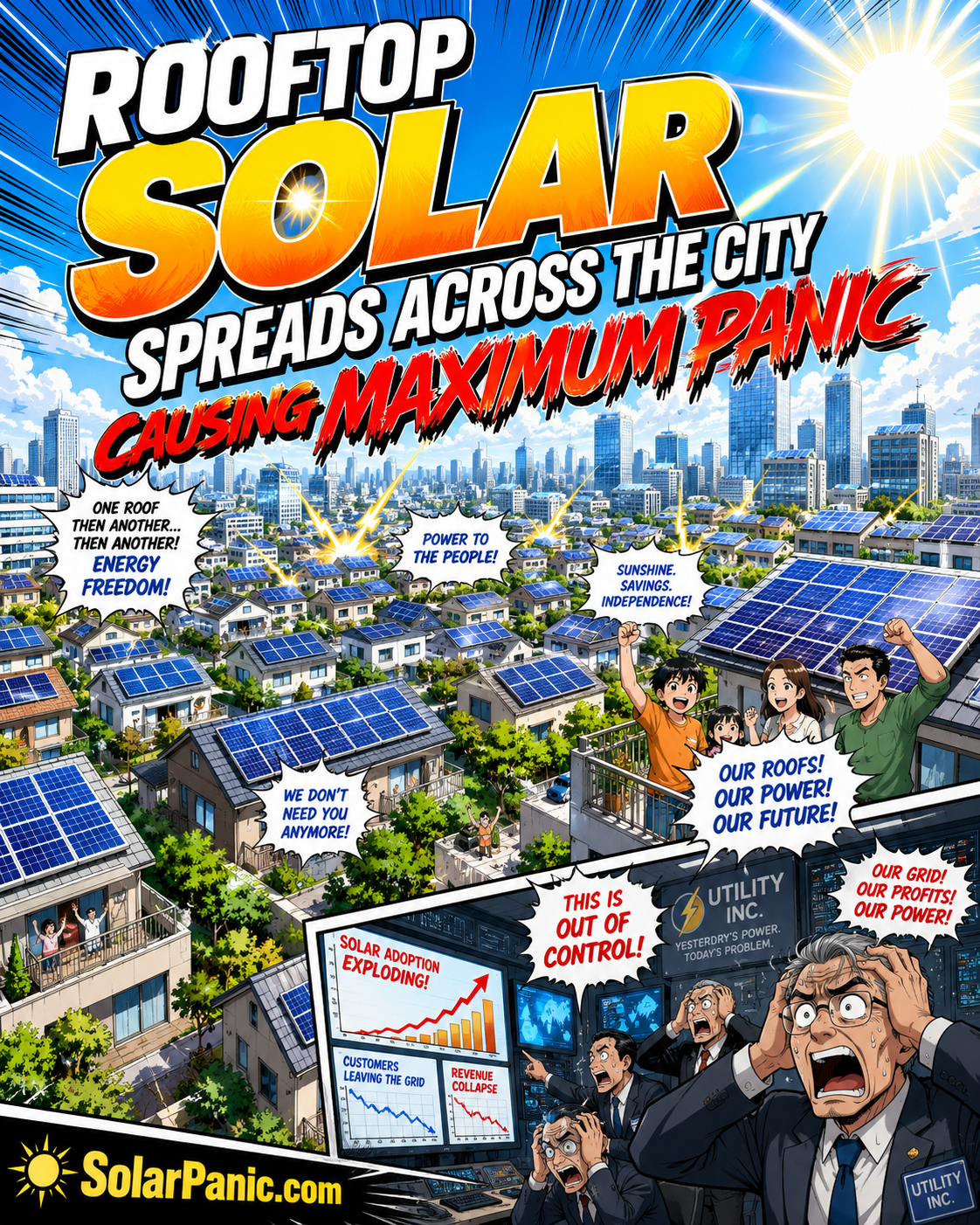
The fictional boardroom tries to respond with noise. Solar Sensei responds with design. The customer responds by asking what matters next.
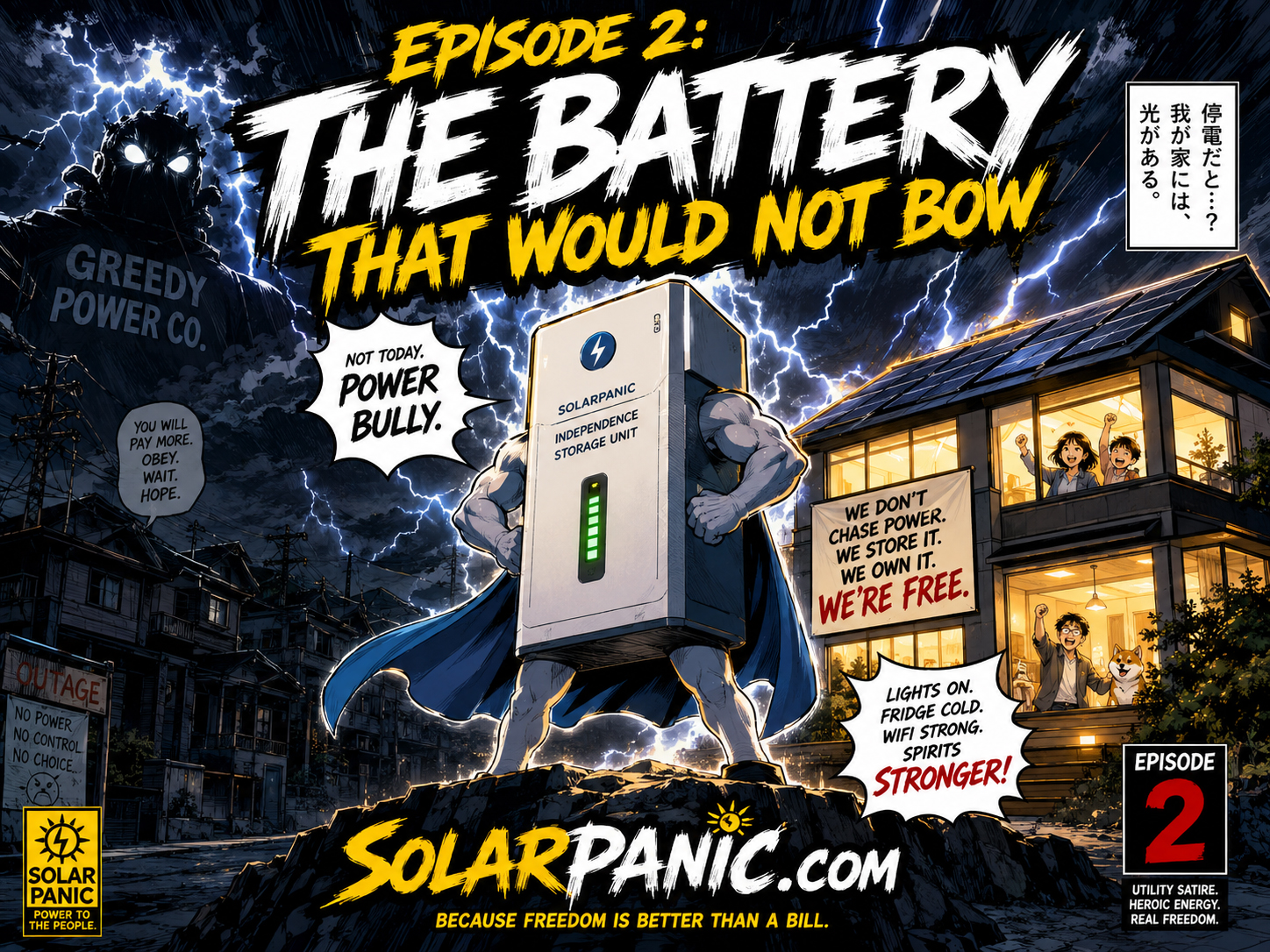
Next: The Battery That Would Not Bow
Rooftop solar begins the rebellion. But the next chapter raises the stakes: what happens when the customer adds storage, timing, and backup planning?
Battery Boy is about to enter the SolarPanic universe.