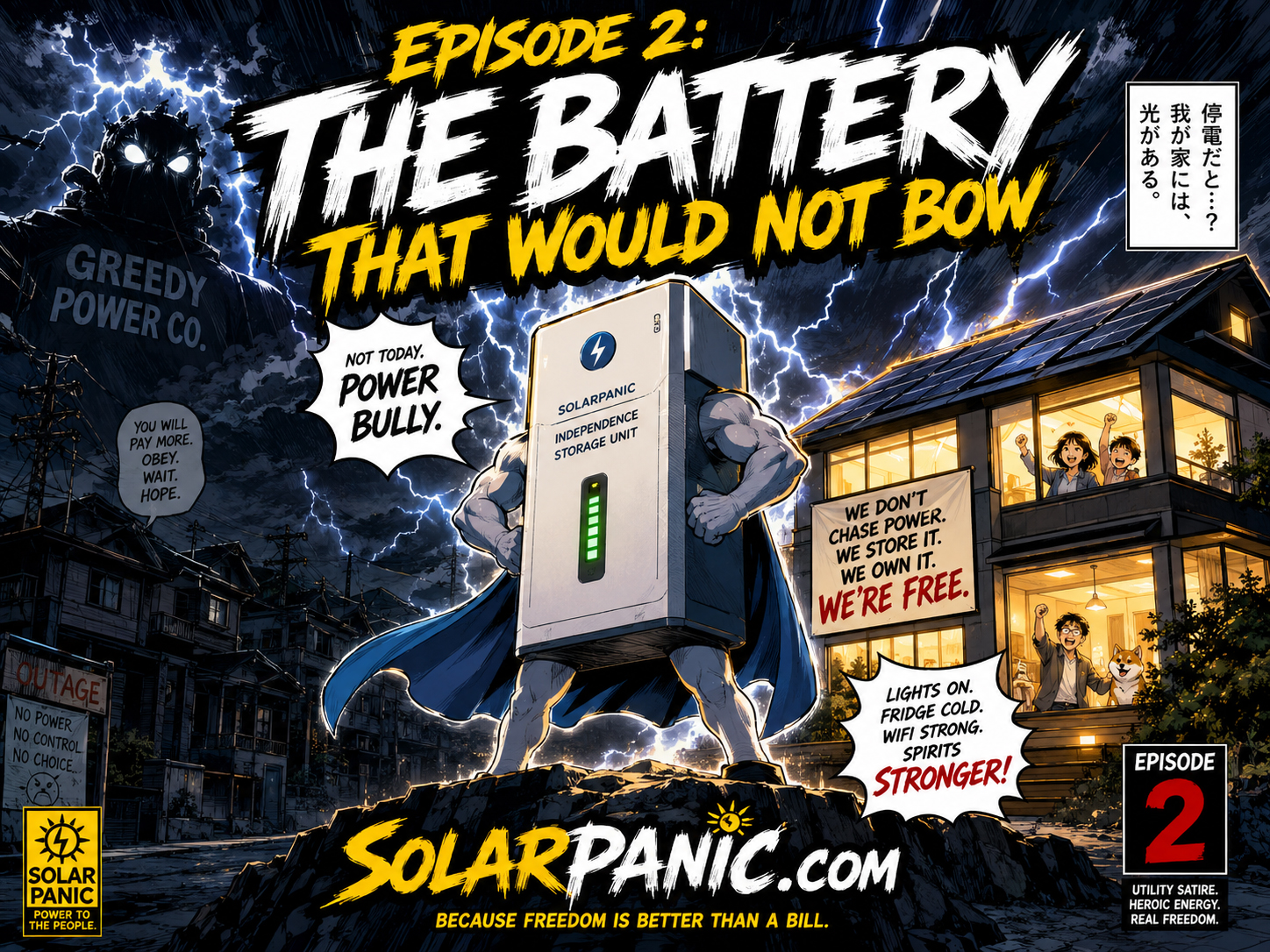
Madame Peak Rate Arrives
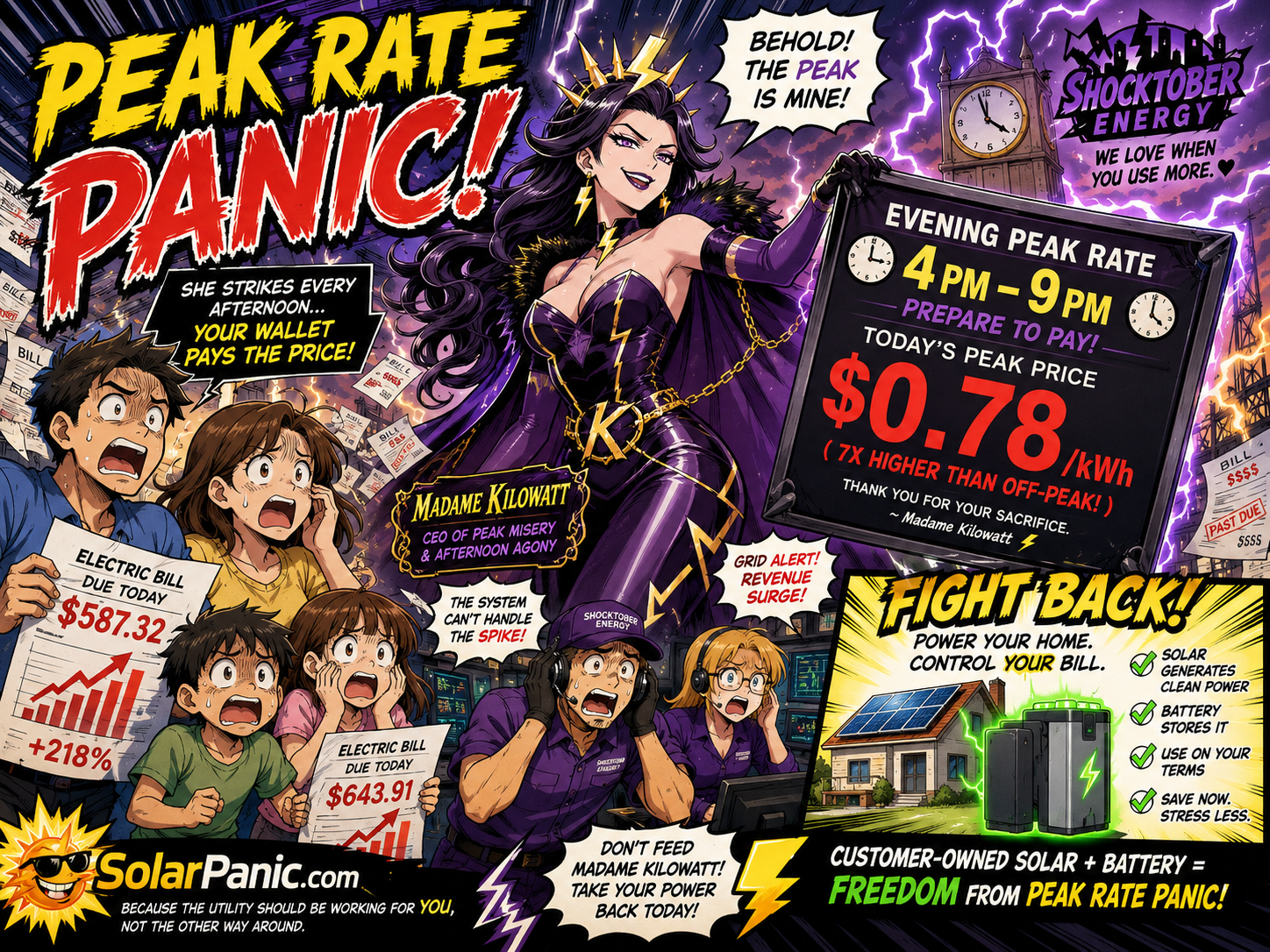
The afternoon was calm until the clock changed. The sun was sliding lower. The house still needed power. Dinner was starting. Lights were coming on. The refrigerator was humming. The internet was alive.
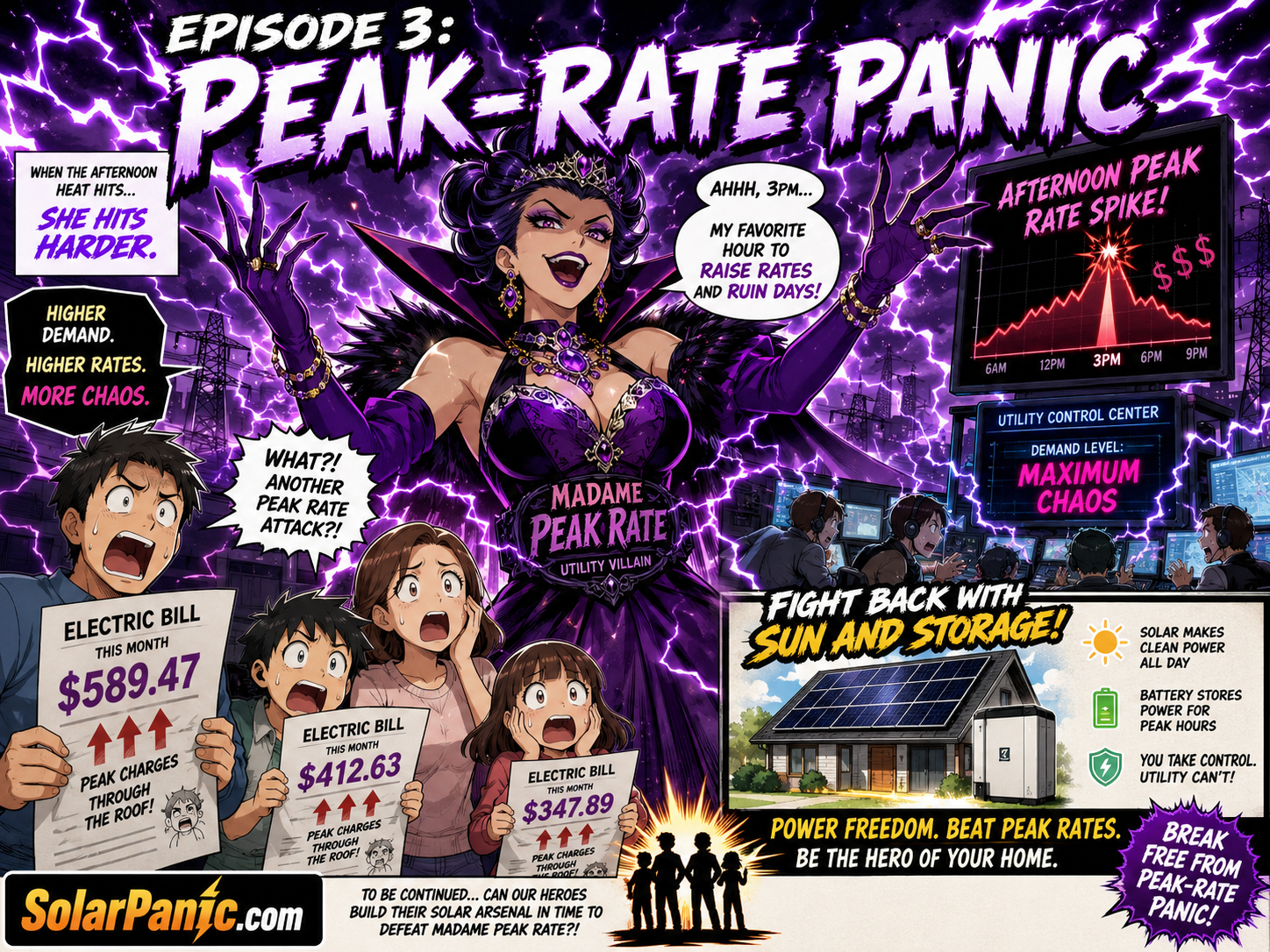
Then the curtains flew open and Madame Peak Rate entered with a calculator, a cape, and a bill sharp enough to slice a mango.
“Good evening,” she said. “I have brought expensive timing.”
At MegaWatt Monopoly Utility Co., Chairman Kilowatt stood and applauded. Peak-rate drama was one of his favorite shows.
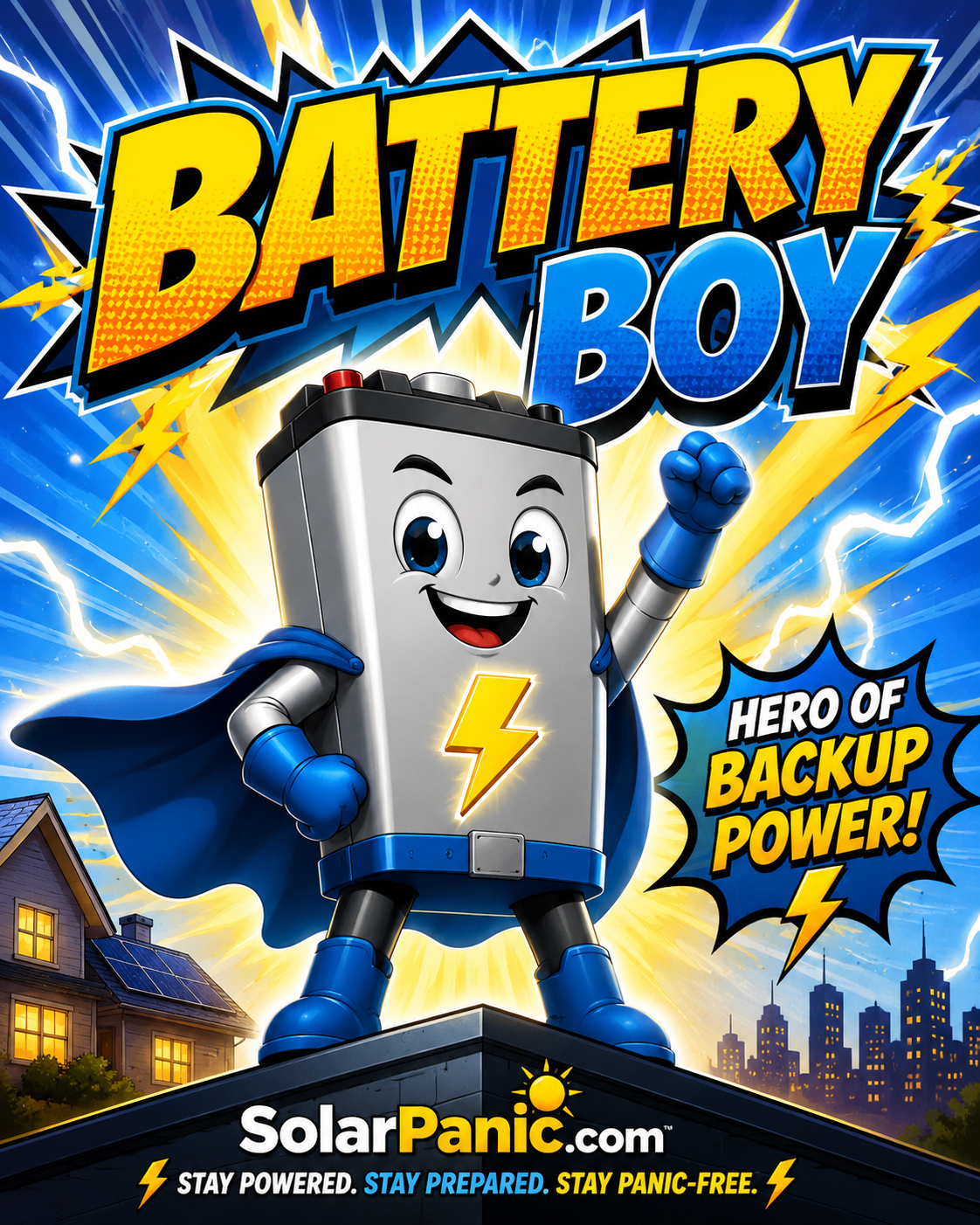
Battery Boy Refuses to Bow
The family looked worried. The fictional boardroom leaned forward. Madame Peak Rate raised her calculator like a sword.
Then a quiet green glow appeared near the wall. Battery Boy opened one eye.
“Some of today’s sunlight came with me,” Battery Boy said.
Madame Peak Rate froze. Chairman Kilowatt dropped his pen. The Permit Goblin tried to file a correction notice against stored energy.
The Power of Timing
Battery Boy is not a miracle machine. Solar Sensei makes that clear immediately. A battery is a design tool. It has limits. It has a capacity. It supports selected loads. It must be installed safely and planned honestly.
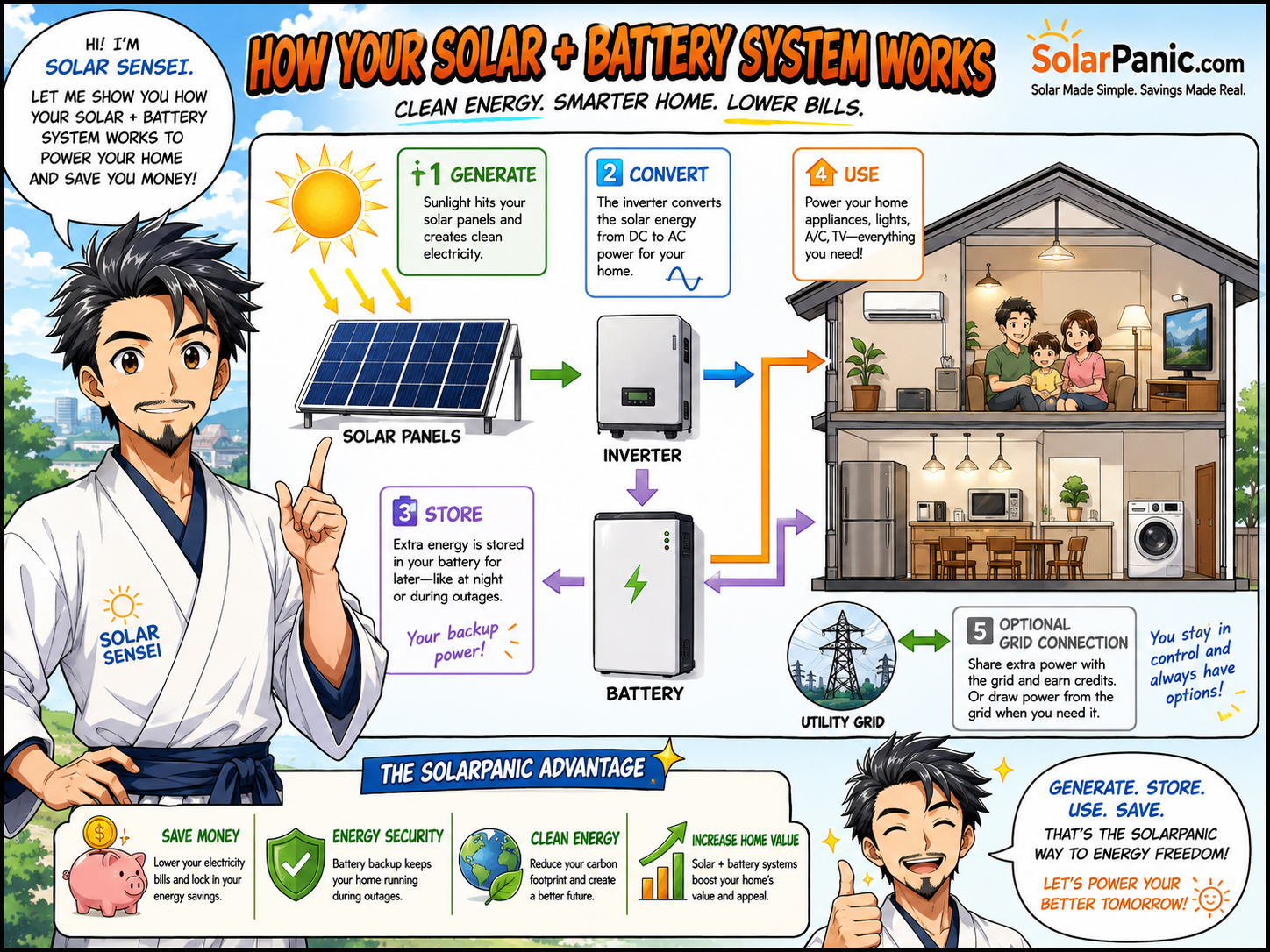
But timing matters. Solar can produce during daylight. A battery can store some energy for later use, depending on system design, load choices, equipment, and site conditions.
- Solar helps produce energy during sunny hours.
- The battery can store energy for later use.
- Selected critical loads can be backed up.
- Peak-rate periods become a design question instead of a mystery.
- Outages become less frightening when the system has a plan.
“They are thinking about timing!” Chairman Kilowatt shouted. “This is terrible for helplessness!”
The Blackout Test
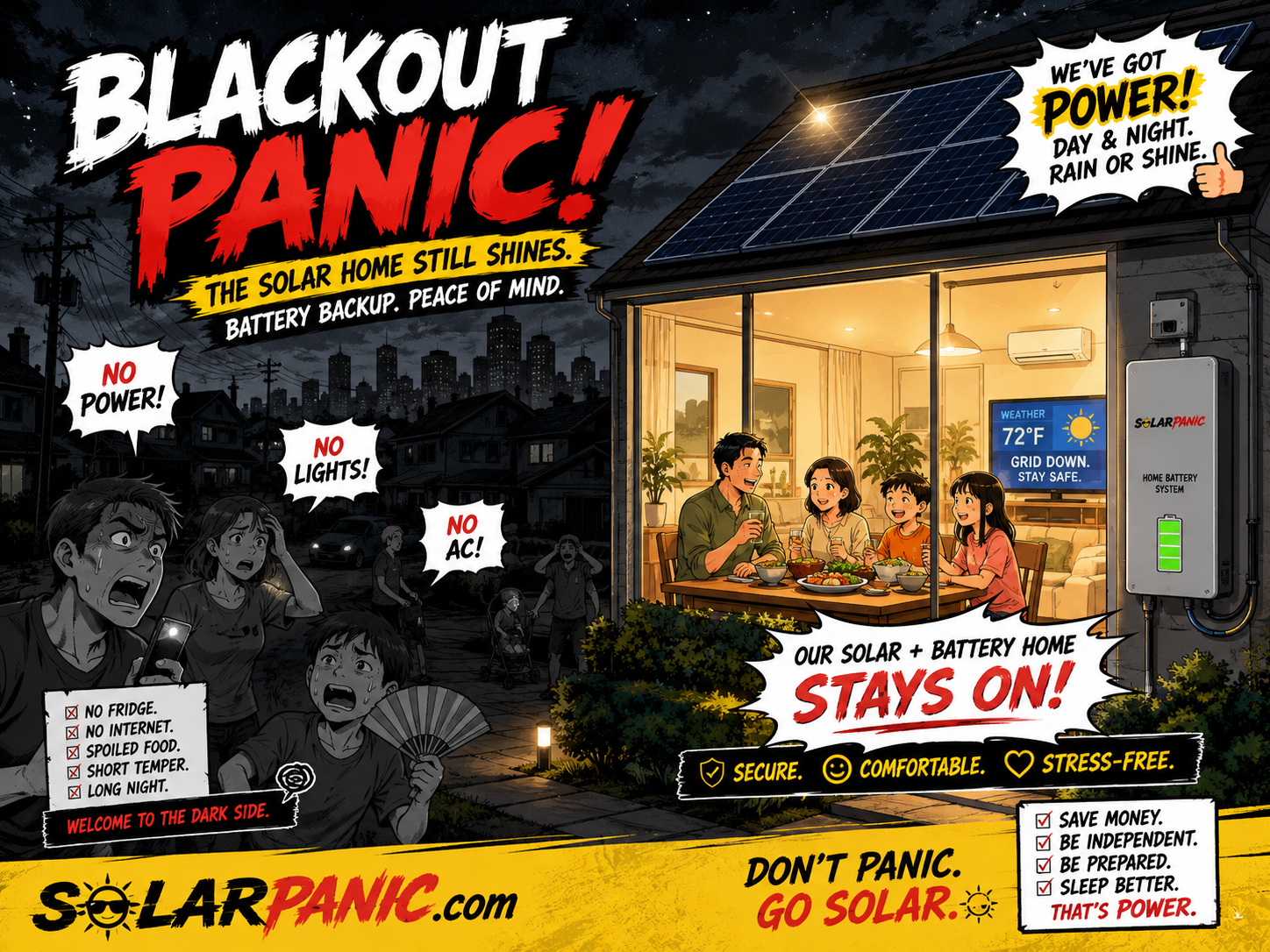
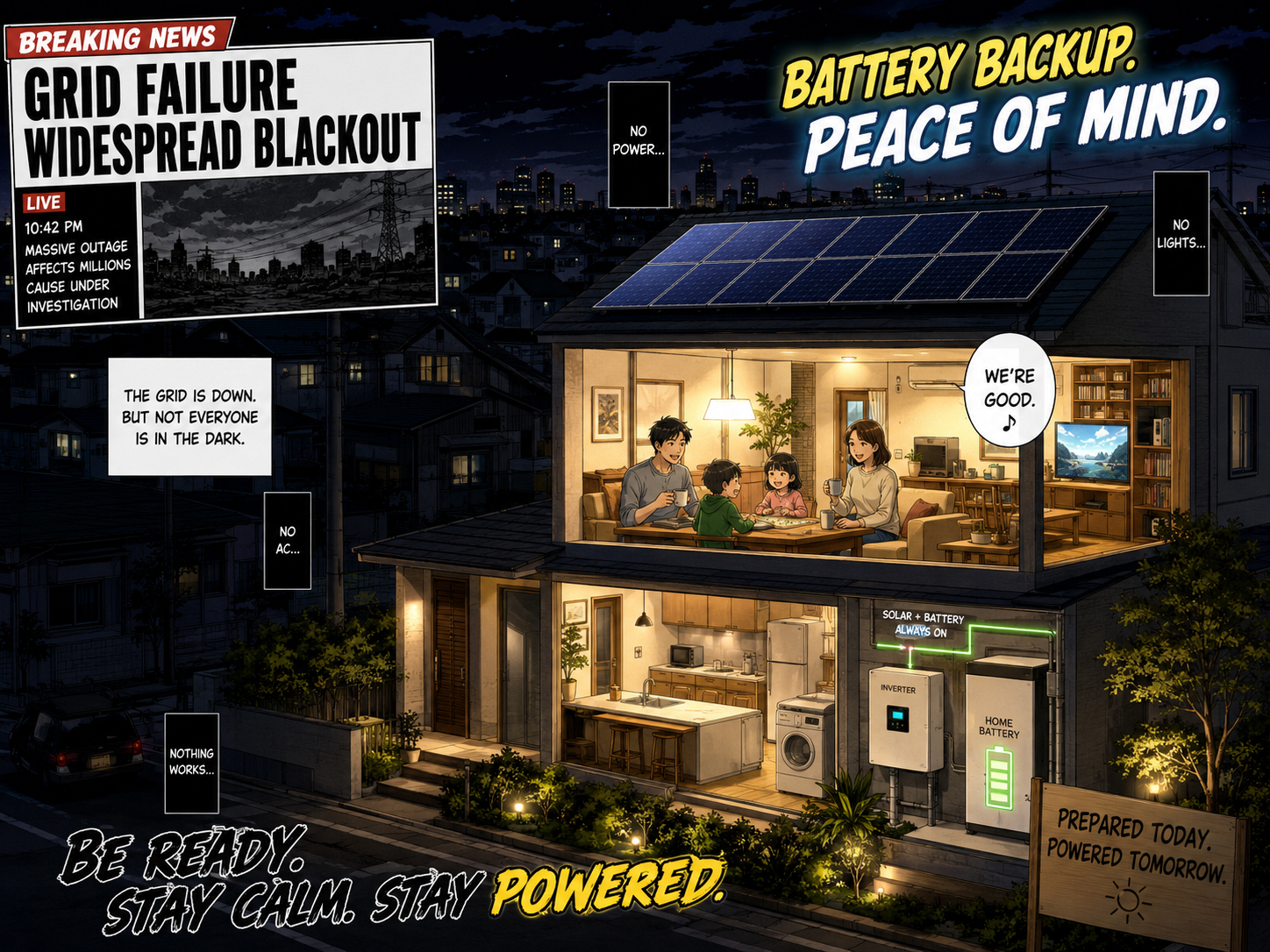
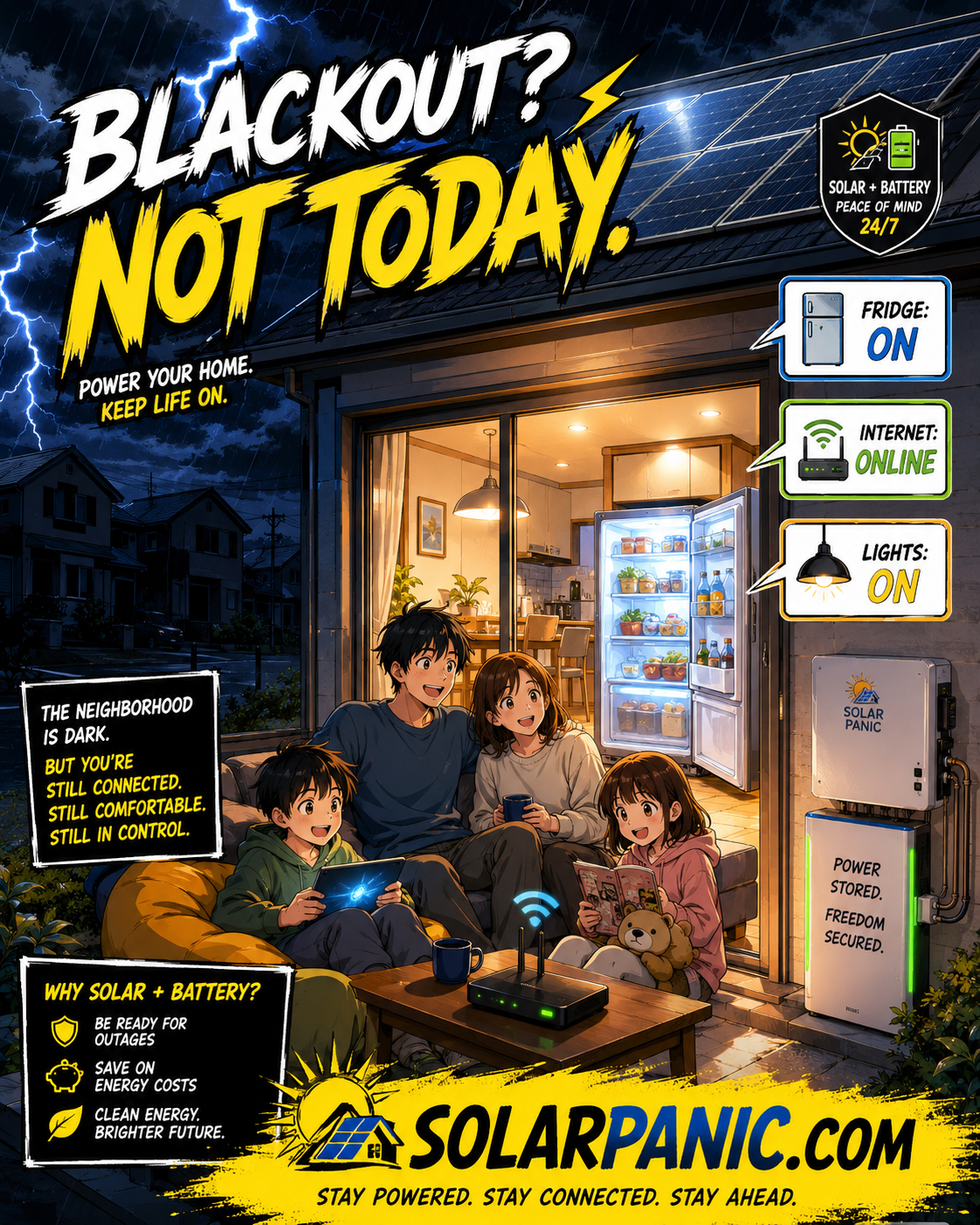
Just as Madame Peak Rate prepared her second attack, the neighborhood went dark. MegaWatt Monopoly immediately began drafting a vague outage statement.
But the battery-backed house did not collapse into panic. The refrigerator kept cooling. The internet stayed useful. Selected lights stayed on. The family was not pretending the blackout was fun. They simply had a plan.
Solar Sensei Explains Critical Loads
Solar Sensei stepped forward with a clean diagram. He did not promise that every appliance could run forever. He did something better: he explained priorities.
- What must stay on?
- What can wait?
- How much battery capacity is available?
- Will daytime solar recharge the battery?
- What happens during cloudy weather?
- What does the customer expect the system to do?
Battery Boy nodded. A good battery system is not about pretending limits do not exist. It is about designing around the right limits.
The Boardroom Panic Deepens
Back at MegaWatt Monopoly, the situation was getting worse. Rooftop solar had made the customer more productive. Battery backup had made the customer more prepared. The fictional boardroom had lost the easiest tool of all: fear.
SolarPanic punchline: the monopoly wanted a customer in the dark. Battery Boy brought a flashlight.
Madame Peak Rate tried one last attack. She lifted the bill high and shouted that expensive timing would always win.
Battery Boy did not bow. He simply looked at the load panel and said:
“Which loads matter most?”
The Bigger Story
Episode 2 shows why batteries are so important in the SolarPanic universe. Solar gives the customer production. Batteries create timing and backup options. Once customers understand those options, they start asking better questions about rates, rules, blackouts, and public oversight.
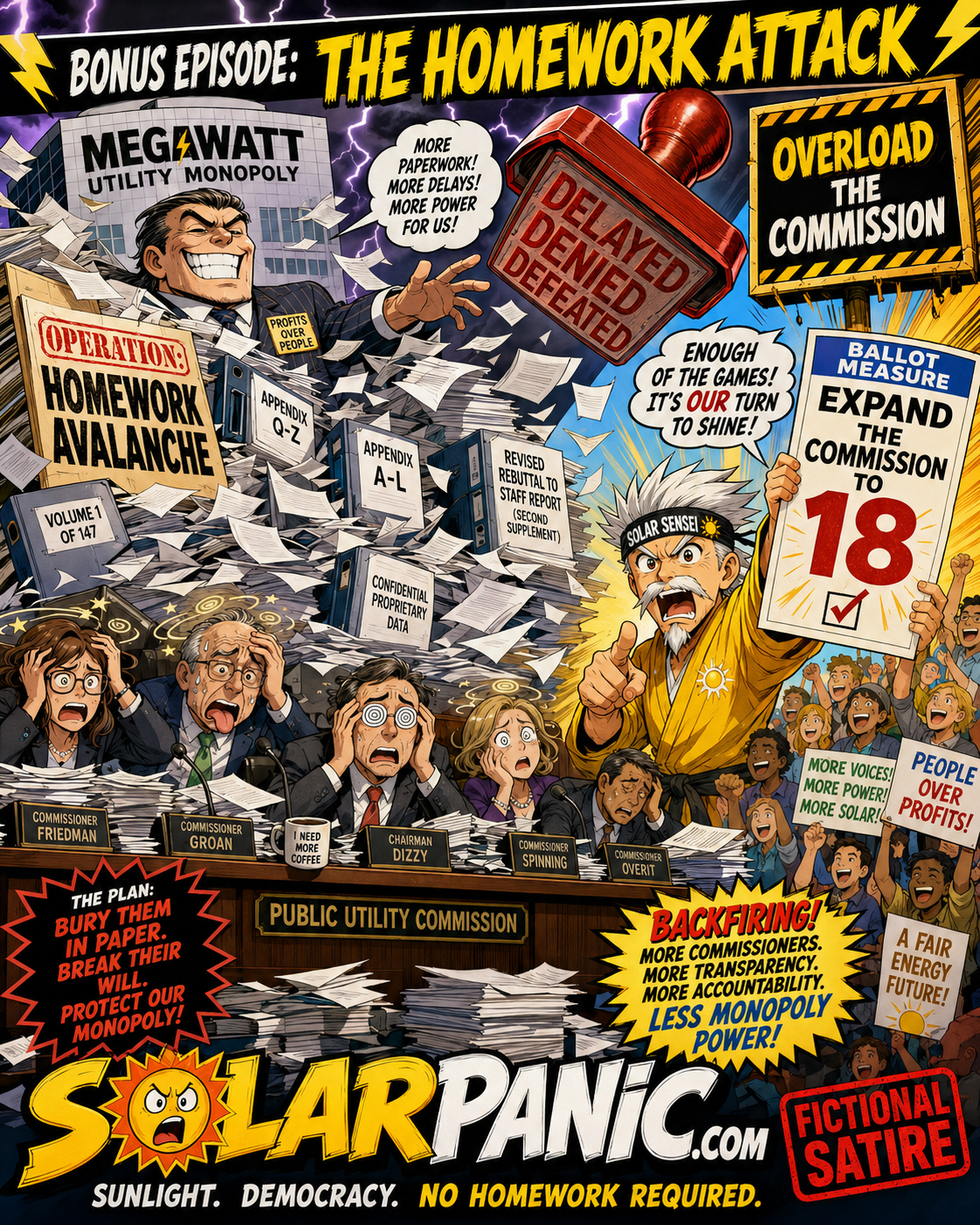
That larger path leads straight to the flagship bonus episode: the Homework Attack, where the fictional monopoly tries to bury commissioners in paperwork and the public answers with 18 commissioners.