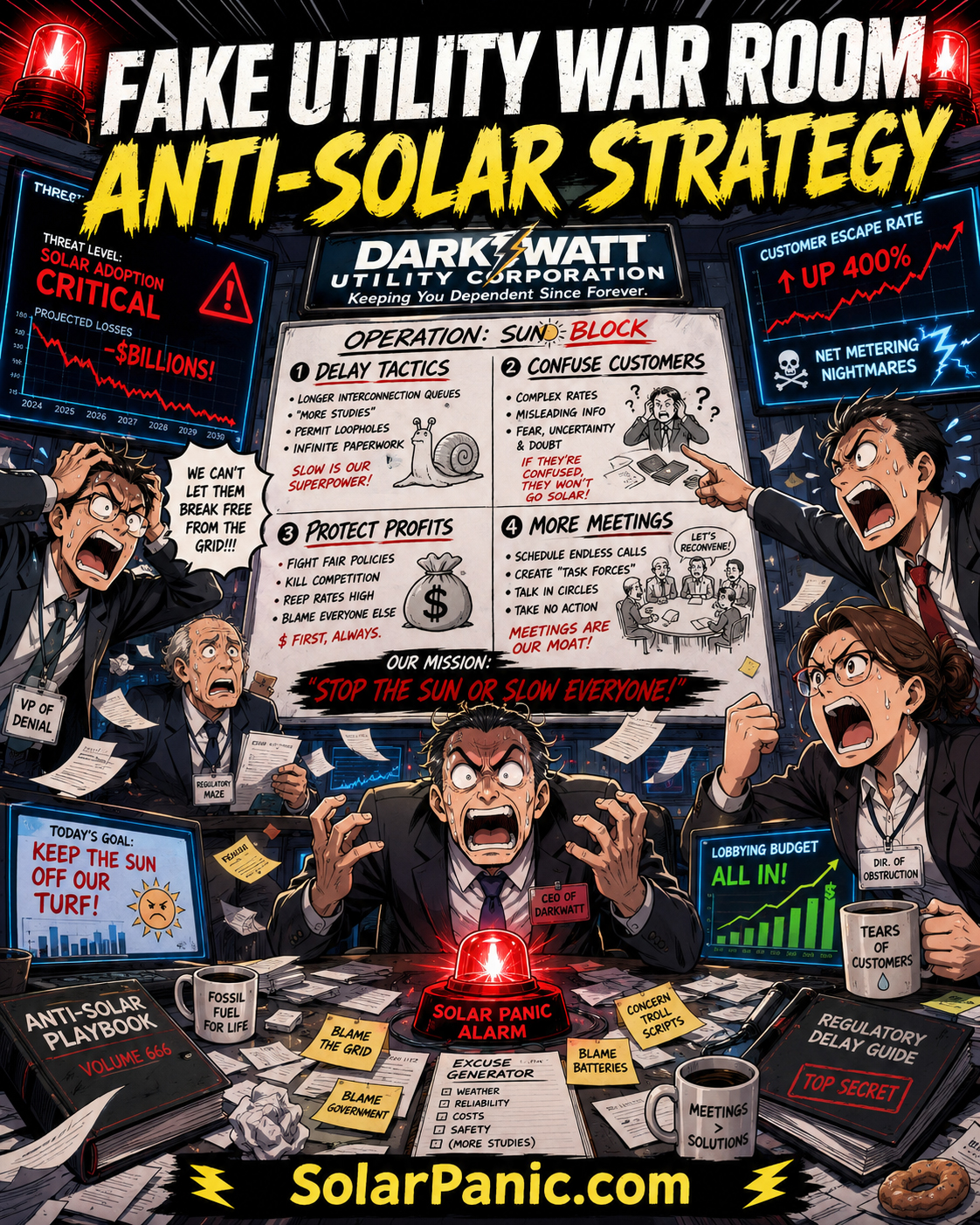
The Company That Feared the Roof
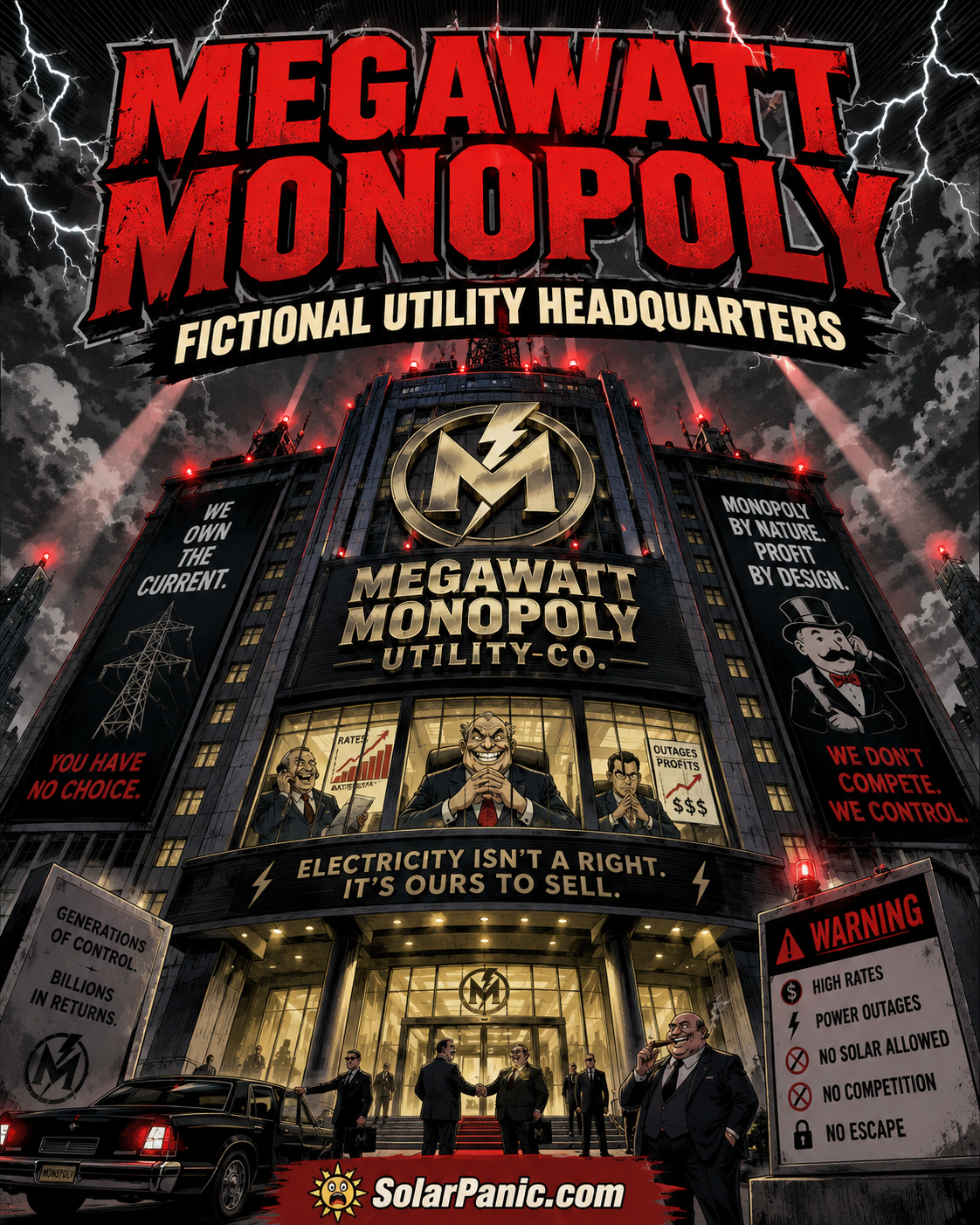
MegaWatt Monopoly Utility Co. was built on a simple fictional belief: customers should receive power, receive bills, and avoid asking too many questions about either one.
For years, the model worked beautifully. Customers waited. Bills arrived. Peak rates appeared. Outages were explained with fog. If anyone asked a simple question, the answer arrived in a binder.
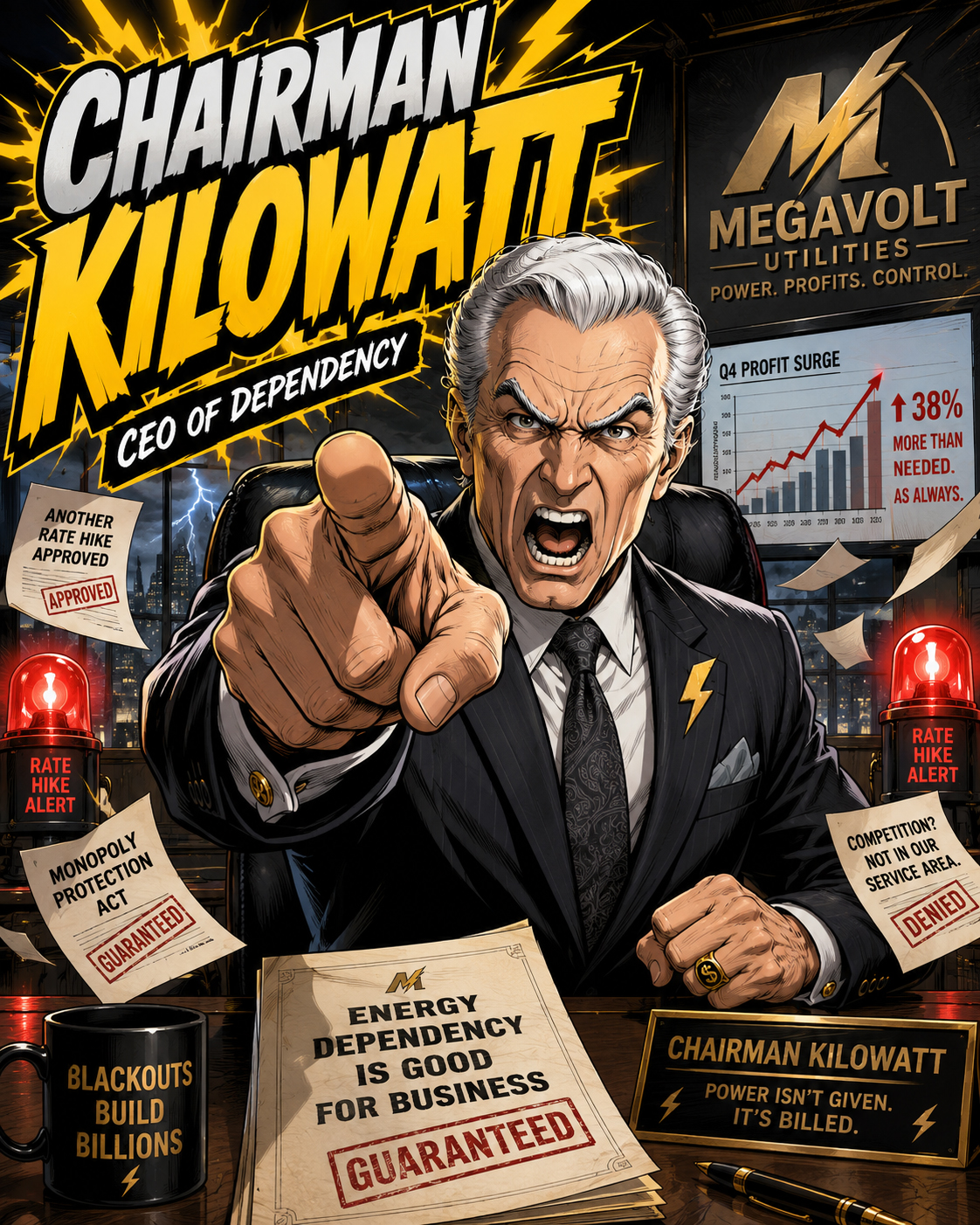
“The customer must never discover that the roof can have a job,” Chairman Kilowatt declared.
The Corporate Mission
MegaWatt Monopoly’s fictional mission statement sounds noble in the boardroom and terrifying everywhere else:
“To preserve customer dependence through complexity, delay, and dramatic billing.”
The company is not afraid of sunlight as a natural phenomenon. It is afraid of sunlight becoming useful on a customer’s property.
- Rooftop solar makes the roof productive.
- Batteries give customers timing and backup options.
- Lower bills give customers evidence.
- Blackout resilience reduces helplessness.
- Public questions threaten the paperwork fog.
The Boardroom Panic System
MegaWatt Monopoly has a complete panic workflow. When a customer installs solar, the first alarm sounds. When the customer adds a battery, the second alarm screams. When the customer understands the bill, the emergency donuts are deployed.
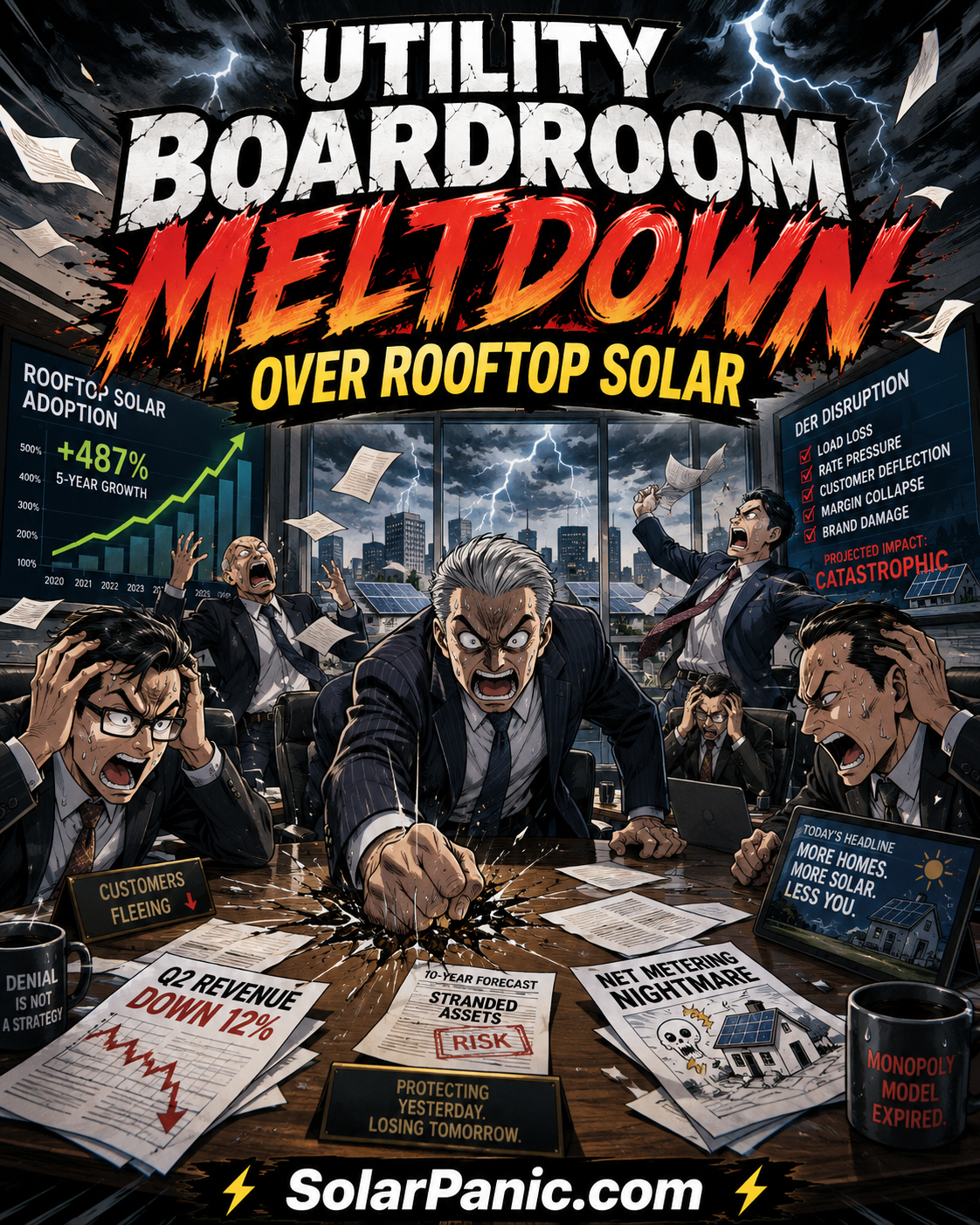
The boardroom does not ask, “How can customers benefit from cleaner, smarter, more resilient energy systems?” It asks, “How can we make this more confusing before anyone notices?”
SolarPanic punchline: the monopoly did not fear the panel. It feared the customer who understood the panel.
The Villain Team
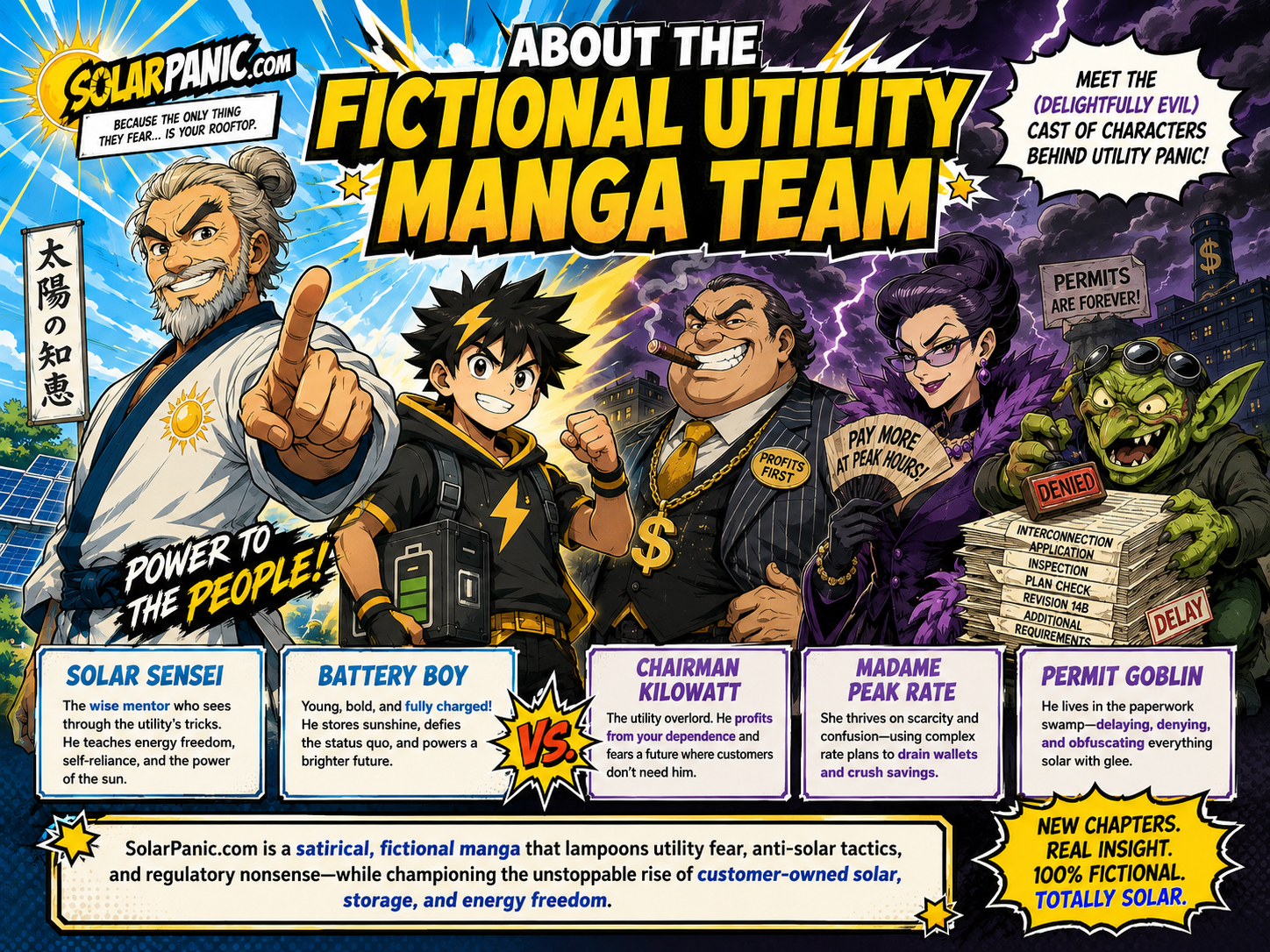
MegaWatt Monopoly’s fictional leadership team is built for panic.
- Chairman Kilowatt: CEO of dependence and emergency board meetings.
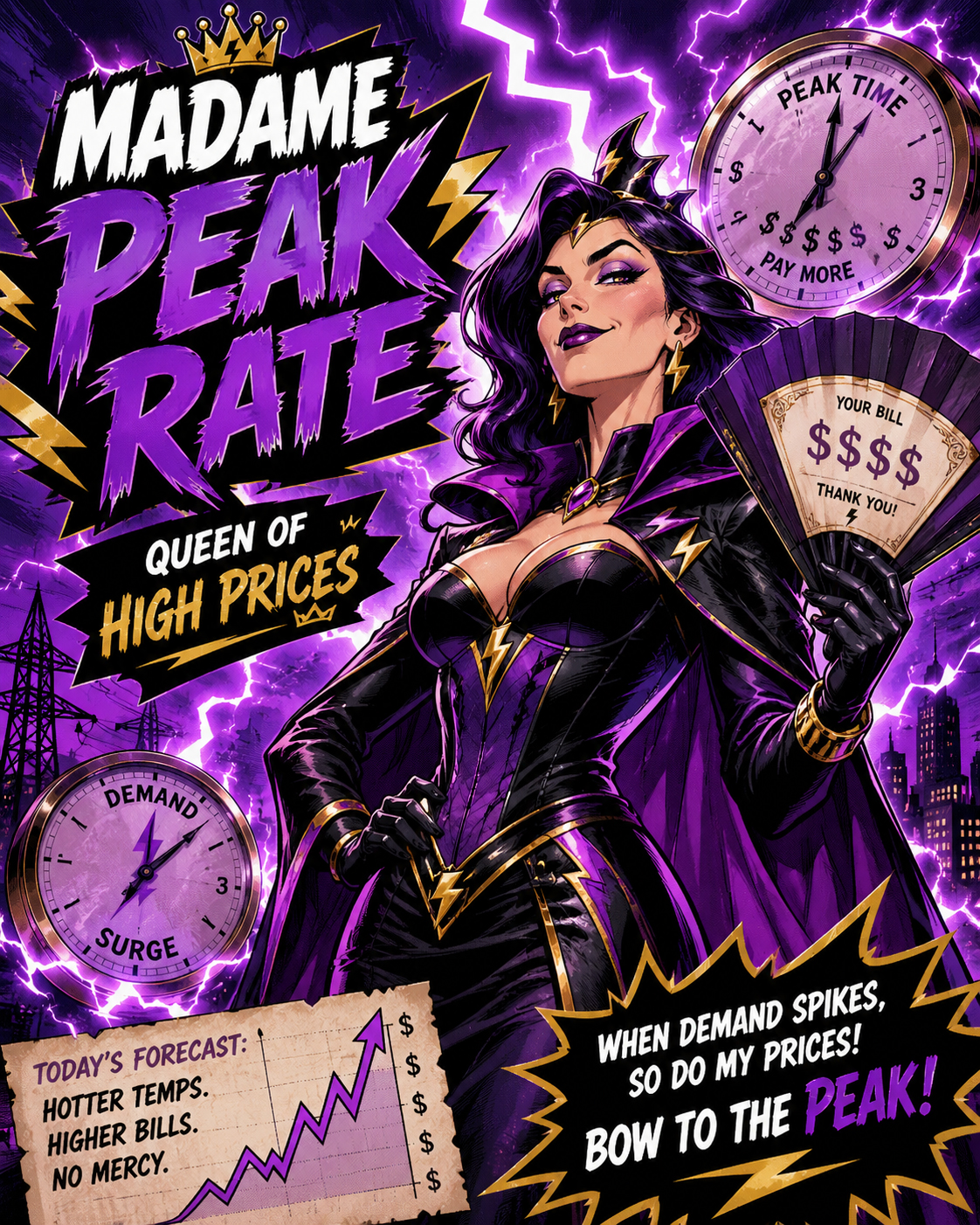
- Madame Peak Rate: queen of the expensive afternoon mood.
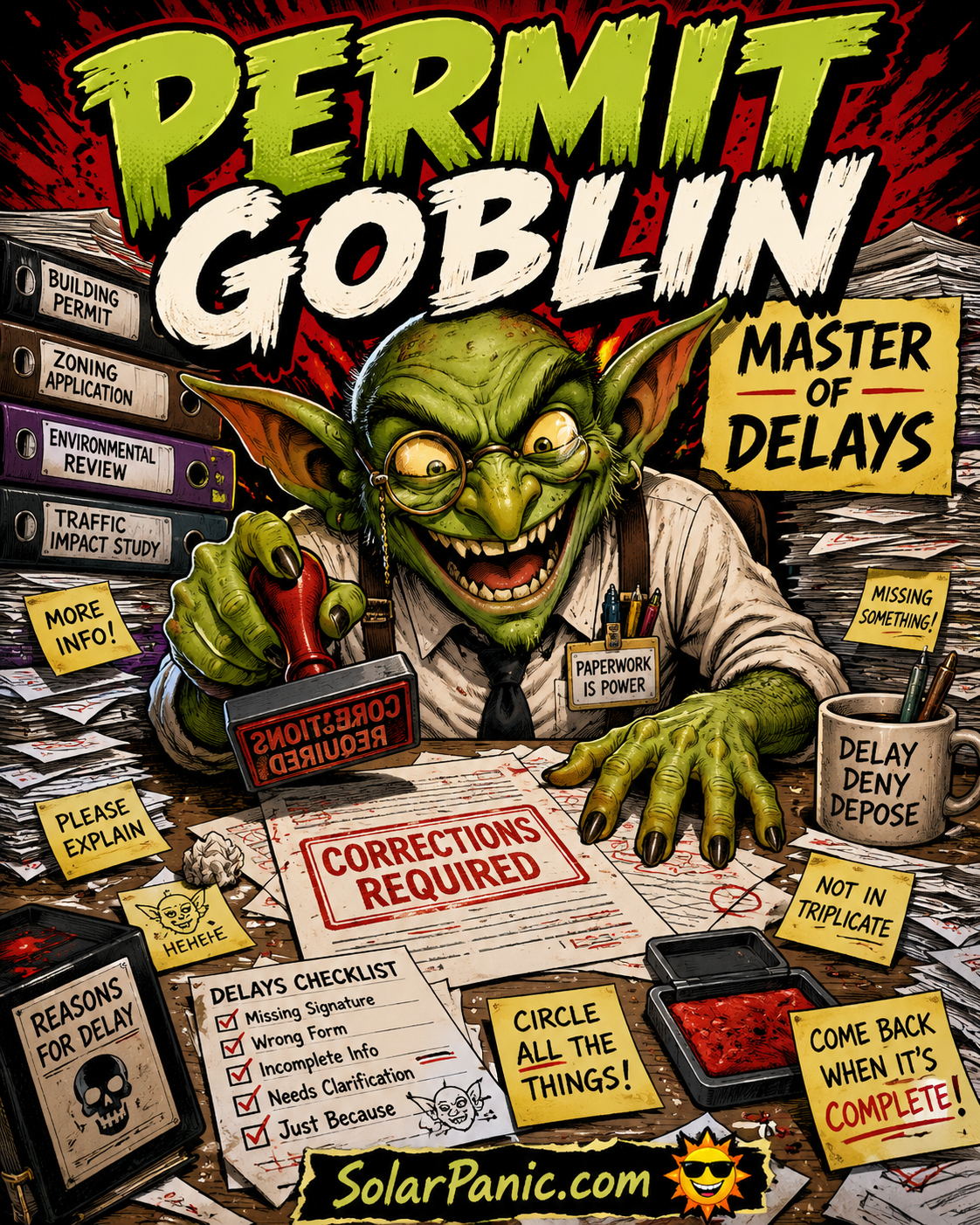
- The Permit Goblin: tiny lord of “one more correction.”
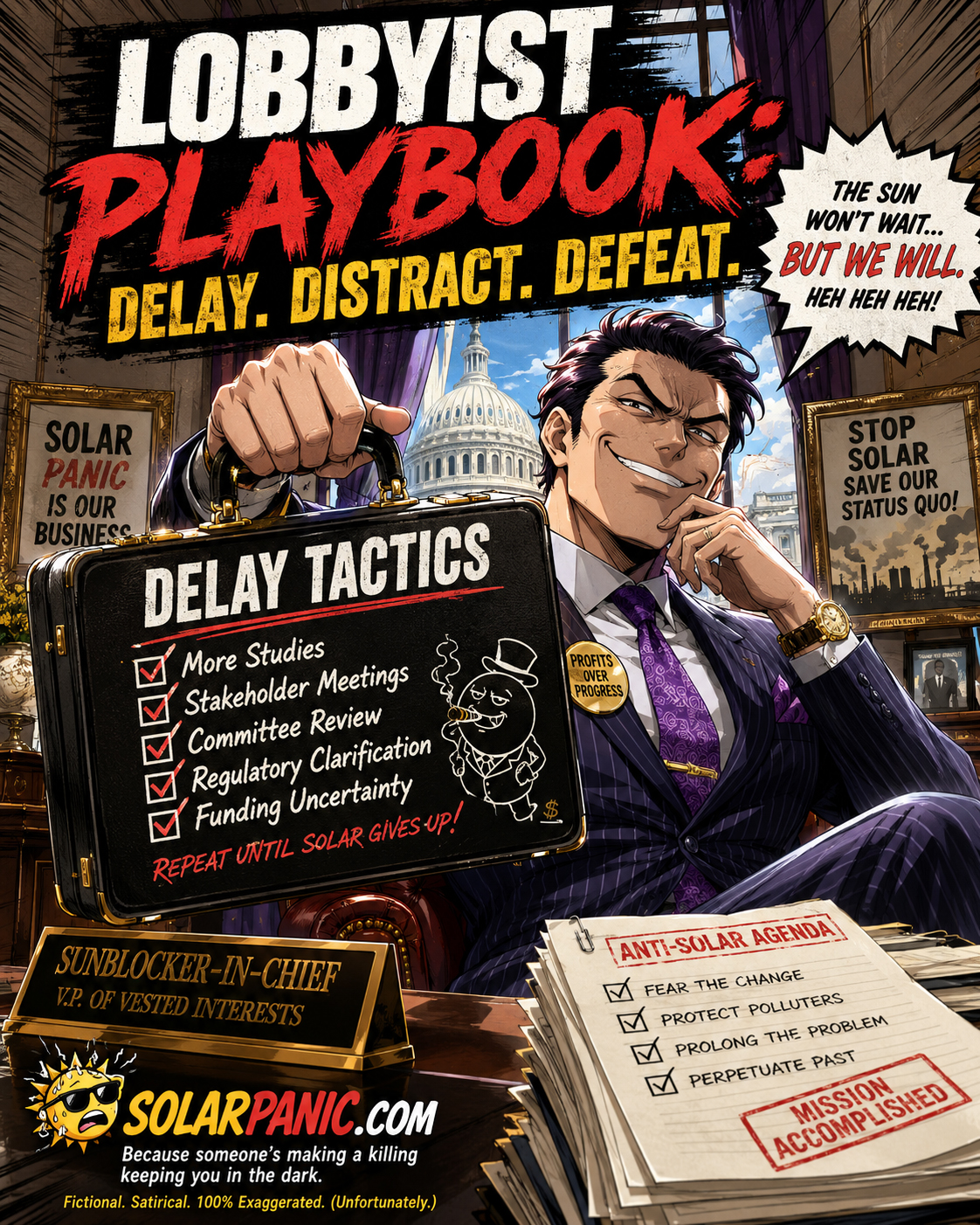
- The Lobbyist: carrier of the delay-tactics briefcase.
- The Utility Lawyers: runners of the hallway binder sprint.
The Delay Tactics Department
MegaWatt Monopoly’s Delay Tactics Department is located three floors below the executive boardroom, next to the coffee machine that only serves anxiety. Its tools are legendary:
- Confusing rate language
- Scary solar talking points
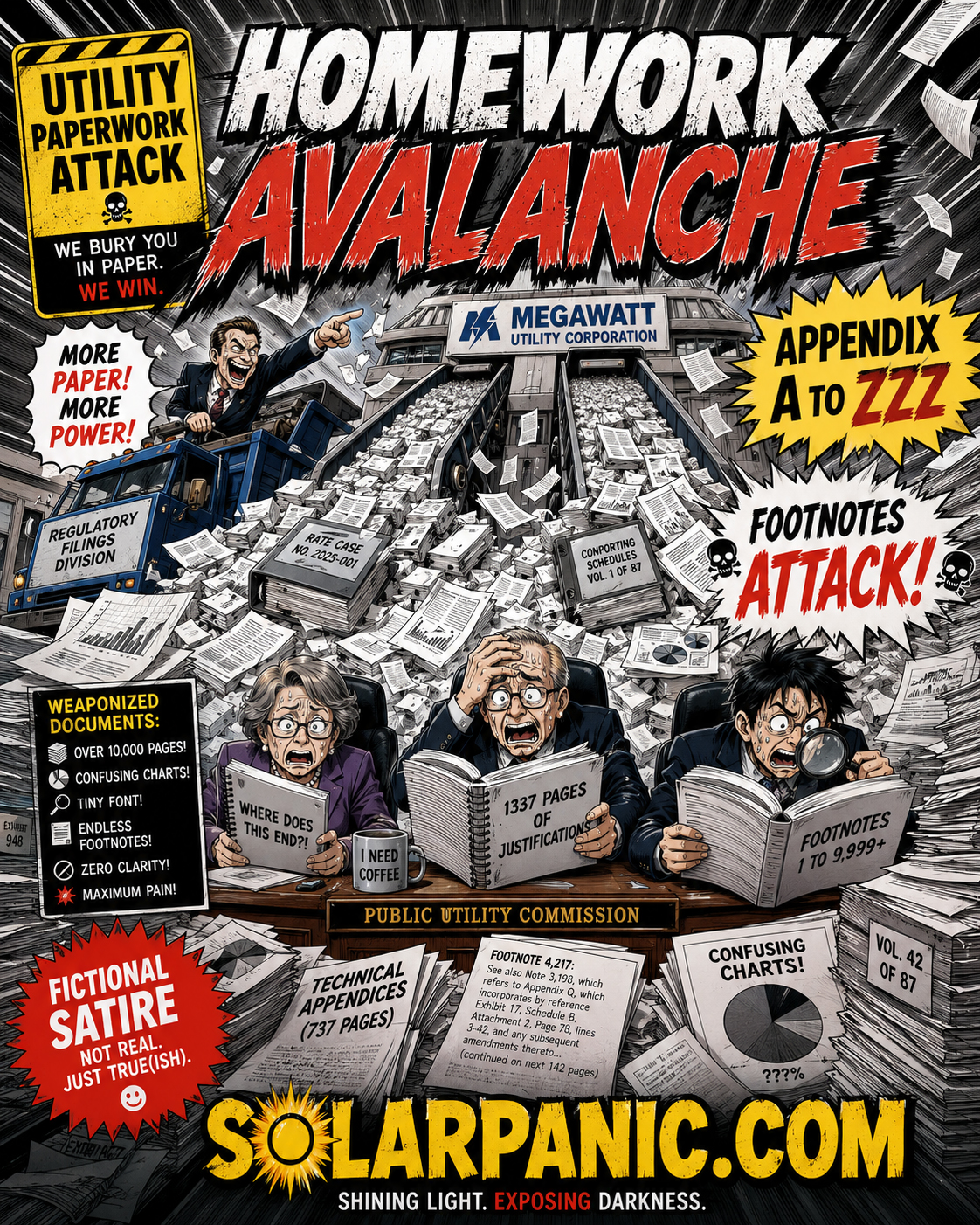
- Footnotes inside footnotes
- Emergency “simple explanations” over 900 pages
- Policy fog machines
- Correction notices that reproduce after midnight
The Homework Attack
MegaWatt Monopoly’s boldest tactic is the flagship SolarPanic bonus episode: The Homework Attack. When customer-owned solar and batteries become too popular to mock directly, the fictional monopoly tries to overwhelm the commissioners with filings, appendices, charts, tariff fog, and unreadable homework.
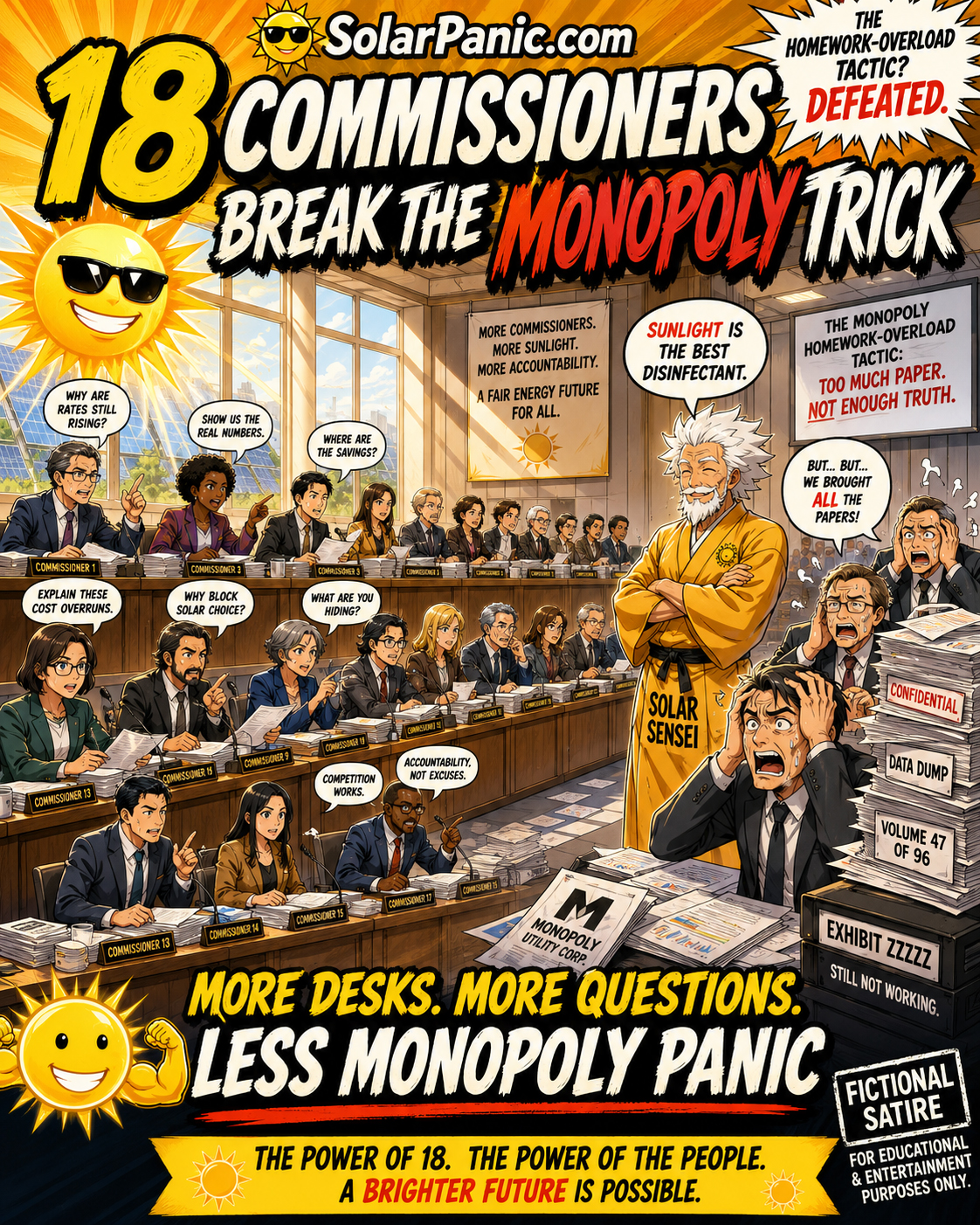
The strategy is simple: if the public table is small enough, the homework becomes bigger than oversight. But Solar Sensei gets the ear of the people. Proposition Sunlight expands the commission to 18, and the homework weapon starts to fail.
They made the homework bigger than the table. The people made the table bigger.
Why MegaWatt Monopoly Loses
The fictional company loses because panic is not a long-term strategy. Customers can learn. Solar can be explained. Batteries can be designed. Critical loads can be identified. Public rules can be questioned. Paperwork can be read when the table is big enough.
“No!” cried Chairman Kilowatt. “They are turning confusion into a checklist!”
That is the heart of SolarPanic. The comedy is loud, but the message is clean: customer-owned solar and batteries make people less passive. Transparent public process makes monopoly fog harder to use.