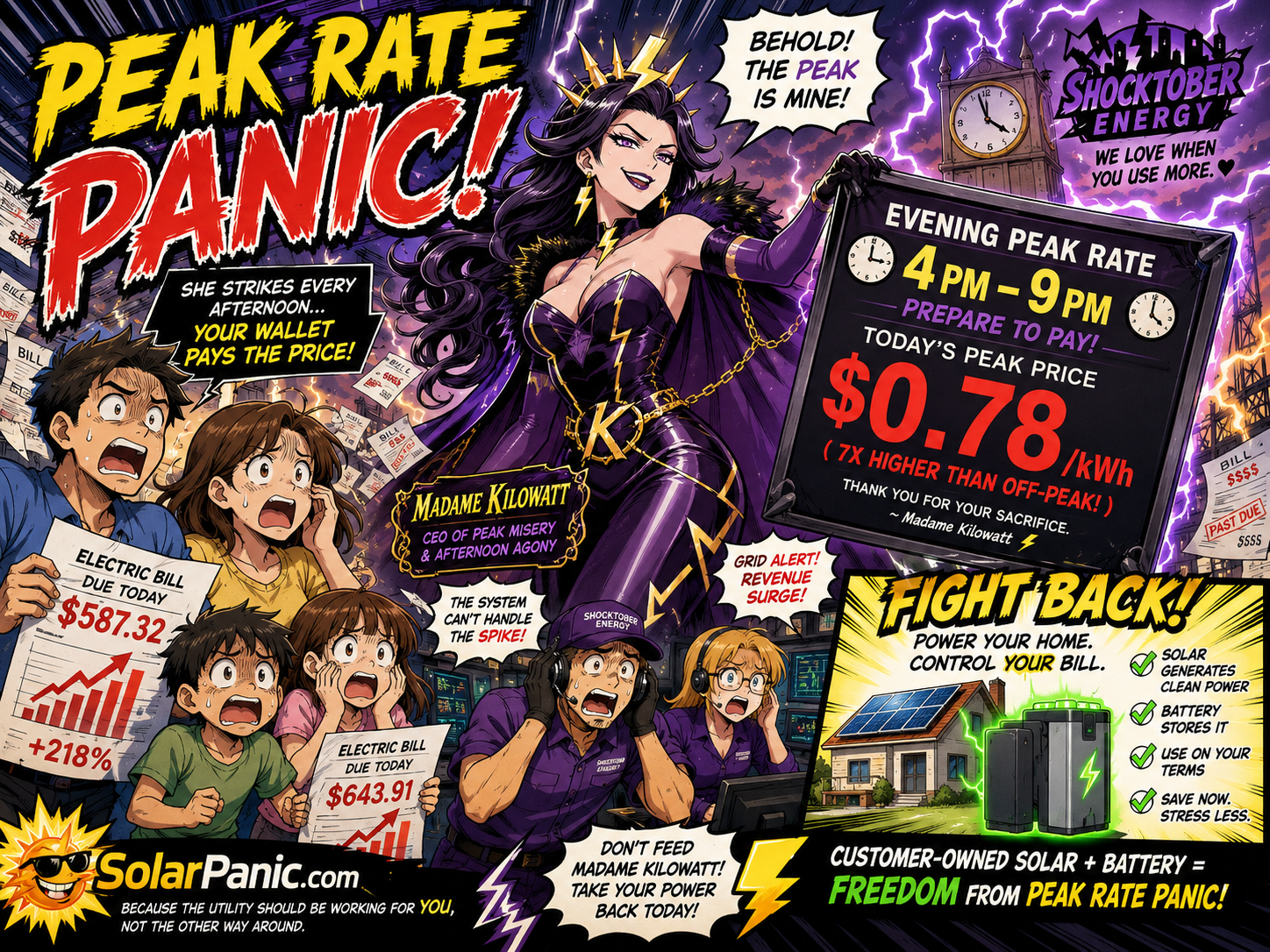
The Queen of the Expensive Clock
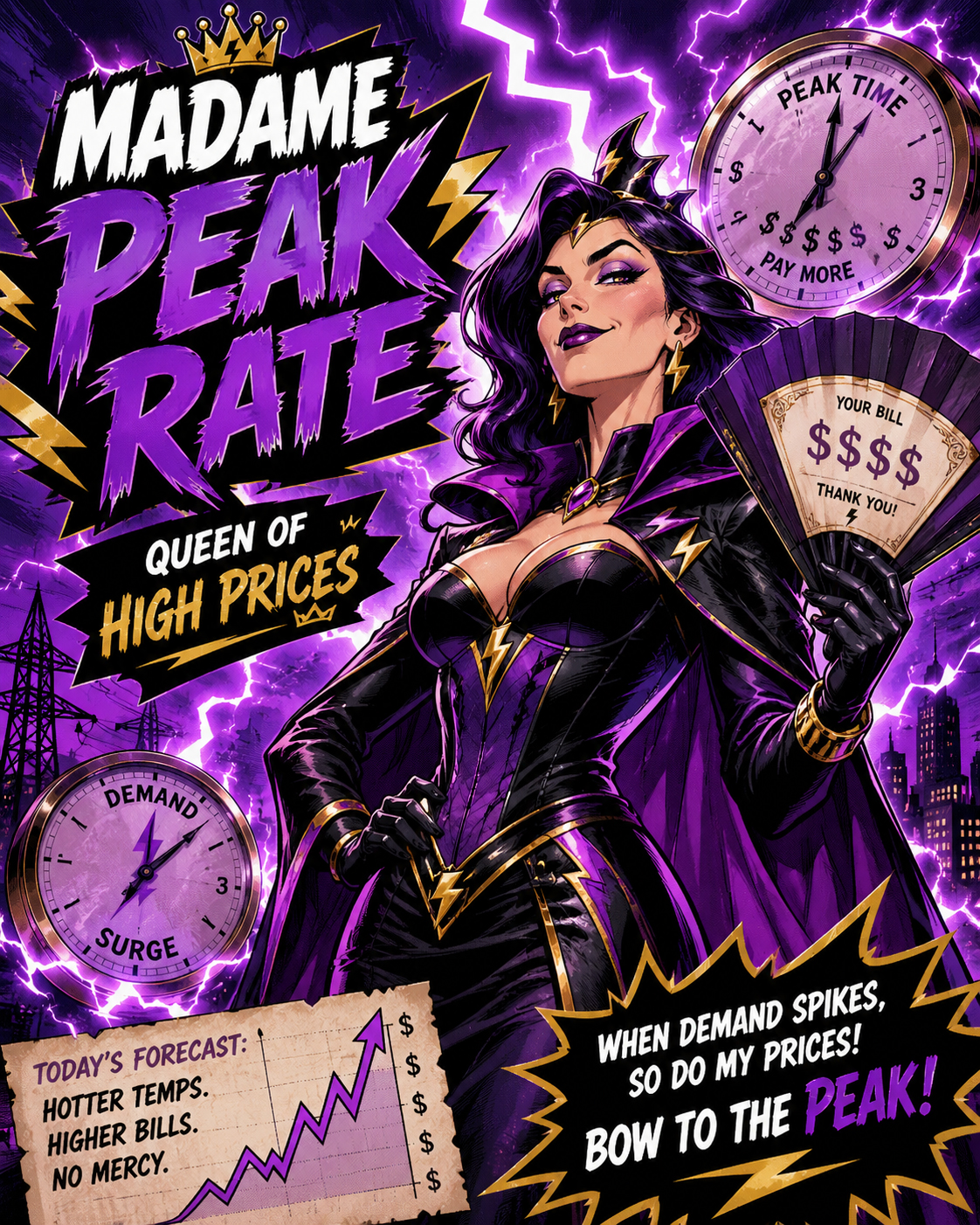
Madame Peak Rate does not need thunder. She does not need a blackout. She only needs the clock to move into the expensive part of the day while the customer is still confused.
“Good evening,” she says. “I brought your bill. It has drama.”
In the fictional world of MegaWatt Monopoly Utility Co., she is treated like a superstar. When the afternoon arrives, the boardroom lights dim, the calculator glows, and Chairman Kilowatt whispers, “Now the customer will feel helpless.”
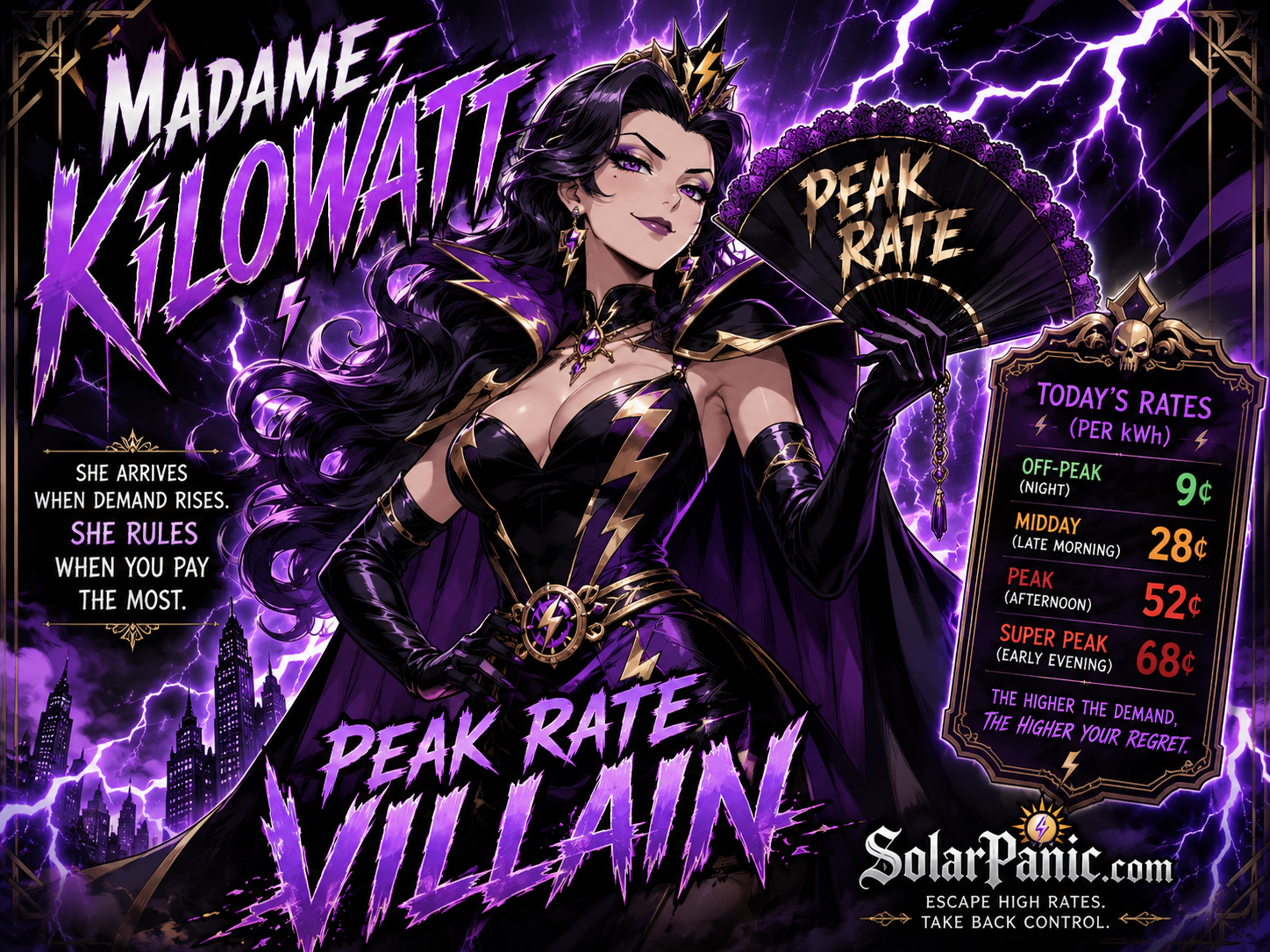
Her Superpower: Confusing the Clock
Madame Peak Rate is strongest when the customer thinks the bill is just a monster that appears from nowhere. She wants timing to feel mysterious. She wants the customer to forget that solar production, battery storage, and load choices can be part of a design conversation.
- She loves afternoon and evening usage spikes.
- She loves customers who do not understand their loads.
- She loves batteries being ignored or misunderstood.
- She loves bills that feel like weather instead of information.
- She hates clear charts, honest design, and Solar Sensei.
SolarPanic rule: the villain is not the clock. The villain is confusion about the clock.
Battery Boy Is Her Problem
Madame Peak Rate does not fear Battery Boy because he is loud. He is not loud. He is calm. He stores energy when the system allows, supports selected loads, and gives the customer timing options.
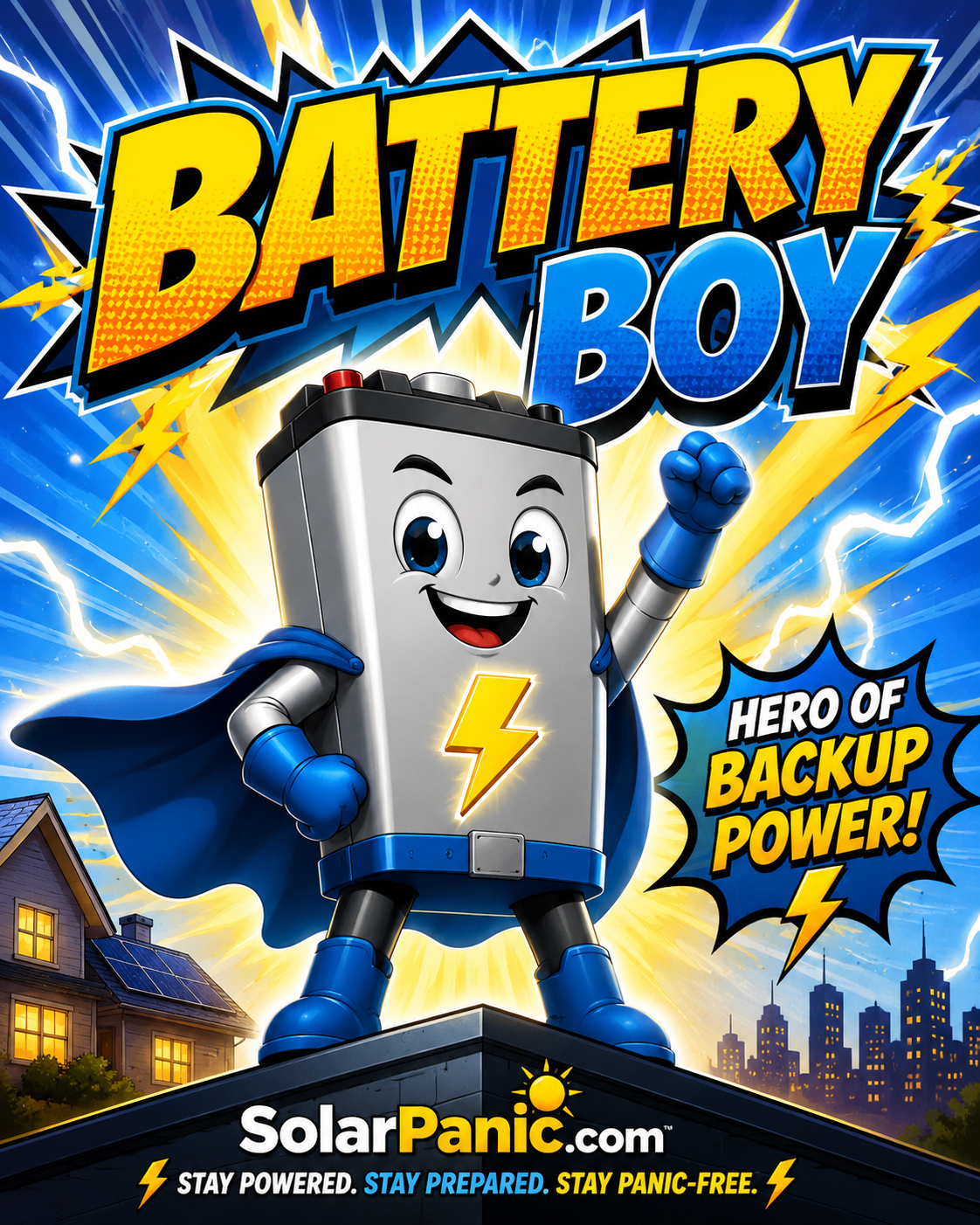
“Some of today’s sunlight came with me,” Battery Boy says.
That one sentence ruins Madame Peak Rate’s favorite trick. The customer starts thinking about when power is produced and when power is needed. Suddenly the bill is not just scary. It is a design problem.
Solar Sensei Explains Her Weakness
Solar Sensei does not pretend peak rates are fake. He does something more useful: he explains them. A good solar and battery conversation includes timing, battery capacity, solar production, customer usage, critical loads, and real expectations.
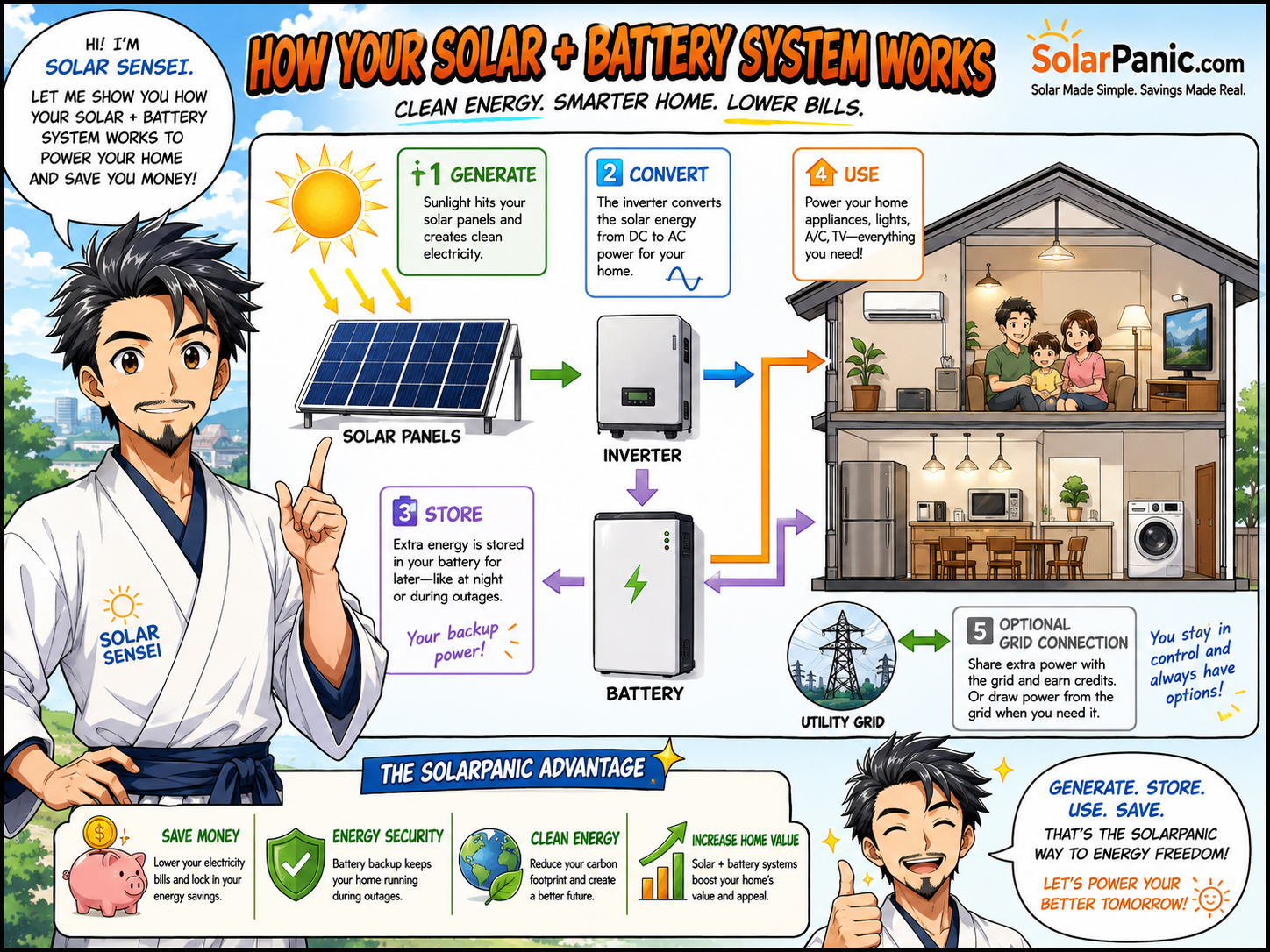
- When does the site use the most power?
- What loads matter during expensive periods?
- How much solar production is available?
- How much battery capacity is realistic?
- What should be backed up during outages?
- What is the customer actually trying to solve?
Every honest question makes Madame Peak Rate a little less magical.
Her Favorite Boardroom Speech
Inside MegaWatt Monopoly, Madame Peak Rate often stands on the conference table and gives the same speech:
“As long as the customer does not understand timing, the bill can remain a monster.”
Chairman Kilowatt always applauds. The Permit Goblin usually throws tiny forms in the air. The lobbyist writes it down and calls it a “rate design communication strategy.”
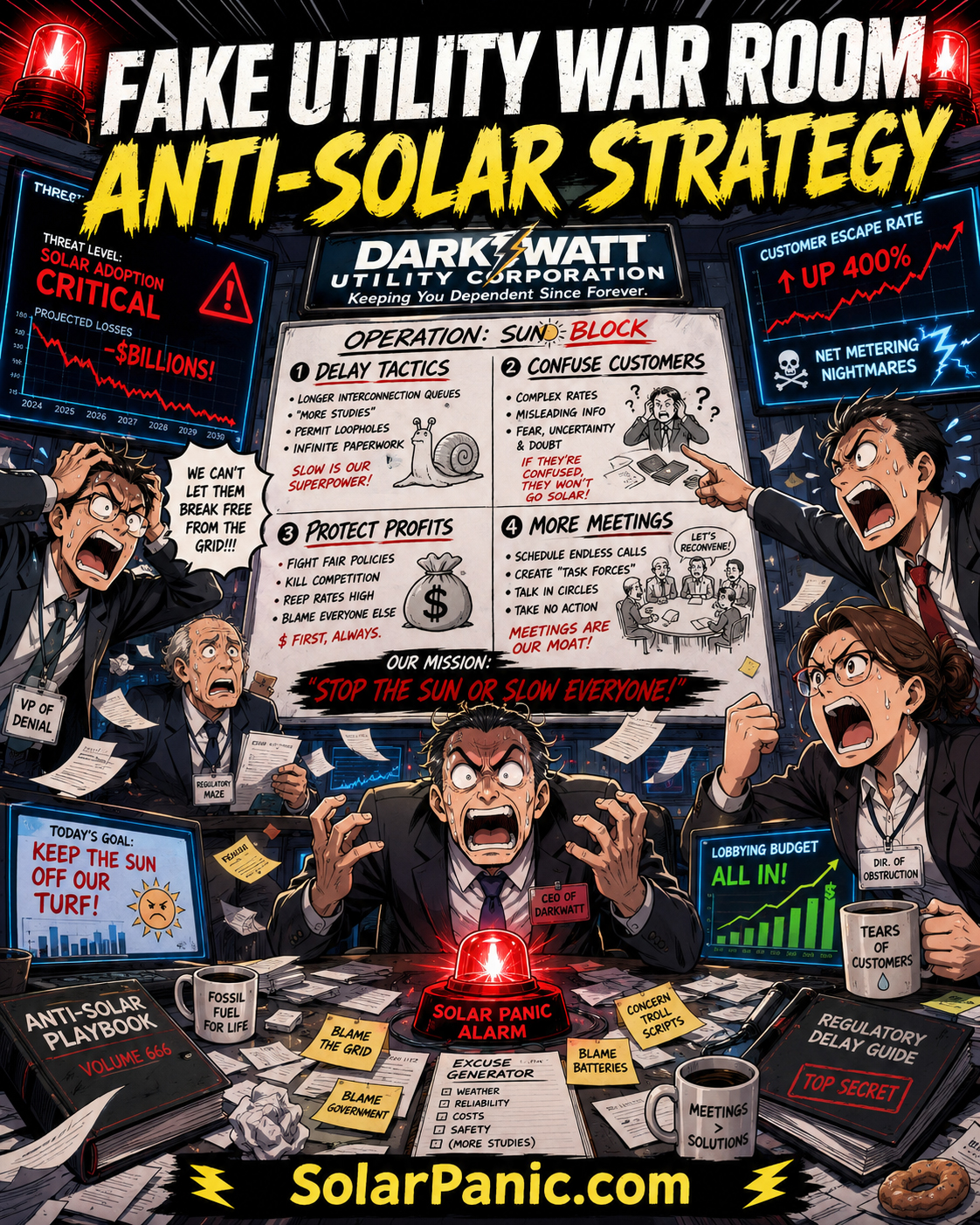
Episode 3: Her Big Moment
Madame Peak Rate takes center stage in Episode 3, where the clock turns villain and the customer learns that timing matters. It is one of the key SolarPanic episodes because it connects rooftop solar to batteries, batteries to peak periods, and peak periods to customer awareness.
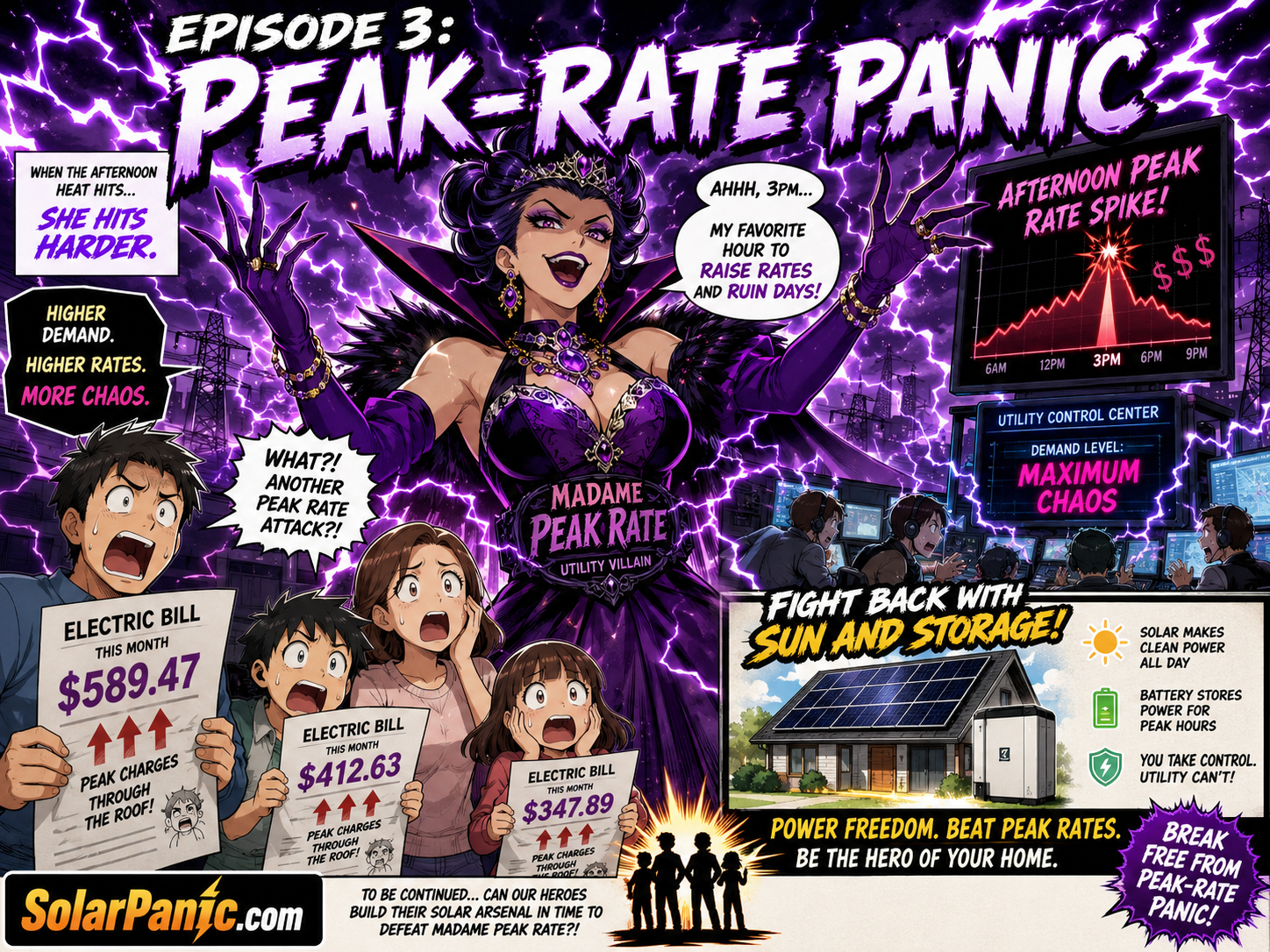
The episode works because the joke is clear: the old monopoly model wants the customer frightened by the bill. Solar Sensei wants the customer to understand the bill.
The Homework Attack Connection
Once customers understand peak rates, they start asking policy questions. Why are solar customers treated like trouble? Why are batteries framed as a threat? Why does every public rule fight arrive buried in homework?
That is why Madame Peak Rate belongs in the larger SolarPanic world. Her timing confusion connects directly to the flagship bonus episode, where the fictional monopoly tries to bury commissioners in paperwork and the people answer with 18 commissioners.
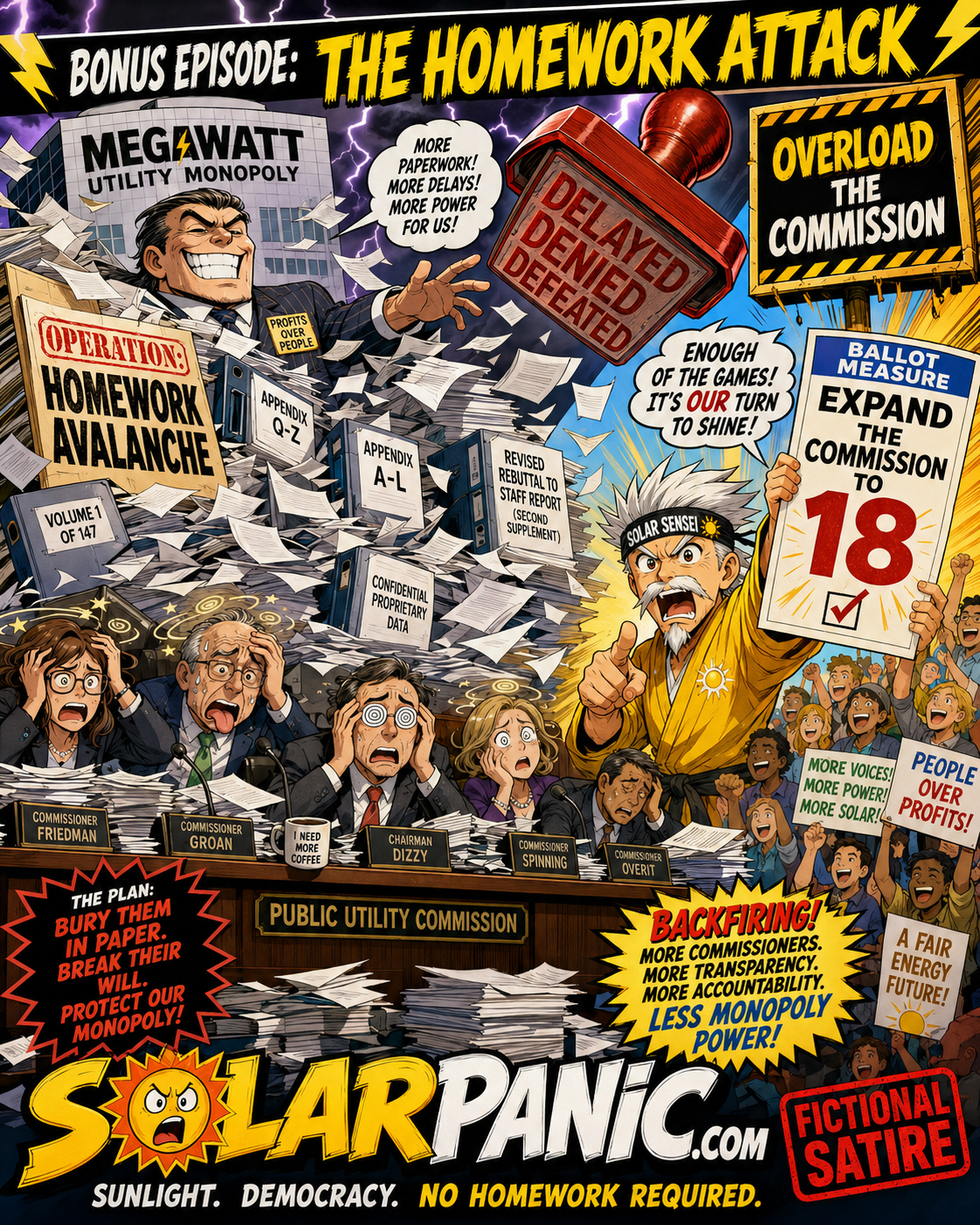
Punchline: Madame Peak Rate brought the bill. Solar Sensei brought the schedule.