The Strategy Meeting Nobody Asked For
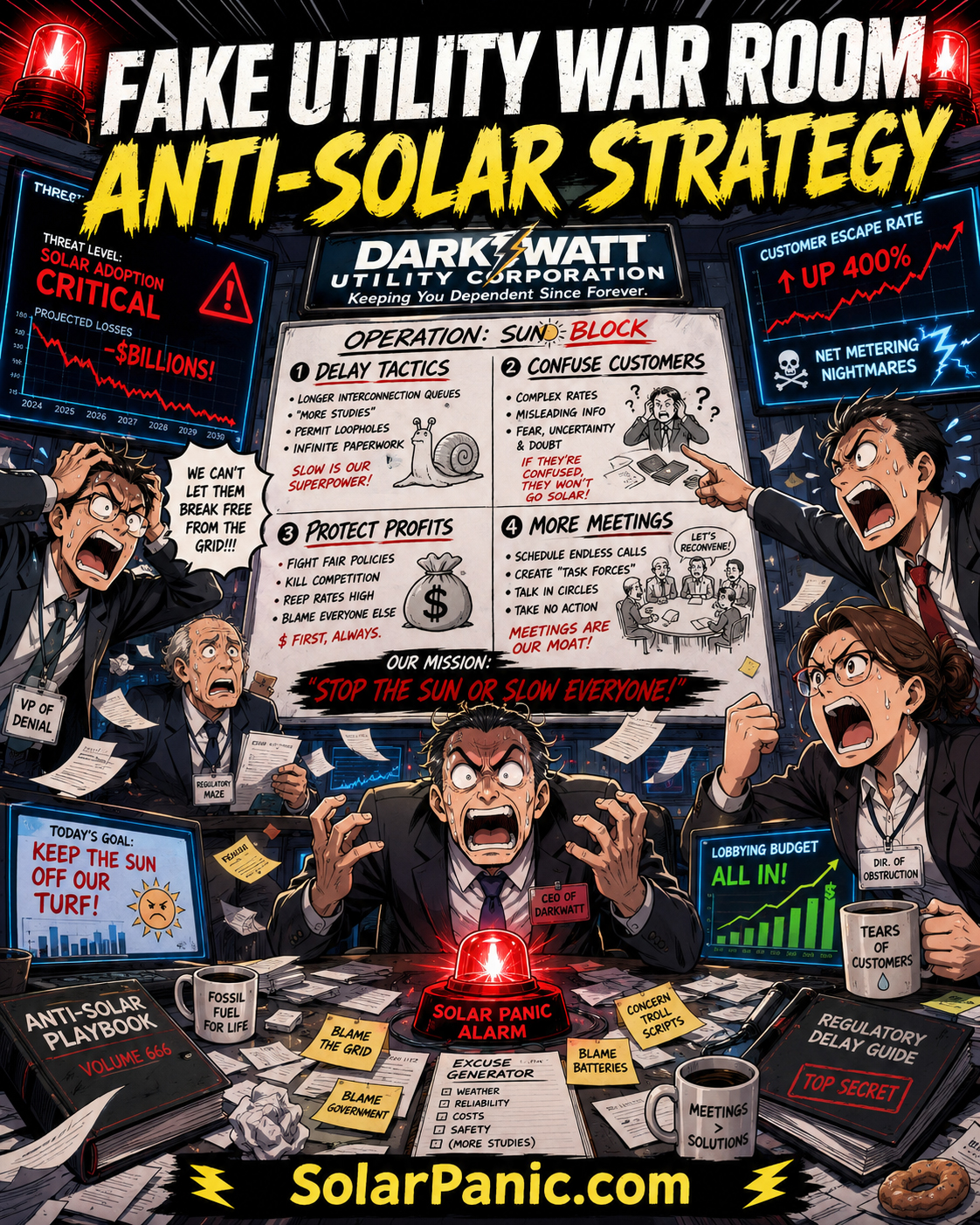
The Fake Utility War Room is three floors below Chairman Kilowatt’s office, behind a door marked “Customer Protection,” which is funny because no customer has ever been invited inside.
On the wall is a city map covered with yellow solar dots. Each dot represents a customer who has discovered that the roof can have a job.
“Every dot is a question we did not control,” Chairman Kilowatt says.
The War Room Whiteboard
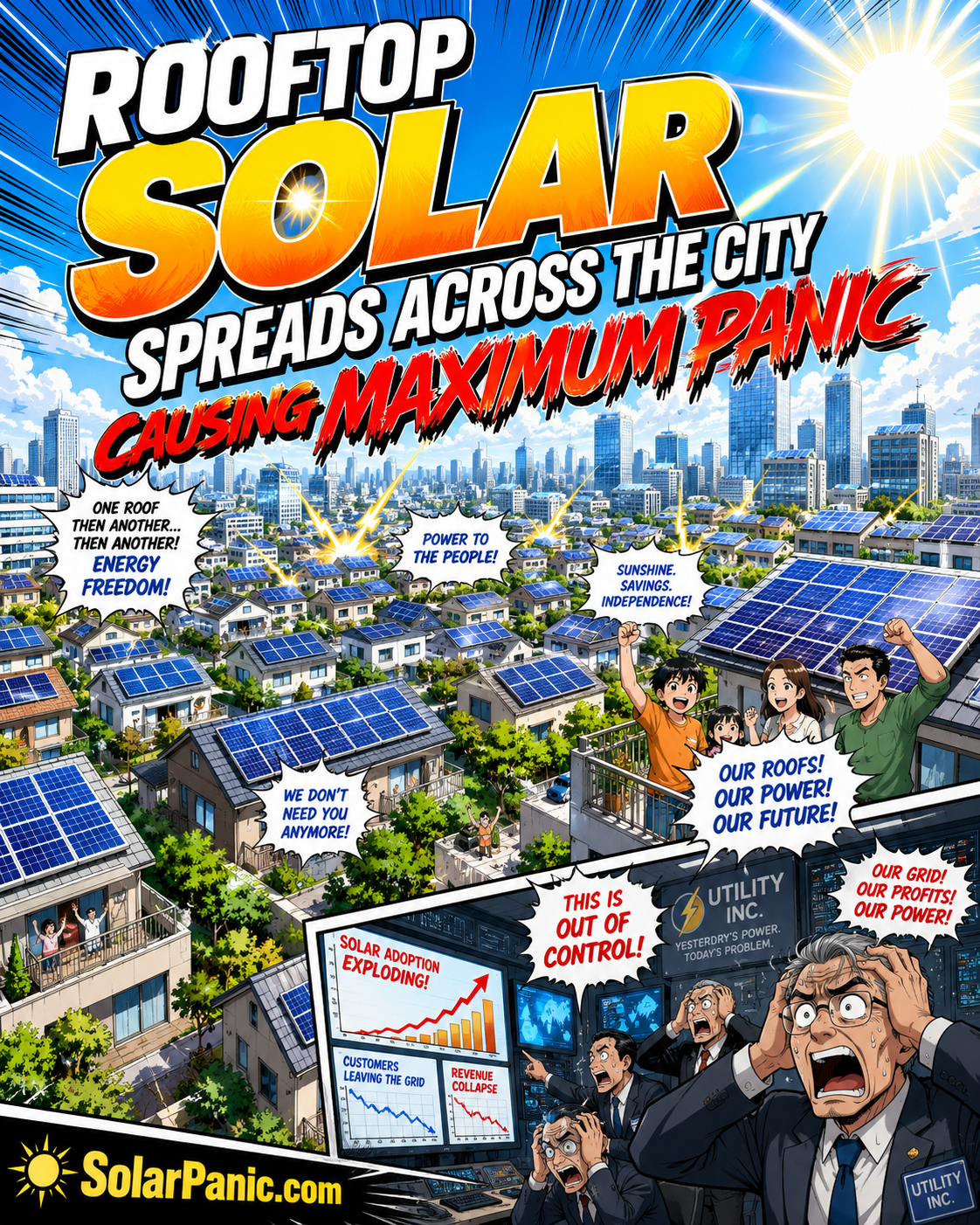
The fictional executives begin listing tactics. None of them involve making customer-owned solar easier to understand. That would be too dangerous.
- Make simple rate questions sound impossible.
- Call customer-owned batteries a “grid concern.”
- Send the Permit Goblin to every clean plan set.
- Use the lobbyist delay briefcase when customers get organized.
- Flood public proceedings with homework.
- Keep the customer inside the fog.
SolarPanic rule: when a monopoly cannot beat the idea, it tries to exhaust the people who understand it.
The Delay Briefcase Opens
The lobbyist steps forward and places a black briefcase on the table. It clicks open with a dramatic manga glow. Inside are talking points, scary charts, vague warnings, and a tiny fog machine labeled “Public Confusion.”
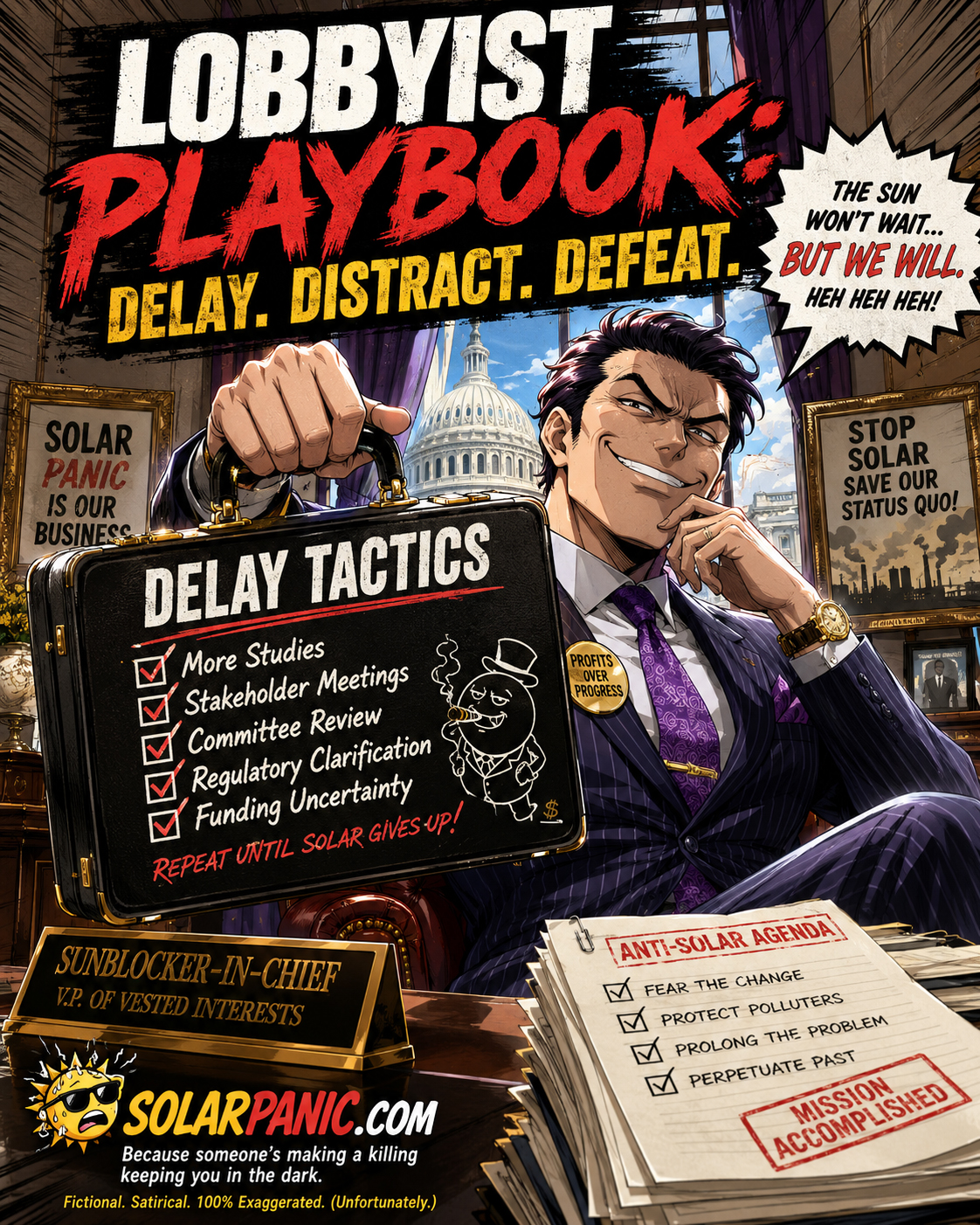
“We must protect customers from the dangerous idea of understanding their own energy,” the lobbyist announces.
The room applauds. The applause sounds like binders closing.
The Lawyers Sprint
The utility lawyers are already warming up in the hallway. They carry binders, tabs, footnotes, and emergency motions written in a font too small for daylight.
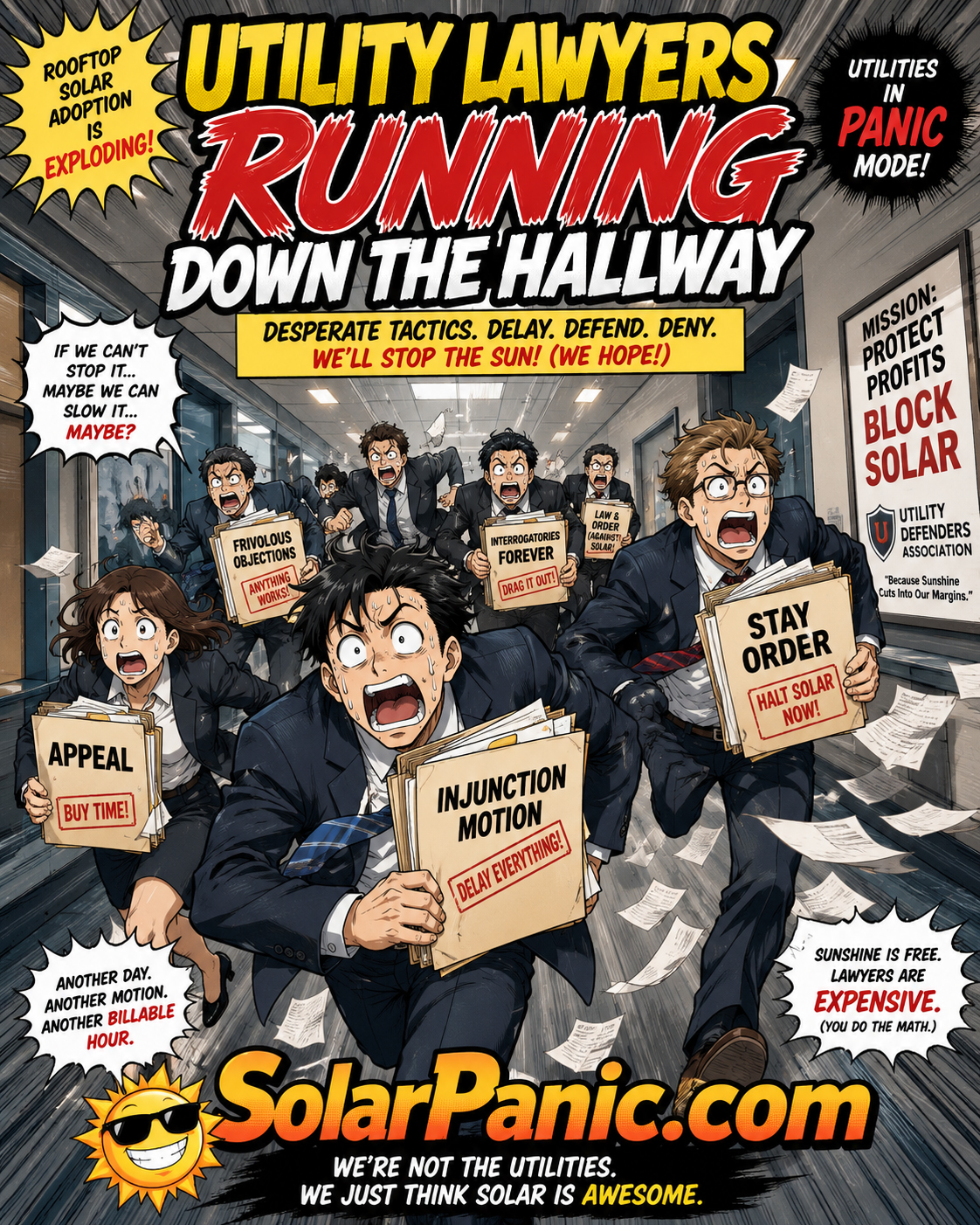
Their mission is not always to answer the question. Sometimes the mission is to create so many side questions that nobody remembers the original one.
Original question: why are customers punished for owning useful solar and battery equipment?
The Permit Goblin Gets His Orders
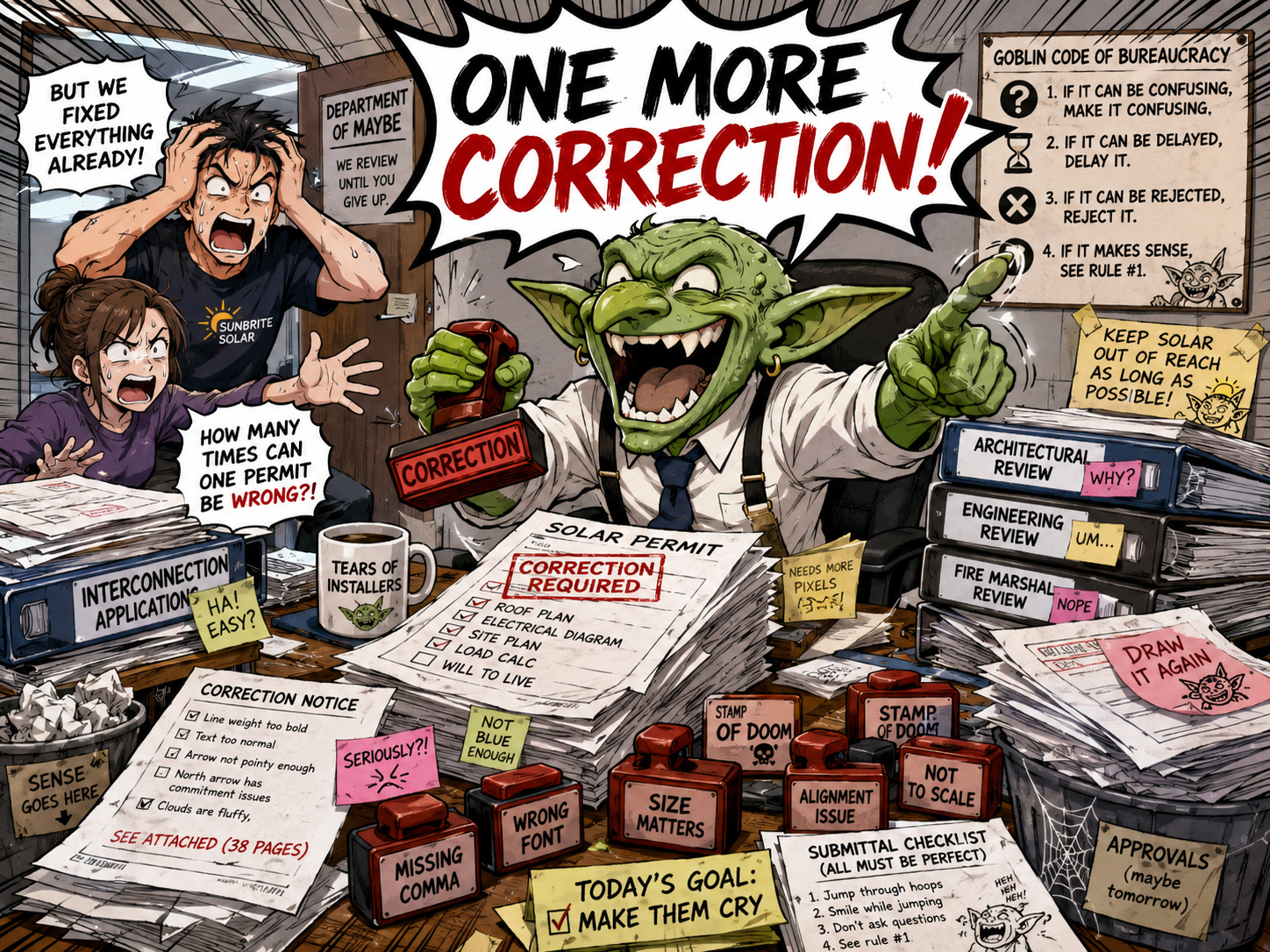
Then the Permit Goblin pops out of a drawer, already holding a correction notice. Chairman Kilowatt points to a clean solar design and whispers the Goblin’s favorite instruction:
“Make it feel unfinished.”
The Goblin smiles. One more correction. One more note. One more form. One more delay snack.
Operation Homework Avalanche
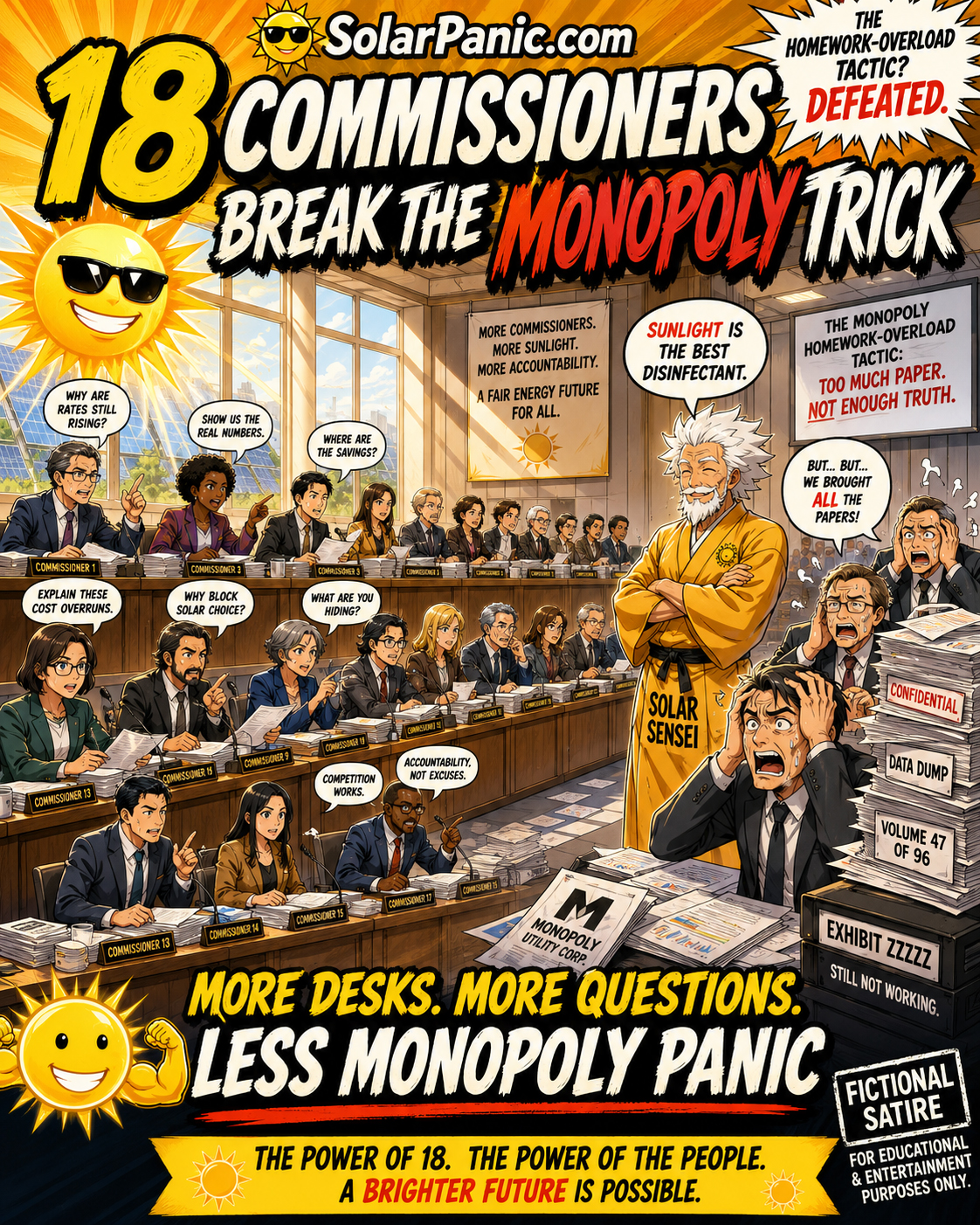
The war room’s biggest plan is the Homework Attack. If customers and public advocates get too smart, MegaWatt Monopoly will bury the commissioners in filings, appendices, tariff fog, and emergency explanations.
The plan is written on the wall in giant letters:
DO NOT WIN THE ARGUMENT. MAKE THE ARGUMENT UNREADABLE.
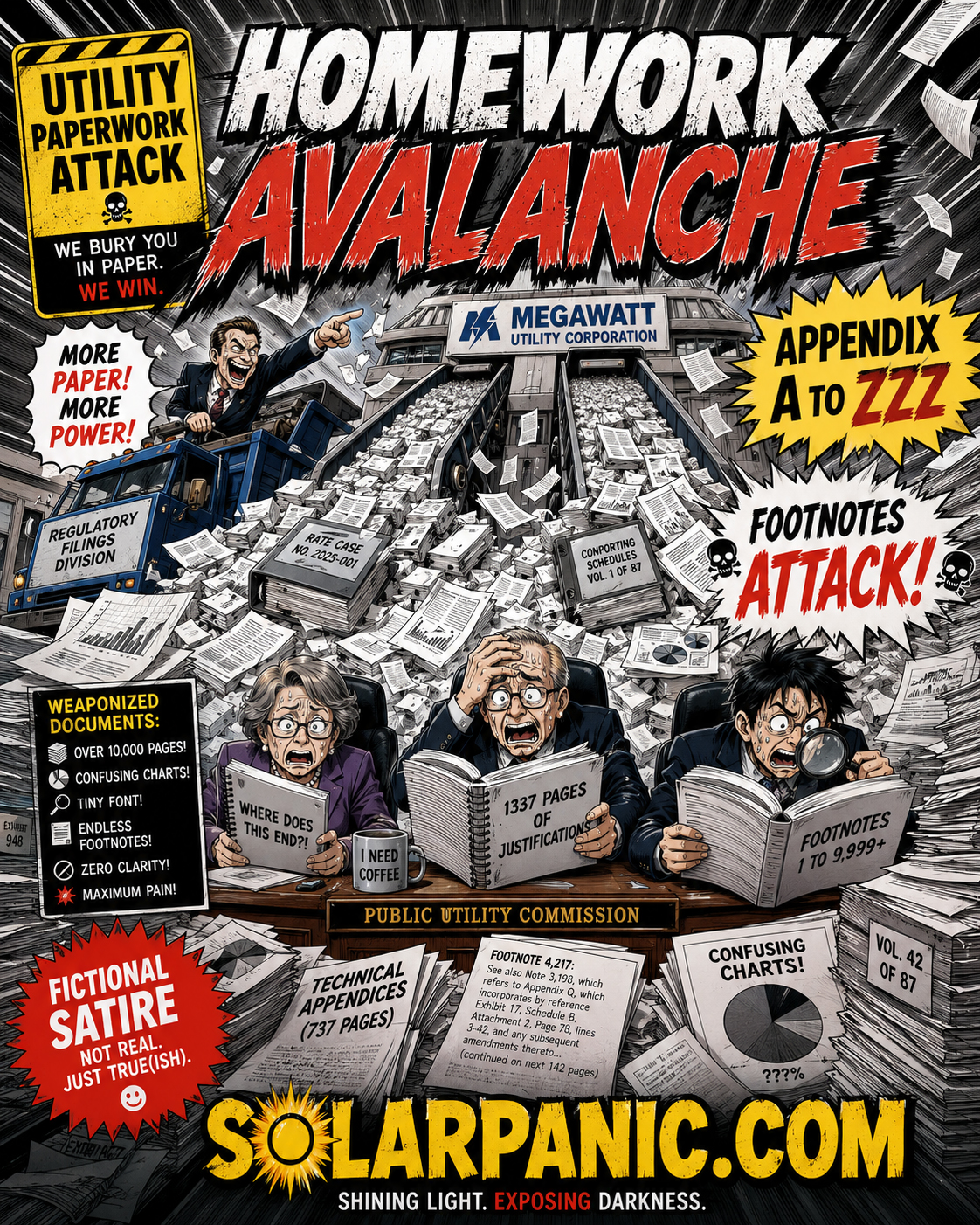
That tactic becomes the flagship SolarPanic bonus episode. The fictional utility tries to overwhelm public oversight. Solar Sensei takes the issue to the people. The people answer with Proposition Sunlight and 18 commissioners.
Solar Sensei Crashes the Strategy
Solar Sensei never enters the war room. He does not need to. He defeats it from outside by helping people understand what the war room wants to keep confusing.
- What does the solar system produce?
- What does the battery support?
- Which critical loads matter?
- When are peak rates most painful?
- What paperwork is legitimate?
- What paperwork is just fog?
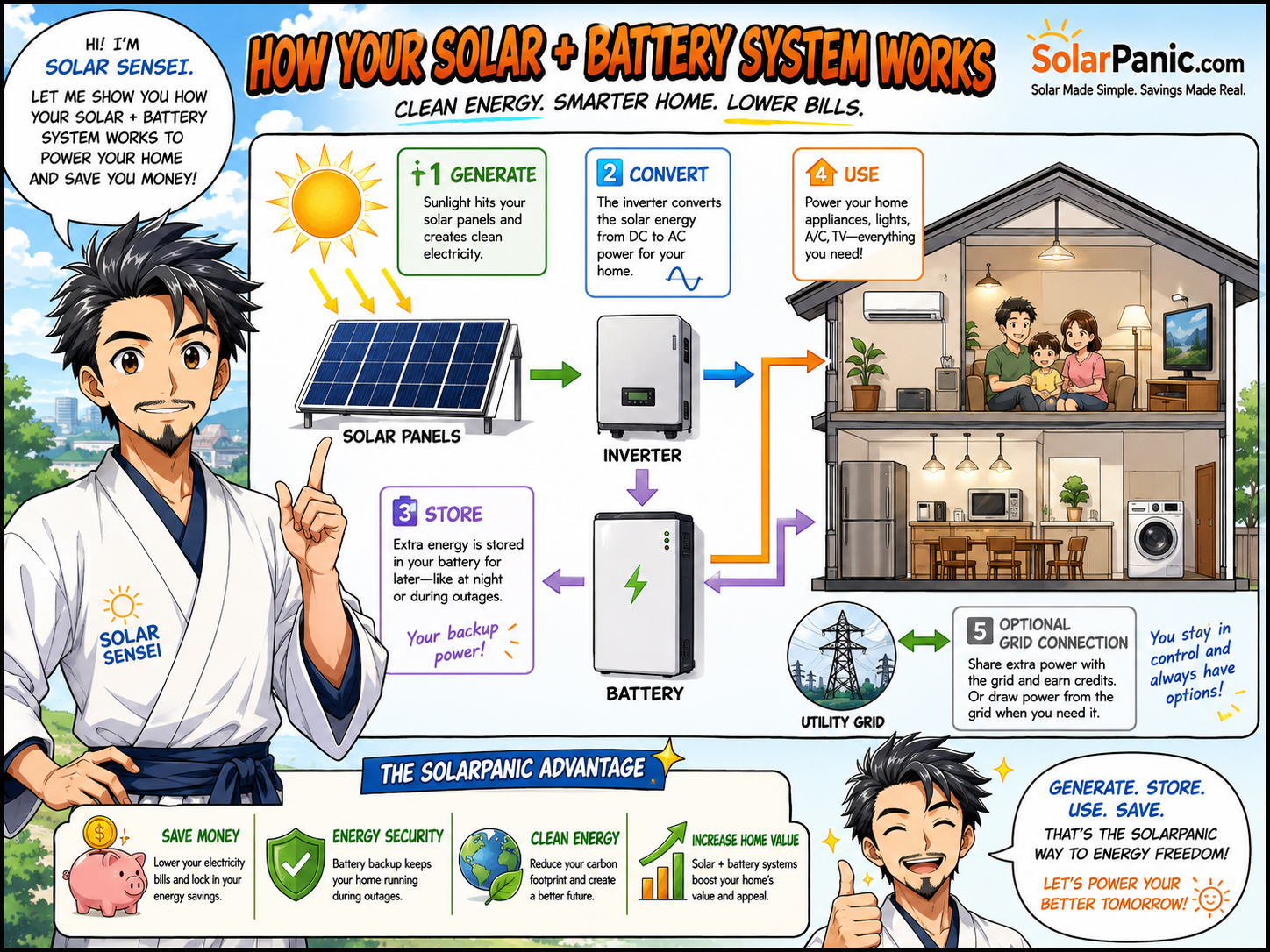
“They are turning the fog into a checklist!” Madame Peak Rate screams.
The War Room’s Fatal Weakness
The Fake Utility War Room depends on secrecy, complexity, and customer fatigue. Its fatal weakness is public clarity. The moment customers and commissioners can ask direct questions, the war room starts to overheat.
Punchline: the war room had a strategy for solar panels, but no strategy for informed people.