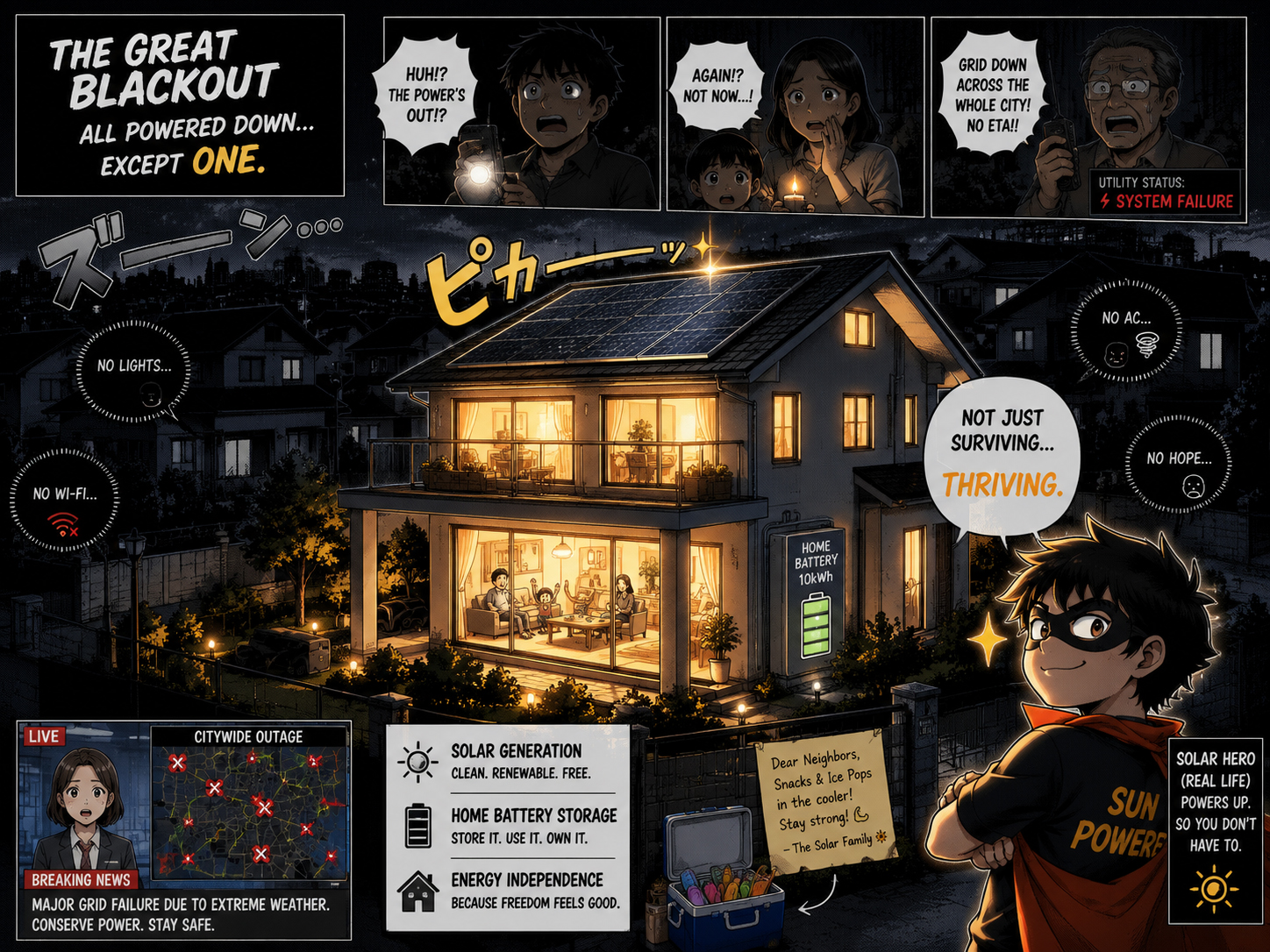
The Quiet Hero of the Critical Load Panel
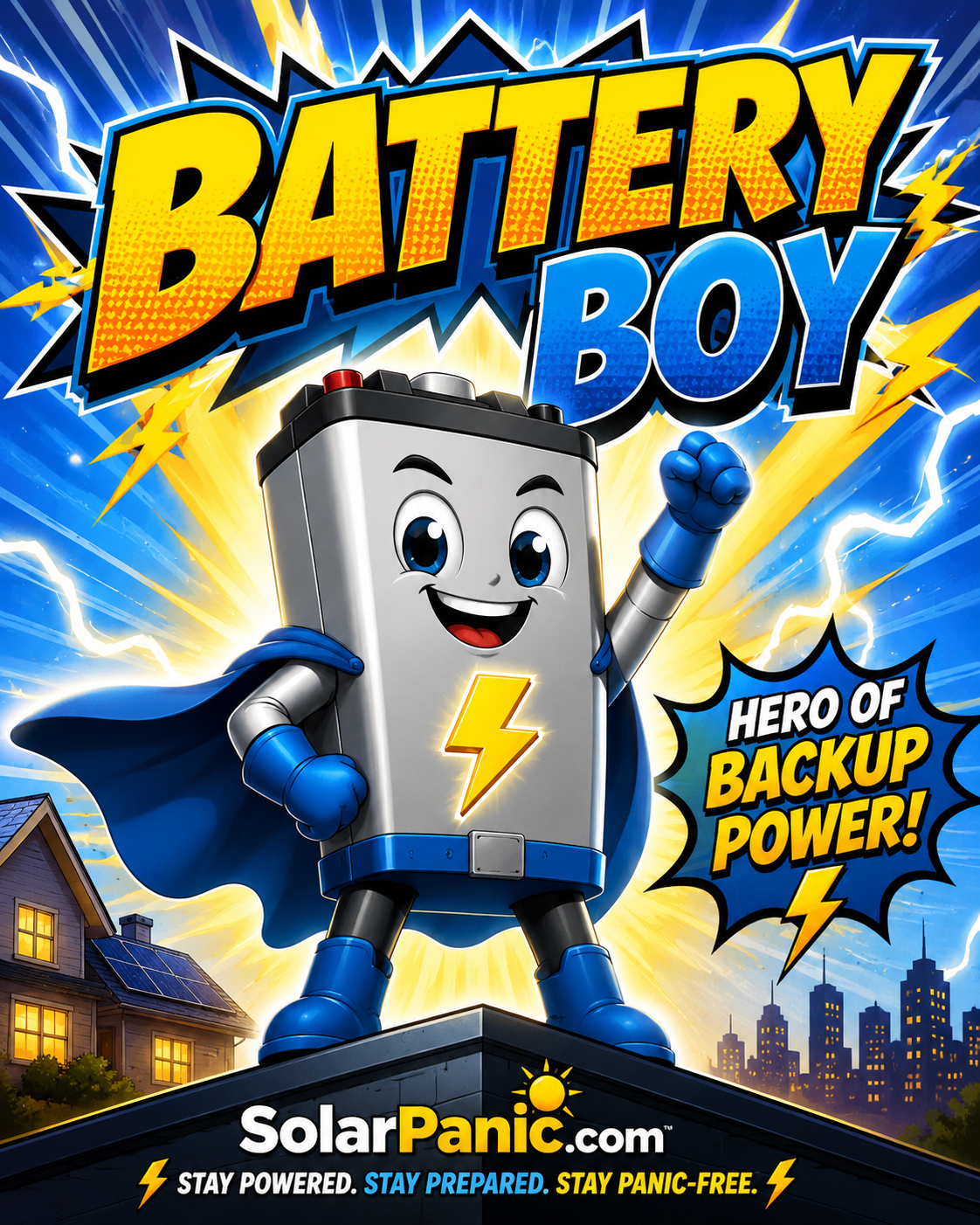
Battery Boy does not enter the story with explosions. He enters with a soft green glow, a calm display, and the confidence of a system that knows exactly what it was designed to support.
“Some of today’s sunlight came with me,” Battery Boy says.
That sentence makes Madame Peak Rate furious. It makes Chairman Kilowatt sweat. It makes the Permit Goblin search for a correction notice about stored energy. Battery Boy is dangerous to the fictional monopoly because he makes customers less helpless.
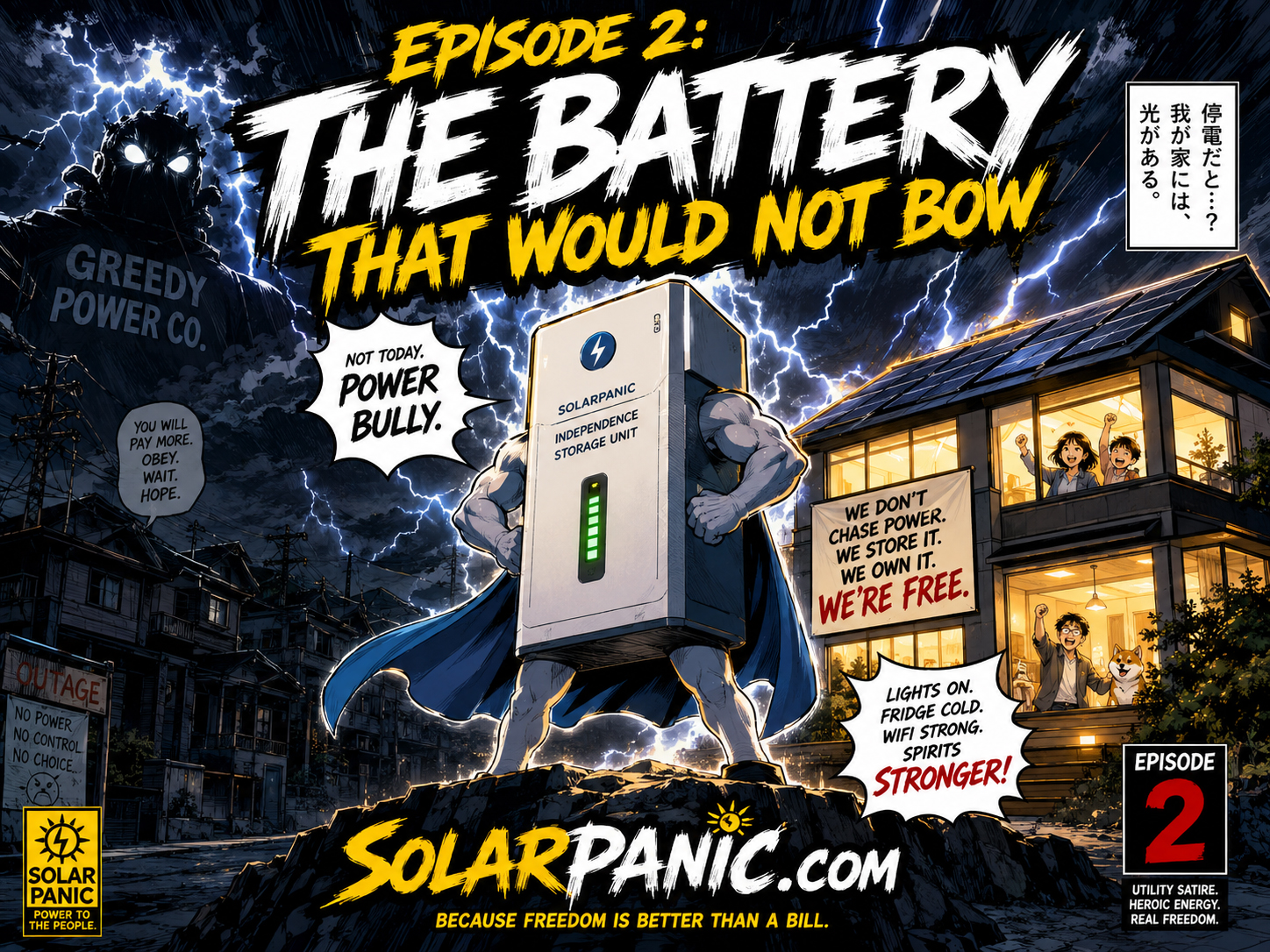
Battery Boy’s Superpower: Timing
Solar panels produce when sunlight is available. Customers often need power later. That gap is where timing matters. Battery Boy helps the customer think about stored energy, peak periods, critical loads, and backup expectations.
He does not promise magic. He asks practical questions.
- What should stay on during an outage?
- How much energy do those loads use?
- How much battery capacity is available?
- Will solar recharge during the day?
- What happens during cloudy weather?
- What loads should not be backed up?
SolarPanic rule: Battery Boy is strongest when the customer is honest about priorities.
His Enemy: Peak-Rate Confusion
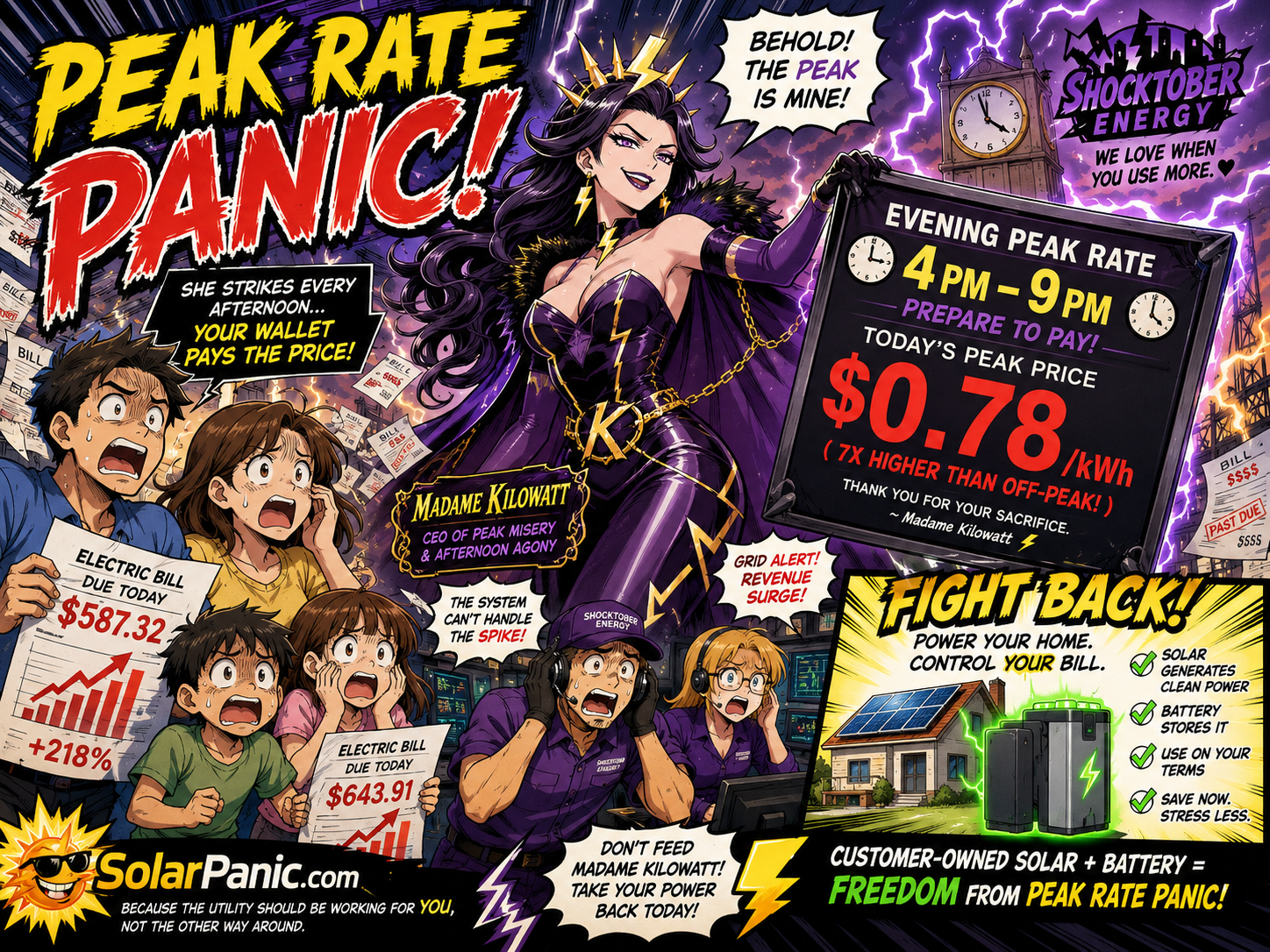
Madame Peak Rate attacks with the clock. She wants the customer to feel trapped when afternoon and evening energy gets expensive. Battery Boy does not erase every cost or every limit, but he helps turn timing into a design conversation.
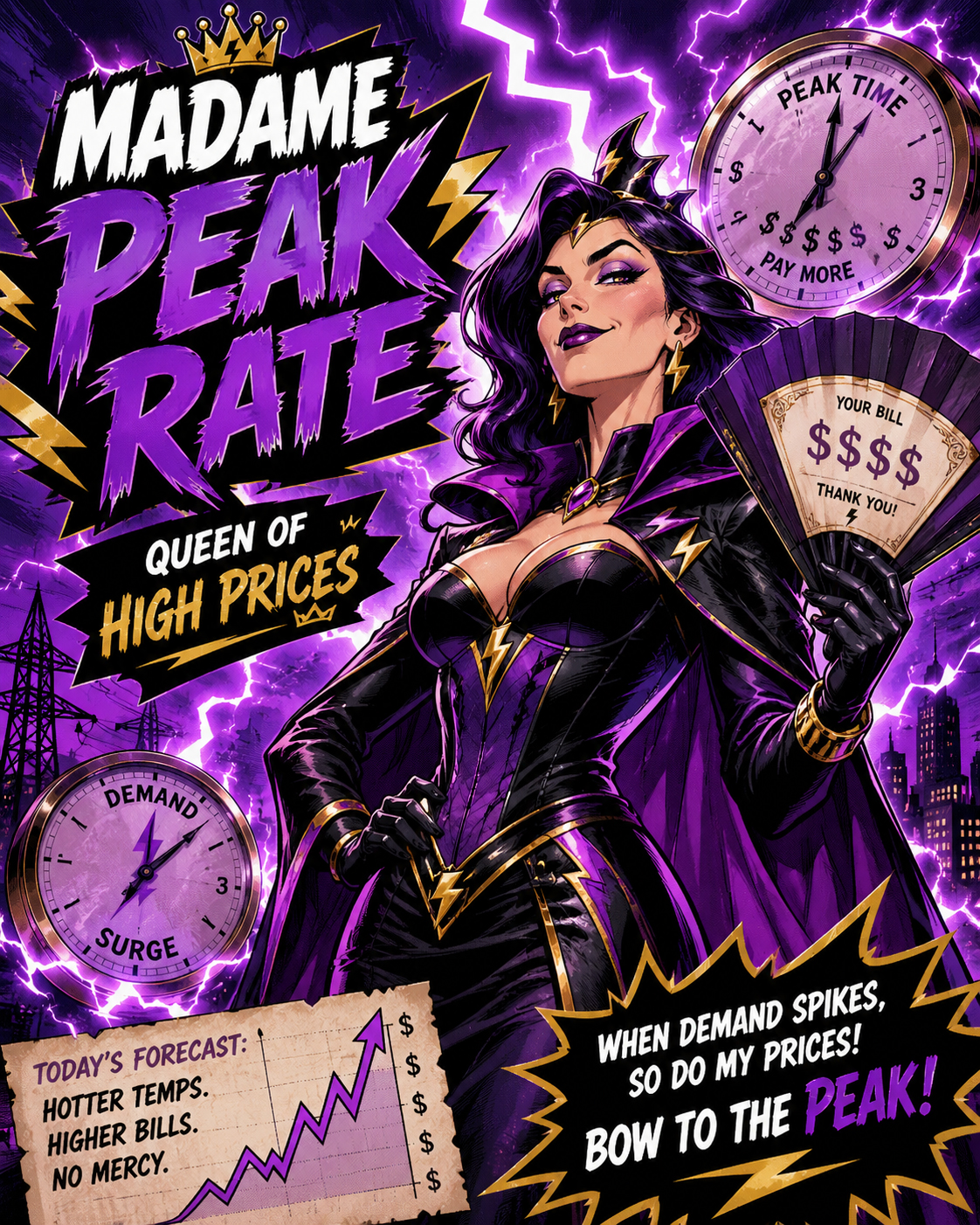
“The villain is not the clock,” Solar Sensei says. “The villain is confusion about the clock.”
Battery Boy loves that line. It means the customer is learning. And every time the customer learns, the monopoly panic machine loses a little smoke.
His Big Moment: Blackout? Not Today.
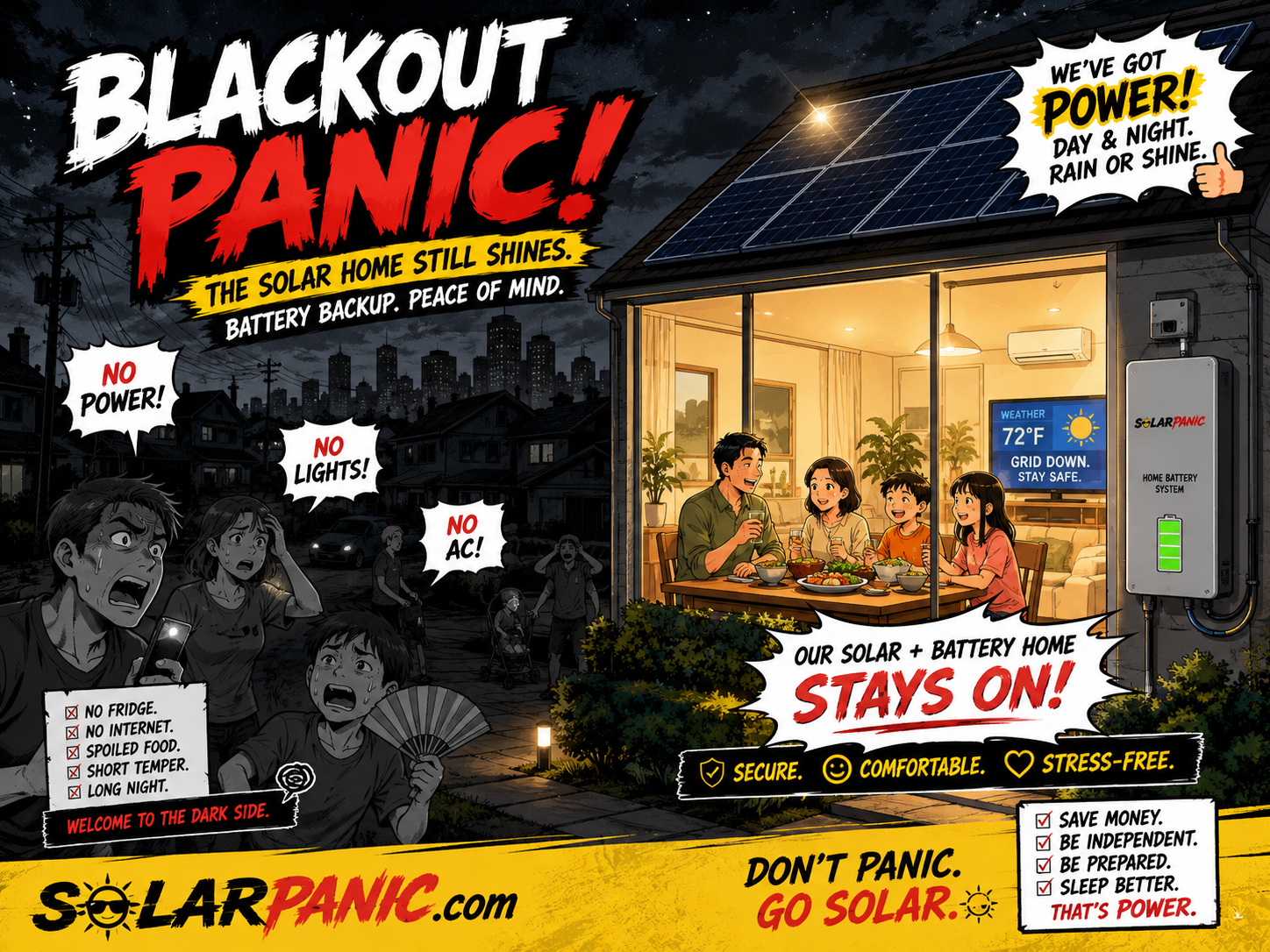
Battery Boy’s heroic moment arrives when the grid gets dramatic. The lights go out. The neighborhood gets quiet. The fictional utility prepares a vague outage statement. But the solar battery home still has a plan.
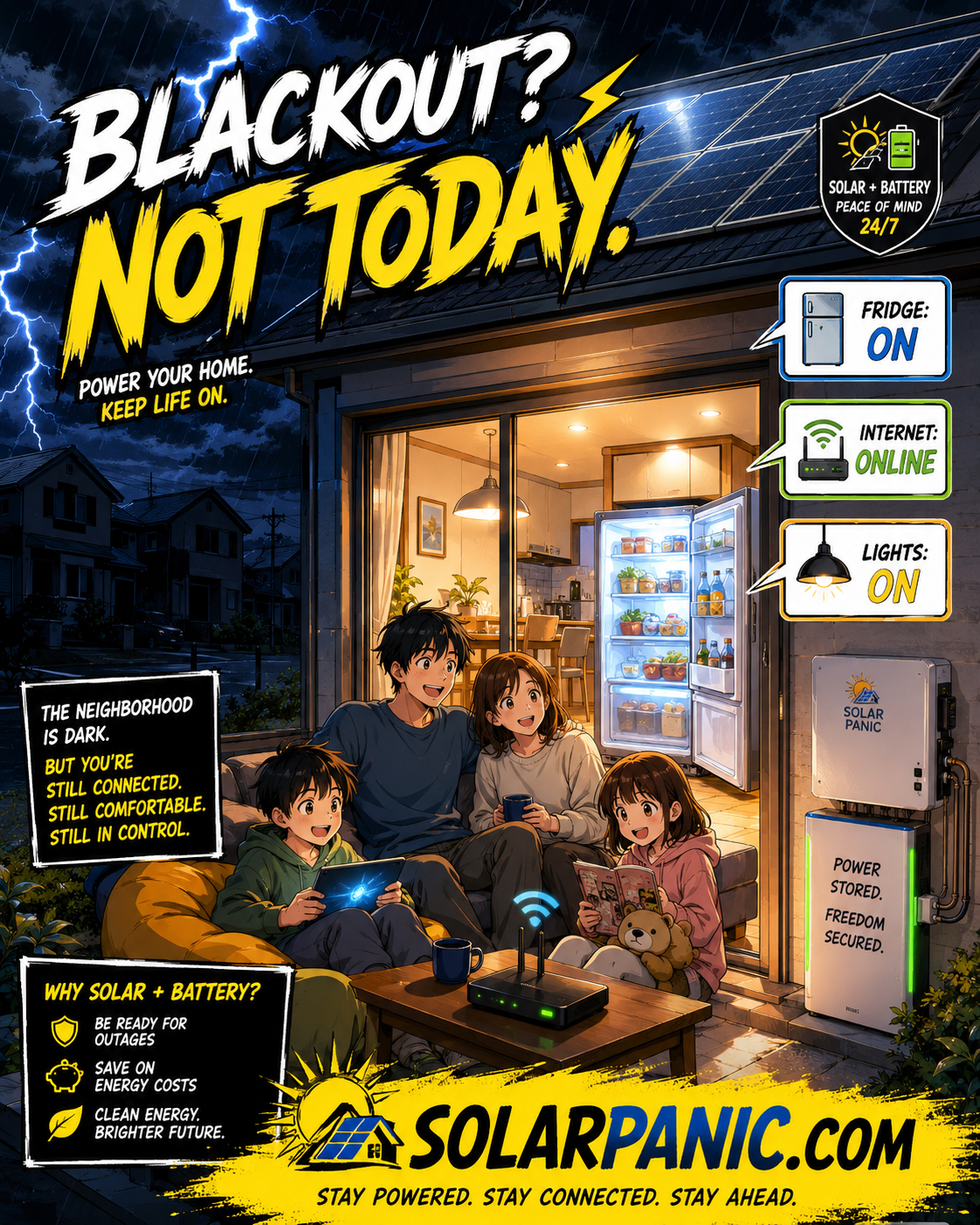
The refrigerator stays cold. The internet stays useful. Selected lights stay on. Phones can charge. The house is not invincible, but it is not helpless.
Battery Boy’s lesson: backup power is not about powering everything forever. It is about supporting the right things when it matters.
Battery Boy and Solar Sensei
Battery Boy works best with Solar Sensei. One provides stored energy and timing. The other provides explanation, design discipline, and realistic expectations. Together, they keep the customer away from both fantasy and fear.
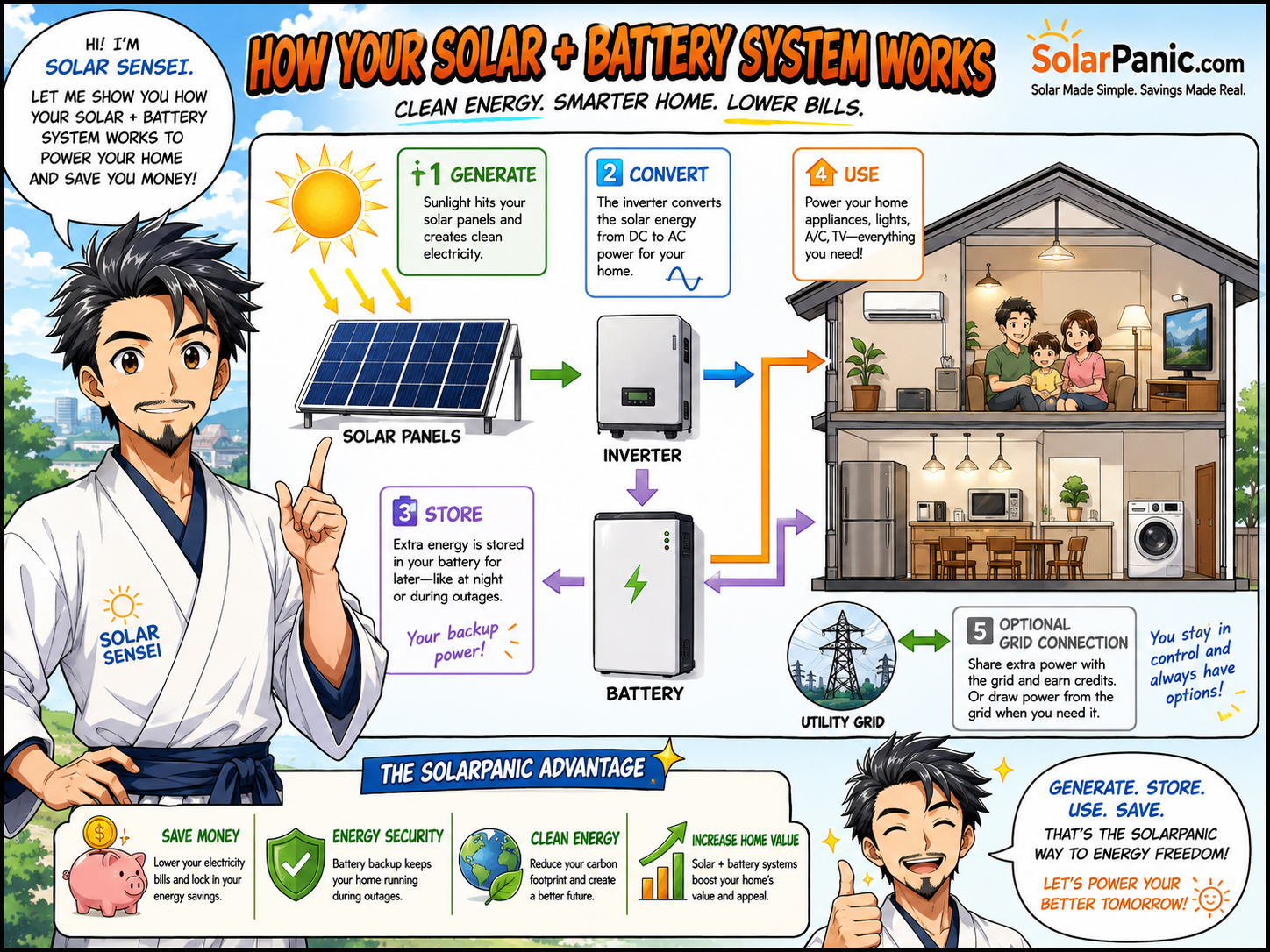
Solar Sensei never lets Battery Boy become a cartoon promise. The system must be designed correctly, installed safely, inspected properly, and understood by the customer.
- Critical-load planning matters.
- Battery capacity matters.
- Inverter capability matters.
- Solar recharge conditions matter.
- Customer expectations matter.
- Installation quality matters.
Why the Monopoly Fears Him
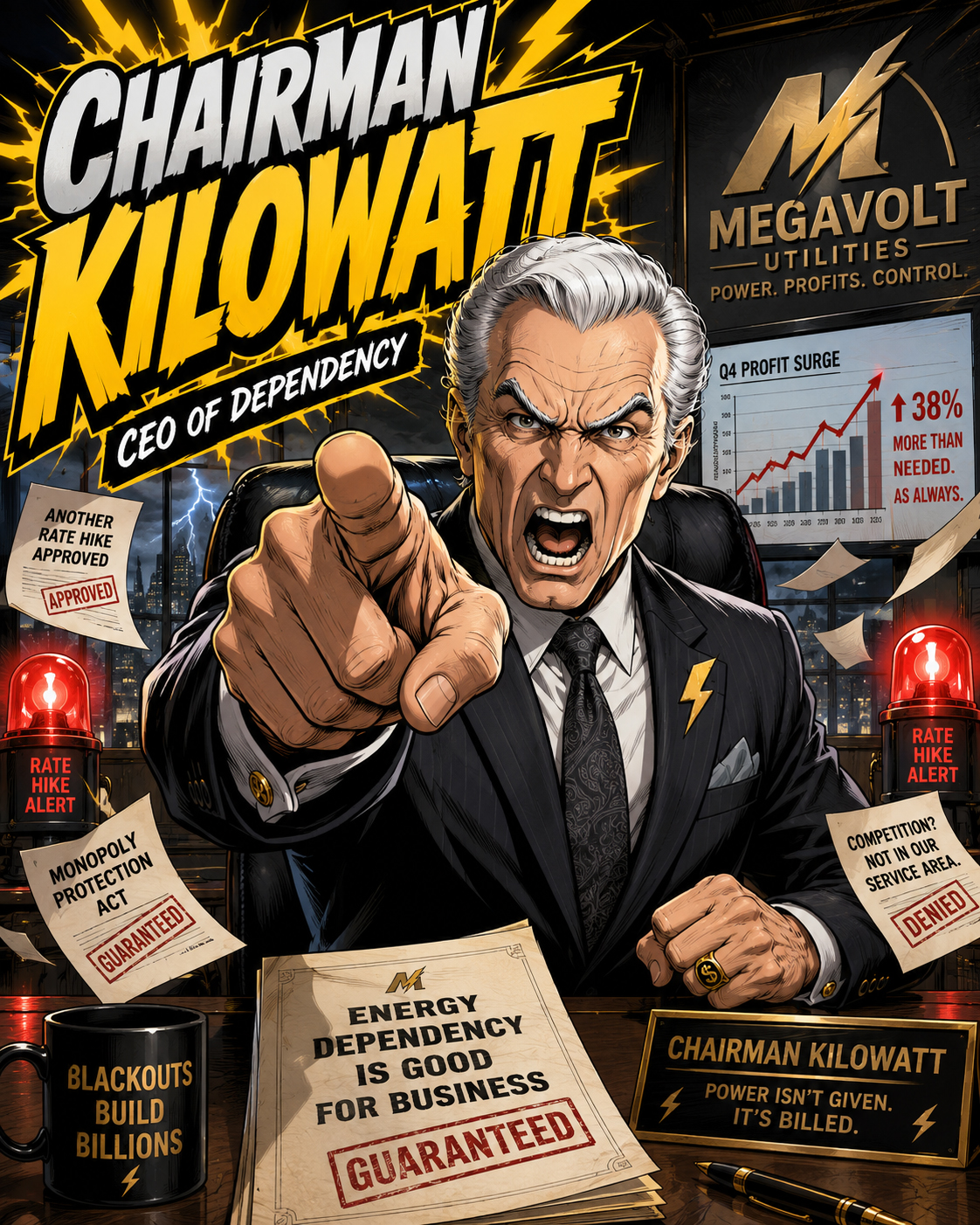
Chairman Kilowatt does not fear Battery Boy because he is enormous. He fears Battery Boy because he makes the customer calmer. A calm customer asks better questions. A customer with backup options is harder to scare.
“They are no longer helpless during our dramatic moments!” Chairman Kilowatt screams.
The Homework Attack Connection
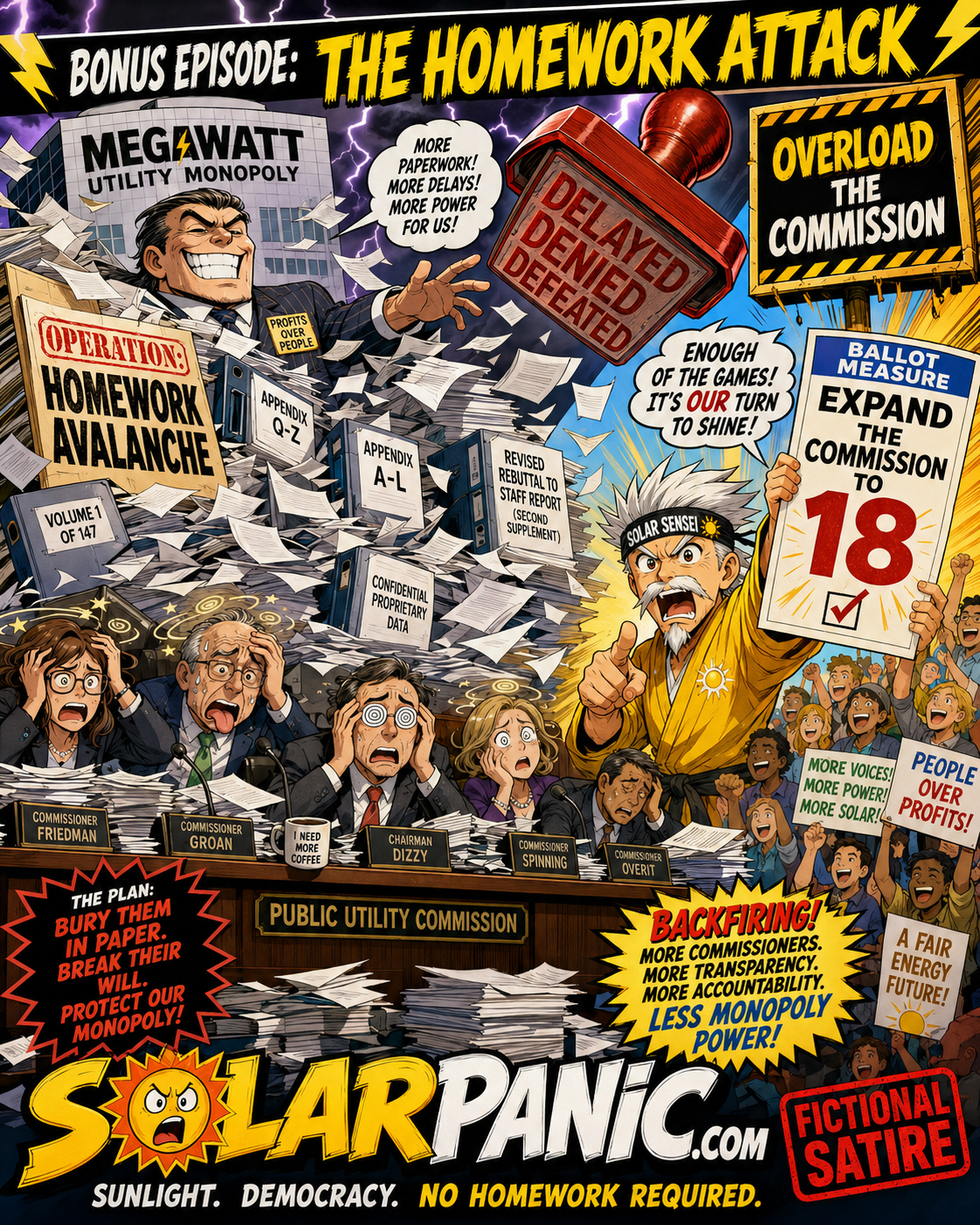
Once customers understand solar and batteries, they begin to understand policy. They ask why batteries are treated like threats, why solar customers get buried in rules, and why public oversight gets drowned in homework.
That is why Battery Boy connects to the flagship bonus episode. The fictional monopoly tries to overwhelm commissioners with paperwork. Solar Sensei brings the people. Proposition Sunlight expands the commission to 18.
Punchline: the monopoly wanted a helpless customer. Battery Boy brought a plan.